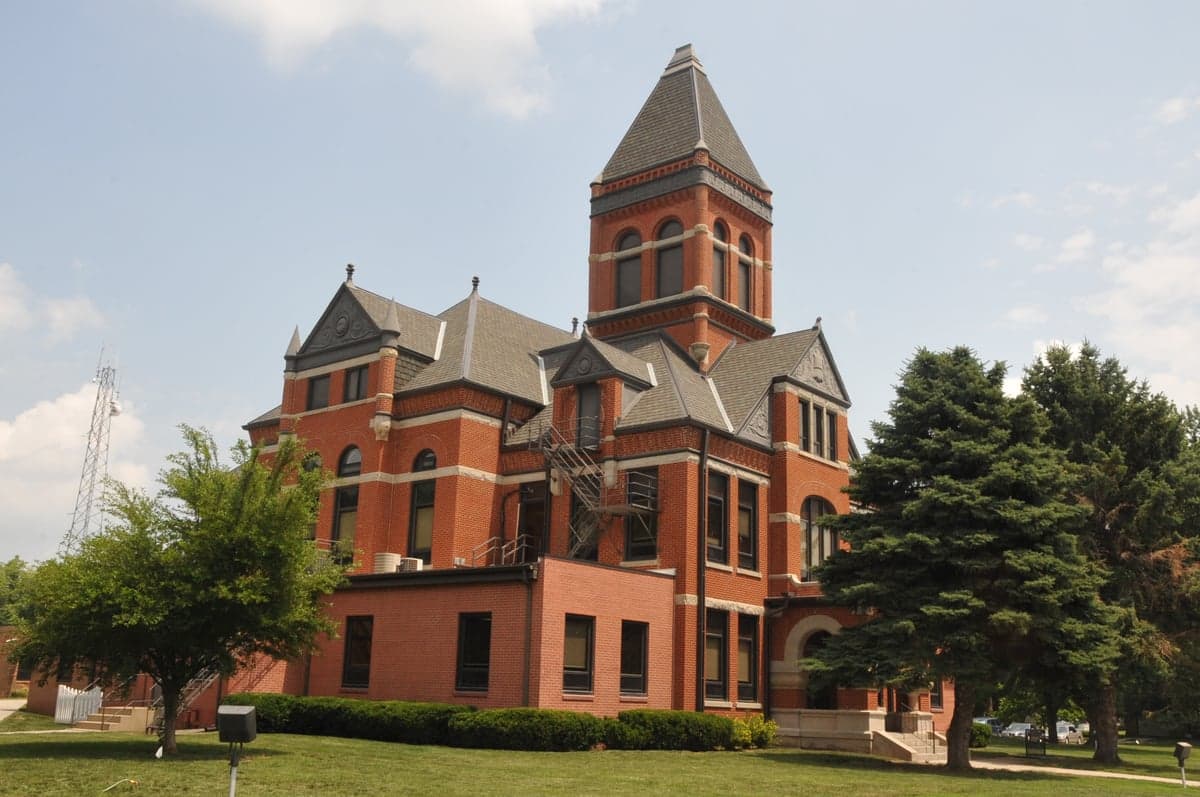
Photo: Wikipedia
Political ClimatePolitical Climate in Monona County
Showing county-level results — no local-only data available.
Lean and PVI are calculated from this county’s 2020 and 2024 presidential results, Cook-style.
Political rankings in Iowa
- Most Conservative Cities in Iowa
- Most Liberal Cities in Iowa
- Best Liberal-Leaning Towns in the Midwest
- Safest Liberal-Leaning Towns in the Midwest
- Safest Conservative-Leaning Towns in the Midwest
- Affordable Small Towns for Conservatives
- Most Affordable Liberal-Leaning Small Towns in the U.S.
- Safest Conservative-Leaning Cities in the U.S.
- Most Conservative Counties in Iowa
- Most Liberal Counties in Iowa
Local Political AnalysisPolitical Analysis of Monona County
Monona County is one of the most reliably Republican counties in western Iowa, carrying a Cook PVI of R+15 — a full nine points more conservative than the state’s overall R+6 rating. That gap isn’t just a number; it reflects a deep, generational shift in a county that once prided itself on split-ticket voting and a stubborn streak of independence. The trajectory here has been steady red for the better part of two decades, and while the margins ebb and flow with the national environment, the county hasn’t backed a Democrat for president since 1996, when Bill Clinton carried it. Locals will tell you the old days of "blue dog" Democrats in the river towns are long gone, replaced by a solid, working-class conservatism that shows up reliably in every cycle.
How it compares
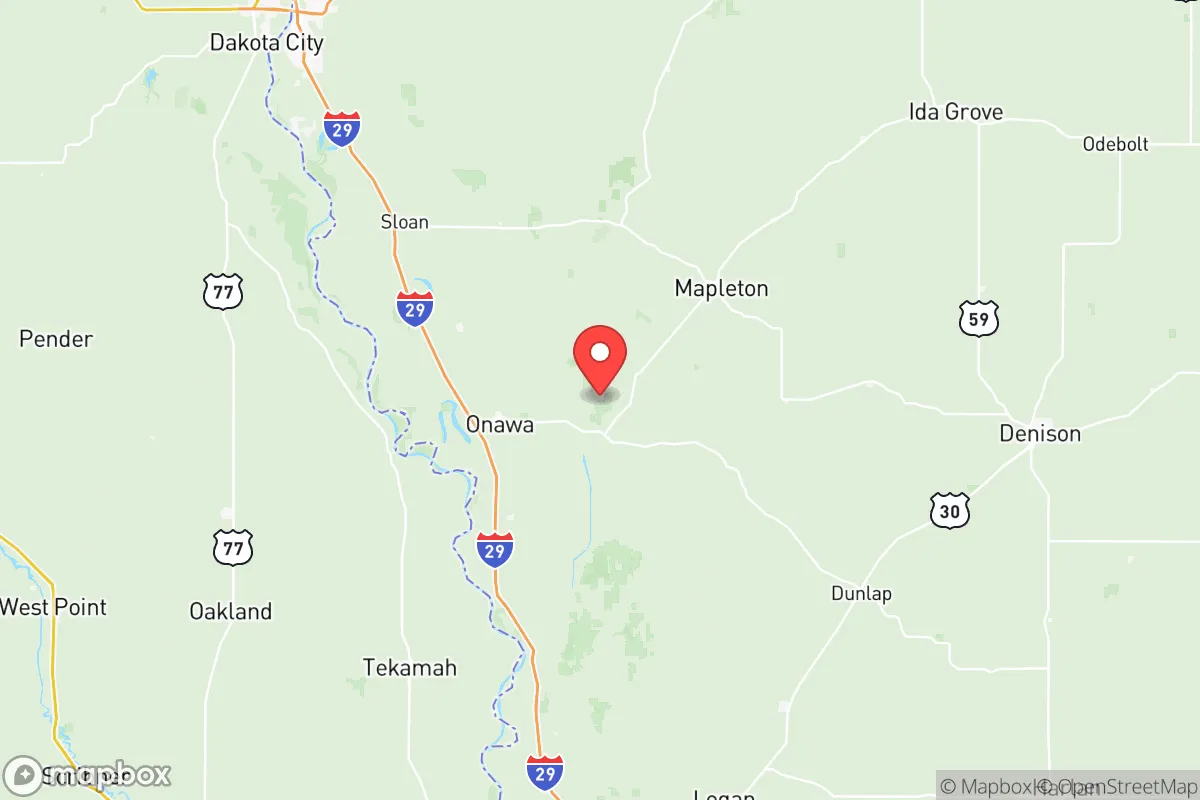
To understand Monona County’s politics, you have to look at the map. The county seat, Onawa, is the closest thing to a swing precinct — it’s the largest town and home to a mix of government workers, retirees, and a small but visible contingent of younger professionals who keep the Democratic vote alive. Onawa regularly votes within a few points of the county average, and in a bad Republican year, it can tip blue down-ballot. The smaller towns, though, are where the R+15 margin is built. Castana, Whiting, and Soldier are reliably red, often going 70-80% Republican, while the rural townships around Turin and Blencoe are even more conservative. The one outlier is the far northern edge near the Sioux City metro influence — towns like Sloan and Hornick lean red but are slightly more moderate, reflecting the suburbanizing pull of Woodbury County.
Compared to Iowa as a whole, Monona County is noticeably more culturally and politically homogeneous. The state’s R+6 PVI is propped up by the urban-rural divide — Des Moines, Iowa City, and Cedar Rapids are deep blue, while the rural west and north are deep red. Monona County lacks that urban counterweight, so its politics skew older, whiter, and more agrarian. The issues that animate voters here — ethanol mandates, property taxes on farmland, and the Second Amendment — are the same ones that drive rural Iowa, but they land with more intensity because there’s no competing urban constituency to moderate the conversation.
What this means for residents
For conservative residents, the R+15 lean means their votes carry real weight in primaries, not general elections. The competitive races here are almost always Republican primaries, where the more conservative candidate typically wins. That shapes local policy — the county board of supervisors, sheriff’s office, and soil and water conservation districts are all reliably Republican, and the practical effect is a low-tax, low-regulation environment that landowners and farmers generally appreciate. For liberal residents, the reality is different. They are a clear minority, and they know it. There’s no organized Democratic infrastructure to speak of; the county party is a small, volunteer-run operation that struggles to field candidates for local office. That said, Onawa’s relative moderation means liberals aren’t isolated — they can find community in the county seat, and the school district and county hospital employ enough professionals to keep the local discourse from becoming a monolith.
One thing that hasn’t changed, even as the county has shifted right, is a strong streak of pragmatism. Monona County voters have a history of supporting incumbents they know personally, regardless of party label. The current county sheriff, for instance, has held office for over a decade and has won re-election with bipartisan support because he’s seen as competent and accessible. That’s the kind of localism that keeps the politics here from feeling as polarized as the national headlines suggest.
Culturally, the county’s conservatism is rooted in self-reliance and a deep attachment to the land. The Loess Hills, which run through the eastern part of the county, are a source of local pride and a reminder that this is a place where people live with the elements, not against them. The policy distinctions that matter most here are the ones that affect the farm economy — the county is a strong supporter of the Renewable Fuel Standard, and any talk of cutting ethanol subsidies is met with immediate skepticism. There’s also a notable streak of anti-government sentiment that predates the Trump era; it’s a libertarian-leaning conservatism that distrusts both parties in Washington but reliably votes Republican because the GOP is seen as the lesser of two evils. Looking ahead, the county’s trajectory seems set — the demographic trends (aging population, out-migration of young people) only reinforce the red lean, and barring a major realignment, Monona County will remain a solid Republican anchor in western Iowa for the foreseeable future.

State Political ClimatePolitical Climate in Iowa
State Political AnalysisPolitical Environment in the State
Iowa has been a reliably Republican state for the past decade, carrying a Cook PVI of R+6, but it wasn’t always this way. The state was a classic presidential bellwether for decades, voting for the winner in every election from 1988 to 2012, and it had a strong tradition of split-ticket voting. That era is over. The shift started around 2014 and accelerated sharply after 2016, driven by a realignment of rural and small-town voters toward the GOP and a simultaneous consolidation of Democratic strength in a handful of college towns and the state’s largest metros. Today, the dominant coalition is a mix of evangelical conservatives, rural farmers, and suburban retirees, while Democrats hold power only in the Des Moines metro, Iowa City, and the Quad Cities. The 10-20 year arc has been a steady march rightward on cultural and economic issues, even as the state’s population has grown slightly more diverse and urban.
Urban vs. rural divide
The political map of Iowa is a textbook case of the urban-rural split. The Democratic strongholds are essentially three islands: Polk County (Des Moines), Johnson County (Iowa City), and Story County (Ames). These three counties alone delivered nearly all of the Democratic votes in the 2024 presidential race, with Johnson County going +35 for Biden in 2020 and maintaining that margin. Outside those islands, the rest of the state is deeply red. The rural northwest, centered on Sioux Center and Orange City, is among the most conservative regions in the entire Midwest, driven by a large Dutch Reformed and evangelical population. The small industrial cities like Dubuque and Council Bluffs have flipped from blue-leaning to reliably red over the past two cycles, as union households shifted right on cultural issues. The suburbs of Des Moines, particularly Ankeny and Waukee, are the key battlegrounds—they were swing areas in 2016 and 2020, but trended right again in 2024 as inflation and education debates pushed them back toward the GOP. The rural-urban divide here isn’t just about population density; it’s about a fundamental difference in worldview that shows up in every local election, school board race, and county commission meeting.
Policy environment
Iowa’s policy environment is now unambiguously conservative, shaped by a Republican trifecta that has held the governorship and both legislative chambers since 2017. The state has a flat income tax of 3.8% (phasing down to 3.5% by 2027), no estate tax, and property taxes that are among the lowest in the Midwest. The regulatory posture is business-friendly, with a right-to-work law on the books and a tort reform system that caps noneconomic damages in medical malpractice cases. On education, Iowa has a robust school choice program: the Education Savings Account (ESA) law, passed in 2023, gives every family state funding for private or homeschool expenses, regardless of income. The state also banned the teaching of critical race theory and divisive concepts in K-12 schools in 2021. Healthcare policy is a mixed bag—Iowa expanded Medicaid under the Affordable Care Act in 2014, but the state has also imposed work requirements for able-bodied adults on the program. Election laws were tightened in 2021 and 2024, with a voter ID requirement, reduced early voting days, and a ban on ballot drop boxes except for disabled voters. The overall posture is one of limited government on economic matters and active government on cultural and social issues.
Recent policy direction
The last three years have seen a flurry of legislation that signals where Iowa is headed. On gun rights, the state passed permitless carry in 2021, allowing any law-abiding adult to carry a concealed firearm without a permit or training. On parental rights and education, the 2023 law banning books with sex acts from school libraries and the 2024 law requiring schools to notify parents of any student requests for name or pronoun changes have been the most contentious. On speech and privacy, Iowa passed a law in 2023 prohibiting government entities from requiring COVID-19 vaccines, and in 2024 it banned the use of TikTok on state devices. On medical and bodily autonomy, the state passed a six-week abortion ban in 2023 (signed into law after a court ruling allowed it to take effect), with no exceptions for rape or incest, only for medical emergencies. On property rights, the state has strengthened eminent domain protections for landowners, particularly in pipeline disputes. On taxation, the flat tax phase-down continues, and the state eliminated the inheritance tax in 2021. On voting and ballot access, the 2024 law shortened the absentee ballot request window and banned private funding of election offices. The direction is clear: a consistent push toward cultural conservatism, fiscal restraint, and individual liberty on guns and vaccines, paired with tighter controls on abortion, education content, and election procedures.
Civil unrest & political movements
Political activism in Iowa is organized and visible, but rarely spills into the kind of civil unrest seen in larger states. The most prominent flashpoint in recent years was the 2023 abortion ban protests, which drew thousands to the state capitol in Des Moines and included a series of sit-ins and arrests. On the right, the Iowa Faith and Freedom Coalition and the Family Leader are powerful organizing forces, particularly in rural areas and in the northwest around Sioux City. Immigration politics have been a growing issue, with Governor Kim Reynolds deploying the Iowa National Guard to the Texas border in 2021 and 2024, and the state passing a law in 2024 making it a crime for someone previously deported to enter Iowa. There is no sanctuary city policy anywhere in the state; in fact, Iowa City is the only city that has even considered it, and the proposal was defeated. Election integrity controversies have been muted compared to other states, though the 2020 and 2022 cycles saw some localized disputes in rural counties over voting machine security. The most visible political movement a new resident would notice is the organized school board activism—both left and right—that has turned local elections in suburbs like West Des Moines and Johnston into proxy wars over curriculum and library books.
Projection
Over the next 5-10 years, Iowa is likely to remain solidly Republican, but the margin may narrow slightly as the Des Moines metro continues to grow and diversify. The population is aging and slowly declining in rural areas, while the suburbs of Des Moines, Cedar Rapids, and the Iowa City corridor are attracting younger families and remote workers from Chicago and the coasts. These newcomers tend to be more moderate on social issues, which could soften the state’s hard-right edge on education and abortion over time. However, the rural exodus is also concentrating conservative power in the legislature through gerrymandered districts, so the policy direction is unlikely to reverse. The flat tax will continue to phase down, school choice will expand, and the cultural battles over LGBTQ rights and abortion will persist. A new resident moving in now should expect a state that is politically stable, with a conservative majority that is unlikely to be dislodged, but with a growing urban-liberal minority that will keep the culture wars alive in local elections. The practical reality is that if you’re conservative, you’ll find a state that largely aligns with your values; if you’re liberal, you’ll find strong communities in Des Moines, Iowa City, and Ames, but you’ll be living under a state government that is actively working against your priorities on most issues.
For someone choosing Iowa, the bottom line is this: you are moving to a state where the political direction is set and stable, not in flux. The tax environment is favorable for earners and business owners, the schools offer real choice, and the gun laws are among the most permissive in the country. The trade-offs are a restrictive abortion law, a K-12 curriculum that reflects conservative values, and a political culture where your vote in statewide elections will likely not be competitive. If you’re looking for a place where your conservative values are the norm and the government is actively advancing them, Iowa is a strong fit. If you’re looking for a purple state where your vote might swing an election, you’ll need to move to the Des Moines suburbs and get involved in local races—that’s where the real action is.
* Values derived from national, state, county, city and local statistics and may differ in a specific area. Last updated: 2026-10-28T01:03:20.000Z
Narrative content on this page is AI-generated and may contain mistakes. Verify any details that matter before acting on them.
ReloMaps may earn a commission from affiliate links at no extra cost to you.

