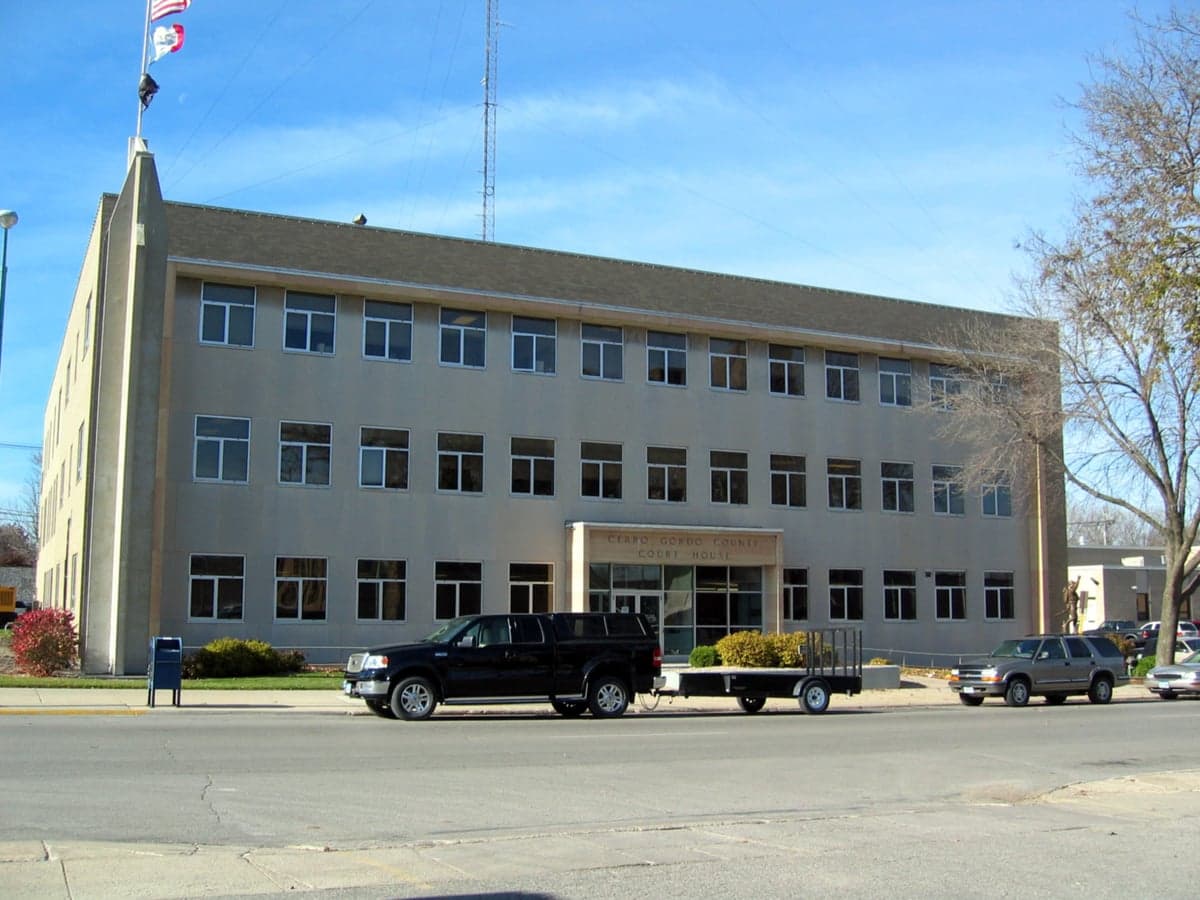
Photo: Wikipedia
Demographics of Cerro Gordo County
Affluence Level in Cerro Gordo County
A middle-class area roughly in line with national averages across income, home values, education, and employment.
People of Cerro Gordo County
Today, Cerro Gordo County, Iowa, is home to roughly 42,785 residents, a population that is 88.9% white and notably less diverse than the state average. The county’s identity is rooted in its agricultural and industrial heritage, with the city of Mason City serving as the cultural and economic hub. This is a region where a strong sense of place is tied to the land, the legacy of manufacturing, and a community-oriented, conservative-leaning lifestyle. The population is older and less transient than in many parts of the country, creating a stable but slowly declining demographic base.
Settlement & growth (pre-1960)
The land that is now Cerro Gordo County was originally inhabited by the Sioux people, particularly the Dakota, who used the area for hunting and seasonal camps. European-American settlement began in earnest in the 1850s, following the 1851 Treaty of Traverse des Sioux, which opened the region to white settlers. The first permanent settlers were primarily of Yankee stock—English-speaking Protestants from New England and New York—who arrived via the Mississippi River and its tributaries. They established the first farms and laid out the county seat, Mason City, in 1853, naming it after the first settler, John Mason.
The next major wave came in the 1860s and 1870s, driven by the Homestead Act of 1862 and the expansion of the railroad. This period saw a significant influx of German immigrants, who were drawn by the promise of cheap, fertile land. They established farming communities in the townships surrounding Mason City, such as Clear Lake and Rockwell, where their descendants remain a strong presence today. The Germans were followed by Irish immigrants, who often worked as laborers on the railroad and in the early lime and cement plants that sprang up in the area. A smaller but notable group of Danish immigrants also settled in the county, particularly around the town of Swaledale, bringing with them a tradition of cooperative farming.
By the late 19th and early 20th centuries, the discovery of large limestone deposits transformed the local economy. The resulting cement and lime industries attracted a new wave of workers, including immigrants from Southern and Eastern Europe. Mason City became a boomtown, with a growing population of Italian and Polish immigrants who settled in distinct neighborhoods near the industrial plants. These groups, though smaller than the German and Yankee populations, added a layer of ethnic diversity to the county’s cultural fabric. The town of Ventura, located on the shores of Clear Lake, also grew as a resort destination for wealthy Iowans, attracting a seasonal population that contributed to the local service economy.
The Dust Bowl and the Great Depression of the 1930s brought a small number of "Okies" and other displaced farmers from the Great Plains, but Cerro Gordo County’s population remained remarkably stable. The post-World War II era saw a modest suburban expansion around Mason City, but the county never experienced the explosive growth seen in other parts of the Midwest. The population peaked in the 1970s and has been in a slow, steady decline ever since, as younger residents moved to larger cities for education and employment.
Modern era (post-1965)
The 1965 Hart-Cellar Act, which reshaped U.S. immigration, had a minimal impact on Cerro Gordo County. Unlike many urban and coastal areas, the county did not see a significant influx of new immigrant groups. The foreign-born population today stands at just 1.2%, far below the national average. The small Hispanic population, now 5.4% of the total, began to grow in the 1990s and 2000s, primarily as a result of domestic migration from other parts of the U.S. rather than direct immigration. These families, many of Mexican heritage, have settled mostly in Mason City, working in the meatpacking plants and agricultural processing facilities that anchor the local economy.
The Black population, at 1.9%, has remained small and stable, with most residents living in Mason City. The East/Southeast Asian community, at 1.0%, is also concentrated in the county seat, with a small number of families working in the medical and educational sectors. The Indian subcontinent population is negligible at 0.2%. The county has not developed the ethnic enclaves seen in larger metropolitan areas; instead, these groups are dispersed within the broader community, often connected through local churches and civic organizations.
Domestically, the post-1965 period has been defined by a slow but steady out-migration of young adults. The county’s population has aged, with a median age well above the national average. Suburbanization has been limited, with most new housing development occurring on the outskirts of Mason City and around Clear Lake, which has become a popular retirement and second-home destination. The town of Plymouth and the unincorporated community of Dougherty have seen little growth, remaining as quiet agricultural hamlets.
The future
The demographic trajectory for Cerro Gordo County points toward continued slow decline and gradual diversification. The population is projected to shrink modestly over the next decade, as the death rate exceeds the birth rate and out-migration of young adults continues. The Hispanic population is expected to grow as a share of the total, driven by higher birth rates and continued domestic migration for agricultural and industrial work. This will make the county slightly more diverse, but it will remain overwhelmingly white and non-Hispanic for the foreseeable future.
The cultural identity of the county is likely to remain rooted in its agricultural and industrial past, with a strong emphasis on community, self-reliance, and traditional values. New residents are most likely to be retirees drawn to the recreational amenities of Clear Lake, or families seeking affordable housing and a slower pace of life. The county’s future will depend on its ability to retain young people and attract new industries to replace the manufacturing jobs that have been lost over the past few decades.
For someone moving in now, Cerro Gordo County offers a stable, safe, and affordable environment with a strong sense of community. It is a place where neighbors know each other, where the pace of life is deliberate, and where the values of hard work and family are still central. The population is not growing, but it is not in crisis either—it is simply aging in place, with a quiet resilience that defines the character of the people who call it home.

* Values derived from national, state, county, city and local statistics and may differ in a specific area. Last updated: 2026-07-12T08:40:55.000Z
Narrative content on this page is AI-generated and may contain mistakes. Verify any details that matter before acting on them.
ReloMaps may earn a commission from affiliate links at no extra cost to you.

