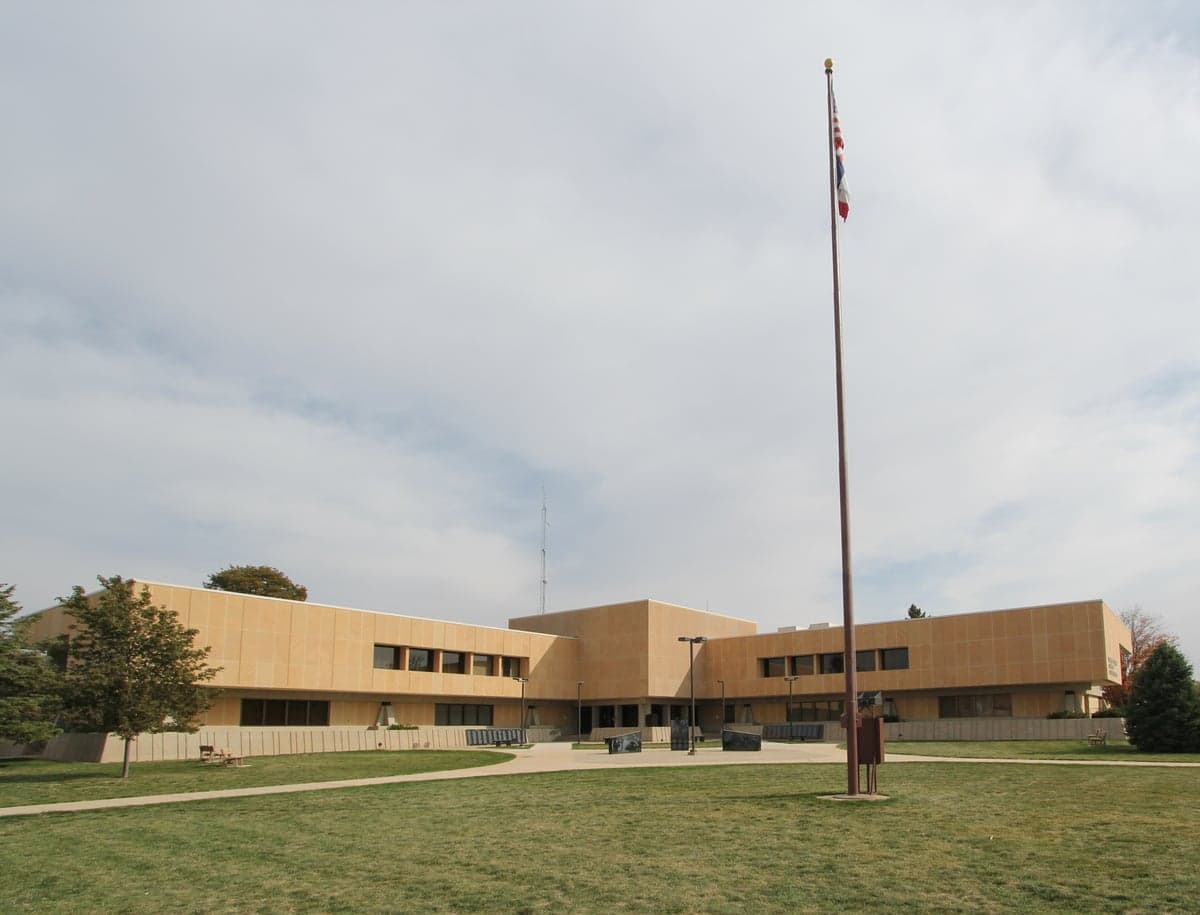
Photo: Wikipedia
Strategic Assessment of Buena Vista County
Strong survivability profile. Good buffer from population centers, with manageable environmental and tactical risks.
What does the Strategic Assessment tell us?
Our Strategic Assessment grades tactical survivability of an area. Major population centers, military targets, fallout zones, natural disasters, and border exposure all drive risk — lower exposure means a more defensible position in a crisis.
This is heavily inspired by Joel Skousen's Strategic Relocation book. Highly recommended you checkout the book ($)What does this tell us?
Our Strategic Assessment grades tactical survivability of an area. Major population centers, military targets, fallout zones, natural disasters, and border exposure all drive risk — lower exposure means a more defensible position in a crisis.
This is heavily inspired by Joel Skousen's Strategic Relocation book. Highly recommended you checkout the book ($)Strategic Pillars

Key Distances
Strategic Assessment Analysis
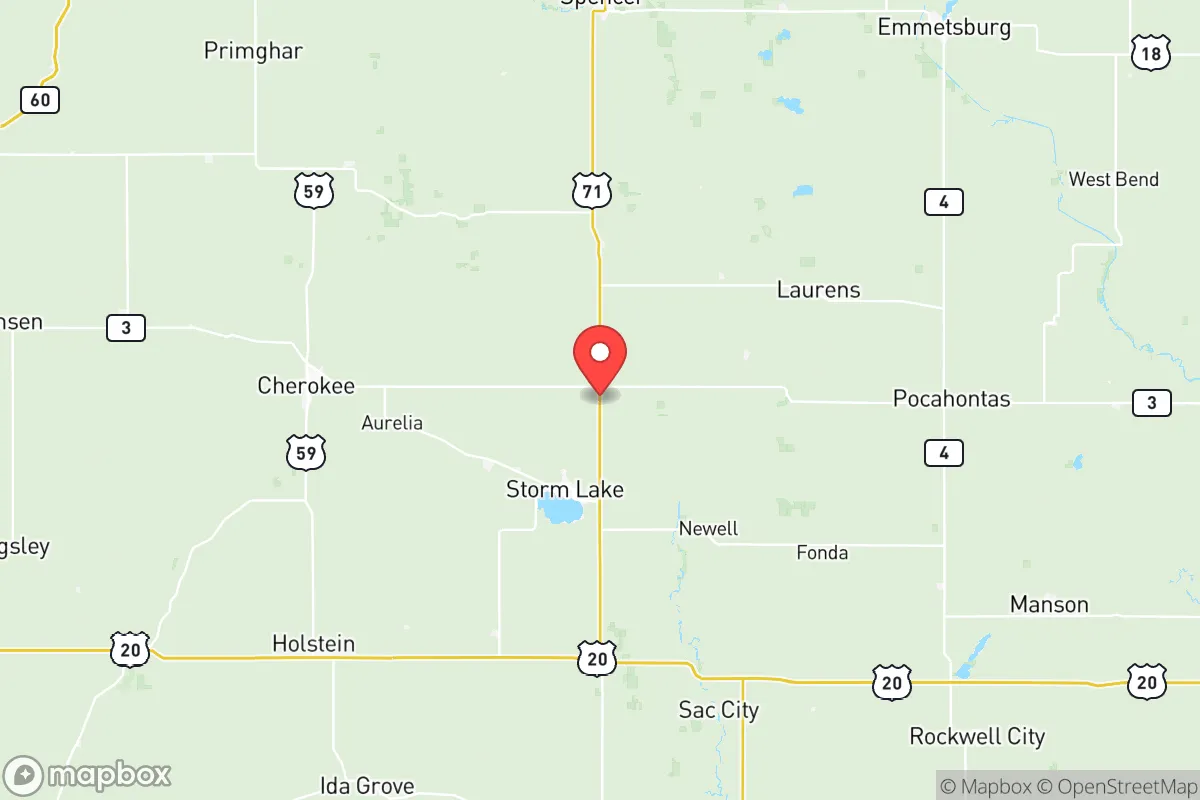
Buena Vista County, Iowa, offers a compelling strategic profile for relocators prioritizing resilience and self-sufficiency, anchored by its position in the state’s agriculturally rich northwest region. The county’s economic and logistical backbone is the city of Storm Lake, a regional hub of roughly 11,000 residents, which provides essential services without the vulnerabilities of a major metropolitan area. The county’s location—roughly 150 miles northwest of Des Moines and 120 miles east of Sioux Falls, South Dakota—places it in a sweet spot of relative isolation from large population centers, while still offering access to regional healthcare, supply chains, and transportation corridors like U.S. Highway 71 and Iowa Highway 7. This balance of remoteness and connectivity is a foundational advantage for anyone assessing long-term stability and disaster preparedness.
Geographic position and natural advantages for long-term stability
Buena Vista County sits within the Des Moines Lobe, a region of exceptionally fertile, flat farmland that supports intensive row-crop agriculture—primarily corn and soybeans. This is not just an economic asset; it is a core resilience factor. The county’s rural character and low population density (roughly 20,000 residents spread over 575 square miles) mean fewer targets for disruption and more space for decentralized living. The landscape is punctuated by the Little Sioux River, which flows through the county and feeds into Storm Lake, a natural 3,000-acre glacial lake that serves as a reliable freshwater reservoir. The county’s position in the Upper Midwest also insulates it from the most severe effects of coastal storms, sea-level rise, and the cascading failures that can accompany major port or refinery disruptions. For a relocator, the area’s natural advantages are straightforward: abundant arable land, a dependable freshwater source, and a climate that, while harsh in winter, is predictable and manageable with proper preparation.
Risks, exposures, and proximity to fallout-relevant landmarks
While Buena Vista County is far from the nation’s most vulnerable zones, it is not without strategic risks. The most significant man-made exposure is its location relative to agricultural and industrial infrastructure. The county is home to several large-scale livestock operations and grain processing facilities, including a major Pork plant in Storm Lake (operated by Smithfield Foods) and numerous ethanol plants in the broader region—such as the POET Biorefining facility in nearby Gowrie. These sites are not primary targets in a conflict scenario, but they represent potential points of contamination or supply chain disruption in a major event. The county is also roughly 200 miles from the Offutt Air Force Base near Omaha, Nebraska, a U.S. Strategic Command headquarters that could be a high-value target in a national security crisis. While this distance provides a buffer, it is not a guarantee of safety. Natural risks are modest: the area lies in Tornado Alley, with a real but manageable threat of severe storms and the occasional derecho, as seen in the devastating August 2020 storm that swept across Iowa. Flooding along the Little Sioux River is a localized concern, particularly in low-lying areas near Storm Lake. Overall, the county’s risk profile is low compared to coastal or urban regions, but relocators should plan for agricultural supply chain interruptions and severe weather events.
Practical resilience for a relocator: food, water, energy, and defensibility
For a household focused on self-sufficiency, Buena Vista County offers strong fundamentals. Food security is the standout advantage: the county is surrounded by farmland, and local farmers’ markets, CSAs, and direct-from-farm purchasing are well-established. Storm Lake’s grocery infrastructure is robust, with multiple supermarkets, but a relocator can realistically supplement with home gardening, small livestock, or cooperative buying groups. Water security is equally strong. The Storm Lake aquifer and the lake itself provide a reliable surface and groundwater source, and most rural properties rely on private wells, reducing dependence on municipal systems. The county’s water table is generally high and clean, though well testing is advisable. Energy resilience is more mixed. The grid is served by MidAmerican Energy, which has invested in wind power across northwest Iowa—Buena Vista County has numerous wind turbines that can provide distributed generation, but the grid remains vulnerable to ice storms and derecho damage. Solar adoption is growing but not yet widespread. A relocator should plan for backup power, whether via propane generator, battery storage, or a small wind turbine. Defensibility is a nuanced factor. The county’s flat, open terrain offers limited natural cover, which can be a disadvantage in a security scenario. However, the low population density and strong community networks—typical of rural Iowa—create a social fabric that can be more resilient than anonymous urban environments. The county seat, Storm Lake, has a well-regarded police department and a county sheriff’s office, but response times in outlying areas can be 15–30 minutes. For a relocator, the practical takeaway is that Buena Vista County excels in food and water security, requires proactive energy planning, and offers a defensible position through community cohesion rather than terrain.
The overall strategic picture for Buena Vista County is one of moderate-to-high resilience with manageable trade-offs. It is not a hardened bunker location, but it is a place where a prepared household can achieve genuine self-sufficiency without the extreme isolation of, say, the Mountain West. The county’s agricultural base, freshwater resources, and distance from major strategic targets make it a strong candidate for a relocator who values long-term stability over immediate convenience. The primary downsides—exposure to severe weather, reliance on a grid that can be disrupted, and proximity to agricultural processing facilities—are all mitigable with planning. For a conservative-leaning audience that prioritizes preparedness, community, and a slower pace of life, Buena Vista County represents a solid, grounded choice in the Upper Midwest’s resilience corridor.

* Values derived from national, state, county, city and local statistics and may differ in a specific area. Last updated: 2026-07-16T00:59:12.000Z
Narrative content on this page is AI-generated and may contain mistakes. Verify any details that matter before acting on them.
ReloMaps may earn a commission from affiliate links at no extra cost to you.

