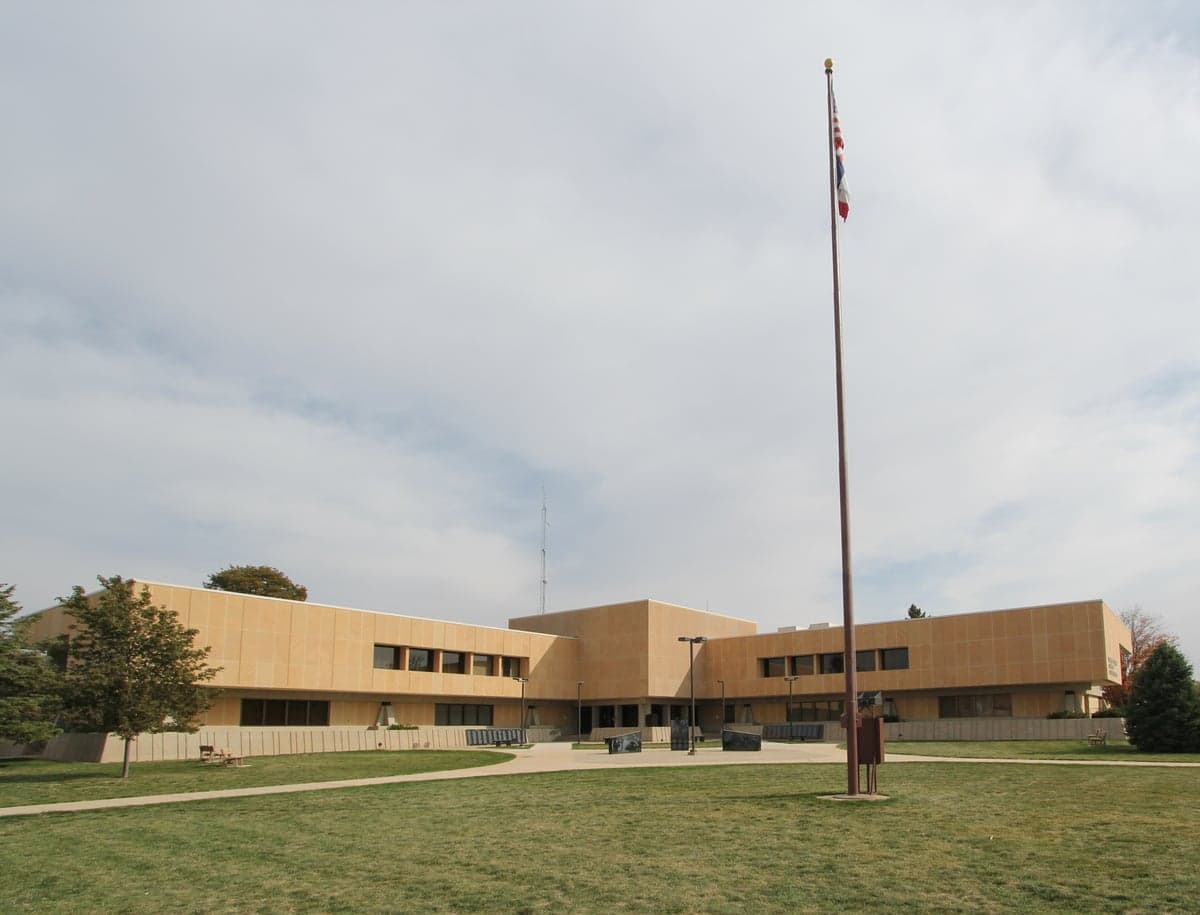
Photo: Wikipedia
Political ClimatePolitical Climate in Buena Vista County
Showing district-level results — no local-only data available.
Local Political AnalysisPolitical Analysis of Buena Vista County
Buena Vista County is a reliably Republican stronghold in northwest Iowa, carrying a Cook Partisan Voting Index of R+15, which is significantly more conservative than the state of Iowa's overall R+6 rating. This isn't a new development; the county has voted for the GOP presidential candidate in every election since at least 2000, and the margins have only widened. The shift is most visible in the county seat, Storm Lake, which was once a swing area but has trended rightward, while the smaller, deeply agricultural towns like Alta, Aurelia, and Newell have been solidly red for decades.
How it compares
To understand Buena Vista's politics, you have to look at the contrast within its own borders. The county's R+15 PVI is more than double the state's R+6, meaning it's a core part of the "redder-than-Iowa" rural bloc. The biggest internal split is between Storm Lake and the rest of the county. Storm Lake, home to a large meatpacking plant and a diverse population (including a significant Latino and Southeast Asian community), has a few precincts that lean Democratic or are competitive. For example, the precincts around the Tyson Foods plant and the downtown area have voted for Democratic candidates in recent state races. Meanwhile, the rural precincts outside of Storm Lake—places like the towns of Lakeside, Marathon, and Linn Grove—routinely deliver 70-80% of their votes to Republicans. This creates a dynamic where the county's overall R+15 number masks a real, if lopsided, urban-rural divide.
What this means for residents
For conservative residents, Buena Vista County is a comfortable place to live politically. Local offices, from the county board of supervisors to the sheriff, are almost always held by Republicans. The county's GOP primary is often the de facto general election. For liberal residents, the reality is different. While they have a community in Storm Lake, they face a political landscape where their votes are often in the minority. There is a small but active Democratic group in the county, but they focus more on local issues like school funding and economic development than on winning countywide races. The practical effect is that policy debates—over things like renewable energy siting, property taxes, and school board decisions—are largely shaped by conservative priorities, with liberal voices acting as a persistent but outnumbered counterweight.
Culturally, the county's politics are reflected in its policy choices. Buena Vista County has been a leader in the state's push for more local control over wind energy projects, with county supervisors often taking a cautious, property-rights-focused approach. There's also a strong emphasis on agricultural interests, with the Farm Bureau and local agribusinesses wielding significant influence. The county's schools, particularly in Storm Lake, have navigated debates over curriculum and diversity programming that mirror national trends, but the local conversations are generally more pragmatic than ideological. Looking ahead, the county's political trajectory seems set: the rural areas will only get redder as the population ages and the agricultural economy consolidates, while Storm Lake's growing diversity might keep a few precincts competitive, but not enough to change the county's overall R+15 character. It's a place where the political reality is clear, and most residents, regardless of their party, have learned to navigate it accordingly.

State Political ClimatePolitical Climate in Iowa
State Political AnalysisPolitical Environment in the State
Iowa has shifted from a classic purple swing state to a solidly Republican R+6 lean over the past decade, driven by a realignment of its rural and small-town base away from the Democratic Party. The state voted for Barack Obama in 2008 and 2012, then flipped hard for Donald Trump in 2016 and 2020, with Trump winning by 8.2 points in 2020 and 13.4 points in 2024. The dominant coalition is now a mix of evangelical conservatives, rural and agricultural voters, and older suburbanites, while Democrats hold ground only in a handful of urban counties and a shrinking number of college towns. For a relocator, this means the state’s political center of gravity is unmistakably conservative, but the intensity varies dramatically depending on whether you land in Des Moines, Iowa City, or a farm town like Storm Lake.
Urban vs. rural divide
The political map of Iowa is a textbook case of the urban-rural split. The Democratic strongholds are Polk County (Des Moines), Johnson County (Iowa City), and Story County (Ames) — home to the state capital, the University of Iowa, and Iowa State University, respectively. In 2020, Johnson County voted for Biden by 40 points, while Polk County went for Biden by 12 points. But drive 20 minutes outside Des Moines into Dallas County (suburban Waukee and West Des Moines), and you’ll find a county that flipped from Obama to Trump and now leans R+12. The real Republican firepower comes from the vast rural expanse: counties like Sioux, Lyon, and Plymouth in the northwest routinely vote 75-80% Republican. The Mississippi River counties — Dubuque, Scott (Davenport), and Black Hawk (Waterloo) — are more competitive, often splitting tickets, but trending redder each cycle. The key takeaway: if you want a deep-blue bubble, Iowa City is your only real option; if you want deep-red, any town under 5,000 people west of I-35 will deliver.
Policy environment
Iowa’s policy environment is aggressively conservative on fiscal and social issues, with a few pragmatic exceptions. The state has a flat income tax of 3.8% (phased down from a progressive top rate of 8.53% in 2018), and property taxes are among the lowest in the Midwest — the median effective rate is about 1.5% of home value. There is no estate tax. The regulatory posture is business-friendly: Iowa is a right-to-work state, and the 2017 collective bargaining law (Chapter 20) sharply limited public-sector union power. Education policy is a flashpoint: the state passed a universal school voucher program (Education Savings Accounts) in 2023, allowing any family to use public funds for private or homeschool expenses, with no income cap. Healthcare is mixed — Iowa expanded Medicaid under the Affordable Care Act, but the state has also imposed work requirements for able-bodied adults on the program. Election laws tightened in 2021 with a law reducing early voting days, closing polls at 8 p.m. instead of 9 p.m., and requiring stricter ID at the polls. For a conservative relocator, the tax and school choice environment is a major draw; for a liberal one, the union restrictions and voting changes are a clear signal.
Recent policy direction
The last five years have seen Iowa move decisively to the right on nearly every liberty axis a relocator might weigh. On gun and self-defense law, Iowa became a permitless carry state in 2021, allowing any legal adult to carry a concealed firearm without a permit or training. On parental and education rights, the 2023 law (HF 68) banned instruction on sexual orientation and gender identity through grade 6, and required schools to notify parents of any student requests for pronoun or name changes. On speech and privacy, the state passed a law in 2024 restricting public library access to “age-appropriate” materials and allowing parents to challenge books — a direct response to culture-war debates. On medical and bodily autonomy, Iowa banned abortion at roughly six weeks (fetal heartbeat) in 2023, with no exceptions for rape or incest, though the law is currently tied up in court challenges. On property rights, the state has strong eminent domain protections for landowners, and a 2022 law limited county-level zoning authority over agricultural land. On taxation, the flat tax is set to drop to 3.5% by 2027. On voting and ballot access, the 2021 law (SF 413) shortened the early voting window from 29 to 20 days and banned ballot drop boxes except in county auditor offices. The overall direction is unmistakable: Iowa is building a model of conservative governance that prioritizes low taxes, school choice, gun rights, and parental control, while restricting abortion access and tightening election procedures.
Civil unrest & political movements
Iowa is not a hotbed of street-level civil unrest, but it has seen organized political movements on both sides. The most visible flashpoint in recent years was the 2020 protests in Des Moines and Iowa City following George Floyd’s murder, which drew thousands and led to some property damage, but were smaller and shorter-lived than in larger states. On the right, the Iowa Freedom Riders (a conservative activist group) have been highly visible at school board meetings and county supervisor hearings, pushing for mask-optional policies and book challenges. Immigration politics are less volatile than in border states, but the 2024 state law (SF 2340) made it a state crime for someone to be in Iowa after being denied entry to the U.S. — a direct challenge to federal authority that has drawn lawsuits. There is no serious secession or nullification movement, but the “constitutional sheriff” movement has traction in rural counties like Ringgold and Wayne. Election integrity controversies flared after 2020, with the state auditor’s office (a Democrat) clashing with Republican county auditors over ballot security, but no widespread fraud was found. A new resident would notice the political divide mostly in yard signs and church parking lots — not in street clashes.
Projection
Over the next 5-10 years, Iowa is likely to become more Republican, not less, driven by two demographic forces. First, the state’s rural population is aging and shrinking, but those who remain are voting even more heavily Republican. Second, in-migration from Illinois and Minnesota — often retirees and remote workers seeking lower taxes and conservative governance — is tilting suburbs like Ankeny and Waukee further right. The Democratic base in Johnson and Story counties is growing in raw numbers (thanks to university enrollment), but those gains are canceled out by rural losses. The state’s congressional delegation is already 4-0 Republican in the House, and both Senate seats are held by Republicans (Chuck Grassley and Joni Ernst). The governorship is likely to remain Republican for the foreseeable future. For a relocator, this means the policy environment will continue to trend conservative: expect further tax cuts, expanded school choice, and more restrictions on abortion and transgender rights. The wildcard is the state’s aging population — as older conservatives pass away, the youth vote in cities could eventually shift the balance, but not within the next decade.
For a new resident, the bottom line is this: Iowa offers a stable, predictable conservative governance model with low taxes, strong gun rights, and school choice, but it comes with a clear trade-off. If you are a conservative, you will find a state that largely aligns with your values, with a government that moves quickly to enact them. If you are a liberal, you will find a state where your vote matters little outside of a few urban islands, and where state policy will often feel adversarial. The practical takeaway is to choose your town carefully — Iowa City or Des Moines’ East Side if you want a blue bubble, any small town or western suburb if you want to be in the political majority. Either way, the state’s trajectory is set: Iowa is not going back to purple.
* Values derived from national, state, county, city and local statistics and may differ in a specific area. Last updated: 2026-07-16T00:59:12.000Z
Narrative content on this page is AI-generated and may contain mistakes. Verify any details that matter before acting on them.
ReloMaps may earn a commission from affiliate links at no extra cost to you.

