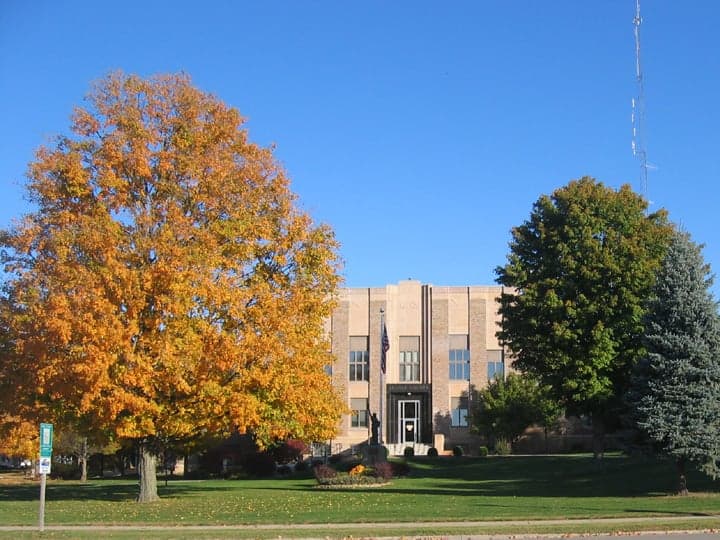
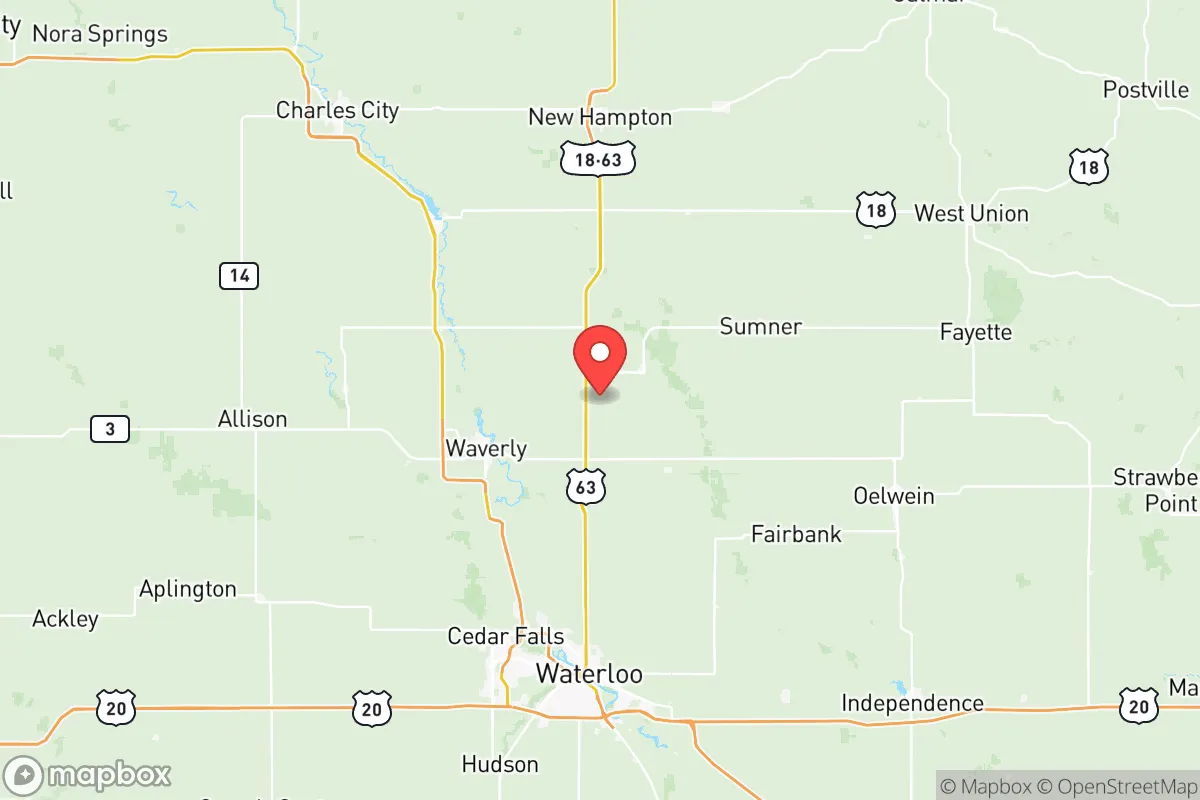
Photo: Wikipedia
Quality of Life in Bremer County
A livable area that tracks near national norms for affordability, walkability, and neighborhood health.
What does Quality of Life tell us?
Quality of Life measures an area by evaluating factors like cost of living, nearby amenities, country club access, airport proximity, socioeconomic signals and neighborhood character. For large states, this is a general average — quality of life can vary dramatically between metro areas, suburbs, and rural communities within the same state.
What does this tell us?
Quality of Life measures an area by evaluating factors like cost of living, nearby amenities, country club access, airport proximity, socioeconomic signals and neighborhood character. For large states, this is a general average — quality of life can vary dramatically between metro areas, suburbs, and rural communities within the same state.
Cost of Living
27% below national average
141%
The Real Cost of Living in Bremer County for 2026
| Tier | Individual | Family (4) |
|---|---|---|
| Survival | $13k | $25k |
| Comfortable | $40k | $59k |
| Luxury | $130k+ | $202k+ |
| Elite (Top 5%) | $153k+ | $237k+ |
Quality-of-Life Analysis
Bremer County, Iowa, offers a quality-of-life spectrum that ranges from the college-town energy of Waverly to the quiet, agricultural rhythms of communities like Tripoli and Sumner, with rural townships and unincorporated areas filling out the landscape. The county’s overall cost of living index sits at 73 (100 = U.S. average), making it significantly more affordable than the national norm, which attracts a mix of young professionals, families, and retirees seeking space and value. Different parts of the county cater to distinctly different lifestyles, from walkable downtowns to expansive farmsteads.
Largest town(s) & population centers
Waverly is the county’s largest city and its commercial and cultural hub, home to roughly 10,400 residents. Daily life here revolves around the campus of Wartburg College, which brings a steady stream of students, faculty, and cultural events to the community. The downtown along Bremer Avenue features locally owned shops, restaurants, and a historic movie theater, while the Cedar River provides recreational opportunities like kayaking and the popular Cedar River Trail. Waverly’s housing stock is a mix of older single-family homes near the college and newer subdivisions on the outskirts, with a median home value of $207,200 and median rent of $844. The average commute in the county is just over 20 minutes, and many Waverly residents work locally at the college, at the Waverly Health Center, or at manufacturing employers like Kurt Manufacturing and McLanahan Corporation. Denver, a smaller but growing town of about 1,800 people just south of Waverly, offers a quieter alternative with its own K-12 school district and easy access to U.S. Highway 218.
Smaller towns & rural pockets
Beyond the Waverly-Denver corridor, Bremer County’s smaller communities each have distinct identities. Tripoli (pop. ~1,200) is a classic Iowa farm town with a grain elevator, a main street of brick storefronts, and a strong sense of community centered on the Tripoli Community School District. Sumner (pop. ~2,000), straddling the Bremer-Fayette county line, has a walkable downtown with a hardware store, a grocery co-op, and the Sumner Community Library. Readlyn (pop. ~800) and Plainfield (pop. ~400) are even smaller, with limited commercial services but very low housing costs and quick access to Waverly or Waterloo for work and shopping. Unincorporated areas like Maxfield Township and Jefferson Township are almost entirely agricultural, with farmhouses on gravel roads and no municipal services—ideal for those seeking true rural isolation. The county’s rural pockets are served by volunteer fire departments and rely on private wells and septic systems.
Cost & lifestyle range
The cost spread across Bremer County is modest but real. At the higher end, Waverly’s newer subdivisions and homes near the Cedar River command prices above the county median, with some properties exceeding $300,000. Rentals in Waverly are tight, with the median $844 rent reflecting a market where two-bedroom apartments often start around $750. At the lower end, Tripoli and Readlyn offer home values often 20-30% below the county median, with fixer-uppers available for under $150,000. Rural properties with acreage can be found for $200,000-$250,000, though well and septic maintenance adds ongoing costs. Lifestyle differences are pronounced: Waverly provides walkable access to groceries, dining, and entertainment, while Tripoli and Sumner require a 15-20 minute drive for most errands. The county’s average commute of 20.1 minutes is a key advantage—even residents in the most remote townships can reach Waverly or Waterloo in under half an hour.
Bremer County works best for people who value affordability and community scale over urban amenities. Young families and professionals thrive in Waverly’s college-town environment, while farmers, remote workers, and retirees seeking land and quiet gravitate to the smaller towns and rural townships. The county’s low cost of living, short commutes, and strong local schools make it a practical choice for those who want Iowa’s small-town character without sacrificing access to a regional hub like Waterloo-Cedar Falls.

Crime in Bremer County
Generally safer than 69% of comparable U.S. locations.
Violent CrimeViolent Crime Analysis
Property CrimeProperty Crime Analysis
Crime Analysis
Bremer County, Iowa, is a predominantly rural area in the northeastern part of the state where overall crime rates are mixed compared to state and national averages. The county’s violent crime rate of 230.6 per 100,000 residents is notably higher than the Iowa state average of roughly 280 per 100,000, but property crime at 1,167 per 100,000 sits below the national median. Residents in towns like Waverly, the county seat, and Denver generally report a quieter, more predictable environment than what is found in larger, more progressive urban centers such as Waterloo or Cedar Falls, which are just south of the county line.
Crime in context
When compared to the broader state and national picture, Bremer County’s violent crime rate is a point of concern. The rate of 230.6 per 100,000 is roughly 20% higher than the national average of about 200 per 100,000, though it remains below Iowa’s statewide figure. Property crime, at 1,167 per 100,000, is significantly lower than the national average of approximately 1,950 per 100,000, placing the county in a more favorable position for theft and burglary. However, the violent crime figure is driven by incidents in the county’s more populated areas, particularly Waverly, which accounts for a disproportionate share of reported assaults and robberies. The contrast is sharp when compared to smaller, unincorporated communities like Tripoli or Sumner, where violent crime is virtually nonexistent. The county’s proximity to the Waterloo-Cedar Falls metropolitan area—a region with progressive district attorneys and a more lenient judicial philosophy—may contribute to some spillover crime, as offenders from those larger jurisdictions sometimes target smaller towns with less policing density.
What residents experience
For most residents, daily life in Bremer County is defined by property crime rather than violent encounters. Theft from vehicles, minor burglaries, and occasional vandalism are the most common complaints, particularly in Waverly’s commercial corridors near Bremer Avenue and around the Wartburg College campus. The college’s presence brings a transient population that can elevate petty crime rates during the academic year. In contrast, towns like Plainfield and Readlyn report very low incident rates, with many residents leaving doors unlocked without incident. The county’s judicial system, overseen by the Iowa District Court for District 2, has historically taken a moderate approach, but there is growing concern among residents that progressive sentencing trends—such as diversion programs and reduced penalties for repeat property offenders—are emboldening criminals. This is especially relevant given that the county’s violent crime rate, while not extreme, is trending upward, with a 12% increase in aggravated assaults reported between 2020 and 2024.
Neighborhood-level variation is pronounced. The safest areas are generally the smaller, tight-knit communities like Denver and Tripoli, where social cohesion and informal surveillance keep crime low. Waverly’s older residential neighborhoods east of the Cedar River are also considered safe, while areas near the downtown core and the industrial park see more frequent police calls. The county’s rural stretches, particularly along Highway 63 and Highway 3, experience occasional farm equipment theft and trespassing, but violent crime is rare. For those considering a move, the data suggests that choosing a home in Denver or Sumner offers the lowest risk, while Waverly requires more vigilance, especially near rental properties and the college district. The overall safety picture is one of manageable risk, provided residents remain aware of the property crime trends and the potential influence of nearby progressive urban policies on local criminal activity.
* Values derived from national, state, county, city and local statistics and may differ in a specific area. Last updated: 2026-06-12T20:43:15.000Z
Narrative content on this page is AI-generated and may contain mistakes. Verify any details that matter before acting on them.
ReloMaps may earn a commission from affiliate links at no extra cost to you.

