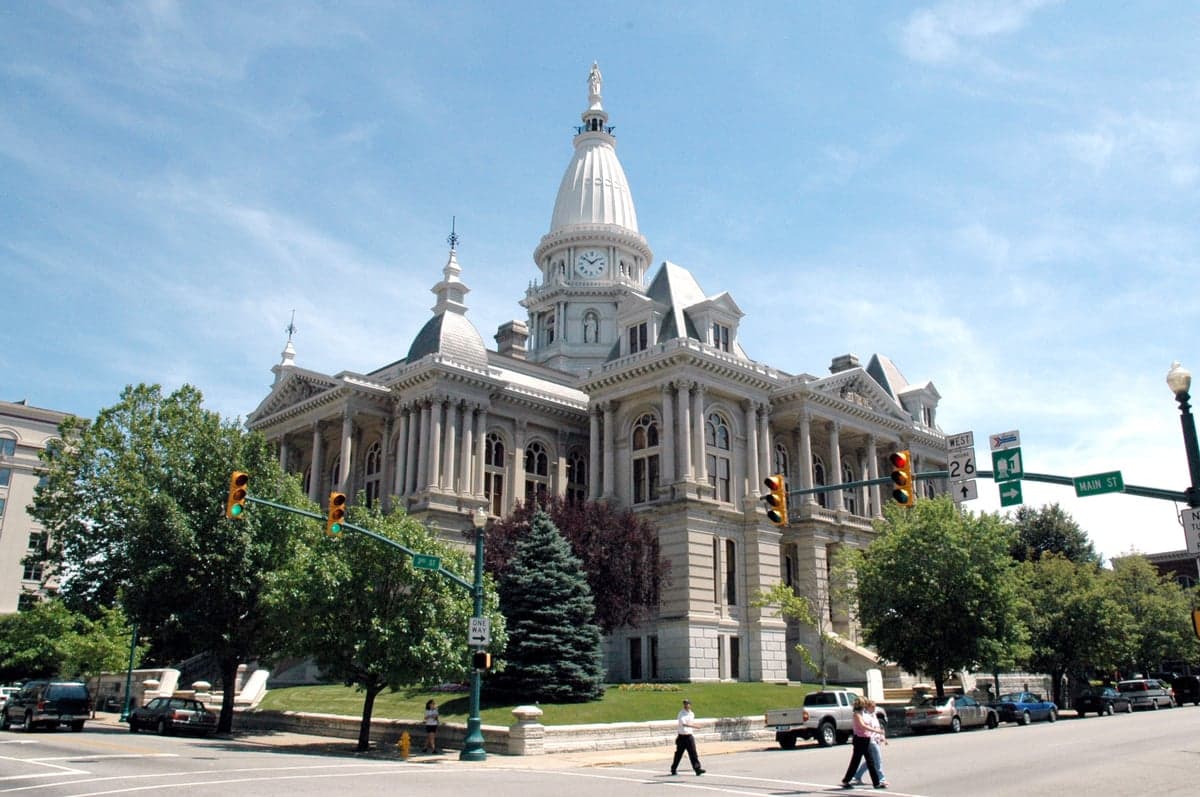
Photo: Wikipedia
Quality of Life in Tippecanoe County
A livable area that tracks near national norms for affordability, walkability, and neighborhood health.
What does Quality of Life tell us?
Quality of Life measures an area by evaluating factors like cost of living, nearby amenities, country club access, airport proximity, socioeconomic signals and neighborhood character. For large states, this is a general average — quality of life can vary dramatically between metro areas, suburbs, and rural communities within the same state.
What does this tell us?
Quality of Life measures an area by evaluating factors like cost of living, nearby amenities, country club access, airport proximity, socioeconomic signals and neighborhood character. For large states, this is a general average — quality of life can vary dramatically between metro areas, suburbs, and rural communities within the same state.
Cost of Living
13% below national average
94%
The Real Cost of Living in Tippecanoe County for 2026
| Tier | Individual | Family (4) |
|---|---|---|
| Survival | $17k | $33k |
| Comfortable | $42k | $62k |
| Luxury | $106k+ | $164k+ |
| Elite (Top 5%) | $131k+ | $203k+ |
Quality-of-Life Analysis
Tippecanoe County, Indiana, offers a broad quality-of-life spectrum that ranges from the bustling college town of West Lafayette to the historic county seat of Lafayette, then outward to quiet agricultural communities like Dayton and rural crossroads such as Battle Ground. This diversity attracts a mix of university faculty, students, manufacturing workers, and families seeking affordable land, all within a county where the cost of living index sits at 87 — well below the national average of 100. The average commute of roughly 18 minutes further enhances the appeal, allowing residents in different parts of the county to access jobs and amenities without long drives.
Largest town(s) & population centers
The county's primary population centers are Lafayette and West Lafayette, which together form a contiguous urban area straddling the Wabash River. West Lafayette is dominated by Purdue University, giving it a youthful, transient energy with dense student housing, a walkable campus core, and a concentration of tech startups and research labs. Daily life here revolves around the academic calendar, with farmers markets, Big Ten sports, and a lively restaurant scene along State Street. Across the river, Lafayette is the larger city and the county seat, with a more diverse economy anchored by manufacturing giants like Caterpillar and Subaru of Indiana Automotive. Lafayette offers historic neighborhoods such as the Ninth Street Hill District, a growing downtown with craft breweries and the Long Center for the Performing Arts, and more affordable single-family homes. Together, these two cities provide the county's densest array of shopping, healthcare, and cultural amenities.
Smaller towns & rural pockets
Beyond the Lafayette-West Lafayette core, Tippecanoe County contains several smaller towns that offer a quieter, more rural lifestyle. Dayton, located about 10 miles southeast of Lafayette, is a small town of roughly 1,500 residents with a historic grain elevator and easy access to the Wildcat Creek for fishing and kayaking. Battle Ground, just north of West Lafayette, is known for the Tippecanoe Battlefield Park and the Wabash Heritage Trail, attracting history buffs and outdoor enthusiasts. Further out, the unincorporated community of Americus sits along the Wabash River and offers a handful of homes and farmland with minimal services. These areas lack the retail density of the urban core but provide larger lots, lower property taxes, and a strong sense of community, often centered around volunteer fire departments and local churches.
Cost & lifestyle range
The cost of living varies noticeably across the county. In West Lafayette, near Purdue's campus, median home values are higher — often exceeding $300,000 for single-family homes in sought-after school districts like West Lafayette Community School Corporation — while median rent in the county overall is $1,088, with student-heavy areas commanding a premium for proximity to campus. In contrast, rural areas and smaller towns like Dayton and Americus offer median home values closer to the countywide figure of $217,600, with some properties under $200,000. Property taxes in unincorporated areas are lower than in the cities, and residents trade walkable amenities for acreage and privacy. The average commute of 17.6 minutes means that even those living in the most rural parts of the county can reach Lafayette's employers — such as Subaru, Caterpillar, or Purdue — in under 25 minutes, making the trade-off manageable for many.
Families and professionals who value a short commute, affordable housing, and access to both a major research university and manufacturing employment will find Tippecanoe County accommodating. The county works well for those who want the option of a vibrant college-town atmosphere in West Lafayette, a historic urban setting in Lafayette, or a quiet small-town or rural lifestyle in Dayton, Battle Ground, or Americus — all within a county where the cost of living remains significantly below the national average.

Crime in Tippecanoe County
Generally safer than 59% of comparable U.S. locations.
Violent CrimeViolent Crime Analysis
Property CrimeProperty Crime Analysis
Crime Analysis
Tippecanoe County, anchored by the city of Lafayette and its sister city West Lafayette, presents a mixed safety profile that demands close attention from potential residents. The county's violent crime rate stands at 263.4 incidents per 100,000 residents, while property crime reaches 1,095.7 per 100,000. These figures place Tippecanoe County in a cautionary position relative to both state and national benchmarks, with property crime emerging as the more pressing concern for daily life.
Crime in context
When measured against Indiana's statewide violent crime rate of approximately 380 per 100,000, Tippecanoe County's 263.4 figure appears comparatively favorable. However, this statistic masks significant variation within the county and should be interpreted with caution. The national violent crime rate hovers near 380 per 100,000 as well, meaning Tippecanoe County sits roughly 30% below the national average for violent offenses. Property crime tells a different story. At 1,095.7 per 100,000, the county exceeds both the Indiana state average of roughly 1,800 per 100,000 and the national average of approximately 1,950 per 100,000. Property crime in Tippecanoe County runs about 44% below the national average, which is a meaningful positive for residents concerned about burglary, theft, and vehicle break-ins. The gap between violent and property crime rates suggests that while serious personal violence is less common, property-related offenses remain the primary safety consideration for most households.
What residents experience
Daily life in Tippecanoe County varies sharply by location. Lafayette, the county seat and largest city, concentrates the majority of reported crime, particularly in its central and near-northside neighborhoods. The downtown area and corridors along Sagamore Parkway and South Street see elevated property crime reports, including vehicle break-ins and package theft. West Lafayette, home to Purdue University, experiences a distinct crime pattern driven by its student population: bicycle theft, porch piracy, and alcohol-related incidents spike during the academic year. The Purdue University Police Department and West Lafayette Police Department maintain a visible presence, but the transient student population creates opportunities for property crime that are less common in more settled communities. Smaller towns within the county, including Battle Ground, Dayton, and Otterbein, report significantly lower crime volumes. Battle Ground, with its small population and rural character, consistently records the lowest crime rates in the county, making it attractive for families and retirees seeking to avoid the issues present in Lafayette and West Lafayette. The unincorporated areas between these towns also tend toward lower crime, though response times from law enforcement can be longer.
Neighborhood-level variation within Lafayette is pronounced. The southern and eastern edges of the city, including areas near the Tippecanoe County line and along the Wabash River corridor, generally report fewer incidents than the central urban core. The judicial environment in Tippecanoe County warrants scrutiny. Tippecanoe County operates under a progressive prosecutorial philosophy that emphasizes diversion programs and reduced sentencing for property and drug offenses, a trend common in counties anchored by large public universities. This approach, while intended to reduce recidivism, has drawn criticism from residents who observe repeat offenders cycling through the system with minimal consequences. The Tippecanoe County Prosecutor's Office under recent administrations has prioritized alternatives to incarceration, which correlates with the elevated property crime rate — offenders face lower risk of meaningful jail time for nonviolent offenses. For readers considering relocation, the practical implication is clear: property crime prevention measures, including security cameras, neighborhood watch participation, and secure parking, are advisable in Lafayette and West Lafayette, while the outlying towns offer a materially different safety experience with lower crime and more traditional law enforcement approaches.
* Values derived from national, state, county, city and local statistics and may differ in a specific area. Last updated: 2026-08-08T16:50:12.000Z
Narrative content on this page is AI-generated and may contain mistakes. Verify any details that matter before acting on them.
ReloMaps may earn a commission from affiliate links at no extra cost to you.

