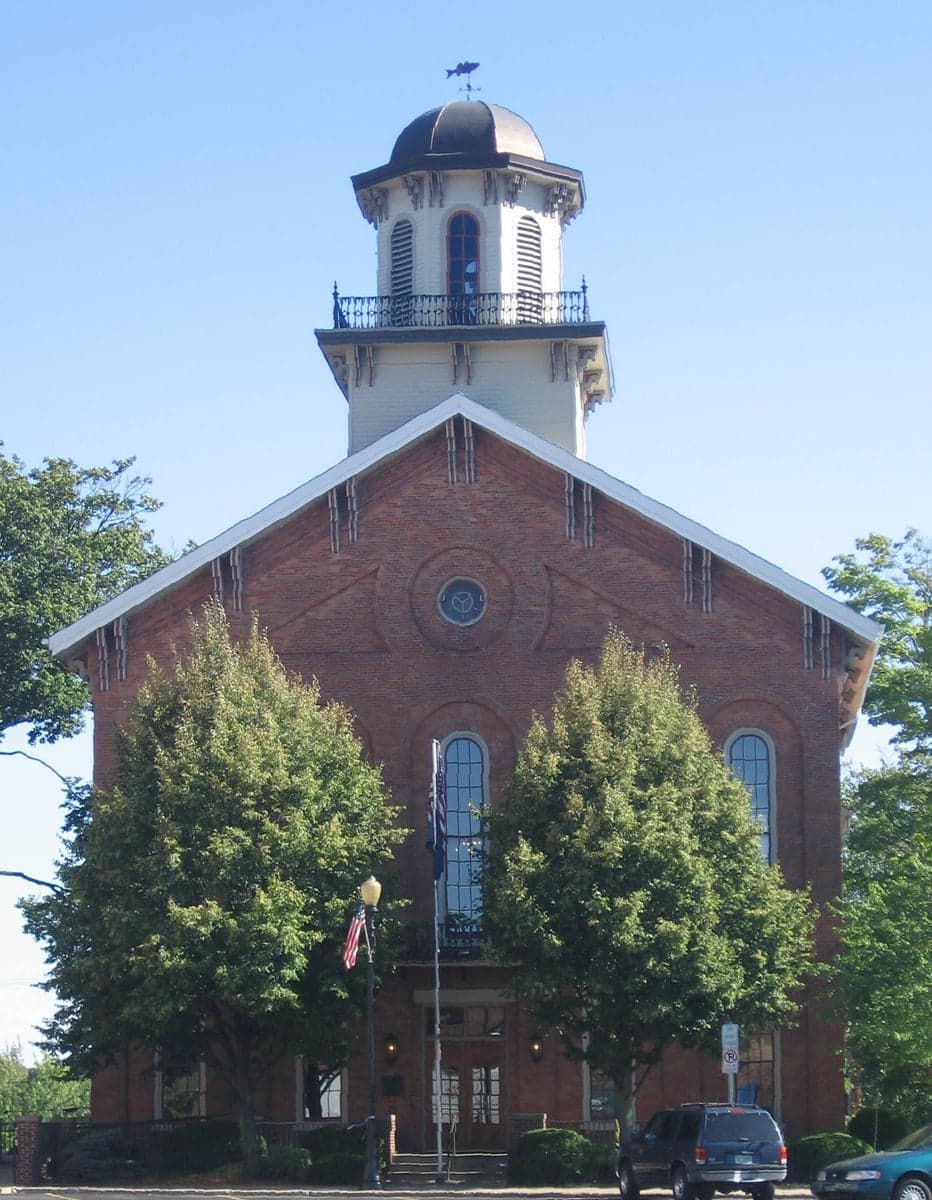
Photo: Wikipedia
Political ClimatePolitical Climate in Steuben County
Showing district-level results — no local-only data available.
Local Political AnalysisPolitical Analysis of Steuben County
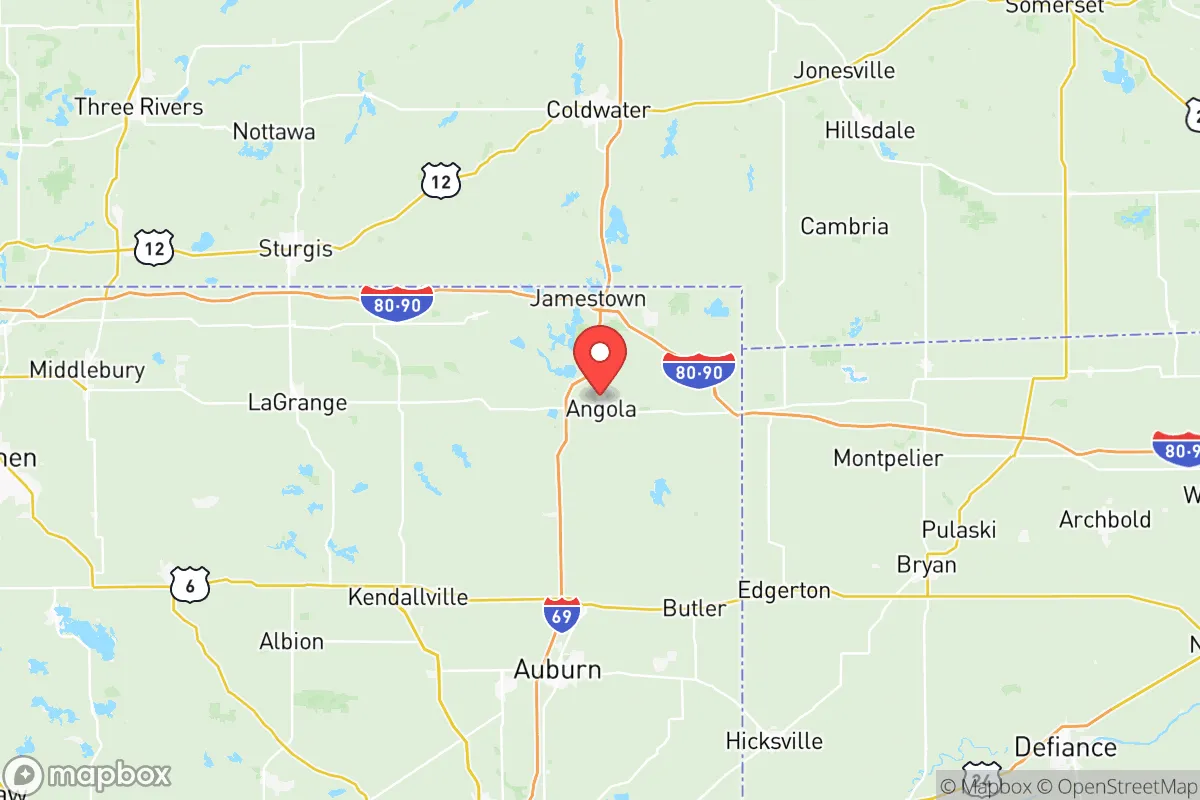
Steuben County, Indiana, is a reliably Republican stronghold with a Cook PVI of R+16, making it significantly more conservative than the state of Indiana as a whole, which sits at R+9. This isn't a new development; the county has voted for the GOP presidential candidate in every election since 2000, often by margins exceeding 30 points. However, the political landscape isn't a monolith—there are subtle but meaningful variations between the county's lake communities, its small towns, and its rural farmlands that shape the local political reality.
How it compares
The R+16 rating places Steuben County firmly in the "solid Republican" category, a full seven points to the right of Indiana's statewide lean. This gap is driven by the county's deeply rural and agricultural character, which contrasts with the more moderate, suburban-leaning areas that pull the state's average toward the center. Within the county, the most conservative precincts are in the northern and eastern townships, particularly around Fremont and Angola's outlying farm areas, where GOP candidates routinely win by 40-50 points. The town of Angola itself, the county seat and home to Trine University, is slightly more moderate—still red, but with a noticeable Democratic presence, especially in precincts near the campus. The lakeside communities, like those around Lake James and Crooked Lake, tend to be swing areas, with a mix of year-round residents and seasonal visitors from more liberal states like Michigan and Illinois. These precincts can flip in local races, particularly when school board or county council seats are on the line. In contrast, the state of Indiana's R+9 reflects a broader mix, including the reliably blue Lake County (Gary) and the swingy suburban counties around Indianapolis, which Steuben County lacks entirely.
What this means for residents
For conservative residents, the political climate is comfortable and affirming. Local offices—from the county commissioners to the sheriff and the school board—are overwhelmingly held by Republicans, and policy decisions tend to reflect conservative priorities like low taxes, limited regulation, and Second Amendment rights. A Republican primary is often the de facto general election in most races. For liberal residents, the reality is more of a challenge. While they are a clear minority, they are not invisible. The Democratic Party in Steuben County is small but active, with a local chapter that fields candidates for county offices and coordinates with the state party. In practice, liberal residents often find their influence most effective in nonpartisan or local issues—like lake preservation, school funding, or zoning—where they can build coalitions with moderate Republicans. The county's growing tourism and second-home market has also introduced more diverse political perspectives, particularly around environmental and land-use debates.
Culturally, Steuben County's politics are shaped by its identity as a "lakes and land" community. There's a strong libertarian streak here—residents value personal freedom and are skeptical of government overreach, whether from Washington or Indianapolis. This manifests in practical ways: the county has a relatively low property tax rate compared to neighboring counties in Michigan and Ohio, and there's a local tradition of "live and let live" that tempers some of the more hardline social conservatism found in other parts of Indiana. The biggest political flashpoints in recent years have been around lake access rights, short-term rental regulations (Airbnb/Vrbo), and the balance between economic development and environmental protection. These issues cut across party lines, creating unusual alliances between liberal environmentalists and conservative property-rights advocates. Looking ahead, the county's political trajectory is likely to remain steady—R+16 is a deep shade of red, and demographic trends (aging population, slow growth) don't suggest a dramatic shift. But the increasing influence of lake-area voters and remote workers could nudge the county a few points toward purple over the next decade, particularly in local races where personality and pragmatism matter more than party label.

State Political ClimatePolitical Climate in Indiana
State Political AnalysisPolitical Environment in the State
Indiana is a reliably Republican state with a Cook PVI of R+9, meaning it typically votes about nine points more Republican than the national average. Over the past 10-20 years, the state has shifted rightward, driven by the consolidation of rural and exurban voters and the continued Democratic decline in industrial towns. While it hasn't flipped like some neighboring states, the GOP now holds a supermajority in both legislative chambers and every statewide office, making it one of the most consistently conservative states in the Midwest.
Urban vs. rural divide
The political map of Indiana is a classic story of urban islands in a red sea. Indianapolis (Marion County) is the dominant blue stronghold, consistently voting Democratic by double digits in presidential elections. Lake County (Gary and the Chicago suburbs) is another Democratic anchor, though its influence is waning as population shifts south. Monroe County (Bloomington, home to Indiana University) and Tippecanoe County (West Lafayette, Purdue) are reliably blue, driven by academic populations. On the flip side, the rest of the state is deeply red. Hamilton County (Carmel, Fishers, Noblesville), just north of Indianapolis, is one of the most Republican suburban counties in the nation, routinely voting 60-65% GOP. Allen County (Fort Wayne) has trended redder, while Vanderburgh County (Evansville) is a bellwether that now leans Republican. The rural counties—like Kosciusko (Warsaw), Elkhart, and Dearborn—routinely vote 70-80% Republican. The divide is stark: if you live in a city of over 100,000, you're likely in a blue bubble; anywhere else, you're surrounded by red.
Policy environment
Indiana's policy environment is consistently conservative, with a low-tax, low-regulation posture. The state has a flat income tax rate of 3.05% (scheduled to drop to 2.9% by 2027), and property taxes are capped at 1% of assessed value for owner-occupied homes. There is no inheritance or estate tax. Sales tax is 7%, with no local add-ons. Education policy is dominated by school choice: Indiana has one of the nation's most expansive voucher programs (the Choice Scholarship Program), and charter schools are widespread. The state is a "right-to-work" state (passed in 2012), meaning union dues are voluntary. Healthcare policy is limited; Indiana did not expand Medicaid under the ACA until 2015 (via a conservative waiver program called HIP 2.0), and the state has some of the highest uninsured rates in the Midwest. Election laws are moderately restrictive: voter ID is required, early voting is available but not as expansive as in some states, and same-day registration is not allowed. Absentee voting requires an excuse, though no-excuse mail voting was temporarily expanded during COVID and then rolled back.
Recent policy direction
Over the past five years, Indiana has moved decisively to the right on a broad set of issues. On gun rights, the state became a permitless carry state in 2022 (HB 1296), meaning any law-abiding adult can carry a handgun without a license. On parental and education rights, the state passed a "Parents' Bill of Rights" (HB 1608 in 2022) requiring schools to notify parents of curriculum changes and allowing them to opt children out of certain materials. A 2023 law (HEA 1447) restricts instruction on human sexuality in K-3 classrooms. On abortion and bodily autonomy, Indiana was one of the first states to pass a near-total abortion ban after Dobbs (SB 1 in 2022), with exceptions only for rape, incest, and life of the mother. On property rights, the state has strong eminent domain protections and no statewide rent control. On taxation, the trend is toward reduction: the flat income tax is being phased down, and the state eliminated the business personal property tax for many small businesses. On voting and ballot access, the state tightened rules around absentee voting and purged inactive voters from rolls more aggressively. On privacy and surveillance, Indiana has no comprehensive data privacy law, though a 2023 law (HB 1047) restricts the use of facial recognition by law enforcement without a warrant. The overall direction is toward maximizing individual liberty in economic and self-defense matters, while restricting it on social and medical issues.
Civil unrest & political movements
Indiana has a relatively low profile for civil unrest compared to coastal states, but there have been notable flashpoints. The 2020 George Floyd protests in Indianapolis led to several nights of property damage and a controversial police response, but the state avoided the prolonged unrest seen in Portland or Seattle. On the right, the Indiana Second Amendment Alliance is a powerful grassroots force, successfully pushing permitless carry and fighting any new gun restrictions. The Indiana Family Institute (affiliated with Focus on the Family) is influential in education and social policy. Immigration politics are less heated than in border states, but there have been local controversies: Logansport and Goshen have seen tensions over growing immigrant populations, and the state passed a law (SB 590 in 2011) requiring local law enforcement to cooperate with federal immigration authorities. There is no sanctuary city movement of note; Indianapolis has a "welcoming city" ordinance but it's largely symbolic. Election integrity controversies are muted compared to states like Arizona or Georgia; Indiana's 2020 election was relatively smooth, though the GOP legislature passed tighter voting laws in response. A new resident would notice that political activism is more organized and visible in the suburbs (especially Hamilton County) than in rural areas, where politics is more of a background assumption.
Projection
Over the next 5-10 years, Indiana is likely to remain solidly Republican, but the margins may tighten slightly in suburban areas. The biggest demographic shift is the continued growth of the Indianapolis suburbs—Hamilton County is projected to add another 100,000 residents by 2030, many of them younger families and professionals who may be less reliably Republican than the current base. The rural population is aging and shrinking, which could slowly erode the GOP's raw vote advantage. In-migration is modest compared to Sun Belt states, but Indiana is attracting some remote workers and retirees from Illinois and California, drawn by lower taxes and housing costs. These newcomers tend to be more moderate than the native population. The state's political trajectory will likely be one of slow moderation on economic issues (more spending on infrastructure and education) while remaining conservative on social and cultural issues. The flat tax will continue to drop, but the state may face budget pressures as federal COVID funds dry up. For a new resident, the practical takeaway is that Indiana will remain a comfortable place for conservatives, while liberals will find their political influence concentrated in a few urban pockets that are unlikely to expand significantly.
For someone moving to Indiana, the bottom line is straightforward: if you're conservative, you'll find a state that largely aligns with your values on taxes, guns, education, and social policy. If you're liberal, you'll need to be comfortable living in a state where your vote carries less weight at the state level, but you can still find like-minded communities in Indianapolis, Bloomington, or West Lafayette. The political climate is stable, predictable, and unlikely to surprise you—which is exactly what many relocators are looking for.
* Values derived from national, state, county, city and local statistics and may differ in a specific area. Last updated: 2026-11-05T16:17:52.000Z
Narrative content on this page is AI-generated and may contain mistakes. Verify any details that matter before acting on them.
ReloMaps may earn a commission from affiliate links at no extra cost to you.

