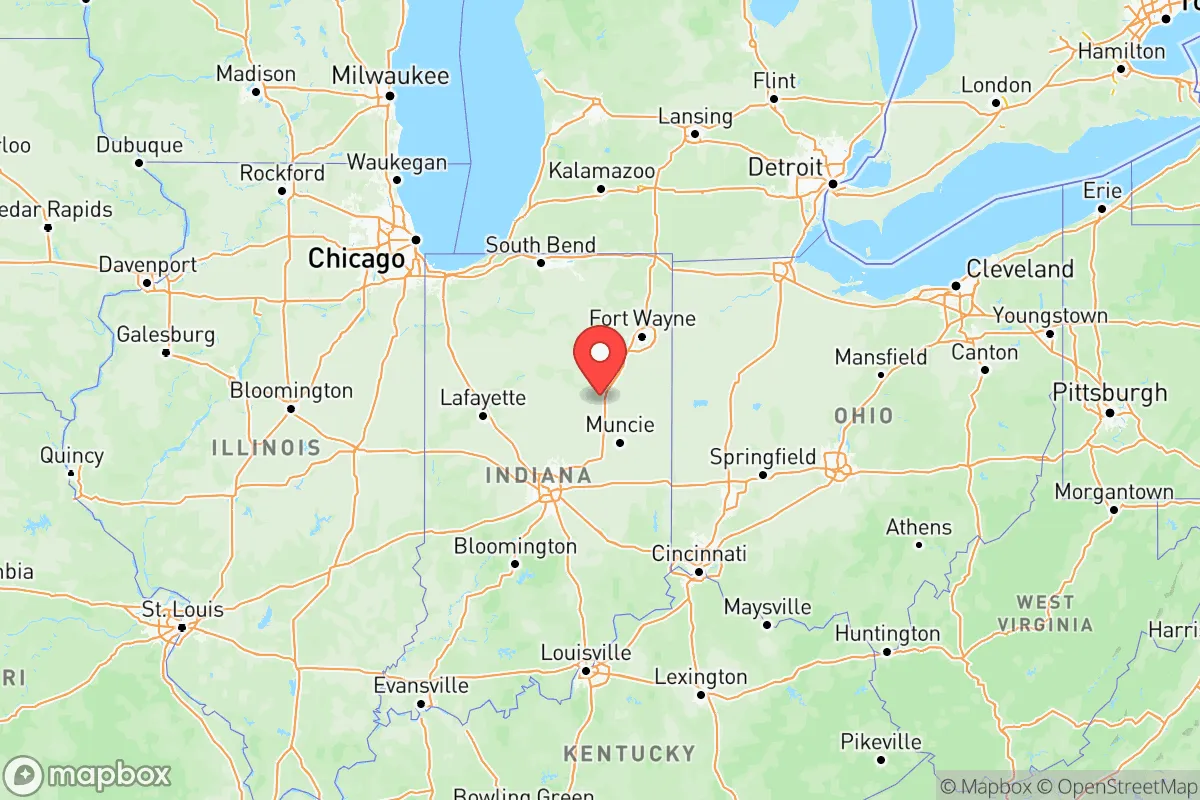
Photo: Wikipedia
Personal Sovereignty in Indiana
Viable for self-reliance. Generally workable, though some barriers may limit total independence.
What does Personal Sovereignty tell us?
Personal Sovereignty measures your capacity for self-reliance and independence with minimal government friction. Higher scores mean fewer barriers between you and the way you want to live... but it assumes you have the space you need and good neighbors.
What does this tell us?
Personal Sovereignty measures your capacity for self-reliance and independence with minimal government friction. Higher scores mean fewer barriers between you and the way you want to live... but it assumes you have the space you need and good neighbors.
State Policy
Energy independence: Importer (35% of energy produced in-state)
Personal Liberty
Homesteading

Personal Liberty Analysis
Indiana offers one of the strongest environments for personal sovereignty in the Midwest, blending a low-tax, limited-government ethos with deep-rooted traditions of self-reliance and firearm freedom. For those concerned with federal overreach and the erosion of individual rights, the Hoosier State provides a legal and cultural framework where you can live largely unbothered—provided you choose your location wisely. From the rural expanses of Knox County to the more restrictive urban corridors of Marion County (Indianapolis), the degree of autonomy you experience will vary significantly based on local ordinances and community norms.
Tax burden and regulatory posture: How Indiana compares to surrounding states
Indiana’s state-level tax structure is a clear win for sovereignty-minded individuals. The state income tax is a flat 3.05% as of 2025, with a path toward further reduction, and property taxes are among the lowest in the nation—averaging roughly 0.81% of assessed value. There is no inheritance tax and no estate tax, meaning your property stays with your family, not the state. Regulatory burden is light compared to coastal states: occupational licensing is minimal for trades, and there are no state-level rent control laws or burdensome energy mandates. However, local zoning can be a trap. In Hamilton County suburbs like Carmel or Fishers, homeowners associations and municipal codes restrict everything from vehicle storage to livestock. For true regulatory freedom, look to unincorporated areas in Pike County or Switzerland County, where county commissioners rarely enforce nuisance ordinances unless a complaint is filed.
Self-defense and gun law specifics: Constitutional carry and castle doctrine
Indiana is a constitutional carry state as of July 2022—no permit is required to carry a handgun openly or concealed for anyone 18 or older who can legally possess a firearm. This places it in the top tier of states for gun rights, alongside Texas and Arizona. The castle doctrine is codified in Indiana Code 35-41-3-2, with no duty to retreat in any place you have a right to be. Stand-your-ground protections are strong, and deadly force is presumed reasonable if an intruder has unlawfully entered your dwelling. Magazine capacity is unrestricted, and there is no state-level firearm registry. However, local preemption is not absolute: Gary and East Chicago have attempted local ordinances restricting firearms in public buildings, though these are often challenged. For the most gun-friendly environment, Rush County and Parke County have sheriffs who publicly refuse to enforce any future federal gun bans, and the culture is overwhelmingly pro-Second Amendment.
Self-reliance and homesteading viability: Lot sizes, zoning, and off-grid feasibility
Indiana’s agricultural heritage makes it one of the most viable states for homesteading and off-grid living east of the Mississippi. Zoning in unincorporated areas is typically permissive: you can keep chickens, goats, and even a few head of cattle on as little as 1-3 acres in most counties. In Brown County, known for its hills and forests, many properties operate entirely off-grid with solar panels and well water, and the county has no building code enforcement outside of septic systems. Martin County is similarly lax, with minimal permitting for sheds, barns, or tiny homes. Rainwater collection is legal statewide, and composting toilets are permitted with a simple variance in most rural counties. The catch is that suburban towns like Zionsville or Noblesville enforce strict minimum lot sizes (often 1-3 acres) and prohibit livestock entirely. For maximum self-reliance, target counties with populations under 30,000—Fountain County and Warren County have no zoning at all outside of incorporated towns, meaning you can build a cabin, dig a well, and plant a garden without a single permit.
Personal liberties: Parental rights, medical autonomy, speech, and property
Indiana has become a battleground for parental rights in education. The state’s 2023 law (HEA 1608) requires schools to notify parents of any curriculum involving human sexuality and gives parents the right to opt their children out. School boards in Johnson County and Hendricks County have been particularly responsive to parental concerns, with conservative majorities that resist federal overreach. Medical autonomy is mixed: Indiana banned gender-affirming care for minors in 2023, which aligns with many conservative values, but vaccine mandates remain legal for private employers. Property rights are strongly protected under the Indiana Constitution, with a "takings" clause that has been interpreted broadly by state courts. The state also has a robust right-to-farm law that protects agricultural operations from nuisance lawsuits—critical if you plan to raise animals or run a small farm. Free speech is well-protected, with no state-level hate speech laws or social media censorship mandates. The only notable restriction is that Indiana is a "red flag" state with a weak version of an extreme risk protection order, but it requires a hearing and clear evidence, unlike more aggressive versions in blue states.
Overall, Indiana ranks in the top 10 states for personal sovereignty when measured by tax burden, gun rights, and regulatory freedom. It is not a libertarian paradise—local zoning in growing suburbs can be restrictive, and property taxes, while low, are not as low as in Alaska or New Hampshire. But for a conservative individual or family looking to escape the encroaching control of federal and state governments, Indiana offers a realistic balance: low taxes, strong self-defense laws, viable off-grid living in rural counties, and a legal system that generally respects parental and property rights. The key is to avoid the urbanized counties—Marion, Lake, and Allen—and instead target the rural strongholds where local sheriffs, county commissioners, and neighbors still believe the government should stay out of your life.

Top Cities for Personal Sovereignty in Indiana





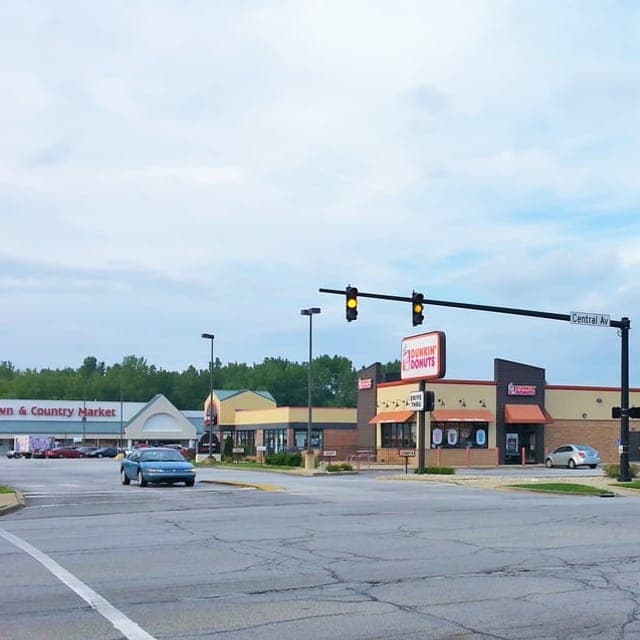




* Values derived from national, state, county, city and local statistics and may differ in a specific area. Last updated: 2026-04-14T06:23:11.000Z
Narrative content on this page is AI-generated and may contain mistakes. Verify any details that matter before acting on them.
ReloMaps may earn a commission from affiliate links at no extra cost to you.

