
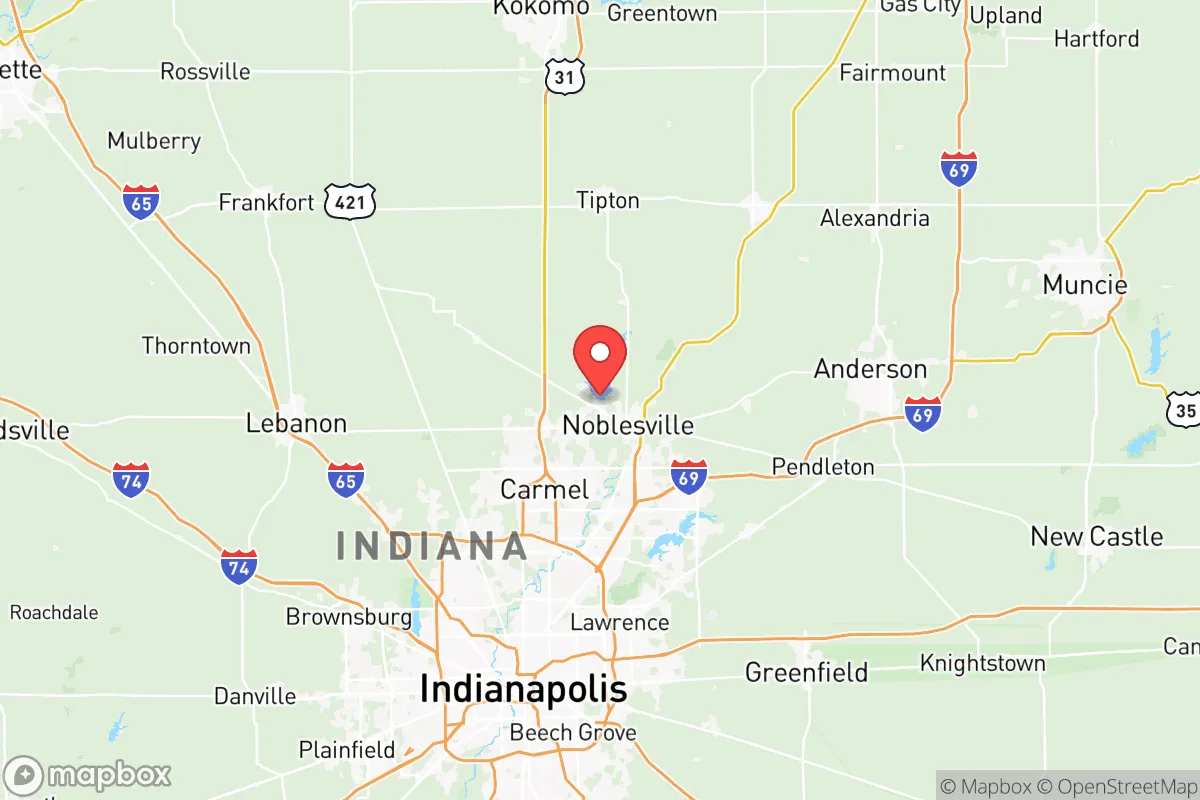
Photo: Wikipedia
Personal Sovereignty in Hamilton County
Viable for self-reliance. Generally workable, though some barriers may limit total independence.
What does Personal Sovereignty tell us?
Personal Sovereignty measures your capacity for self-reliance and independence with minimal government friction. Higher scores mean fewer barriers between you and the way you want to live... but it assumes you have the space you need and good neighbors.
What does this tell us?
Personal Sovereignty measures your capacity for self-reliance and independence with minimal government friction. Higher scores mean fewer barriers between you and the way you want to live... but it assumes you have the space you need and good neighbors.
State Policy
Energy independence: Importer (35% of energy produced in-state)
Personal Liberty
Homesteading

Personal Liberty Analysis
Hamilton County, Indiana, offers a notably high degree of personal sovereignty compared to many suburban rings around major U.S. cities, but it is not a libertarian free-for-all. The county’s political culture, anchored by deeply conservative strongholds like Westfield and Zionsville, generally resists the kind of progressive regulatory overreach seen in neighboring Marion County (Indianapolis). However, the autonomy you experience here is heavily shaped by which municipality you choose to live in, as the county’s eight townships and seven cities each enforce their own zoning, code enforcement, and local ordinances. For a prepper or survivalist-minded individual, the key trade-off is this: you get strong Second Amendment protections and low taxes, but you must navigate a patchwork of suburban HOA-style restrictions and state-level preemptions that limit local government overreach in some areas while enabling it in others.
Tax burden and regulatory posture: How Hamilton County compares to surrounding areas
Indiana’s state-level tax structure is a clear win for personal sovereignty. The state’s flat income tax rate of 3.15% (as of 2025, with scheduled reductions) and a capped property tax system (the “Circuit Breaker”) mean your earnings and property are not subject to the kind of progressive confiscation found in Illinois or California. Within Hamilton County, the combined property tax rate averages around 1.1% of assessed value, but this varies significantly by township. Noblesville and Fishers have slightly higher rates due to their robust school systems and municipal services, while unincorporated areas of Adams Township or Washington Township can be lower. The regulatory posture is business-friendly at the county level—permitting for home-based businesses, workshops, and small-scale agriculture is straightforward in unincorporated zones. However, the cities themselves are not uniformly hands-off. Carmel, for example, has a reputation for aggressive code enforcement regarding lawn maintenance, fence heights, and even the color of your front door. If you want minimal municipal interference, you are better off in the county’s rural townships—specifically Jackson Township or White River Township—where zoning is less prescriptive and you are less likely to get a letter about an unkempt shed.
Self-defense and gun law specifics: What the state allows and local sheriffs enforce
Indiana is a constitutional carry state, meaning no permit is required to carry a handgun openly or concealed for anyone 18 or older who can legally possess a firearm. This is a bedrock of personal sovereignty here. The Hamilton County Sheriff’s Office, led by a Republican sheriff, is known for being pro-Second Amendment and generally does not engage in the kind of “red flag” enforcement seen in more progressive jurisdictions. However, there are local nuances. Carmel and Fishers have city ordinances that prohibit discharging a firearm within city limits, which effectively limits defensive firearm use to inside your home or on a range. In contrast, Westfield and Noblesville have more permissive discharge rules in their rural fringe areas, particularly in the northern parts of the county near Atlanta (a small unincorporated community). Stand-your-ground laws are fully in effect, and there is no duty to retreat in any place you have a legal right to be. For the prepper, the key takeaway is that while the state law is solid, your ability to train and practice on your own property is constrained by municipal boundaries. If you want to run tactical drills or zero a rifle on your own land, you need to be in the unincorporated areas of Jackson Township or Washington Township, not in a subdivision in Fishers.
Self-reliance and homesteading viability: Lot sizes, zoning, and off-grid feasibility
Hamilton County is rapidly suburbanizing, but pockets of genuine rural living remain. Minimum lot sizes in the county’s agricultural zones (A-1 and A-2) are typically 1 to 5 acres, but you can find parcels of 10 to 20 acres in the northern and eastern townships. Jackson Township (north of Westfield) and White River Township (east of Noblesville) still have working farms and undeveloped land where you can keep livestock, build a workshop, and install solar panels without a fight. Off-grid feasibility is mixed. Indiana law requires connection to the electrical grid for new construction in most subdivisions, but in unincorporated areas, you can go fully off-grid with solar and battery storage as long as you meet the state’s building code for structural safety. Water wells are permitted and common in rural areas—drilling a well in Jackson Township runs about $8,000–$12,000, and yields are generally good due to the aquifer underlying the county. Septic systems are required, and the county health department has strict percolation test standards, but these are not onerous for a prepared landowner. The biggest obstacle to homesteading is not the county but the cities’ extraterritorial jurisdiction. Carmel and Fishers have aggressive annexation plans that can bring rural parcels under city zoning rules. If you buy land in Clay Township near the Boone County line, you are safer from annexation than in areas directly adjacent to Fishers’ growth corridor.
Personal liberties: Parental rights, medical autonomy, speech, and property
Indiana has strong parental rights statutes, including a law that requires schools to notify parents of any changes in a student’s health or well-being (the “Parental Bill of Rights,” enacted in 2023). Hamilton County’s school districts—particularly Hamilton Southeastern (Fishers) and Westfield Washington Schools—have been at the center of school board battles over curriculum transparency and library content, with conservative majorities generally prevailing. Medical autonomy is more constrained. Indiana has a near-total abortion ban (with narrow exceptions), and the state does not have a right-to-try law for experimental treatments, though it does allow for medical marijuana only in limited CBD form. For the prepper, the bigger concern is vaccine mandates and public health orders. During the COVID-19 pandemic, Hamilton County’s health department was notably less aggressive than Marion County’s, and the county commissioners resisted mask mandates. Property rights are well-protected under Indiana’s “right to farm” law, which shields agricultural operations from nuisance lawsuits—useful if you plan to keep chickens or goats. However, HOAs in subdivisions like The Village of WestClay (Carmel) or Geist (Fishers) can impose covenants that restrict everything from vehicle storage to garden size. If you value unfettered property use, avoid any property with an HOA and stick to unincorporated land in Adams Township or Washington Township.
Overall, Hamilton County offers a strong foundation for personal sovereignty relative to the rest of the Midwest, but it is not a sanctuary for those seeking total autonomy. The state-level protections—constitutional carry, low taxes, parental rights, and right-to-farm—are genuine advantages over blue states like Illinois or Michigan. The local variable is municipal creep. If you choose Westfield or Noblesville’s rural edges, you can achieve a high degree of self-reliance with minimal government interference. If you land in Carmel or Fishers, you will trade some liberty for convenience and services. For the survivalist or prepper, the smart play is to buy land in the northern or eastern townships—Jackson, White River, or Adams—where you can build a compound, store supplies, and train without a neighbor or code enforcement officer peering over your fence. The county is not a redoubt, but it is a defensible position in an increasingly overregulated world.

* Values derived from national, state, county, city and local statistics and may differ in a specific area. Last updated: 2026-06-05T07:53:33.000Z
Narrative content on this page is AI-generated and may contain mistakes. Verify any details that matter before acting on them.
ReloMaps may earn a commission from affiliate links at no extra cost to you.

