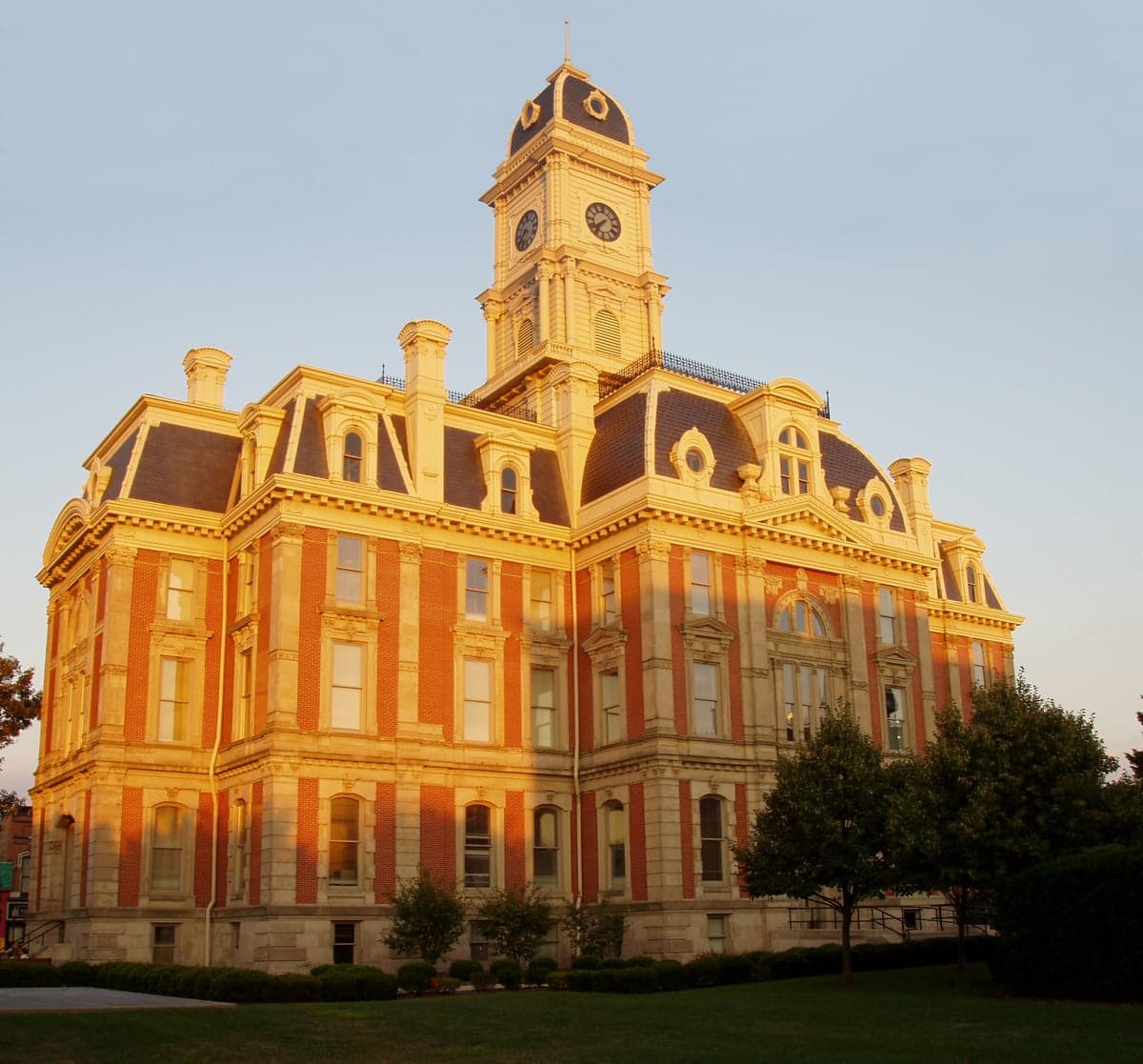
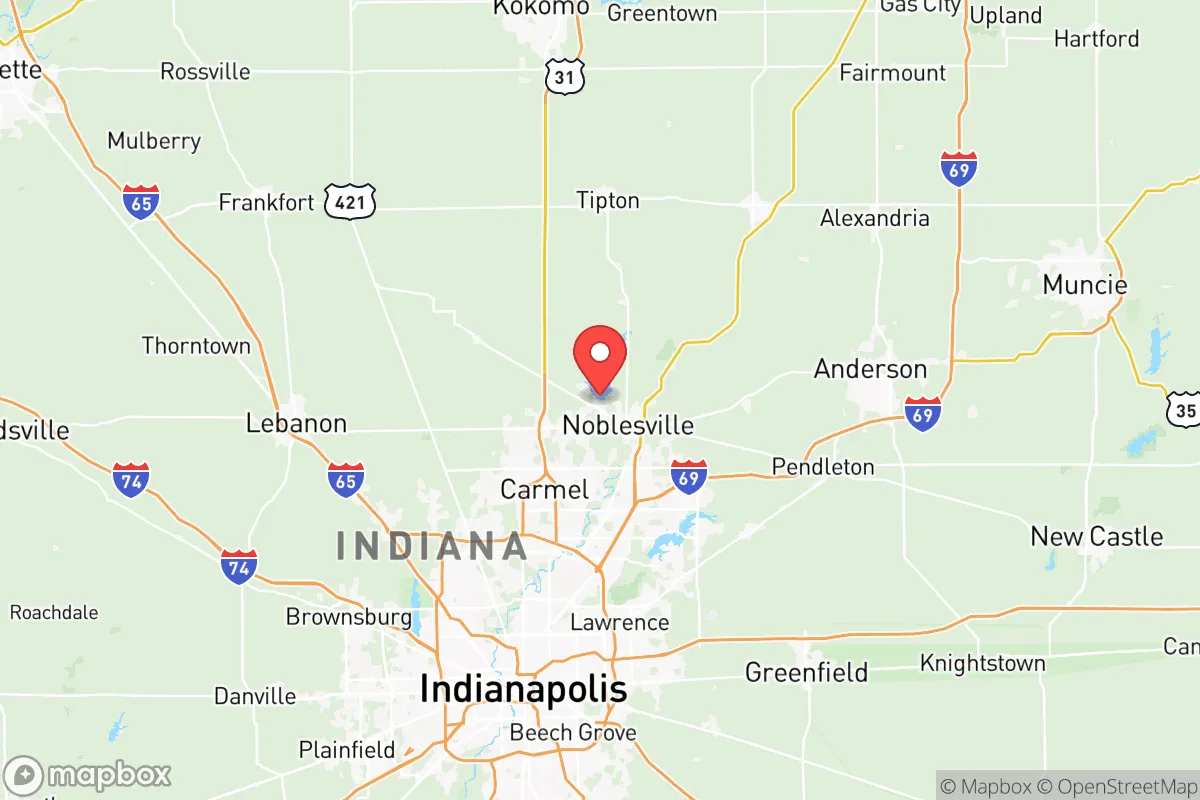
Photo: Wikipedia
Political ClimatePolitical Climate in Hamilton County
Showing district-level results — no local-only data available.
Local Political AnalysisPolitical Analysis of Hamilton County
Hamilton County has long been a Republican stronghold in Indiana, but the political landscape here is more nuanced than the county's R+8 Cook PVI might suggest. While the county as a whole leans reliably red, the real story is the growing divide between its established, conservative small towns and the rapidly expanding, more moderate suburbs of Indianapolis. If you've lived here as long as I have, you've watched places like Carmel and Fishers transform from quiet farm communities into bustling hubs, and with that growth has come a noticeable shift in political energy. The county still votes Republican, but the flavor of that conservatism is changing, and not everyone is happy about it.
How it compares
On paper, Hamilton County's R+8 is almost a mirror image of Indiana's statewide R+9, but the comparison is misleading. Indiana's R+9 is a broad, rural and small-town conservatism that's been stable for decades. Hamilton County's R+8, however, is being pulled in two directions. The northern and eastern parts of the county—towns like Noblesville, Westfield, and Cicero—still vote heavily Republican, often by margins of 60-70% in local races. These are the areas where you'll find the traditional, limited-government, pro-Second Amendment voters who are deeply skeptical of any government overreach. But then you have Carmel and Fishers, where the margins are tighter, sometimes dipping into the low 50s for Republican candidates. In the 2020 presidential election, for example, Carmel's precincts around the Arts & Design District actually went for Biden, a sign that the county's conservative foundation is being tested by an influx of out-of-state transplants and younger professionals who bring more progressive ideas about taxes, zoning, and personal freedoms.
What this means for residents
For those of us who value limited government and individual liberty, the trend is concerning. The shift in Carmel and Fishers isn't just about voting patterns—it's about policy. You're seeing more local ordinances that feel like government overreach, like stricter noise regulations, more aggressive code enforcement, and even debates about "inclusionary zoning" that could force property owners to accept higher-density development against their will. In Westfield and Noblesville, the old-school conservatism still holds, but the pressure is mounting. The county's school boards, once reliably conservative, are now battlegrounds over curriculum and parental rights. The long-term trajectory is clear: if the growth in the southern part of the county continues to attract a more progressive demographic, the county's political identity could shift from a conservative stronghold to a purple battleground within a decade.
For now, the cultural and policy distinctions within Hamilton County are stark. In the northern towns, you'll find a strong sense of local control, low taxes, and a general distrust of state or federal mandates. In Carmel and Fishers, you're more likely to encounter bike lanes, roundabouts, and a city council that's open to "smart growth" initiatives that often come with more regulations. If you're looking for a place where your personal freedoms—whether it's how you use your property, what you teach your kids, or how you carry a firearm—are respected without a lot of bureaucratic interference, the northern half of the county is still your best bet. But keep an eye on the voting maps. The political winds are shifting, and the fight for Hamilton County's soul is just getting started.

State Political ClimatePolitical Climate in Indiana
State Political AnalysisPolitical Environment in the State
Indiana has been a reliably Republican state for decades, carrying a Cook PVI of R+9 that reflects a deep-rooted conservative lean, but the coalition holding it together is more complex than a simple red-state label. Over the last 10-20 years, the state has shifted rightward in its rural and suburban areas, while its urban cores have become increasingly Democratic strongholds. The overall trajectory is one of steady, if sometimes contested, conservative dominance, driven by a strong manufacturing and agricultural base, a growing population of conservative-leaning transplants from the Midwest and beyond, and a state government that has consistently pushed for lower taxes, expanded gun rights, and parental control in education.
Urban vs. rural divide
The political map of Indiana is a textbook study in the urban-rural split. The Indianapolis metro area, anchored by Marion County, is the state’s Democratic engine, with the city itself voting reliably blue in statewide races. However, the surrounding suburban counties—Hamilton, Hendricks, Johnson, and Boone—have become some of the most reliably Republican suburbs in the nation. Hamilton County, home to Carmel and Fishers, voted for Donald Trump by over 20 points in 2020, a margin that has only widened since. Meanwhile, the state’s other major cities—Fort Wayne (Allen County), Evansville (Vanderburgh County), and South Bend (St. Joseph County)—are more competitive but still lean Republican overall, with their suburbs and exurbs providing the decisive margins. The real story is in the rural counties: over 80 of Indiana’s 92 counties voted for Trump in 2020, with many in the southern and central parts of the state delivering margins of 70% or more. Places like Jasper, Dubois, and Gibson counties in the southwest are deeply conservative, while the northwestern corner, around Lake County (Gary), is the state’s only reliably Democratic region outside of Indianapolis. The divide is stark: drive 20 minutes outside any city center, and you’re in deep-red territory where conservative values are the norm.
Policy environment
Indiana’s policy environment is a model of conservative governance, with a focus on low taxes, limited regulation, and individual liberty. The state has a flat income tax rate of 3.15%, which is scheduled to drop to 2.9% by 2027 under legislation passed in 2022. Property taxes are among the lowest in the nation, and there is no inheritance or estate tax. The regulatory climate is business-friendly, with a right-to-work law (enacted in 2012) and a strong tort reform environment that keeps lawsuit costs down. On education, Indiana has been a leader in school choice: the state’s voucher program, the Choice Scholarship Program, is one of the largest in the country, serving over 60,000 students, and charter schools are plentiful. The state also passed a law in 2022 requiring schools to post curriculum materials online and notify parents of any changes, a move that has been praised by conservatives for increasing transparency. Healthcare policy is more mixed: Indiana expanded Medicaid under the Healthy Indiana Plan (HIP) in 2015, but the state has resisted further expansion and has not implemented a state-based insurance exchange. Election laws are solidly conservative: voter ID is required, early voting is limited to 28 days, and the state has not expanded mail-in voting beyond what was already allowed. Indiana also has some of the strongest Second Amendment protections in the country, including a permitless carry law that took effect in 2022.
Trajectory & freedom
Indiana is on a clear trajectory of expanding personal freedom, particularly in areas that matter most to conservatives. The most significant recent legislation is the permitless carry law (House Bill 1296), signed by Governor Eric Holcomb in 2022, which allows any law-abiding adult to carry a handgun without a license. This was a major victory for gun rights advocates and reflects the state’s strong pro-Second Amendment culture. On parental rights, the state passed the “Parents’ Bill of Rights” (Senate Bill 380) in 2023, which requires schools to notify parents of any changes to a student’s health or well-being and prohibits instruction on sexual orientation or gender identity in grades K-3. This law has been a flashpoint, but it’s popular with conservative families. Medical autonomy has also seen gains: Indiana banned nearly all abortions in 2022 after the Dobbs decision, with exceptions only for rape, incest, and life of the mother. The law is one of the strictest in the Midwest. On taxation, the state has been steadily cutting rates, with the aforementioned income tax reduction and a phase-out of the business personal property tax for many small businesses. Property rights are strong, with no statewide zoning mandates and a general presumption in favor of landowners. The only area where freedom has contracted is in the realm of COVID-era mandates: Indiana did impose some restrictions in 2020-2021, but those have been fully repealed, and the state has passed laws prohibiting vaccine mandates for state employees and students. Overall, the trend is toward more liberty, not less.
Civil unrest & political movements
Indiana has seen its share of political activism, but it has largely been orderly and focused on policy rather than widespread unrest. The most visible flashpoints have been around abortion and education. After the 2022 abortion ban, protests erupted at the Statehouse in Indianapolis, with thousands of demonstrators on both sides, but they were peaceful and largely confined to the capital. The “Parents’ Bill of Rights” debate also drew large crowds to committee hearings, with conservative parents groups like Moms for Liberty playing a prominent role. On the left, the Indiana chapter of the ACLU has been active in challenging the abortion ban and school transparency laws, but these efforts have been largely unsuccessful in court. Immigration politics are less heated than in border states, but there is a strong undercurrent of concern about illegal immigration, particularly in agricultural areas. Indiana has no sanctuary cities, and the state passed a law in 2011 requiring local law enforcement to cooperate with federal immigration authorities. Election integrity has been a minor issue: the 2020 election was conducted smoothly, with no major controversies, but the state did pass a law in 2021 tightening voter ID requirements and banning ballot harvesting. The most visible political movement in recent years has been the rise of the “Indiana Freedom Coalition,” a grassroots group that has pushed for school choice, gun rights, and limited government at the local level. There is no serious secession or nullification rhetoric in Indiana; the state is firmly within the mainstream of conservative governance.
Projection
Over the next 5-10 years, Indiana is likely to become even more conservative, driven by demographic shifts and in-migration patterns. The state is seeing a steady influx of residents from Illinois, particularly from the Chicago suburbs, who are fleeing high taxes and crime. These newcomers tend to be conservative-leaning and are settling in the Indianapolis suburbs and along the I-65 corridor. The rural areas are aging but remain deeply Republican, while the urban cores are becoming more Democratic but are not growing fast enough to offset the suburban and exurban gains. The state’s Republican supermajority in the legislature is likely to continue, and further policy moves are expected: a possible elimination of the state income tax, expansion of school choice to include education savings accounts, and further restrictions on abortion. The biggest wildcard is the 2024 gubernatorial race, where the Republican primary will determine the direction of the state for the next four years. The current governor, Eric Holcomb, is term-limited, and the field includes several candidates who are more conservative than he is, particularly on social issues. Expect the state to continue its trajectory of low taxes, strong gun rights, and parental control in education, with no major shifts toward progressive ideology.
For a new resident, the bottom line is this: Indiana offers a stable, predictable environment where conservative values are the norm and government overreach is minimal. You’ll find a state that respects your right to keep and bear arms, your right to direct your children’s education, and your right to keep more of what you earn. The politics are not flashy, but they are effective. If you’re looking for a place where the government stays out of your life and your wallet, Indiana is a solid bet. Just be prepared for the urban-rural divide: if you move to Indianapolis, you’ll be in a blue bubble, but the rest of the state is a sea of red. Choose your county wisely, and you’ll find a community that shares your values.
* Values derived from national, state, county, city and local statistics and may differ in a specific area. Last updated: 2026-06-05T07:53:33.000Z
Narrative content on this page is AI-generated and may contain mistakes. Verify any details that matter before acting on them.
ReloMaps may earn a commission from affiliate links at no extra cost to you.

