
Photo: Wikipedia
Personal Sovereignty in Allen County
Viable for self-reliance. Generally workable, though some barriers may limit total independence.
What does Personal Sovereignty tell us?
Personal Sovereignty measures your capacity for self-reliance and independence with minimal government friction. Higher scores mean fewer barriers between you and the way you want to live... but it assumes you have the space you need and good neighbors.
What does this tell us?
Personal Sovereignty measures your capacity for self-reliance and independence with minimal government friction. Higher scores mean fewer barriers between you and the way you want to live... but it assumes you have the space you need and good neighbors.
State Policy
Energy independence: Importer (35% of energy produced in-state)
Personal Liberty
Homesteading

Personal Liberty Analysis
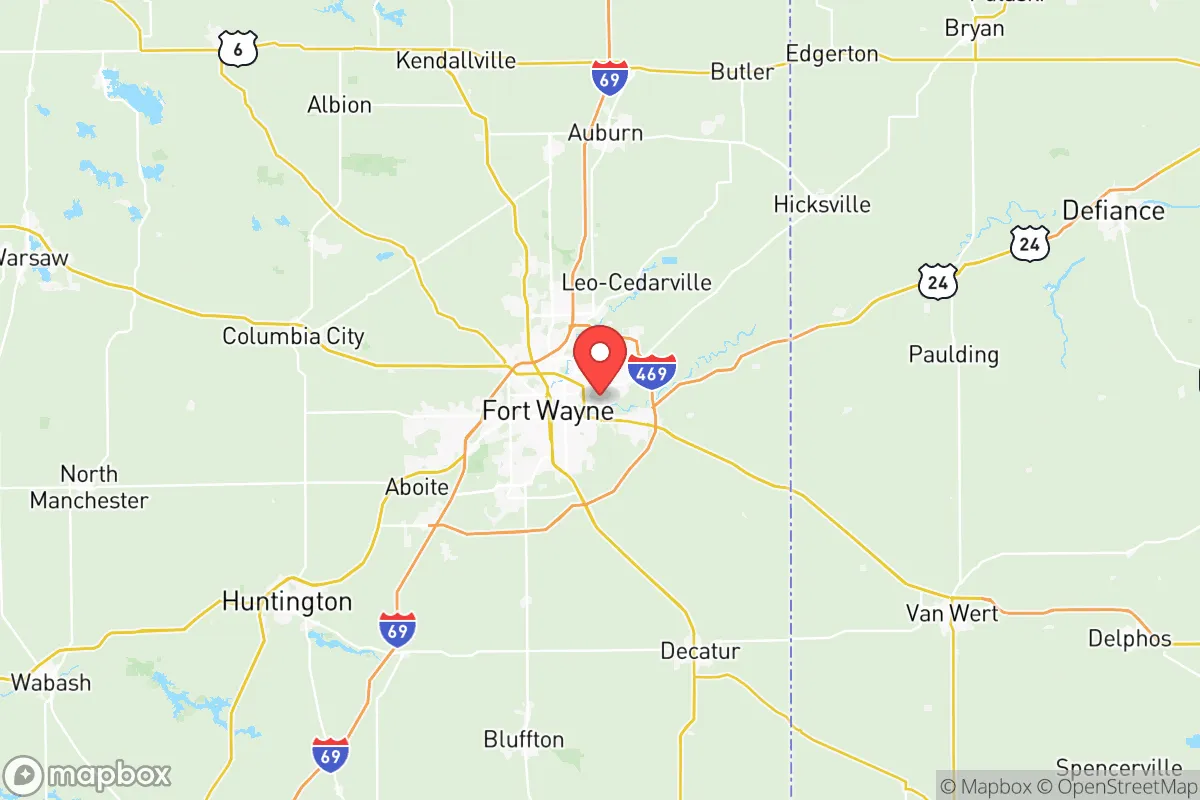
Allen County, Indiana, offers a notably high degree of personal sovereignty compared to many Midwestern urban centers, particularly in the realms of taxation, self-defense, and property rights. The county seat, Fort Wayne, anchors a region where state-level preemption laws limit local government overreach, creating a more predictable and less restrictive environment for individuals and families. While not as libertarian as some rural Indiana counties, Allen County strikes a balance that appeals to those seeking autonomy without complete isolation, with distinct differences in regulatory posture between the city of Fort Wayne and its surrounding towns like New Haven, Huntertown, and Leo-Cedarville.
Tax burden and regulatory posture in Allen County
Indiana’s state-level tax structure is a key draw for sovereignty-minded residents. The state imposes a flat income tax rate of 3.05% as of 2026, with no local income tax surcharge in Allen County, keeping the effective rate low. Property taxes are capped at 1% of assessed value for owner-occupied homes, 2% for rental properties, and 3% for commercial real estate, a constitutional limit that provides long-term predictability. In Fort Wayne, the combined property tax rate averages roughly 1.2% for residential properties, while in unincorporated areas of the county, rates can dip below 1% due to the absence of city services. Sales tax is a flat 7% statewide, with no local add-ons. Regulatory posture is generally light-touch: Allen County does not impose county-level business licensing beyond state requirements, and zoning in unincorporated areas is minimal compared to the city of Fort Wayne. However, the city itself has a more active planning department, with stricter building codes and land-use regulations, particularly in older neighborhoods like the Near West Side or the Lakeside Park district. For those seeking the least regulatory friction, towns like Huntertown and Grabill offer a more rural, less bureaucratic environment, with fewer permit requirements for accessory structures or home-based businesses.
Self-defense and gun law specifics in Allen County
Indiana is a constitutional carry state, meaning no permit is required to carry a handgun openly or concealed for anyone 18 or older who is legally allowed to possess a firearm. Allen County fully aligns with this framework, and local law enforcement in Fort Wayne and the surrounding communities generally respects the law without imposing additional restrictions. The county does not have any local ordinances that exceed state law on firearms, such as bans on carry in parks or public buildings beyond what state statute allows. Stand-your-ground laws are in effect, with no duty to retreat in any place where a person is legally present. The Allen County Sheriff’s Department issues lifetime handgun permits for those who choose to obtain one for reciprocity purposes, with a processing time of roughly 60-90 days. Gun ranges and firearms retailers are plentiful, with notable shops like Midwest Gun & Range in Fort Wayne and ZX Guns in New Haven. The culture is strongly pro-self-defense, and open carry is common in rural parts of the county, such as around Woodburn and Hoagland, though less so in downtown Fort Wayne. For families, the legal environment provides clear protections for using force in defense of home and person, with no local pushback against these rights.
Self-reliance and homesteading viability in Allen County
Homesteading and off-grid living are feasible in Allen County, but viability varies sharply by location. In unincorporated areas, zoning is permissive: raising chickens, goats, or even a small number of cattle is generally allowed without a special permit, provided the lot size meets minimum acreage requirements. For example, in the rural townships of Milan, Springfield, and Washington, lot sizes of 1 to 5 acres are common, and residents can install rainwater collection systems, solar panels, and composting toilets without significant bureaucratic hurdles. However, off-grid living is not fully legal in the sense of disconnecting from the electrical grid—Indiana does not have a state law explicitly prohibiting it, but mortgage lenders and insurance companies often require grid connection. In Fort Wayne proper, city zoning restricts livestock to lots of at least 2 acres, and backyard chickens are limited to hens only, with a permit required. Towns like Huntertown and Leo-Cedarville are more homestead-friendly, with larger lot sizes (often 0.5 to 2 acres) and less restrictive covenants. For those seeking true self-reliance, the area around Grabill and Woodburn offers affordable land—prices range from $5,000 to $15,000 per acre—with minimal HOA restrictions. The county’s soil is fertile for gardening, and the growing season (roughly April to October) supports a wide range of crops. Water rights are tied to property ownership, and well drilling is permitted with a simple permit from the county health department.
Personal liberties in Allen County: parental rights, medical autonomy, speech, and property
Parental rights are strongly protected in Indiana, and Allen County reflects this. The state has a robust parental bill of rights law, giving parents explicit authority over their children’s education, healthcare, and religious upbringing. School boards in the county, including Fort Wayne Community Schools and the Northwest Allen County Schools district, have generally deferred to parental input on curriculum and medical decisions, though some friction exists over library materials and sex education in the city. Medical autonomy is more limited: Indiana has a strict abortion law (banning the procedure except in cases of rape, incest, or life endangerment), and vaccine mandates are not enforced at the county level. However, the state does require a prescription for many medications, and telemedicine for out-of-state providers is restricted. Free speech is robust, with no local ordinances limiting public expression beyond standard time, place, and manner restrictions. Property rights are a strong point: Indiana has a right-to-farm law that protects agricultural operations from nuisance lawsuits, and Allen County’s planning department is generally pro-development, with few impact fees or exactions. In Fort Wayne, historic preservation districts (like the West Central neighborhood) impose some restrictions on exterior modifications, but these are limited to designated areas. For most of the county, property owners can build fences, add structures, and use their land with minimal interference.
Overall, Allen County ranks as a high-sovereignty area within the Midwest, comparable to counties in Ohio or Michigan but with a lower tax burden and stronger gun rights. The main trade-off is between the convenience and services of Fort Wayne—which comes with slightly more regulation—and the greater autonomy of the surrounding towns and unincorporated areas. For a family or individual prioritizing personal freedom, the county offers a solid foundation, with the ability to choose a level of regulatory engagement that fits their lifestyle, from the urban core of Fort Wayne to the rural expanses of Woodburn and Hoagland.

* Values derived from national, state, county, city and local statistics and may differ in a specific area. Last updated: 2026-07-21T03:16:44.000Z
Narrative content on this page is AI-generated and may contain mistakes. Verify any details that matter before acting on them.
ReloMaps may earn a commission from affiliate links at no extra cost to you.

