Photo: Wikipedia
Political ClimatePolitical Climate in Valley County
Showing district-level results — no local-only data available.
Local Political AnalysisPolitical Analysis of Valley County
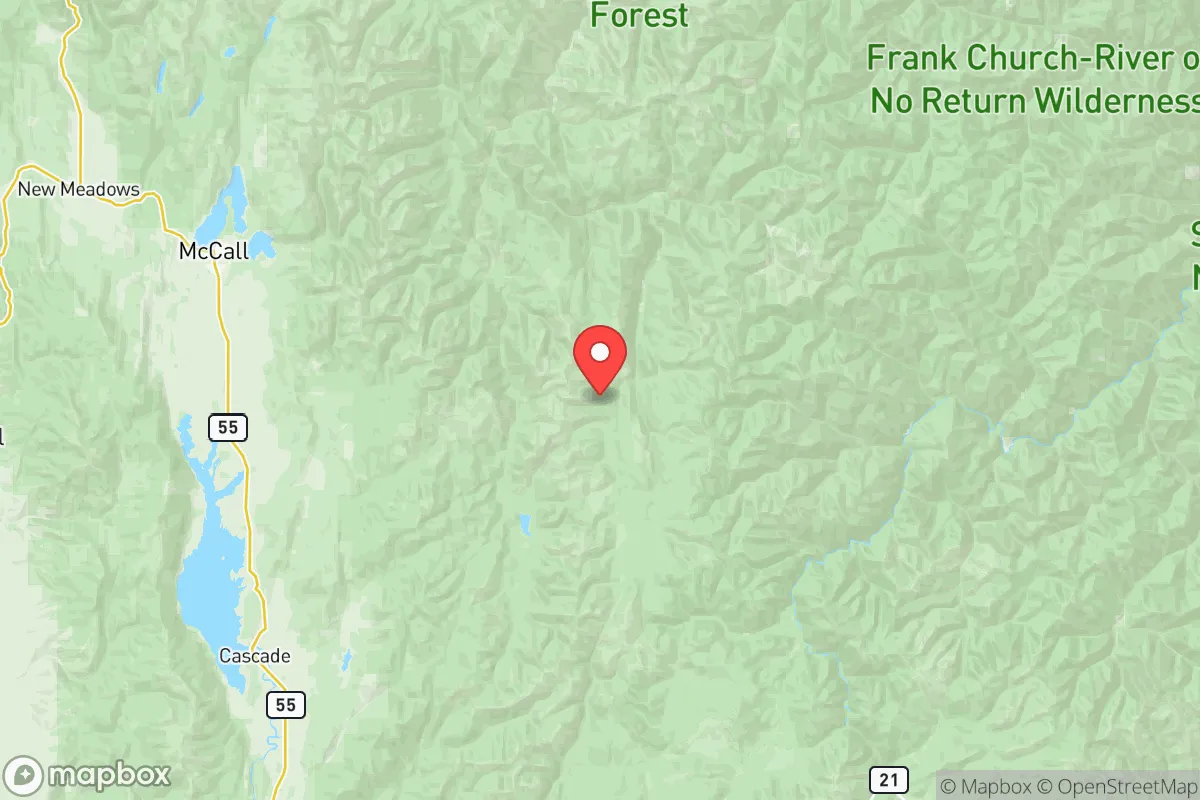
Valley County, Idaho, is a reliably Republican stronghold with a Cook PVI of R+22, making it significantly more conservative than the state of Idaho as a whole, which sits at R+18. This isn't a new development; the county has been a GOP bastion for decades, but the flavor of that conservatism has shifted. The old-school, libertarian-leaning ranching and timber families who once dominated the politics of places like Cascade and Donnelly are now sharing the stage with a newer, more culturally conservative wave of transplants, many drawn by the outdoor lifestyle and lower taxes. The result is a county that votes red by wide margins, but with interesting internal fractures, particularly around growth and land use.
How it compares
The R+22 rating puts Valley County in the top tier of Idaho's most conservative counties, well to the right of the state's average. To put it in perspective, while Idaho as a whole hasn't voted for a Democratic presidential candidate since 1964, Valley County's margins are even more lopsided. In the 2024 election, the county gave Donald Trump over 70% of the vote, a share that exceeded his statewide performance. However, the comparison isn't uniform across the county. The town of McCall, the county's largest and most affluent hub, is the clear exception. While still Republican-leaning overall, McCall has a visible and active Democratic minority, and its precincts often vote 10-15 points more moderately than the rest of the county. In contrast, the smaller, more rural communities like Cascade, Donnelly, and Yellow Pine are deeply red, with Republican candidates routinely winning by 80% or more. The swing precincts, if you can call them that, are the newer subdivisions around McCall Lake and the Payette River corridor, where second-home owners and remote workers sometimes split tickets on local bond measures and school levies.
What this means for residents
For conservative residents, Valley County feels like a natural fit. Local government, from the county commission to the sheriff's office, is reliably Republican, and the political culture aligns with their views on gun rights, limited regulation, and low taxes. There's a strong sense of community built around shared values, especially in the smaller towns. For liberal or moderate residents, the reality is more nuanced. You won't find many overtly progressive elected officials, but you will find a live-and-let-live attitude in many social circles, particularly in McCall. The key is that political affiliation rarely dictates social standing; your neighbor might have a Trump flag on their truck and still help you dig your car out of a snowbank. The real political friction isn't about national culture wars as much as it is about local growth management, water rights, and the tension between preserving the area's rural character and accommodating new development.
One of the most distinctive cultural and policy distinctions in Valley County is the deep-seated skepticism of federal land management. With over 70% of the county's land base under U.S. Forest Service or Bureau of Land Management control, local politics are often consumed by debates over timber sales, grazing permits, and motorized access on public lands. This isn't a partisan issue in the traditional sense; it's a local one that unites many ranchers, loggers, and outdoor recreationists against perceived federal overreach. The county has a long history of passing symbolic resolutions asserting local control, and the sheriff's office has publicly stated it will not enforce certain federal gun laws. For anyone moving here, understanding that this local-versus-federal dynamic is often more consequential than the national political headlines is key to understanding the area's true political climate.

State Political ClimatePolitical Climate in Idaho
State Political AnalysisPolitical Environment in the State
Idaho is one of the most reliably Republican states in the nation, with a Cook Partisan Voting Index of R+18, meaning it votes about 18 points more Republican than the national average. The state has been on a steady rightward trajectory for the past two decades, driven by explosive growth in the conservative Treasure Valley and a simultaneous exodus of moderate Democrats from rural areas. While the state was once known for a libertarian-leaning, "leave me alone" brand of Western conservatism, the last ten years have seen a shift toward a more culturally assertive, Trump-aligned Republican majority that dominates every lever of state government.
Urban vs. rural divide
The political map of Idaho is defined by a stark urban-rural split, but with a twist: the state's largest metro area, Boise, is actually the most politically moderate and diverse part of the state. Ada County (Boise) has trended purple in recent cycles, with Democrats winning the county in 2020 and 2024, though by narrow margins. The city of Boise itself is a blue island in a deep red sea, with its progressive city council and strong LGBTQ+ protections standing in contrast to the state legislature. Meanwhile, the fast-growing suburbs of Meridian, Eagle, and Star are among the most conservative in the nation, reliably delivering 70%+ margins for Republicans. The rural counties — from the Panhandle's Boundary County down to the southeastern farming communities like Rexburg and Idaho Falls — are deeply red, often voting 80-90% Republican. The only other notable blue pocket is Blaine County (Sun Valley), a wealthy resort area that votes reliably Democratic. The political reality is that while Boise and Sun Valley provide a counterweight, the rest of the state's vast geography ensures a supermajority Republican legislature.
Policy environment
Idaho's policy environment is aggressively conservative across nearly every dimension. The state has a flat income tax rate of 5.8% (recently cut from 6%), no corporate income tax on pass-through entities, and a constitutional cap on property tax growth. There is no state-level sales tax on groceries, and the overall tax burden is among the lowest in the nation. The regulatory posture is decidedly pro-business and pro-development, with minimal land-use planning outside of incorporated cities. Education policy is a flashpoint: the state has one of the nation's most expansive school choice programs, including a $5,000 per-student education savings account (ESA) program passed in 2023, while also maintaining some of the lowest per-pupil funding levels in the country. Healthcare policy is similarly conservative — Idaho has not expanded Medicaid under the Affordable Care Act (though voters passed a ballot initiative in 2018 that was later partially undermined by the legislature), and the state has some of the strictest abortion laws in the nation, banning the procedure at all stages of pregnancy with narrow exceptions. Election laws are restrictive by national standards: voter ID is required, same-day registration is not available, and absentee voting requires an excuse. The state also passed a law in 2023 banning ranked-choice voting and limiting ballot initiatives, a direct response to the 2018 Medicaid expansion vote.
Recent policy direction
The last three legislative sessions have pushed Idaho further right on nearly every front. In 2023, the state passed a near-total abortion ban (HB 242) with no exceptions for rape or incest, only for the life of the mother. Gun laws have been loosened: permitless carry was enacted in 2016, and in 2023 the legislature passed a bill prohibiting local law enforcement from enforcing federal gun laws (HB 124). Parental rights have been a major theme: the state passed a "Parents' Bill of Rights" (HB 93) in 2023, requiring schools to notify parents of any curriculum related to sexual orientation or gender identity, and a law banning transgender girls from female sports (HB 500). On the privacy front, Idaho passed one of the nation's strictest data privacy laws in 2023 (HB 220), but also expanded government surveillance powers for law enforcement. Property rights remain strong, with no state-level income tax on agricultural land and minimal eminent domain abuse. Voting access has been tightened: the state passed a law in 2023 requiring proof of citizenship to register (HB 124), and another limiting ballot drop boxes. The overall direction is toward a more culturally conservative, less regulatory state that prioritizes parental authority and gun rights while restricting abortion and transgender rights.
Civil unrest & political movements
Idaho has a visible and active far-right movement, particularly in the northern Panhandle and around Coeur d'Alene, where groups like the Idaho Freedom Foundation and various militia-adjacent organizations hold significant sway. The state was the site of the 2022 arrest of 31 Patriot Front members in Coeur d'Alene, and the region has a history of white nationalist activity dating back to the Aryan Nations compound in the 1980s. More mainstream conservative activism is centered around the Idaho Republican Party's internal battles, where hardline factions have successfully primaried moderate Republicans in recent cycles. On the left, protests have been smaller and more localized, focused on abortion rights (with large rallies at the Statehouse in 2022 and 2023) and LGBTQ+ rights, particularly in Boise. Immigration politics are relatively quiet compared to border states, though the legislature passed a law in 2024 banning "sanctuary city" policies. Election integrity controversies have been minimal compared to states like Arizona or Georgia, but the 2020 and 2022 cycles saw some local disputes over ballot counting procedures in Ada County. A new resident in Boise would notice occasional protests at the Statehouse, but in most of the state, political life is quiet and homogeneous.
Projection
Over the next five to ten years, Idaho is likely to become even more Republican, but with an important internal shift. The massive in-migration from California, Washington, and Oregon — which has added over 300,000 residents since 2020 — is not uniformly conservative. Many newcomers are moderate Republicans or even Democrats fleeing high taxes and crime in their home states, and they are settling disproportionately in Ada and Kootenai counties. This could create a growing suburban moderate bloc that pushes back against the most extreme cultural legislation, particularly on education and LGBTQ+ issues. However, the rural counties are not shrinking, and the legislature's supermajority is likely to persist due to gerrymandering and the concentration of Democratic voters in a few urban districts. The most likely scenario is a continued rightward drift on cultural issues (abortion, transgender rights, gun laws) combined with a slow moderation on fiscal and education policy as the growing suburban population demands better schools and infrastructure. A relocator moving in now should expect to find a state that is deeply conservative but with a visible, growing moderate-liberal minority centered in Boise and Sun Valley, and a political climate that is stable but increasingly polarized between the urban core and the rural expanse.
For a new resident, the bottom line is straightforward: if you are a conservative, you will find Idaho's political climate deeply welcoming, with low taxes, strong gun rights, and a government that shares your values. If you are a liberal, you will find a state where your vote has limited impact at the state level, but where you can find community in Boise or Sun Valley and enjoy the natural beauty and outdoor lifestyle that draws everyone here. The state's political trajectory is stable and predictable — Idaho will remain one of the most Republican states in the union for the foreseeable future, but the internal debate will increasingly be about what kind of conservatism defines it.
* Values derived from national, state, county, city and local statistics and may differ in a specific area. Last updated: 2026-06-21T22:38:26.000Z
Narrative content on this page is AI-generated and may contain mistakes. Verify any details that matter before acting on them.
ReloMaps may earn a commission from affiliate links at no extra cost to you.

