Photo: Wikipedia
Demographics of Valley County
Affluence Level in Valley County
An upper-middle-class area. Household wealth, education levels, and homeownership run ahead of national benchmarks.
People of Valley County
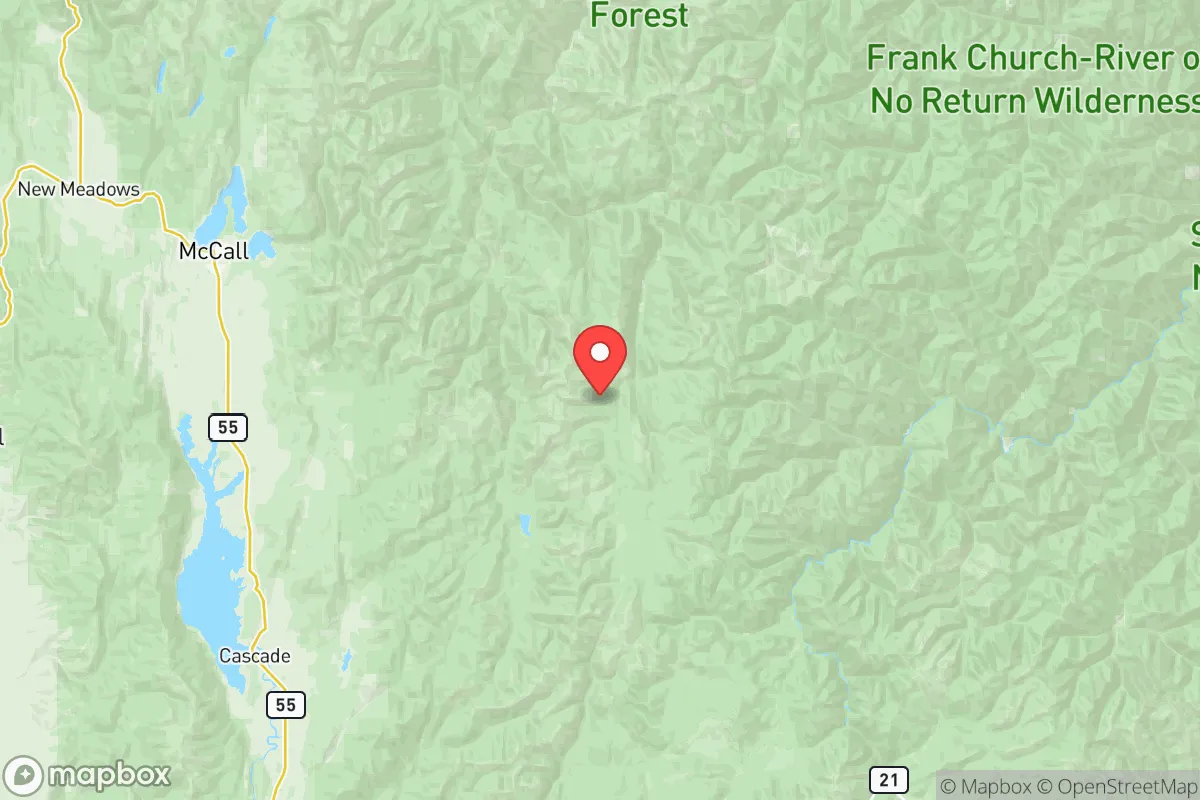
Valley County, Idaho, is one of the most homogenous rural counties in the American West, with a population that is 94.0% white, 5.1% Hispanic, and less than 1% foreign-born. Its 12,136 residents are spread across a vast, mountainous landscape centered on the towns of McCall, Cascade, and Donnelly, creating a culture defined by outdoor recreation, seasonal tourism, and a strong sense of local independence. The county’s identity is shaped less by ethnic diversity and more by the tension between long-time ranching and logging families and the influx of second-home owners and remote workers drawn to the Payette Lake and Brundage Mountain areas.
Settlement & growth (pre-1960)
Long before European settlement, the region now known as Valley County was seasonal hunting and fishing territory for the Shoshone and Nez Perce peoples, who followed game through the Payette River drainage and the vast Ponderosa pine forests. The first permanent non-Native presence came in the 1860s and 1870s, when prospectors drawn by the Idaho gold rush pushed into the Salmon River and Payette River drainages. Small mining camps like Warren (established 1862) and Yellow Pine (1890s) sprang up, but most proved short-lived as the placer deposits played out.
The real settlement wave began with the arrival of the railroad and the timber industry in the early 1900s. The Oregon Short Line Railroad reached McCall in 1914, opening the region to commercial logging. The U.S. Forest Service, established in 1905, began managing the Payette National Forest, and the combination of federal land policy and private timber companies drew a workforce of predominantly white, native-born Americans from the Midwest and the Pacific Northwest. These were not immigrants from Europe in large numbers — unlike the mining towns of northern Idaho — but rather internal migrants: loggers, mill workers, and homesteaders of mostly English, German, and Scandinavian descent who had already been in the United States for a generation or more.
By the 1930s and 1940s, the communities of Cascade and Donnelly were established as service centers for the timber economy. The construction of the Cascade Dam on the Payette River (completed 1948) created Lake Cascade and brought a modest construction boom, but the county remained overwhelmingly rural and white. The 1950 census recorded a population of just 4,270, with virtually no non-white residents. The post-war period saw the beginning of a shift from extraction to recreation, as McCall began marketing itself as a resort destination centered on Payette Lake and Brundage Mountain Ski Area, which opened in 1961.
Modern era (post-1965)
The 1965 Hart-Cellar Act, which reshaped immigration patterns across the United States, had almost no direct effect on Valley County. The county’s foreign-born population today stands at just 0.6%, and the overwhelming majority of residents are native-born white Americans. The demographic story of Valley County since the 1960s is not one of immigration but of domestic migration and the transformation of the local economy from timber to tourism.
Throughout the 1970s and 1980s, the timber industry declined as federal logging restrictions tightened and mills closed. The population actually shrank during parts of this period, falling to around 6,000 by 1990. The turnaround came with the growth of McCall as a year-round resort. Second-home development around Payette Lake and the construction of luxury subdivisions like the Whitetail Club (opened 1997) attracted affluent retirees and vacation-home owners from Boise, California, and the Pacific Northwest. This wave was almost entirely white and economically upscale, reinforcing the county’s existing demographic profile.
The Hispanic population, now 5.1%, grew slowly and steadily from the 1990s onward, driven by labor demand in construction, hospitality, and seasonal agriculture. These residents are concentrated in McCall and Cascade, where they work in hotels, restaurants, and landscaping. There is no distinct ethnic enclave, but a small but visible Hispanic community has formed, centered on Catholic parishes and seasonal service work. The East/Southeast Asian population (0.1%) and Indian subcontinent population (0.0%) are negligible, and the Black population is statistically zero. Valley County remains one of the least diverse counties in Idaho, which is itself one of the least diverse states in the nation.
The most significant demographic shift of the past two decades has been the post-2020 remote-work migration. The COVID-19 pandemic accelerated a trend already underway: urban and suburban professionals, many from California, Oregon, and Washington, purchased homes in McCall, Donnelly, and the unincorporated areas around Lake Cascade. This influx has driven up home prices — the median home value in McCall now exceeds $700,000 — and created a cultural divide between newer residents and established locals. The county’s population grew by roughly 15% between 2010 and 2020, and the pace has accelerated since 2021.
The future
Valley County is likely to become slightly more diverse in the coming decade, but the change will be modest. The Hispanic population is projected to grow to perhaps 8-10% of the total by 2035, driven by continued demand for service labor and natural increase. The white non-Hispanic population will remain dominant, though its share may edge down to around 88-90% as the county grows. The remote-work influx shows no signs of slowing, and McCall will continue to attract affluent, predominantly white newcomers from out of state, further concentrating wealth and driving up housing costs.
The county’s cultural identity is evolving from a working-class timber-and-ranching community into a high-amenity recreation destination. This shift creates tension: long-time residents worry about affordability and the loss of rural character, while newcomers bring economic investment and demand for services. Politically, Valley County leans conservative but is less uniformly Republican than many rural Idaho counties — McCall in particular has a visible libertarian and moderate contingent. The next 10-20 years will likely see continued growth in the McCall area, slower growth in Cascade and Donnelly, and a gradual aging of the population as retirees continue to move in.
For someone moving to Valley County now, the bottom line is this: you are joining a community that is overwhelmingly white, politically conservative-leaning, and deeply shaped by the outdoors. The county is becoming more affluent and more oriented toward tourism and remote work, but it remains a place where personal connections, self-reliance, and a tolerance for long, snowy winters are essential. The demographic future is one of slow, incremental change — not a transformation, but a gradual shift toward a slightly more diverse, more service-oriented, and more expensive place to live.

* Values derived from national, state, county, city and local statistics and may differ in a specific area. Last updated: 2026-06-21T22:38:26.000Z
Narrative content on this page is AI-generated and may contain mistakes. Verify any details that matter before acting on them.
ReloMaps may earn a commission from affiliate links at no extra cost to you.

