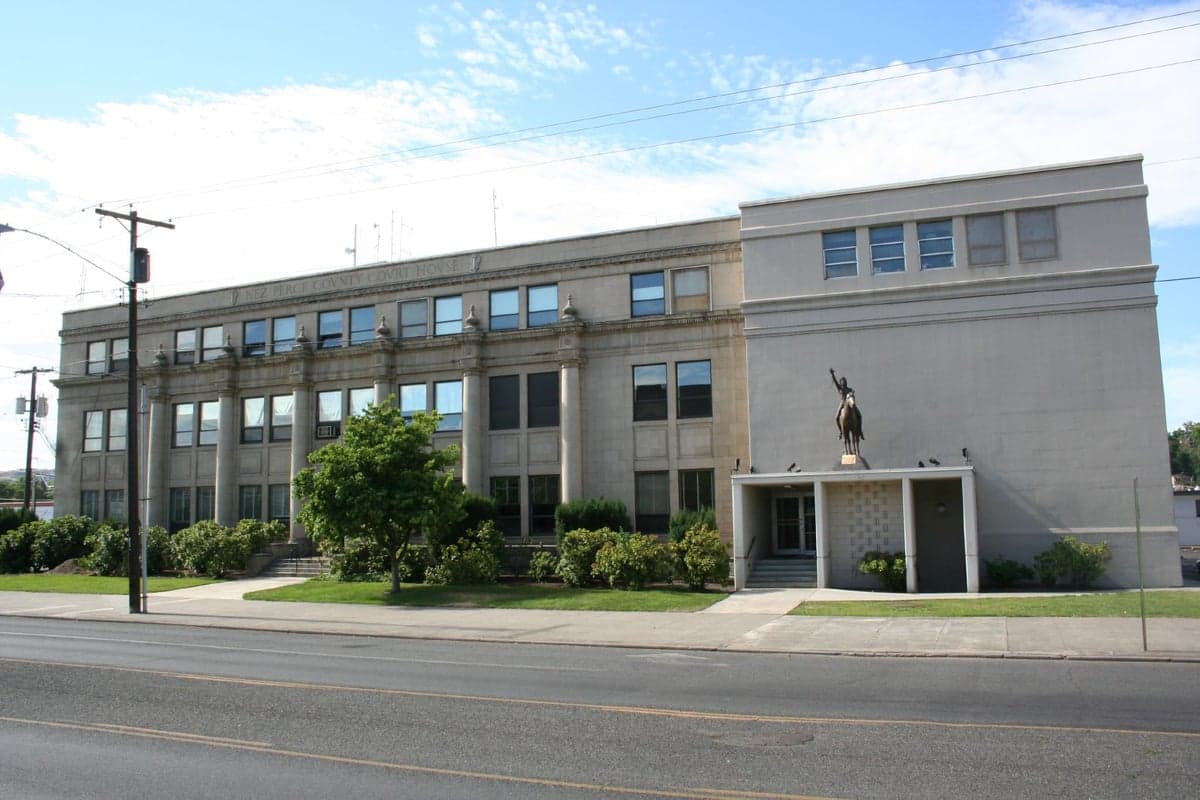
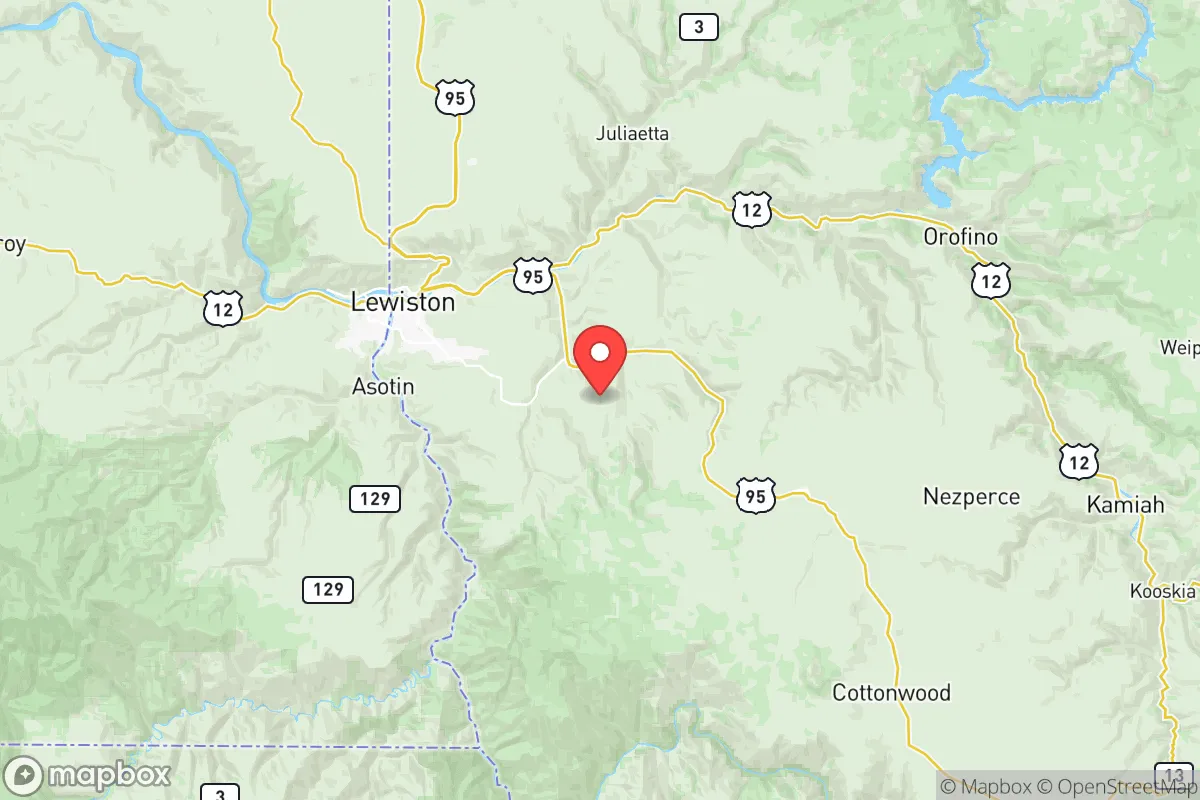
Photo: Wikipedia
Political ClimatePolitical Climate in Nez Perce County
Showing district-level results — no local-only data available.
Local Political AnalysisPolitical Analysis of Nez Perce County
Nez Perce County, anchored by the city of Lewiston, leans heavily Republican with a Cook PVI of R+22, making it significantly more conservative than the state of Idaho as a whole, which sits at R+18. This isn't a new development; the county has been a Republican stronghold for decades, but the margin has widened in recent presidential cycles. In 2024, Donald Trump carried the county by a comfortable margin, though the city of Lewiston itself often provides a slight blue tint, with precincts around the Lewis-Clark State College campus and the downtown core occasionally voting Democratic in local races.
How it compares
The R+22 rating places Nez Perce County among the most Republican-leaning counties in a state that is already deeply red. To put it in perspective, while Idaho's overall PVI of R+18 reflects its conservative bent, Nez Perce County is four points further right. This is driven largely by the rural and agricultural areas outside Lewiston. Towns like Culdesac and Peck routinely vote Republican by margins exceeding 70%, while the smaller communities of Lapwai (on the Nez Perce Reservation) and Sweetwater show more variation, with Lapwai often leaning Democratic due to tribal voting patterns. The swing precincts are almost nonexistent; the county hasn't voted for a Democratic presidential candidate since Lyndon B. Johnson in 1964. Compared to Idaho's more moderate pockets like Boise (Ada County, R+14) or Blaine County (D+7), Nez Perce County is a bastion of traditional, rural conservatism.
What this means for residents
For conservative residents, the political climate feels like a natural fit. Local government, from the county commission to the sheriff's office, is reliably Republican, and policy debates tend to center on property rights, Second Amendment issues, and limited government. The Lewiston City Council, however, is a bit more mixed, with a few Democratic-leaning members who have pushed for things like a non-discrimination ordinance and expanded public transit. For liberal residents, it means being a distinct minority. You'll find like-minded folks in Lewiston's older neighborhoods or near the university, but statewide and countywide elections can feel disheartening. The practical effect is that progressive policy proposals—like raising the minimum wage or expanding Medicaid—rarely gain traction at the county level, though they sometimes pass in city limits.
Culturally, the county's politics are shaped by its agricultural and timber roots, as well as a strong libertarian streak. Gun rights are a given, and the local economy is heavily tied to the Port of Lewiston and the region's natural resources. There's a palpable skepticism of federal land management, especially regarding the Nez Perce-Clearwater National Forests. The Nez Perce Tribe's sovereignty is a unique factor; tribal politics often diverge from county politics, creating a distinct cultural and political layer that you don't see in most of Idaho. Looking ahead, the county's political trajectory seems stable—no major demographic shifts are expected to flip it blue, but the growing influence of remote workers moving to Lewiston for its lower cost of living could slowly moderate the edges. For now, it's a place where the conservative majority sets the tone, and the minority adapts, with both sides finding their niches in the city's quieter corners.

State Political ClimatePolitical Climate in Idaho
State Political AnalysisPolitical Environment in the State
Idaho is one of the most reliably Republican states in the country, with a Cook Partisan Voting Index of R+18, meaning it votes about 18 points more Republican than the national average. The state hasn’t voted for a Democratic presidential candidate since 1964, and over the last 20 years, the GOP has only tightened its grip—legislative supermajorities are now the norm, and Democrats hold zero statewide elected offices. That said, the political reality is more layered than a simple red-state label: the explosive growth in the Boise metro area and the influx of out-of-state transplants are slowly reshaping the state’s internal dynamics, even if the overall partisan lean remains deeply conservative.
Urban vs. rural divide
The political map of Idaho is a textbook case of urban-rural polarization. The Treasure Valley—anchored by Boise, Meridian, and Nampa—is the state’s population center and its most politically competitive region. Ada County (Boise) has been trending purple for a decade; in 2020, Biden won 47% of the vote there, and in 2022, Republican gubernatorial candidate Brad Little only carried it by 12 points, down from 20 points in 2018. Meanwhile, the rural counties—like Lemhi, Clark, and Butte—routinely deliver 80-90% of their votes to Republicans. The University of Idaho in Moscow and Idaho State University in Pocatello create small blue islands in otherwise red territory, but they don’t shift the statewide math. The real story is the suburban ring around Boise—places like Eagle and Kuna—where conservative voters are still dominant but are being joined by moderate and even left-leaning newcomers from California, Washington, and Oregon. This influx is slowly diluting the state’s hard-right edge, but it’s happening at a glacial pace relative to the state’s overall rural weight.
Policy environment
Idaho’s policy environment is shaped by a legislature that is among the most conservative in the nation. The state has a flat income tax rate of 5.8% (reduced from 6% in 2023), no corporate income tax on pass-through entities, and a sales tax of 6% that applies to most goods but not groceries. Property taxes are relatively low, with a median effective rate of about 0.69%, though they vary by county. The regulatory posture is decidedly pro-business: Idaho is a right-to-work state, has no statewide zoning mandates, and permits concealed carry without a license (permitless carry was enacted in 2016). Education policy is a flashpoint: the state ranks near the bottom nationally in per-pupil spending, and the legislature has repeatedly rejected Medicaid expansion implementation (though voters approved it in 2018, the state finally expanded in 2020 after a court order). Election laws are restrictive by national standards: voter ID is required, same-day registration is not allowed, and mail-in voting requires an excuse. The state also has a strict abortion ban (trigger law effective in 2022) with no exceptions for rape or incest, only to save the mother’s life.
Recent policy direction
Over the last five years, Idaho’s legislature has moved aggressively on several fronts. On gun and self-defense law, the state passed a “stand your ground” law in 2018 and preempted local gun ordinances in 2021. On parental and education rights, the 2023 “Parental Rights” bill (HB 93) requires schools to notify parents of any curriculum involving sexual orientation or gender identity, and the 2024 “School Choice” bill expanded charter school funding. On speech and privacy, the state enacted a law in 2023 banning public libraries from hosting “harmful” materials to minors, with civil liability for librarians. On medical and bodily autonomy, the 2022 trigger ban on abortion is the most significant change, but the state also passed a law in 2023 restricting gender-affirming care for minors. On property rights, the legislature has repeatedly tried to limit county-level land-use regulations, though a 2024 bill to preempt local zoning failed. On taxation, the 2023 tax cut package reduced the top income tax rate and expanded the grocery tax credit. On voting and ballot access, the 2023 law requiring proof of citizenship to register (SB 1050) was blocked by a federal court, but the state is appealing. The overall direction is toward more individual liberty in some areas (guns, taxes, school choice) and more government intervention in others (abortion, LGBTQ+ rights, library content).
Civil unrest & political movements
Idaho has a long history of anti-government and militia movements, dating back to the Ruby Ridge standoff in 1992. In recent years, the North Idaho region—particularly around Sandpoint and Bonners Ferry—has seen a resurgence of white nationalist and separatist activity, with groups like the Aryan Nations (now largely defunct) replaced by newer, more diffuse networks. The 2020 protests in Boise over police brutality were relatively small (a few thousand people) compared to national averages, but they did draw counter-protests from armed right-wing groups. Immigration politics are less visible here than in border states, but the 2023 “anti-sanctuary” law (HB 135) requires local law enforcement to cooperate with federal immigration authorities, and there have been no sanctuary cities in Idaho. Election integrity controversies flared in 2020 and 2022, with the state GOP passing resolutions questioning the 2020 presidential results, but no major fraud was found. The most visible flashpoint for a new resident would be the Boise State University campus, where free speech debates and dueling protests are common, and the annual “Idaho Freedom Festival” in Coeur d’Alene, which draws both conservative activists and counter-protesters. Overall, the state is politically stable but has a fringe element that occasionally makes national headlines.
Projection
Over the next 5-10 years, Idaho’s political trajectory is likely to be one of slow, uneven moderation in the Treasure Valley and continued hardening in rural areas. The state is growing faster than almost any other—population increased 18% from 2010 to 2020—and the newcomers are disproportionately from blue states. If current trends hold, Ada County could become competitive at the state legislative level within a decade, and a Democratic candidate might win a statewide office (like superintendent of public instruction) by 2030. However, the rural counties are so overwhelmingly Republican that the state’s overall partisan lean will remain R+15 or higher. The legislature will likely continue to pass culturally conservative bills on abortion, education, and guns, but the margin for error is shrinking. A new resident moving to Boise or Meridian today should expect to see more political diversity in their neighborhood and workplace over time, but if they move to Rexburg or Twin Falls, the political landscape will remain deeply conservative for the foreseeable future.
For a new resident, the bottom line is this: Idaho is a state where conservative policies dominate, but the political culture is not monolithic. If you’re a conservative, you’ll find a welcoming environment with low taxes, strong gun rights, and a government that largely leaves you alone. If you’re a liberal, you’ll find a small but growing community in Boise and Moscow, but you’ll need to accept that your vote will rarely matter in statewide elections and that the legislature will pass laws you strongly disagree with. The practical takeaway is to choose your location carefully—the political experience in Ada County is very different from the one in Bonner County—and to understand that the state’s rapid growth is slowly changing the political calculus, even if the overall direction remains firmly red.
* Values derived from national, state, county, city and local statistics and may differ in a specific area. Last updated: 2026-07-03T05:04:54.000Z
Narrative content on this page is AI-generated and may contain mistakes. Verify any details that matter before acting on them.
ReloMaps may earn a commission from affiliate links at no extra cost to you.

