Photo: Wikipedia
Demographics of Nez Perce County
Affluence Level in Nez Perce County
A middle-class area roughly in line with national averages across income, home values, education, and employment.
People of Nez Perce County
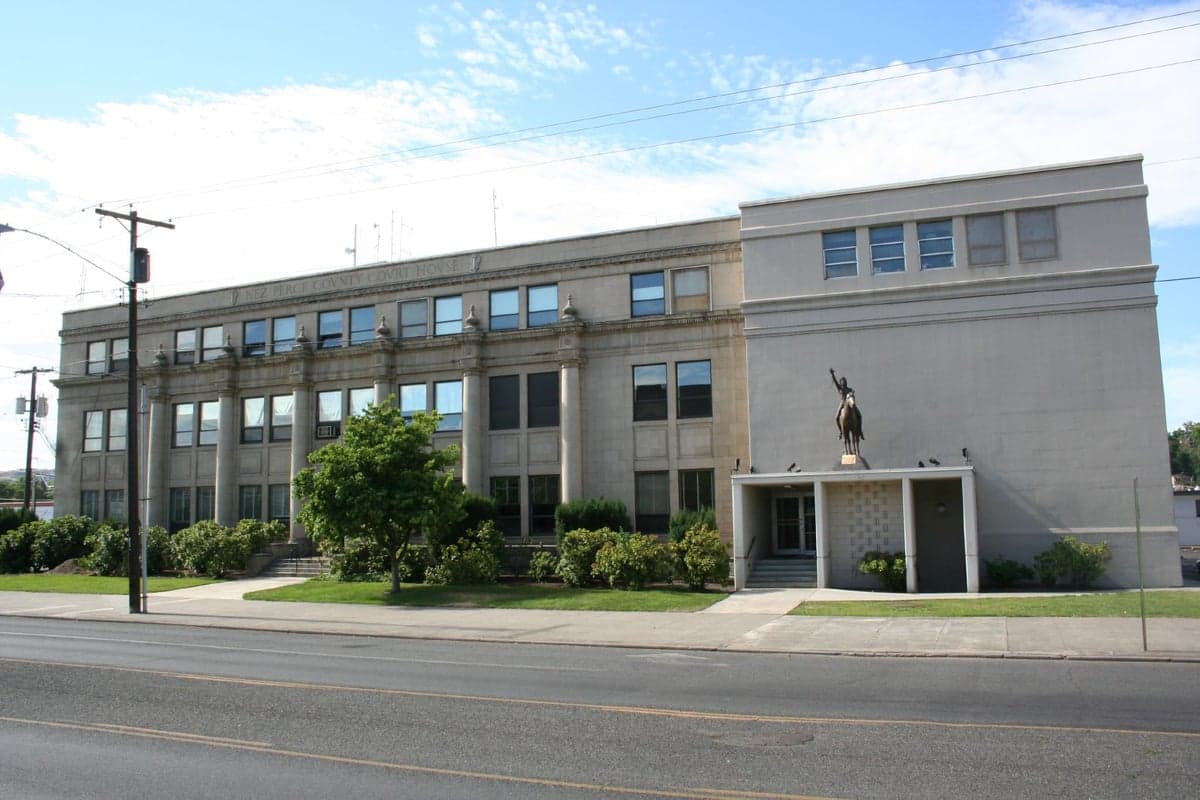
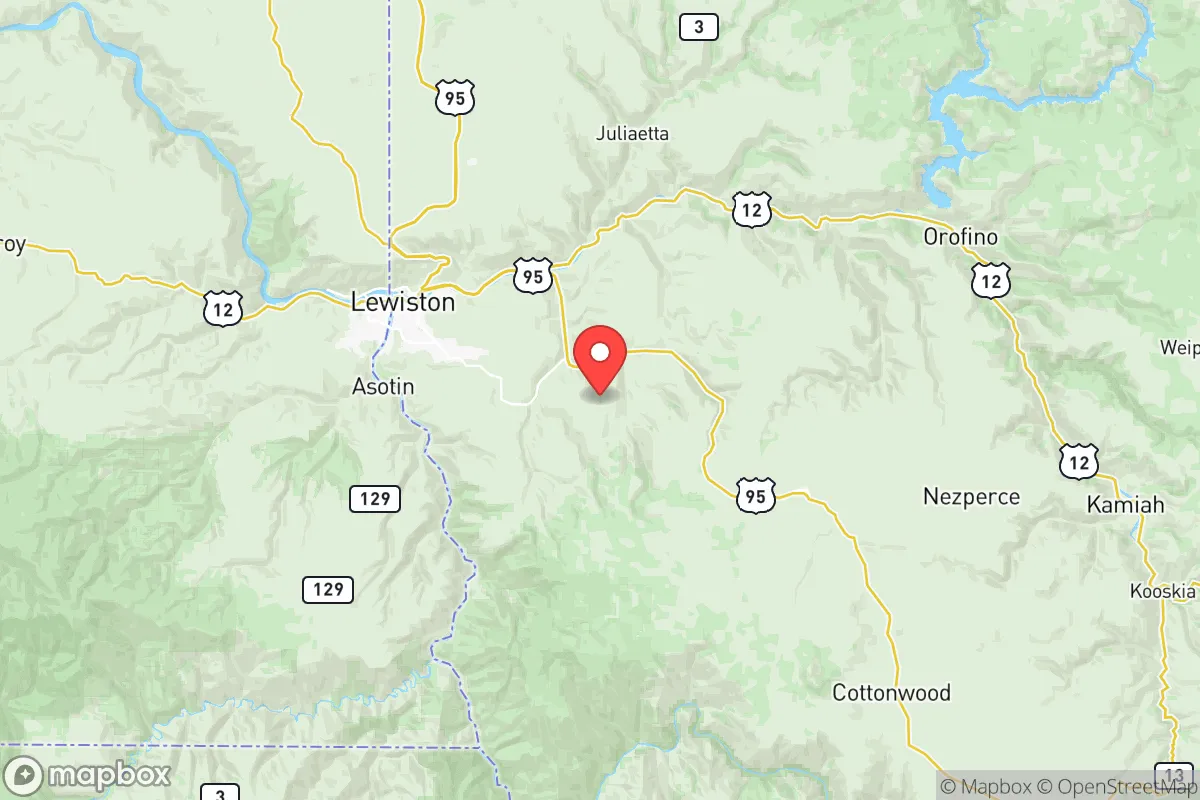
The people of Nez Perce County, Idaho, today number 42,477, forming a predominantly white (86.1%) and native-born (only 0.6% foreign-born) population centered on the city of Lewiston and its surrounding communities. The county’s identity is rooted in a deep agricultural and industrial heritage, with a notably low college attainment rate of 26.8% reflecting a workforce historically tied to the region’s timber, paper, and farming sectors. Despite its small size, the county is a distinct cultural crossroads where the legacy of the Nez Perce Tribe, the arrival of Euro-American settlers, and a modest but growing Hispanic community (4.3%) shape a character that is both rural and resilient.
Settlement & growth (pre-1960)
Long before Euro-American settlement, the Nez Perce people (Nimiipuu) inhabited the region for thousands of years, with their traditional territory spanning the Clearwater and Snake River valleys. The county, established in 1864 and named for the tribe, was the heart of their homeland. The Lewis and Clark Expedition passed through in 1805, and the subsequent fur trade brought French-Canadian trappers and a few early American traders, but sustained non-Native settlement did not begin until the 1860s. The discovery of gold in the Clearwater River drainage in 1860 triggered a rush, drawing miners and merchants to the area. The town of Lewiston, founded in 1861 at the confluence of the Snake and Clearwater Rivers, became the county seat and a supply hub for the goldfields. By 1863, the Nez Perce Tribe had been forced onto a reservation under the Treaty of 1863, opening most of the county to homesteading.
The major wave of permanent settlement came from the 1870s through the early 1900s, driven by the promise of fertile farmland and the expansion of the railroad. Euro-American settlers, overwhelmingly of German, English, and Scots-Irish descent, arrived via the Oregon Trail and later the Northern Pacific Railway. They established farms and small communities across the county’s rolling hills and river bottoms. The town of Culdesac (founded 1890) and Gifford (a railroad stop) grew as agricultural service centers, while Peck (founded 1900) and Lenore (a steamboat landing) served the timber and wheat trade. The region’s economy diversified with the arrival of the Potlatch Lumber Company in the early 1900s, which built a massive sawmill in Lewiston and later a pulp and paper mill, drawing workers from the Midwest and Scandinavia. By 1910, the county’s population had reached roughly 15,000, with Lewiston as the dominant urban center.
The Dust Bowl and Great Depression of the 1930s brought a smaller but notable influx of Okies and Arkies—displaced farmers from the Southern Plains—who found work in the region’s timber and agricultural industries. World War II further boosted the economy, as the Lewiston Ordnance Plant (later the Potlatch mill) and the nearby U.S. Army’s Farragut Naval Training Station on Lake Pend Oreille drew workers and military personnel. The post-war period saw steady growth, with the county’s population reaching 22,000 by 1950, as veterans and their families settled in Lewiston and the surrounding communities of Sweetwater and Waha.
Modern era (post-1965)
The 1965 Hart-Cellar Act, which reshaped U.S. immigration, had a minimal direct impact on Nez Perce County. The county’s foreign-born population remains exceptionally low at 0.6%, far below the national average. The primary demographic shifts since 1965 have been driven by domestic migration and suburbanization, not international arrivals. The construction of the Dworshak Dam on the North Fork Clearwater River (completed 1973) and the expansion of the Potlatch mill in Lewiston sustained a stable industrial base, but the county did not experience the rapid growth seen in Idaho’s Boise or Coeur d’Alene regions.
The most significant modern demographic change has been the growth of the Hispanic population, which now stands at 4.3%. This community, largely of Mexican descent, began arriving in the 1970s and 1980s, drawn by agricultural work in the region’s orchards, vineyards, and wheat fields. Many settled in Lewiston and the rural areas around Culdesac and Gifford, where they formed small but stable enclaves. The East/Southeast Asian population (0.5%) and Indian subcontinent population (0.3%) are tiny, primarily consisting of professionals and students associated with Lewis-Clark State College in Lewiston. The Black population (0.1%) is negligible, reflecting the county’s historical lack of industrial pull for the Great Migration or later urban migration.
Suburbanization has been modest, with Lewiston’s growth spilling into the neighboring communities of Clarkston (across the river in Washington) and the unincorporated areas of Sweetwater and Waha. The county’s population has grown slowly but steadily, from 30,000 in 1970 to 42,477 today, driven by natural increase and a small but steady stream of retirees and remote workers seeking a lower cost of living and outdoor recreation. The Nez Perce Tribe, while not a large share of the county’s population (the reservation is primarily in adjacent Lewis and Idaho counties), maintains a cultural and economic presence, particularly through the Clearwater River Casino and the tribe’s fisheries management.
The future
Nez Perce County is projected to remain one of Idaho’s least diverse counties, with the white population likely staying above 85% for the foreseeable future. The Hispanic population is expected to grow slowly, potentially reaching 6-7% by 2040, driven by continued agricultural labor demand and family reunification. The East/Southeast Asian and Indian populations will likely remain small, tied to the college and healthcare sectors. The county’s low foreign-born rate suggests that international migration will not be a major driver of change.
The most significant demographic trend is the aging of the population, as younger residents move to Boise or Spokane for jobs and education, while retirees from the Pacific Northwest and California continue to arrive for the region’s affordable housing and outdoor amenities. The county’s population growth rate has slowed to under 1% annually, and the median age (roughly 40) is rising. New residential development is concentrated in Lewiston’s outskirts and the Sweetwater area, where subdivisions are replacing farmland. The county’s cultural identity is likely to remain rooted in its agricultural and industrial past, with a conservative, self-reliant ethos that appeals to those seeking a slower pace of life.
For someone moving in now, Nez Perce County offers a stable, predominantly white, and deeply traditional community where change comes slowly. The population is not becoming more diverse in any rapid sense, but the Hispanic community is a growing and visible presence, particularly in the agricultural sector. The county’s future is one of modest, steady growth, with an economy anchored by timber, agriculture, and healthcare, and a social fabric that values continuity over transformation. It is a place for those who want a quiet, rural lifestyle with a strong sense of local history, rather than the dynamism of a growing metropolitan area.

* Values derived from national, state, county, city and local statistics and may differ in a specific area. Last updated: 2026-07-03T05:04:54.000Z
Narrative content on this page is AI-generated and may contain mistakes. Verify any details that matter before acting on them.
ReloMaps may earn a commission from affiliate links at no extra cost to you.

