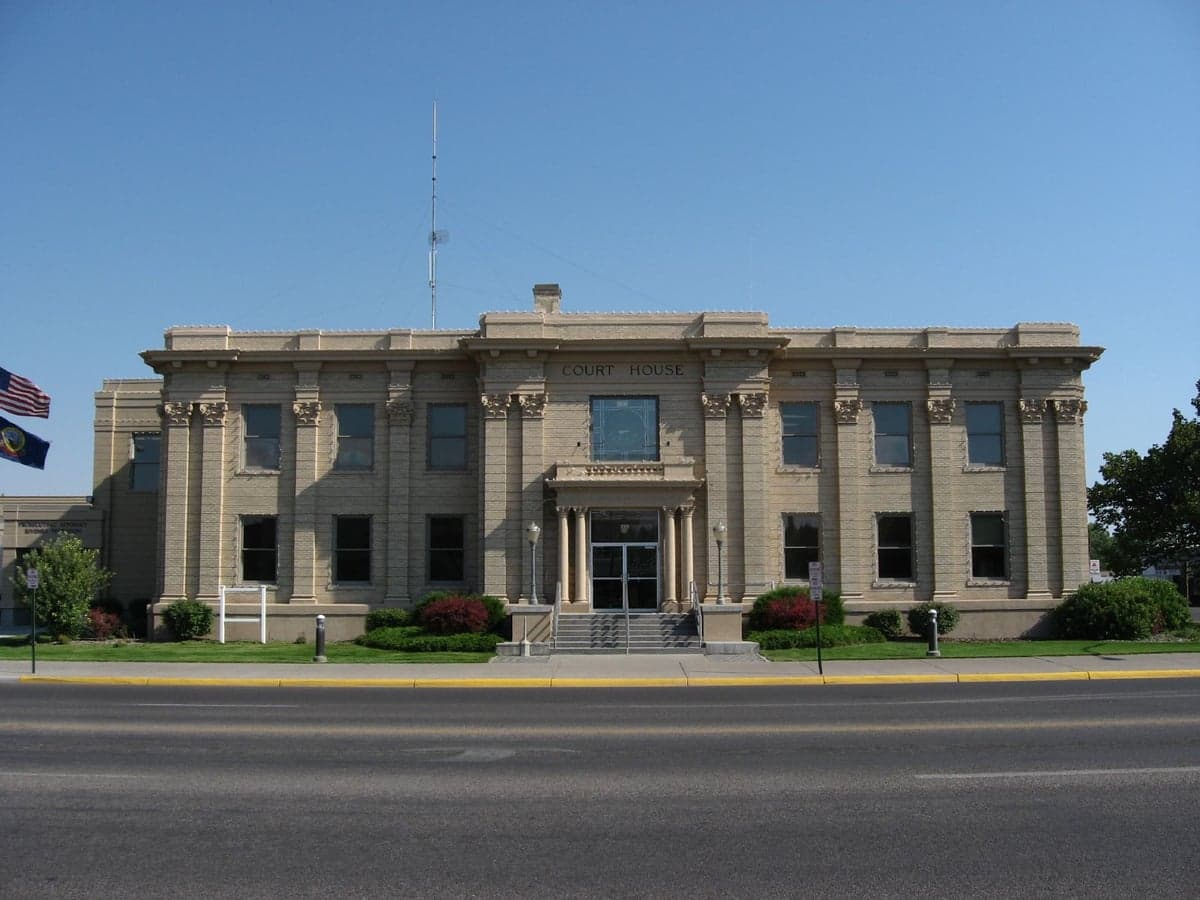
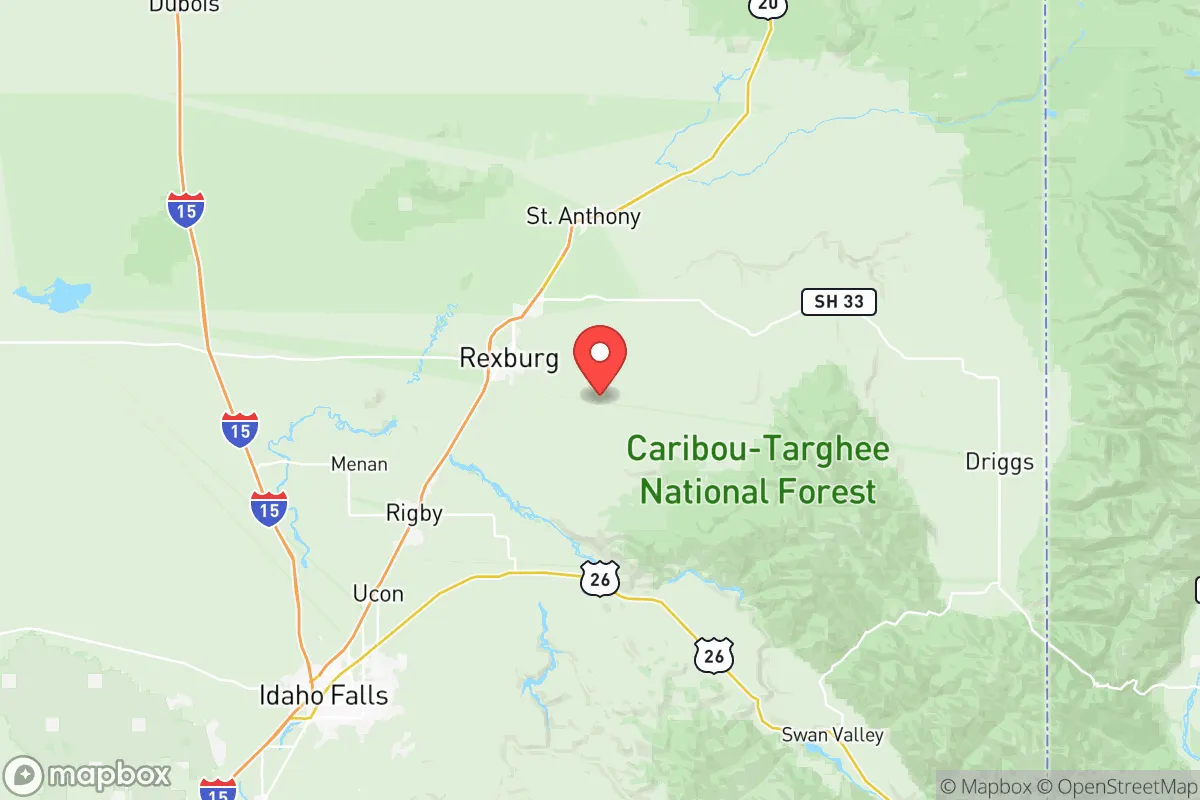
Photo: Wikipedia
Political ClimatePolitical Climate in Madison County
Showing district-level results — no local-only data available.
Local Political AnalysisPolitical Analysis of Madison County
Madison County, Idaho, is a deeply conservative stronghold with a Cook Partisan Voting Index (PVI) of R+13, meaning it consistently votes about 13 percentage points more Republican than the national average. This makes it a reliably red area, though it is notably less conservative than the state of Idaho as a whole, which carries a PVI of R+18. The county’s political trajectory has been stable for decades, with Republican candidates routinely winning by wide margins, but there are subtle shifts and internal variations that tell a more nuanced story, especially when you look at the specific towns within its borders.
How it compares
While Madison County is solidly Republican, it is 5 points less conservative than Idaho’s statewide average, a gap that reflects the influence of its largest city, Rexburg. Rexburg, home to Brigham Young University-Idaho, is the political and cultural heart of the county. The city’s precincts are overwhelmingly red, but they show slightly more moderate tendencies compared to the rural outlying areas. For instance, precincts near the university campus sometimes see a small but noticeable uptick in Democratic or third-party votes, driven by younger, more transient students and faculty. In contrast, the smaller towns like Hamer and Parker are among the most conservative in the county, regularly delivering 80-90% of their votes to Republican candidates. The swing precincts, if you can call them that, are in the more suburban edges of Rexburg, where a mix of long-time residents and newer arrivals create a slightly more competitive environment, though no precinct has flipped blue in a presidential election since at least 2000. Compared to Idaho’s R+18, Madison County’s R+13 means it is a reliable Republican vote, but not the most extreme in the state—that title belongs to counties like Franklin or Oneida, which are even more rural and homogenous.
What this means for residents
For conservative residents, Madison County’s political climate is a comfortable fit. Local policies align with their values, from low taxes to a strong emphasis on religious freedom and family-oriented governance. The county commission and school board are reliably Republican, and conservative candidates rarely face serious primary challenges. For liberal or moderate residents, the reality is more complex. They are a clear minority, and their political influence is limited, but they are not invisible. In Rexburg, there is a small but active community of progressive-leaning individuals, often centered around the university or local nonprofits, who engage in issues like environmental conservation and social justice. However, they face practical challenges: finding like-minded neighbors can be difficult, and local political discourse is overwhelmingly one-sided. The key takeaway is that while the county is not a political battleground, it is not a monolith either—the university injects a degree of diversity that you won’t find in the surrounding farm towns.
Culturally, Madison County is defined by its strong Latter-day Saint (Mormon) majority, which shapes both its politics and daily life. This influence is most visible in Rexburg, where the church’s presence is felt in everything from local business hours (many close on Sundays) to the social calendar. Policy-wise, the county has been a leader in conservative stances on issues like abortion and gun rights, often passing symbolic resolutions that go further than state law. A notable distinction is the county’s approach to land use and development: there is a strong preference for preserving agricultural land and limiting urban sprawl, which sometimes puts local officials at odds with developers. For anyone moving here, the political climate is not just about voting—it’s woven into the fabric of community life, from church potlucks to school board meetings. Whether you’re a conservative looking for a like-minded community or a liberal seeking a quiet, safe place to live, understanding this reality is key to settling in comfortably.

State Political ClimatePolitical Climate in Idaho
State Political AnalysisPolitical Environment in the State
Idaho is one of the most reliably Republican states in the country, with a Cook PVI of R+18, meaning it votes about 18 points more Republican than the national average. The state hasn't voted for a Democratic presidential candidate since 1964, and the GOP holds every statewide office, supermajorities in both legislative chambers, and all four congressional seats. Over the last 20 years, the state has shifted further right, driven by explosive growth in the conservative-leaning Treasure Valley and an exodus of moderate Democrats from rural areas, though the influx of out-of-state transplants has introduced a small but growing libertarian-leaning and independent streak.
Urban vs. rural divide
The political map is stark. The Treasure Valley, anchored by Boise, Meridian, and Nampa, is the state's population center and its most politically competitive region. Ada County (Boise) has trended purple in recent cycles — it voted for Trump by only 8 points in 2020 and 12 points in 2024, down from 18 points in 2016. The city of Boise itself leans left, with progressive pockets in the North End and downtown, while the sprawling suburbs of Meridian and Eagle are deeply conservative. Canyon County (Nampa-Caldwell) remains solidly red, voting +30 R in 2024. Outside the Treasure Valley, the state is overwhelmingly Republican. Idaho Falls and Rexburg in the east are among the most conservative cities in the nation, driven by a large LDS population and a strong agricultural base. The Panhandle, including Coeur d'Alene and Post Falls, has seen an influx of conservative Californians and Washingtonians, reinforcing its red lean, though Kootenai County has a small but vocal libertarian minority. The only reliably blue counties are Blaine County (Sun Valley) and Teton County (Victor-Driggs), both wealthy resort areas with a high concentration of second-home owners and remote workers from blue states. The rural-urban divide is less about a left-right split and more about a deep-red vs. light-red spectrum.
Policy environment
Idaho's policy environment is a textbook example of a low-tax, low-regulation, culturally conservative state. There is no state corporate income tax, and the individual income tax was flattened to a single rate of 5.8% in 2023, with a further cut to 5.3% scheduled for 2026. Property taxes are relatively low, though they vary by county. The state has a "right-to-work" law, no state-level minimum wage above the federal $7.25, and a strong preemption law that prevents cities from enacting their own labor or housing regulations. Education policy is a flashpoint: the state has one of the nation's most generous school choice programs, including a $5,000 per-student education savings account (ESA) for private or homeschool expenses, passed in 2023. Public school funding per pupil is among the lowest in the nation, and teacher salaries lag behind neighboring states. Healthcare policy is limited — Idaho has not expanded Medicaid under the ACA (though voters passed a ballot initiative in 2018, which the legislature has since chipped away at with work requirements). Election laws are restrictive: voter ID is required, same-day registration is not allowed, and absentee voting requires an excuse. The state has also passed laws banning ranked-choice voting and limiting ballot drop boxes.
Recent policy direction
The last five years have seen a sharp acceleration of conservative policy. On gun and self-defense law, Idaho is a constitutional carry state (no permit needed for concealed carry) and in 2024 passed a law prohibiting state enforcement of any federal gun restrictions, including background checks on private sales. Parental and education rights have been a major focus: the 2023 "Parental Rights" law requires schools to notify parents of any curriculum involving sexuality or gender identity, and the 2024 "School Choice" law created the ESA program. Speech and privacy are protected by a 2023 law that prohibits public libraries from restricting access to materials deemed "harmful to minors" — a response to book challenges. On medical and bodily autonomy, Idaho has one of the strictest abortion bans in the nation, effective at conception with no exceptions for rape or incest, only for the life of the mother. The state also passed a law in 2023 banning gender-affirming care for minors. Property rights are strong: Idaho has a "right to farm" law protecting agricultural operations from nuisance lawsuits, and a 2024 law limits the ability of cities to annex land without property owner consent. Taxation has been cut repeatedly: the 2023 flat tax replaced a progressive structure, and the 2024 session eliminated the sales tax on groceries. Voting and ballot access tightened in 2023 with a law requiring proof of citizenship to register and banning the use of student IDs as voter ID.
Civil unrest & political movements
Idaho has a long history of anti-government and militia movements, dating back to the Ruby Ridge standoff in 1992. The North Idaho region, particularly around Sandpoint and Bonners Ferry, has been a hub for white nationalist and sovereign citizen groups, though their influence is often overstated. In 2023, a planned "white nationalist" music festival in Coeur d'Alene was canceled after public backlash. On the left, the most visible activism has been around abortion rights: in 2022, protests erupted at the state capitol after the trigger ban took effect, and a 2024 ballot initiative to enshrine abortion rights failed to gather enough signatures. Immigration politics are relatively quiet — Idaho has no sanctuary cities, and the state passed a law in 2024 requiring local law enforcement to cooperate with ICE. Election integrity controversies have been minimal compared to other states, though a 2022 audit of the 2020 election found no evidence of widespread fraud. The most visible political flashpoint for new residents is likely the culture war in public schools: school board meetings in Boise and Meridian have been contentious over library books and LGBTQ+ curriculum.
Projection
Over the next 5-10 years, Idaho will likely remain deeply red, but the nature of that conservatism is shifting. The influx of out-of-state migrants — primarily from California, Washington, and Oregon — is changing the political demographics. Many of these new residents are conservative-leaning but less culturally aligned with the LDS-dominated Republican establishment. This could lead to a more libertarian, less socially conservative GOP in the long run. The Treasure Valley will continue to grow, and Ada County may become a genuine swing county by 2030, though the rest of the state will remain deeply red. The biggest wildcard is the state's housing crisis: if affordability continues to erode, it could slow migration and shift the political conversation toward land use and zoning reform. Expect continued tax cuts, further school choice expansion, and a hardening of the state's position on abortion and transgender rights. The Democratic Party will remain a non-factor in statewide races, but local races in Boise and Sun Valley may become more competitive.
For a new resident, the bottom line is this: if you're a conservative, you'll find a state that largely aligns with your values on taxes, guns, education, and regulation, with a government that is actively pushing those policies further. If you're a liberal, you'll be in a clear minority, but you'll find like-minded communities in Boise, Sun Valley, and a few smaller towns. The state's politics are stable and predictable — don't expect any dramatic flips. The biggest practical consideration is the education system: if you have school-age children, you'll need to decide between underfunded public schools or taking advantage of the generous ESA program for private or homeschool options. The cost of living is rising fast, especially in the Treasure Valley, but the tax burden remains low. Idaho is a place where your vote matters less in statewide elections but can have real impact at the local level, especially in school board and city council races.
* Values derived from national, state, county, city and local statistics and may differ in a specific area. Last updated: 2026-07-25T20:49:29.000Z
Narrative content on this page is AI-generated and may contain mistakes. Verify any details that matter before acting on them.
ReloMaps may earn a commission from affiliate links at no extra cost to you.

