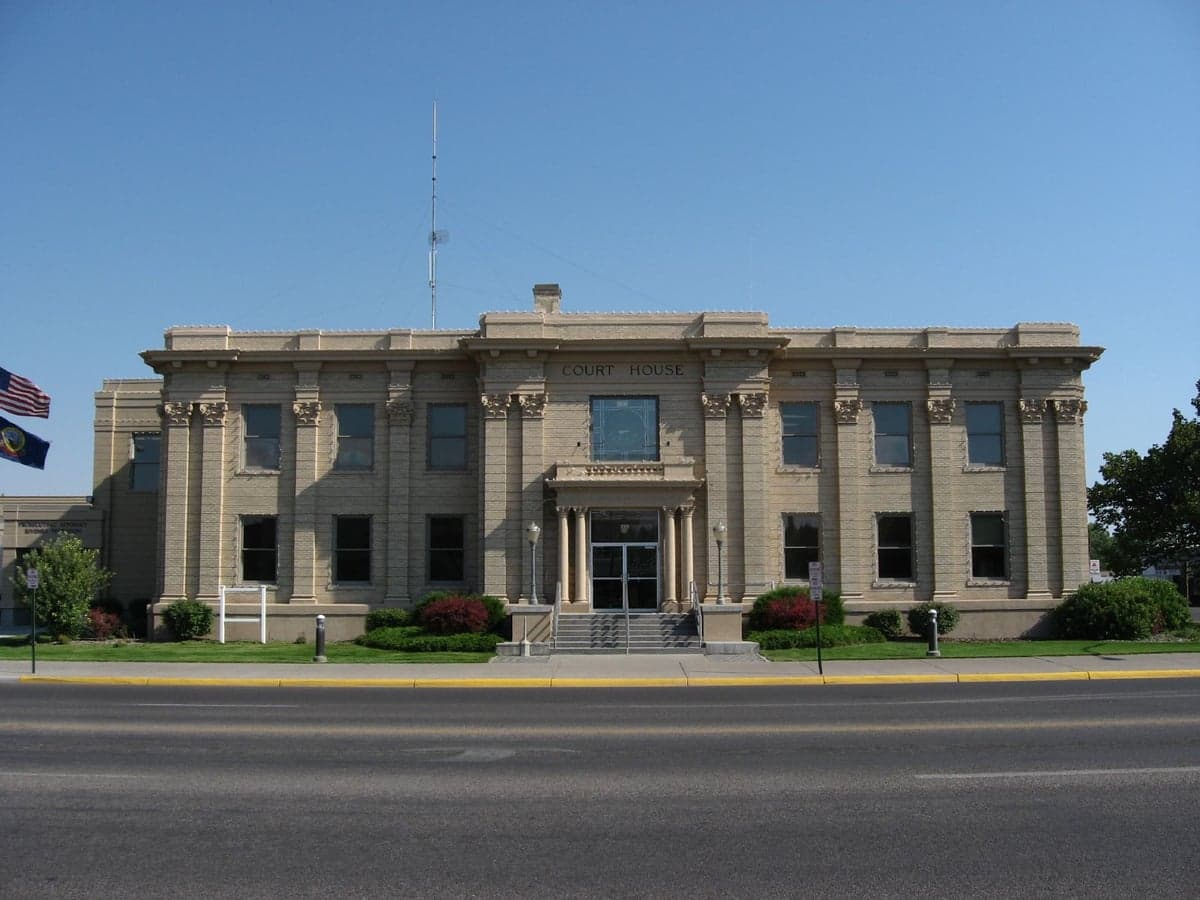
Photo: Wikipedia
Demographics of Madison County
Affluence Level in Madison County
A middle-class area roughly in line with national averages across income, home values, education, and employment.
People of Madison County
Madison County, Idaho, is a tight-knit, predominantly white, and highly educated community of 53,578 residents, anchored by the city of Rexburg and the presence of Brigham Young University-Idaho. The county is defined by its strong Latter-day Saint (LDS) cultural identity, which shapes its family-oriented character, low crime rates, and conservative political leanings. With a foreign-born population of just 3.9% and a Hispanic share of 9.7%, the county remains less diverse than the national average, but its steady growth is driven by university expansion and domestic in-migration of families seeking a safe, community-focused environment.
Settlement & growth (pre-1960)
Before American settlement, the land that is now Madison County was part of the traditional territory of the Shoshone and Bannock peoples, who followed the seasonal game and fish of the Snake River Plain. The first permanent American settlers arrived in the 1880s, a wave of Latter-day Saint pioneers sent by church leaders to colonize the Upper Snake River Valley. These families, primarily of English, Scandinavian, and Welsh descent, founded the town of Rexburg in 1883, naming it after Thomas E. Ricks, a Mormon pioneer and colonizer. The settlers drained the marshy land for agriculture, establishing a thriving economy based on potatoes, wheat, and sugar beets.
The arrival of the railroad in the 1890s connected Rexburg to national markets and spurred the founding of smaller farming communities like Hibbard and Archer, where Danish and English LDS families clustered. The early 20th century saw the establishment of Ricks College (now BYU-Idaho) in 1888, which became a cultural and educational anchor. The Dust Bowl and Great Depression of the 1930s brought few new residents to Madison County, as the agricultural economy was already struggling. However, the post-World War II baby boom and the expansion of irrigation projects in the 1950s stabilized the population, with Rexburg growing as a regional service center. By 1960, the county's population was nearly 100% white and overwhelmingly LDS, a pattern that would persist for decades.
Modern era (post-1965)
The 1965 Hart-Cellar Act had a minimal direct impact on Madison County, as the area did not attract significant post-1965 immigration from Asia, Latin America, or Africa. Instead, the county's modern demographic story is one of domestic migration and institutional growth. The transformation of Ricks College into a four-year university (BYU-Idaho) in 2000 triggered a population surge, drawing LDS students and faculty from across the United States and, to a lesser extent, from abroad. This influx has made Rexburg a magnet for young, married families, with the county's median age hovering around 24—one of the youngest in Idaho.
The Hispanic population, now at 9.7%, grew steadily from the 1990s onward, driven by agricultural labor in the potato and dairy industries. These families, many of Mexican origin, have settled primarily in Rexburg and the rural areas around Burton and Plano, working on farms and in food processing plants. The East/Southeast Asian community (1.4%) is largely composed of international students and faculty at BYU-Idaho, with a small but visible presence in Rexburg's university district. The Black population (0.9%) and Indian subcontinent population (0.0%) remain negligible, reflecting the county's limited appeal to non-LDS immigrants. Suburbanization has been modest, with new subdivisions spreading south and east of Rexburg, but the county retains its rural, agricultural character.
The future
Madison County is projected to continue growing at a steady pace, driven by BYU-Idaho's enrollment and the in-migration of LDS families from other parts of the Intermountain West. The county's population could reach 65,000 by 2035, with Rexburg absorbing most of the growth. The Hispanic share is likely to rise slowly, potentially reaching 12-14% by 2040, as agricultural families settle and have children. However, the county is unlikely to become significantly more diverse in the near term, as the LDS cultural framework and limited economic opportunities outside education and agriculture deter large-scale immigration from other groups.
New residential development is concentrating in the Rexburg Bench area and along the Highway 33 corridor toward St. Anthony, where commuters seek affordable housing. The cultural identity of the county will remain deeply tied to the LDS Church, with community life centered on wards, BYU-Idaho events, and agricultural traditions. For a newcomer, this means moving into a place where social networks are strong, crime is low, and the pace of life is deliberate—but where fitting in may require an understanding of the dominant religious and cultural norms.
Madison County is becoming a more populous but not fundamentally more diverse version of itself: a conservative, family-centric, and highly educated community where the LDS faith and BYU-Idaho are the twin pillars of daily life. For those seeking a safe, affordable, and community-oriented environment, it offers a stable and predictable future—one where change is measured and tradition holds firm.

* Values derived from national, state, county, city and local statistics and may differ in a specific area. Last updated: 2026-07-25T20:49:29.000Z
Narrative content on this page is AI-generated and may contain mistakes. Verify any details that matter before acting on them.
ReloMaps may earn a commission from affiliate links at no extra cost to you.

