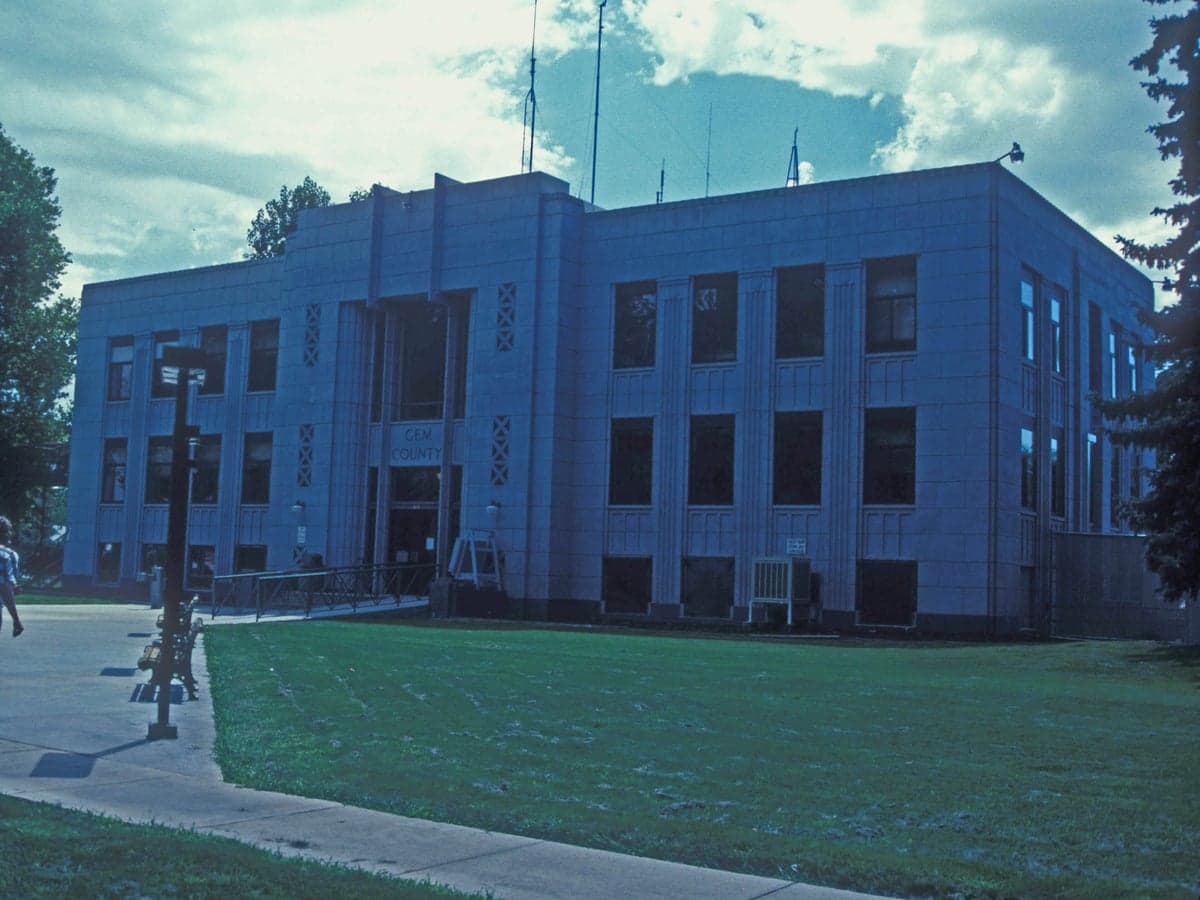
Photo: Wikipedia
Political ClimatePolitical Climate in Gem County
Showing district-level results — no local-only data available.
Local Political AnalysisPolitical Analysis of Gem County
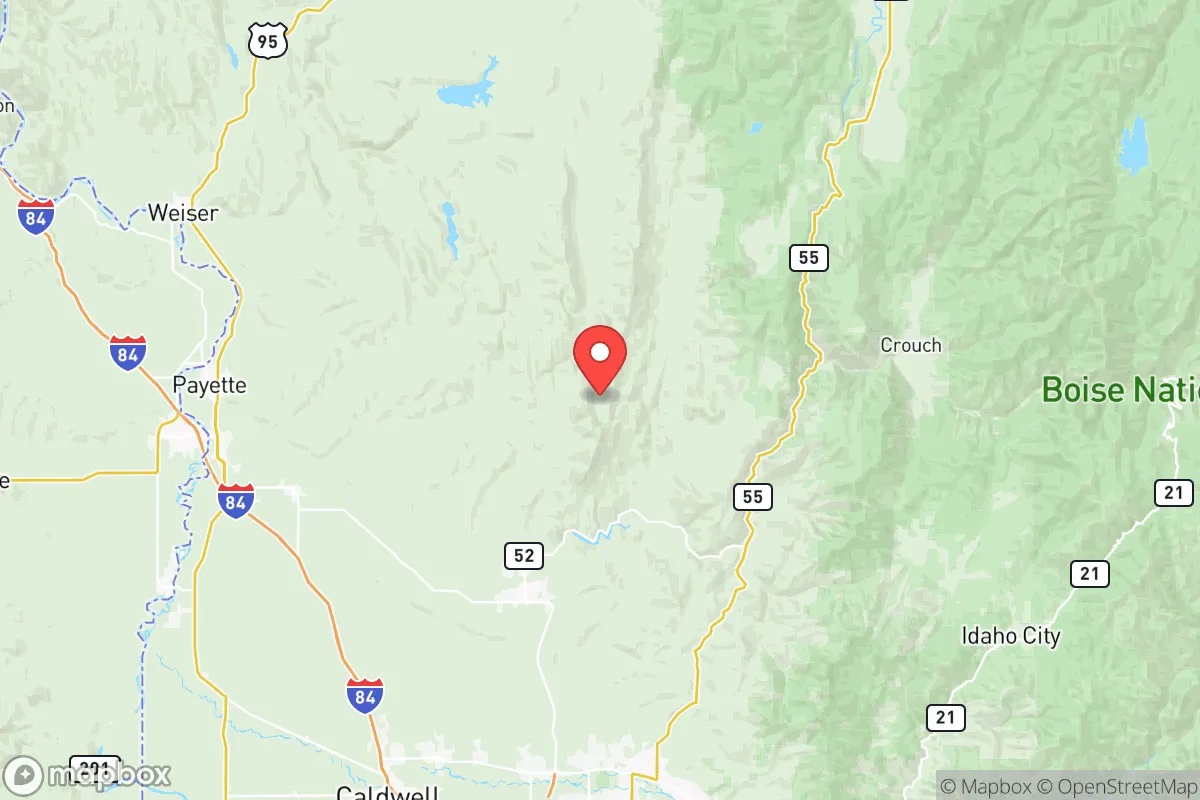
Gem County, Idaho, is a reliably conservative area with a Cook PVI of R+22, making it significantly more Republican than the state of Idaho as a whole, which sits at R+18. The county has been trending even further right in recent cycles, with Emmett, the county seat and largest town, consistently delivering margins of 70-80% for GOP candidates. While the county is overwhelmingly red, there are subtle variations: the rural farming communities like Ola and Sweet lean the most conservative, while the small pocket around the Black Canyon Dam area and some newer subdivisions near the Boise County line show slightly more moderate tendencies, occasionally producing precincts that vote 60-65% Republican instead of 80%.
How it compares
The four-point gap between Gem County's R+22 and Idaho's R+18 is meaningful. In practice, this means Gem County is roughly as conservative as the deeply red counties of eastern Idaho (like Madison or Fremont), while the state as a whole is pulled slightly leftward by the Boise metro area (Ada County, which is now a swing county). For example, in the 2024 presidential election, Gem County voted for Donald Trump by a margin of roughly 78-20, while statewide the margin was closer to 66-30. The difference is driven by Emmett's rural character and the absence of a major university or tech hub—unlike Boise or Moscow, there's no significant liberal-leaning population center. The county's growth has been slow and steady, mostly from conservative-leaning retirees and families seeking cheaper land, which has reinforced rather than diluted the political lean.
What this means for residents
For conservative residents, Gem County offers a deeply affirming political environment. Local offices—county commissioners, sheriff, school board—are held by Republicans, and policy debates tend to focus on property rights, Second Amendment issues, and limiting county government growth. For liberal residents, the reality is more isolating. There is no organized Democratic Party presence in the county, and progressive viewpoints are rarely represented in public forums or local media. Socially, a liberal resident might find themselves the only one in their neighborhood or workplace holding those views, which can lead to a sense of being an outsider. However, the county's small size (roughly 20,000 residents) means that personal relationships often transcend political labels—neighbors still help each other with haying or snow removal regardless of party registration.
Culturally, Gem County stands apart from the rest of Idaho in its strong agricultural identity and slower pace of change. While Boise has become a bustling, diverse city with a growing tech sector, Emmett still feels like a farming town where the county fair and the cherry festival are the biggest events of the year. Policy-wise, the county has been a leader in pushing back against state-level land-use regulations, with local officials often arguing that Gem County knows its own needs better than Boise bureaucrats. This independent streak means that even within Idaho's conservative framework, Gem County residents tend to be skeptical of both federal and state authority, preferring local control on everything from zoning to public health decisions. Looking ahead, the county is likely to stay deeply red, but as more Boise-area commuters move in for cheaper housing, the political conversation may slowly shift toward growth management and infrastructure—issues that don't break neatly along party lines.

State Political ClimatePolitical Climate in Idaho
State Political AnalysisPolitical Environment in the State
Idaho is one of the most reliably Republican states in the country, with a Cook Partisan Voting Index of R+18, meaning it votes about 18 points more Republican than the national average. The state hasn’t voted for a Democratic presidential candidate since 1964, and the GOP holds every statewide office, supermajorities in both legislative chambers, and all four congressional seats. Over the last 10-20 years, the dominant trend has been a sharp rightward shift, driven by explosive growth in the conservative-leaning Treasure Valley and an exodus of moderate and liberal-leaning residents from more rural areas, while the Democratic stronghold of Boise has become an increasingly isolated blue island.
Urban vs. rural divide
The political map of Idaho is a study in contrasts. The Treasure Valley, anchored by Boise, Meridian, and Nampa, is the state’s population center and economic engine. Ada County (Boise) has trended purple over the last decade — it voted for Trump by just 3 points in 2020 and 2024, down from a 14-point Romney margin in 2012. The city of Boise itself is reliably Democratic, with a growing progressive activist scene, while its suburbs like Meridian and Eagle remain solidly red. Meanwhile, the rural and exurban counties — Kootenai (Coeur d’Alene), Bonneville (Idaho Falls), Canyon (Nampa), and Madison (Rexburg) — vote Republican by 40 to 70 points. The Panhandle, particularly Coeur d’Alene, has seen an influx of conservative transplants from California and Washington, pushing its politics further right. The only other notable blue pocket is Blaine County (Sun Valley), a wealthy resort area that votes Democratic by wide margins. The divide isn’t just geographic — it’s cultural. Rural Idahoans often view Boise as a distant, liberal-leaning bureaucracy, while Boise residents see rural legislators as out of touch with the state’s growing urban needs.
Policy environment
Idaho’s policy environment is a textbook example of conservative governance. The state has a flat income tax rate of 5.8% (down from 6.5% in 2023), no corporate income tax on pass-through entities, and a sales tax of 6% with no local add-ons. Property taxes are relatively low, though they vary by county. The regulatory posture is light-touch: no statewide building codes outside of major cities, minimal occupational licensing requirements, and a “right-to-farm” law that shields agricultural operations from nuisance lawsuits. Education policy is a flashpoint: the state has one of the nation’s most expansive school choice programs, with Education Savings Accounts (ESAs) available to all families, and a heavy emphasis on parental rights in curriculum and library materials. Healthcare is largely private, with no state-run insurance exchange and one of the highest uninsured rates in the country (around 10%). Election laws are restrictive by national standards: voter ID is required, same-day registration is not available, and mail-in voting is limited to those with a valid excuse. The state also has a strict “no-excuse” absentee ballot law that was tightened in 2023.
Recent policy direction
Over the past three legislative sessions, Idaho has moved decisively to the right on nearly every front. On gun and self-defense law, the state enacted permitless carry in 2016 and in 2023 passed a “Second Amendment Preservation Act” that prohibits state and local law enforcement from enforcing any federal gun laws deemed unconstitutional. On parental and education rights, the 2024 “Parents’ Bill of Rights” requires schools to notify parents of any curriculum involving sexuality or gender identity and bans classroom instruction on those topics through grade 5. On speech and privacy, the state passed a law in 2023 requiring social media platforms to verify the ages of users and obtain parental consent for minors, and it has a broad “right to be forgotten” law for minors. On medical and bodily autonomy, Idaho has one of the most restrictive abortion bans in the nation — a near-total ban with no exceptions for rape or incest, only for the life of the mother — and in 2024 passed a law criminalizing “abortion trafficking” of minors across state lines. On property rights, the state has strong eminent domain protections and a 2023 law that prohibits local governments from adopting “rent control” or inclusionary zoning ordinances. On taxation, the 2024 legislative session saw a further cut to the top income tax rate and an expansion of the grocery tax credit. On voting and ballot access, the state in 2023 banned the use of drop boxes for absentee ballots and shortened the window for returning mail-in ballots to 14 days before Election Day.
Civil unrest & political movements
Idaho has a long history of anti-government and militia movements, dating back to the Ruby Ridge standoff in 1992. In recent years, the state has seen a resurgence of far-right activism, particularly in the Panhandle around Coeur d’Alene and Sandpoint, where groups like the “People’s Rights” network and various “constitutional sheriff” movements have held rallies. In 2022, a planned “Pride” event in Coeur d’Alene was disrupted by a group of 31 alleged members of the “White Aryan Resistance” who were arrested for conspiracy to riot. On the left, Boise has seen large-scale protests — the 2020 Black Lives Matter demonstrations drew thousands and led to clashes with counter-protesters. Immigration politics are a major flashpoint: the state has a 2023 law that makes it a crime for undocumented immigrants to enter Idaho from another state, and local sheriffs in Canyon County and Ada County have been vocal about cooperating with ICE. There is no sanctuary city policy anywhere in the state. Election integrity controversies have been muted compared to other states, but in 2022, the Idaho Secretary of State’s office investigated a small number of duplicate voter registrations and found no evidence of widespread fraud. The most visible flashpoint for a new resident would likely be the presence of armed protesters at the state capitol in Boise during the legislative session, particularly around bills on abortion, guns, and LGBTQ rights.
Projection
Over the next 5-10 years, Idaho’s politics will likely continue to shift rightward, but with increasing internal tension. The Treasure Valley’s growth — Meridian is one of the fastest-growing cities in the U.S. — will bring more moderate and even liberal-leaning transplants, particularly from California and Washington, who may soften the state’s hard edge on some issues. However, the rural and exurban counties are growing even faster in relative terms, and the state’s legislative maps are drawn to heavily favor rural areas. The most likely scenario is a continued Republican supermajority, but with a more visible split between the “MAGA” wing (dominant in the Panhandle and eastern Idaho) and a more business-friendly, “Chamber of Commerce” wing (centered in the Treasure Valley). On policy, expect further tax cuts, continued expansion of school choice, and an ongoing battle over abortion access — likely with attempts to criminalize out-of-state travel for the procedure. A new resident moving in now should expect to find a state that is deeply conservative, but with a growing, vocal progressive minority in Boise that will keep cultural fights alive for the foreseeable future.
For a new resident, the bottom line is straightforward: if you are conservative, you will find a state that largely aligns with your values on taxes, guns, education, and regulation. If you are liberal, you will find a state where your vote has limited impact on statewide outcomes, but where you can find a like-minded community in Boise or Sun Valley. The practical takeaway is that Idaho’s politics are not monolithic — the divide between Boise and the rest of the state is real and growing — but the overall direction is unambiguously rightward, and that is unlikely to change in the next decade.
* Values derived from national, state, county, city and local statistics and may differ in a specific area. Last updated: 2026-07-02T08:28:59.000Z
Narrative content on this page is AI-generated and may contain mistakes. Verify any details that matter before acting on them.
ReloMaps may earn a commission from affiliate links at no extra cost to you.

