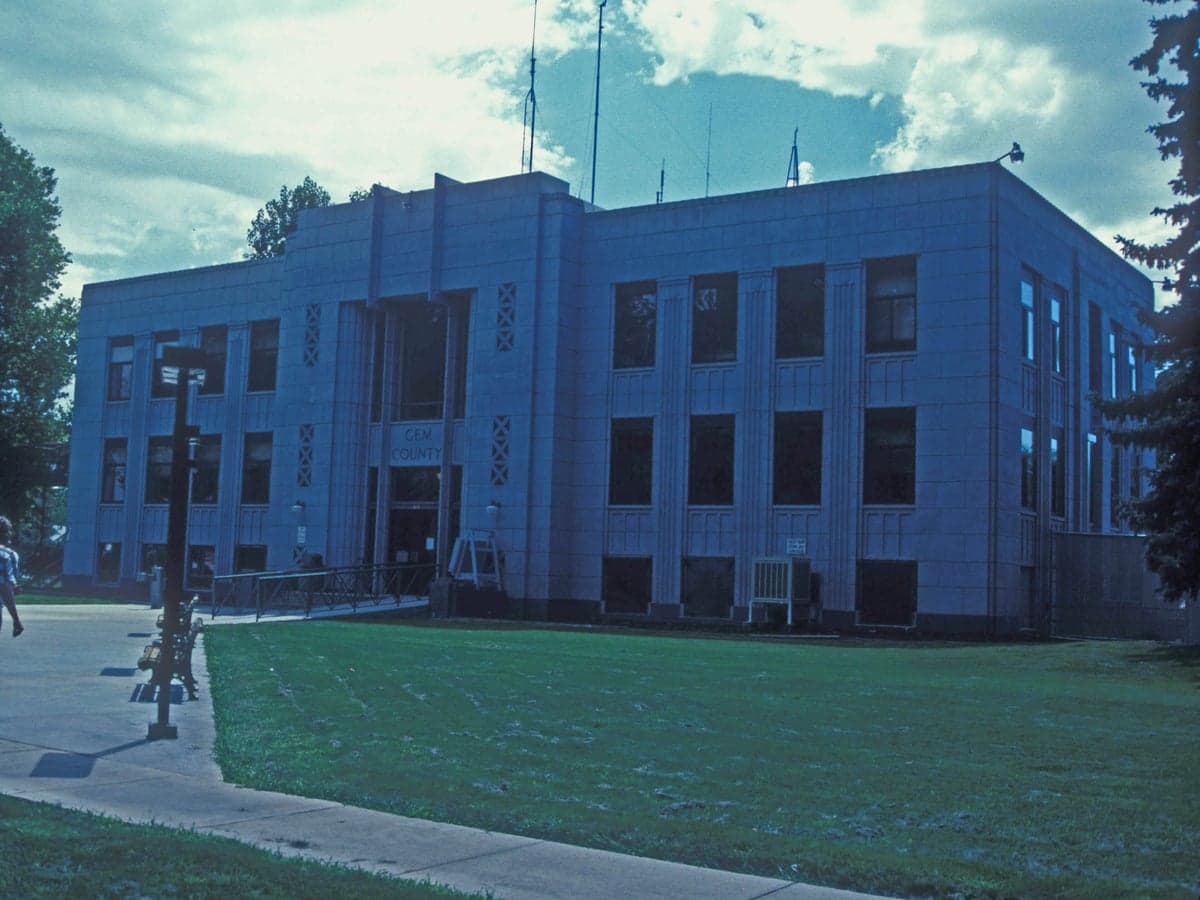
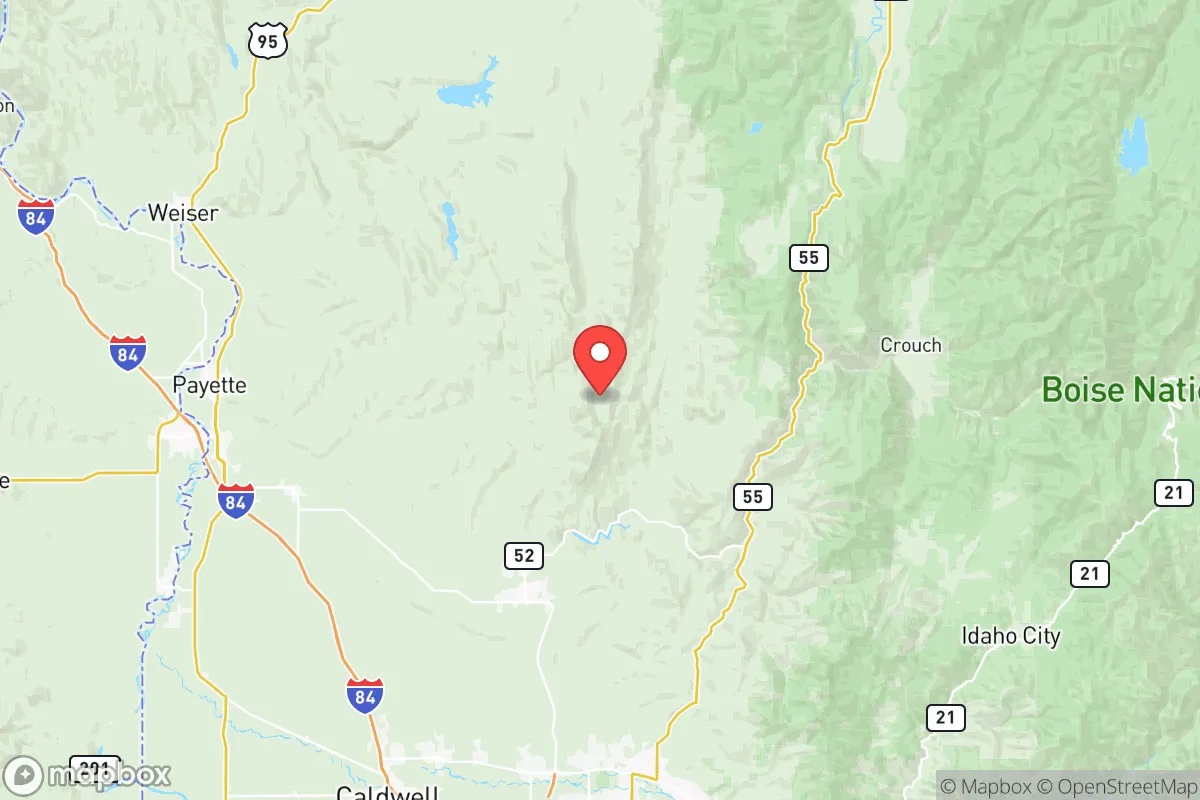
Photo: Wikipedia
Demographics of Gem County
Affluence Level in Gem County
A middle-class area roughly in line with national averages across income, home values, education, and employment.
People of Gem County
Gem County, Idaho, is a predominantly white, rural community of just under 20,000 residents, characterized by its agricultural roots and a strong sense of local independence. With a population that is 84% white and 9.3% Hispanic, the county’s identity is shaped by its history as a farming and ranching hub, anchored by the county seat of Emmett. The population is notably less diverse and less college-educated than the national average, with only 22.3% holding a bachelor’s degree, reflecting a community built on hands-on industries rather than a knowledge economy.
Settlement & growth (pre-1960)
The land now known as Gem County was originally inhabited by the Northern Shoshone and Bannock peoples, who followed seasonal game and fish runs along the Payette River. The first permanent American settlers arrived in the 1860s, drawn by the promise of fertile bottomland and the discovery of gold in the nearby Boise Basin. These early pioneers were predominantly of Northern European stock—English, Scots-Irish, and German—who established homesteads along the Payette River and its tributaries.
The town of Emmett, founded in 1885, became the commercial and social center of the valley, named after a local rancher. The arrival of the Oregon Short Line Railroad in the 1890s transformed the local economy, allowing farmers to ship fruit, grain, and livestock to distant markets. This period saw an influx of Midwestern farmers, many of German and Scandinavian descent, who were attracted by the region’s irrigated farmland and the promise of a temperate climate. The communities of Letha and Sweet grew as agricultural service centers, with Letha becoming a hub for the region’s famous fruit orchards.
The early 20th century brought a wave of Basque sheepherders, who followed seasonal grazing patterns from the Sierra Nevada into the high desert of southwestern Idaho. While their numbers were small, the Basque influence is still visible in Emmett’s annual sheep-shearing contests and local ranching culture. The Dust Bowl of the 1930s pushed a modest number of displaced farmers from Oklahoma and Arkansas into the county, though the impact was less dramatic than in Idaho’s Magic Valley. By 1950, Gem County’s population had reached roughly 8,000, with the economy almost entirely dependent on agriculture—primarily apples, cherries, onions, and sugar beets.
Modern era (post-1965)
The 1965 Hart-Cellar Act had a minimal direct effect on Gem County, as the region did not attract the large-scale immigration seen in urban centers. The foreign-born population today stands at just 3.1%, well below the national average. The most significant demographic shift since the 1970s has been the growth of the Hispanic population, which now makes up 9.3% of the county. This increase is largely tied to agricultural labor, with Mexican and Central American families settling in Emmett and the surrounding farm communities to work in the orchards and packing sheds. The town of Ola, a tiny unincorporated community in the county’s northwest, has seen a small but stable Hispanic presence tied to ranching and seasonal work.
Domestic migration has been the primary driver of population growth since the 1990s. Retirees and families from California, Oregon, and Washington have moved to Gem County seeking lower housing costs and a slower pace of life. This influx has concentrated in newer subdivisions on the outskirts of Emmett, particularly along the Highway 16 corridor, which offers a 45-minute commute to Boise. The communities of Black Canyon and Montour, historically small farming hamlets, have seen modest suburban-style development as Boise’s housing market pushes outward. The county’s population grew from 15,000 in 2000 to nearly 20,000 by 2020, a 33% increase that has strained infrastructure but not fundamentally altered the area’s cultural character.
The East/Southeast Asian population (0.2%) and Black population (0.2%) remain negligible, concentrated almost entirely in Emmett among professionals working in healthcare or education. There is no Indian subcontinent population (0.0%) to speak of. The county remains overwhelmingly white and native-born, with a cultural identity rooted in rural self-reliance, conservative politics, and a strong attachment to outdoor recreation—hunting, fishing, and off-road vehicle use are central to local life.
The future
Gem County is projected to continue growing at a moderate pace, driven by spillover from the Boise metropolitan area. The completion of the Highway 16 expansion in the early 2020s has made the commute to Boise more feasible, and new subdivisions are planned on the eastern edge of Emmett. However, the county’s demographic profile is unlikely to shift dramatically. The Hispanic population will likely grow slowly as agricultural labor patterns persist, but the county lacks the economic diversity to attract significant numbers of new immigrant groups. The white share of the population may decline slightly from 84% as younger, more diverse families from Boise seek cheaper land, but the county will remain one of Idaho’s least diverse areas for the foreseeable future.
The biggest demographic wildcard is the potential for remote workers to relocate from coastal states, drawn by low taxes and a rural lifestyle. If this trend accelerates, Gem County could see a modest increase in college-educated residents, which would raise the current 22.3% figure and potentially shift local politics toward a more moderate conservatism. The communities of Freezeout Hill and Pearl, currently sparsely populated, could see new housing developments if water rights and zoning allow.
For someone moving in now, Gem County offers a stable, predictable community where neighbors know each other and the pace of life is dictated by the seasons rather than the stock market. It is a place where the population is growing but not changing in character—still agricultural, still predominantly white, and still deeply conservative. The trade-off is clear: you gain affordability, safety, and a strong sense of place, but you trade away the diversity and cultural amenities of a larger city. For families seeking a traditional rural upbringing for their children, or for retirees wanting to live off the land, Gem County remains a viable choice. For those seeking a dynamic, multicultural environment, it is not.

* Values derived from national, state, county, city and local statistics and may differ in a specific area. Last updated: 2026-07-02T08:28:59.000Z
Narrative content on this page is AI-generated and may contain mistakes. Verify any details that matter before acting on them.
ReloMaps may earn a commission from affiliate links at no extra cost to you.

