Photo: Wikipedia
Political ClimatePolitical Climate in Fremont County
Showing district-level results — no local-only data available.
Local Political AnalysisPolitical Analysis of Fremont County
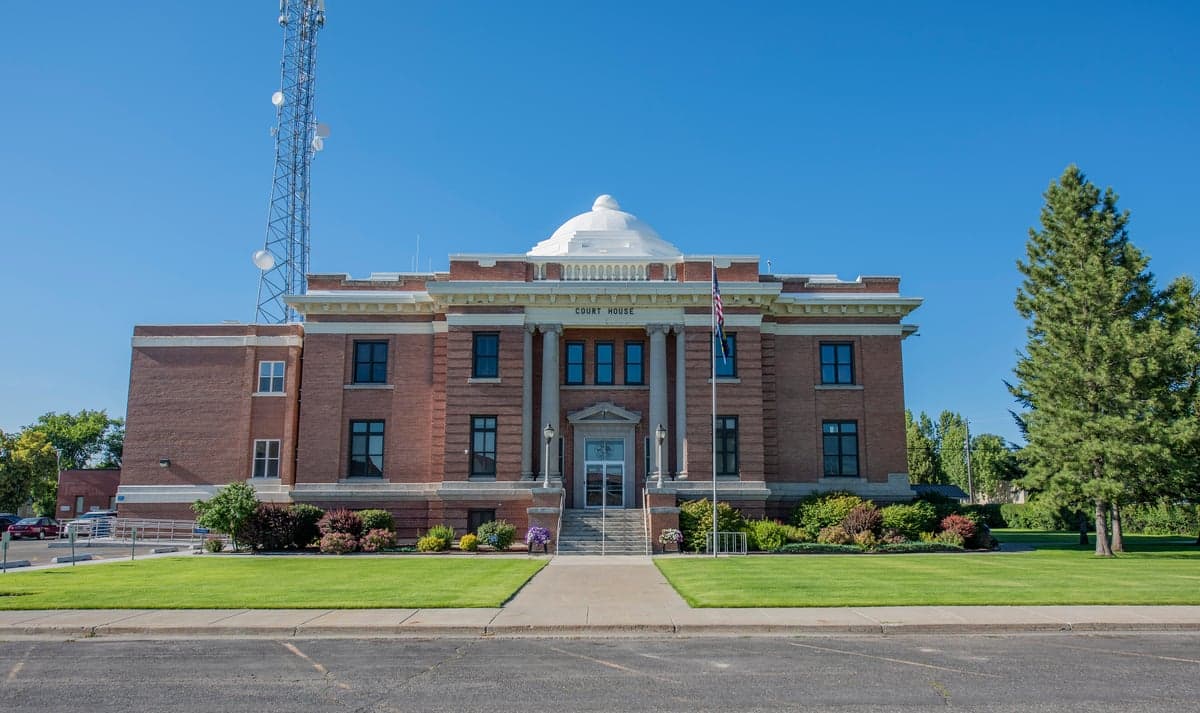
Fremont County has long been a rock-solid conservative stronghold, and honestly, it’s one of the last places in Idaho where you can still breathe free without someone from the state capital telling you how to live. With a Cook PVI of R+13, it’s reliably red, but it’s not quite as deep red as the state as a whole (Idaho sits at R+18). That gap tells a story—a story of a county that’s stayed true to its rural, self-reliant roots while the rest of the state has gotten a little too cozy with big-government conservatism. The trajectory here is steady: we’ve been red for decades, and barring a massive influx of out-of-staters, we’ll stay that way.
How it compares
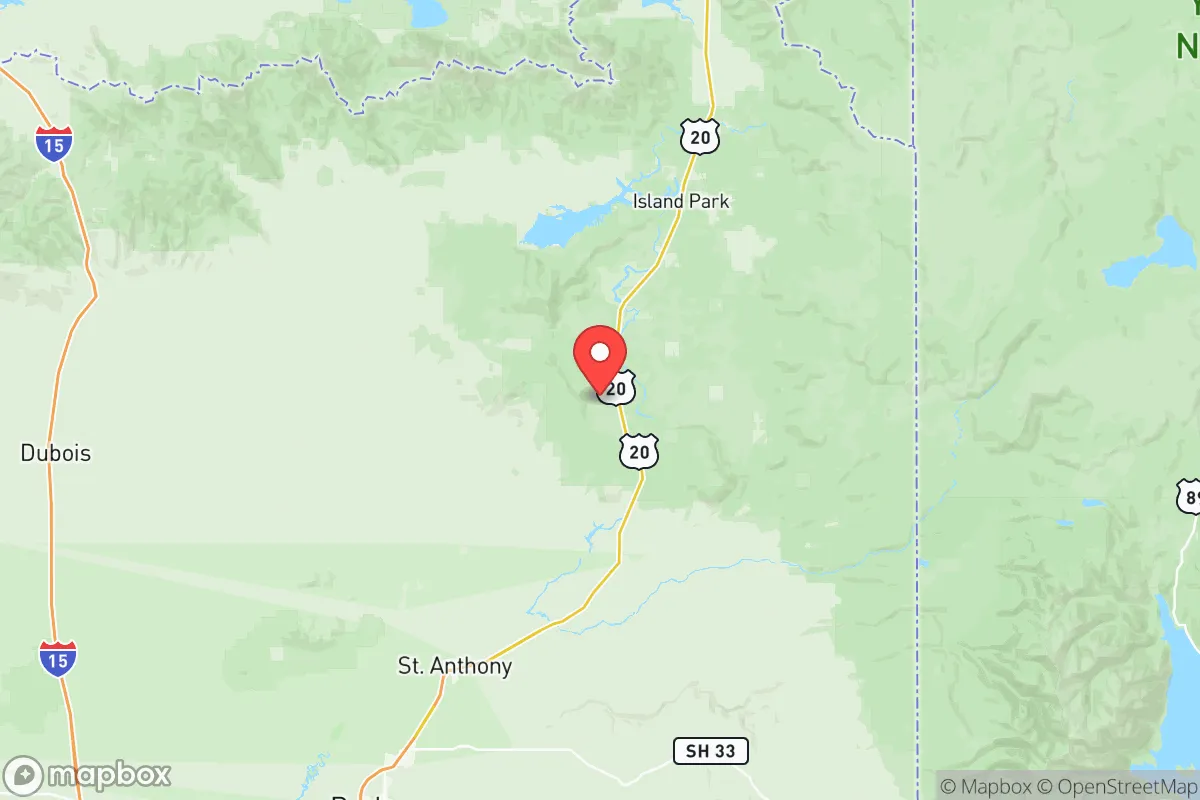
Compared to Idaho’s R+18, Fremont County’s R+13 might look like a slight shift left, but don’t let that fool you. The difference comes down to a few pockets of moderation, not a real liberal surge. In Ashton, for example, you’ll find a more traditional, family-farm conservative vibe—folks who vote red but aren’t afraid to question the party line on land use or water rights. Meanwhile, St. Anthony is the county seat and leans a bit more establishment Republican, with a stronger pull from state employees and local government types. The real contrast is in Island Park, where the seasonal crowd and second-home owners from places like California have nudged things slightly purple in recent years—still red, but you’ll see a few more “moderate” signs in the yards during hunting season. The swing precincts are mostly around the Warm River area and the western edge near Chester, where independent ranchers vote their conscience, not a party card. Overall, Fremont County feels more grounded in local control than the state’s broader, more corporate conservatism.
What this means for residents
For folks living here, the political climate means a lot less government overreach in daily life. We don’t have the same pressure from Boise to adopt progressive policies on land use, school curriculum, or health mandates. That’s a big deal when you see other parts of Idaho—like Ada County—caving to woke agendas on things like critical race theory in schools or vaccine passports. Here, the county commission and school board are still run by people who understand that personal freedom isn’t negotiable. The downside? We’re not immune to the state’s growth pressures. More people moving in from blue states could shift things over the next decade, especially if they settle in Island Park or along the Henry’s Fork. But for now, residents enjoy a political environment where your rights to bear arms, raise your kids without government interference, and run your business without endless red tape are still respected.
Culturally, Fremont County stands apart from Idaho’s more urbanized areas. We don’t have the same tech-bro libertarianism of Boise or the Mormon-heavy influence of eastern Idaho’s Rexburg. Instead, it’s a mix of old-school ranchers, LDS families, and independent outdoorsmen who all agree on one thing: the government should stay out of our lives. Policy-wise, you’ll see strong support for Second Amendment sanctuary status, opposition to land-use restrictions from the feds, and a healthy skepticism of state-level education mandates. If you’re looking for a place where conservative values aren’t just lip service, Fremont County is it—but keep an eye on those newcomers. The next five years will tell us if we hold the line or start sliding toward the state’s softer, more centralized version of red.

State Political ClimatePolitical Climate in Idaho
State Political AnalysisPolitical Environment in the State
Idaho is one of the most reliably Republican states in the nation, with a Cook PVI of R+18, meaning it votes about 18 points more Republican than the national average. Over the past 20 years, the state has shifted from a moderate, libertarian-leaning conservatism to a more assertive, culturally conservative posture, driven largely by an influx of out-of-state transplants and a corresponding backlash from long-time residents. The dominant coalition is a mix of rural ranchers, Mormon communities in the southeast, and a growing wave of conservative refugees from California, Oregon, and Washington, who have accelerated the state’s rightward drift on social and fiscal issues.
Urban vs. rural divide
The political map of Idaho is starkly divided between its few urban islands and the vast, deeply red rural expanse. The Treasure Valley, anchored by Boise, Meridian, and Nampa, is the state’s population center and the only area with any real Democratic presence. Ada County (Boise) has been a perennial swing county, flipping blue in 2020 for the first time in decades, though it swung back toward Trump in 2024. Canyon County (Nampa, Caldwell) remains reliably red, but the margins are shrinking as Boise’s suburban sprawl pushes west. The real engine of Idaho’s conservatism is everywhere else. Idaho Falls and Rexburg in the east are heavily Mormon and vote 80%+ Republican. Coeur d’Alene in the north has seen a massive influx of conservative Californians, turning what was once a purple resort town into a deep red stronghold. The rural counties—Lemhi, Custer, Owyhee—routinely deliver 85-90% of their votes to the GOP. The divide isn’t just urban vs. rural; it’s also native vs. newcomer, with many long-time residents feeling their libertarian roots are being replaced by a more rigid, culture-war-focused conservatism.
Policy environment
Idaho’s policy environment is aggressively conservative, with a strong emphasis on limited government, low taxes, and parental rights. The state has a flat income tax rate of 5.8% (reduced from 6% in 2023), and the sales tax is 6%, with no local add-ons. Property taxes are relatively low, though they vary by county. The regulatory posture is business-friendly, with no state-level minimum wage above the federal $7.25 and a right-to-work law. On education, the state has embraced school choice through a robust charter school sector and the 2023 “Empowering Parents” grant program, which gives state funds directly to families for educational expenses. However, the public school system is chronically underfunded, ranking near the bottom nationally in per-pupil spending. Healthcare policy is minimal; the state did not expand Medicaid until 2020, and only after a voter-led initiative forced the legislature’s hand. Election laws have tightened: voter ID is required, and in 2023, the legislature passed a law banning ballot drop boxes and restricting absentee voting. The state also passed a near-total abortion ban in 2020, triggered by the Dobbs decision, with no exceptions for rape or incest. For a conservative, the policy environment is largely aligned with small-government principles, though the heavy-handed social legislation can feel like an overreach to those who value personal liberty above all.
Trajectory & freedom
The trajectory of freedom in Idaho is a mixed bag. On the positive side, the state has aggressively expanded gun rights: in 2023, it passed a constitutional carry law, allowing permitless concealed carry for anyone 18 or older. It also passed a “Second Amendment Protection Act” that purports to nullify federal gun laws. Parental rights have been strengthened with the 2023 “Parents’ Bill of Rights,” which requires schools to notify parents of any curriculum related to sexuality or gender identity and prohibits instruction on these topics in K-5. Medical freedom took a hit with the abortion ban, but the state has not imposed COVID-19 vaccine mandates or lockdowns since 2021. On the concerning side, the state’s property rights are under threat from the influx of cash buyers driving up land prices, and the legislature has shown a willingness to preempt local control—for example, banning cities from regulating short-term rentals. The biggest red flag for a liberty-minded person is the growing influence of the Church of Jesus Christ of Latter-day Saints in the legislature, which has pushed for stricter alcohol laws and Sunday closing hours in some areas. Overall, Idaho is becoming more free in the sense of fewer gun and education restrictions, but less free in the sense of a more intrusive social agenda and a housing market that prices out locals.
Civil unrest & political movements
Idaho has a history of fringe political movements, but the current climate is relatively calm compared to the Pacific Northwest. The most visible flashpoint is the North Idaho region, particularly around Sandpoint and Bonners Ferry, where white nationalist groups have held rallies and attempted to establish a “homeland” in the 2010s. These groups have been largely marginalized, but they still generate headlines. On the left, the Boise area saw significant protests during the 2020 George Floyd demonstrations, with some property damage downtown. The state’s immigration politics are tense but not explosive; the legislature passed a law in 2024 requiring law enforcement to cooperate with federal immigration authorities, and there are no sanctuary cities. Election integrity is a hot-button issue: the 2022 primary saw a controversial “ballot harvesting” investigation in Canyon County, though no charges were filed. The most visible political movement right now is the “Take Back Idaho” faction within the GOP, which is pushing for even stricter abortion laws, a ban on ranked-choice voting, and a crackdown on “woke” curriculum in universities. A new resident would notice the strong presence of “Don’t Tread on Me” flags and “Let’s Go Brandon” stickers, but actual civil unrest is rare—Idahoans tend to be polite and keep to themselves, even when politically fired up.
Projection
Over the next 5-10 years, Idaho will likely become even more Republican, but the flavor of that conservatism will shift. The in-migration from California, Oregon, and Washington shows no signs of slowing, and these newcomers tend to be culturally conservative but fiscally moderate—they want low taxes and school choice, but they also want good infrastructure and services. This will create tension with the native libertarian ranchers who want no government at all. The Boise metro area will continue to grow, potentially flipping Ada County permanently blue, but the legislature will remain supermajority Republican due to gerrymandering and rural overrepresentation. Expect more preemption laws from the state capital, stripping cities of the ability to pass their own housing, environmental, or social policies. The biggest wildcard is the LDS Church’s influence: as the church moderates on some social issues (e.g., supporting the Respect for Marriage Act), it may create a rift with the evangelical wing of the GOP. For a new resident, the Idaho of 2035 will likely have more people, more traffic, higher housing costs, and a government that is more focused on culture war battles than on the limited-government ideals that originally made the state attractive.
For a conservative moving to Idaho, the bottom line is this: you’ll find a state that largely shares your values on taxes, guns, and parental rights, but you should be prepared for a government that is increasingly willing to use its power to enforce a specific moral vision. If you’re a libertarian-leaning conservative who wants to be left alone, the rural areas and smaller towns like Emmett or Moscow are your best bet. If you want a vibrant economy and don’t mind some political diversity, the Boise suburbs are fine. Just don’t expect the Idaho of 20 years ago—the state is changing fast, and the freedom you’re moving for might look different than you imagined.
* Values derived from national, state, county, city and local statistics and may differ in a specific area. Last updated: 2026-05-28T05:34:40.000Z
Narrative content on this page is AI-generated and may contain mistakes. Verify any details that matter before acting on them.
ReloMaps may earn a commission from affiliate links at no extra cost to you.

