Photo: Wikipedia
Demographics of Fremont County
Affluence Level in Fremont County
A middle-class area roughly in line with national averages across income, home values, education, and employment.
People of Fremont County
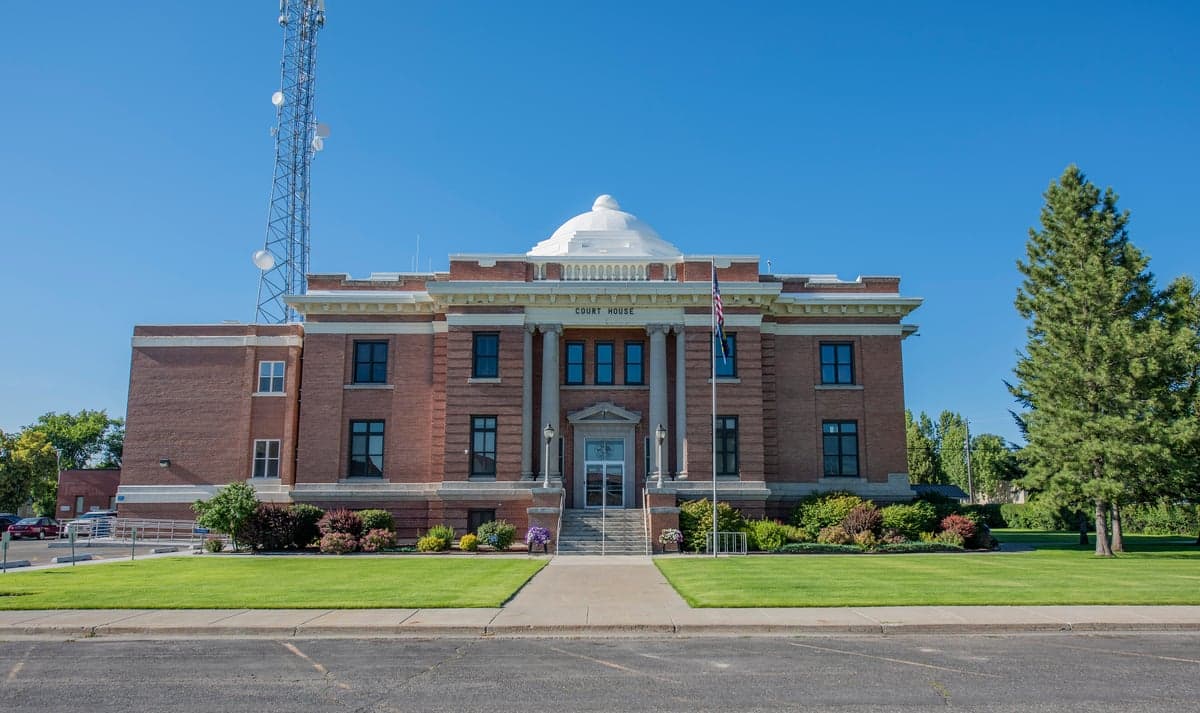
Fremont County, Idaho, is a predominantly white, rural community of 13,701 residents, characterized by its Mormon pioneer heritage and a strong agricultural and outdoor-recreation identity. The population is notably homogenous, with 83.5% identifying as white and a Hispanic minority of 12.1%, while the foreign-born share sits at just 3.2%. This is a place where family roots run deep, and the county’s demographic story is one of early settlement by Latter-day Saint pioneers, followed by a long period of stability and slow growth, with recent in-migration from neighboring states beginning to introduce modest change.
Settlement & growth (pre-1960)
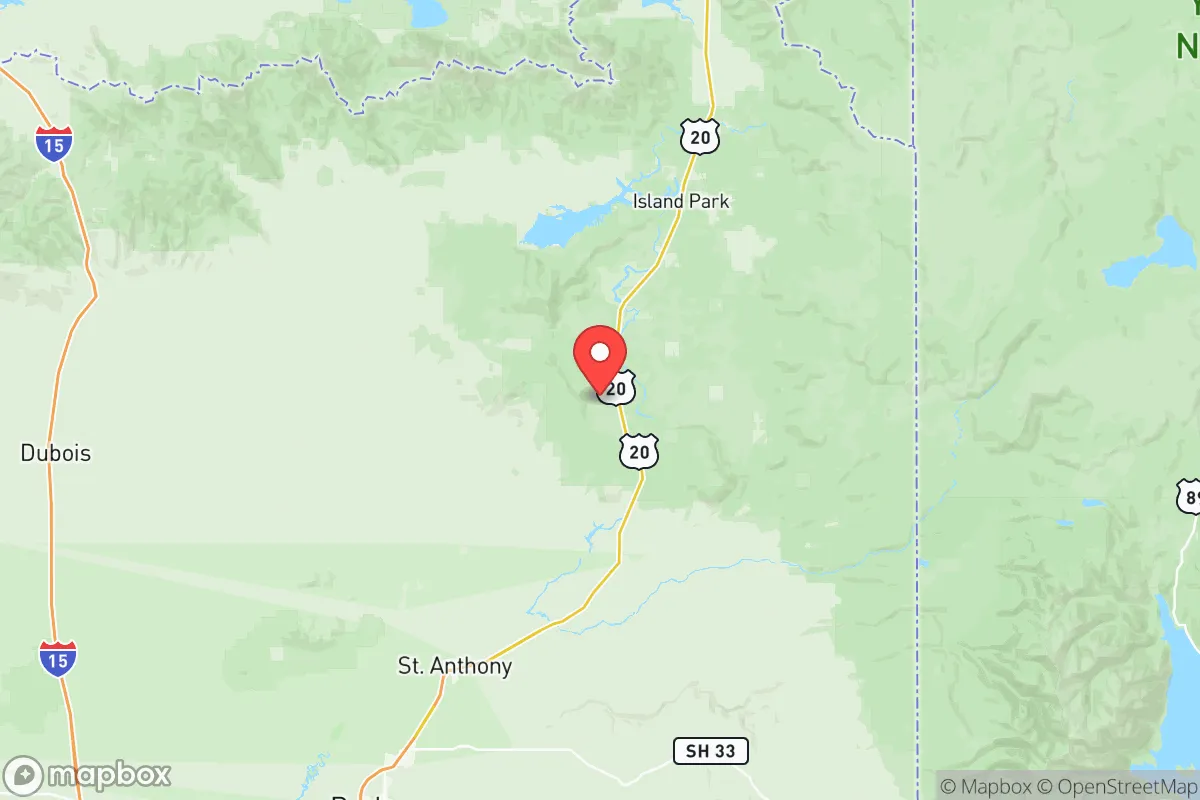
Before American settlement, the Fremont County area was inhabited by the Shoshone and Bannock peoples, who followed the seasonal game and fish runs through the Upper Snake River Valley. The first permanent American settlers arrived in the 1860s, drawn by the promise of irrigated farmland and religious community. These were predominantly Mormon pioneers from Utah, sent by Brigham Young to colonize the region and establish agricultural outposts. The town of St. Anthony, founded in 1888 as the county seat, became the central hub for these settlers, who built irrigation canals and turned the sagebrush plains into productive hay and potato fields.
The Mormon colonization wave continued through the 1880s and 1890s, with families spreading out to form smaller communities like Ashton (founded 1906) and Drummond (1910). These towns were linked by the Yellowstone Branch of the Oregon Short Line Railroad, which opened the area to commerce and tourism. A second, smaller wave came in the early 1900s with the expansion of dryland farming and the timber industry in the Targhee National Forest. This period saw a trickle of non-Mormon homesteaders, mostly of Northern European descent, who settled in the more remote areas around Island Park and Last Chance. By 1950, the county’s population had reached roughly 9,000, and the cultural identity was firmly established: conservative, church-centered, and tied to the land.
Modern era (post-1965)
The post-1965 period brought little of the dramatic demographic change seen in other parts of the West. Fremont County did not experience the large-scale immigration from Latin America or Asia that reshaped urban Idaho. The Hispanic population, now 12.1%, grew gradually through the 1980s and 1990s, primarily as agricultural labor for the potato and barley farms around Parker and Teton. These families, many from Mexico and Central America, settled in small clusters near farm operations, but did not form the distinct ethnic enclaves seen in larger Idaho cities like Nampa or Caldwell.
Domestic migration has been the more significant driver of change since 2000. Retirees and remote workers from California, Oregon, and Washington have been drawn by the county’s lower cost of living and proximity to Yellowstone National Park. This in-migration has concentrated in the Island Park area, where vacation homes and year-round cabins have proliferated along the Henrys Fork of the Snake River. These newcomers tend to be older, more affluent, and less connected to the LDS church than the native population, creating a subtle cultural divide between the agricultural valley and the recreational high country. The county’s college-educated share stands at 21.8%, below the national average, reflecting the area’s reliance on farming, tourism, and trades rather than professional services.
The future
Fremont County’s population is projected to grow slowly, likely reaching 15,000-16,000 by 2040, driven primarily by domestic in-migration rather than natural increase. The Hispanic share is expected to rise modestly, perhaps to 15-18%, as agricultural families grow and second-generation residents remain in the area. However, the county is unlikely to see significant diversification from East/Southeast Asian or Indian subcontinent communities, given the lack of urban job centers or university anchors. The Black population, currently 0.3%, will likely remain negligible.
The cultural identity of the county is becoming more bifurcated. The traditional Mormon farming communities in St. Anthony and Ashton are holding steady, while the recreational corridor around Island Park and Warm River is attracting a more secular, outdoors-oriented population. This is not a region undergoing rapid tribalization, but rather a slow layering of new residents onto a stable base. The in-migrants are largely being absorbed into the existing social fabric, though tensions occasionally surface over land use, water rights, and the pace of development.
For a conservative-leaning individual or family considering relocation, Fremont County offers a predictable, safe, and family-oriented environment where community ties remain strong and the pace of change is measured. The population is not homogenizing in the sense of losing its character, but it is slowly becoming more diverse in background and outlook. The next decade will likely see continued growth in the Island Park area, while the valley towns remain the cultural and economic anchors. This is a place where a newcomer can still find a welcoming, traditional community, provided they respect the local rhythms and the land that defines them.

* Values derived from national, state, county, city and local statistics and may differ in a specific area. Last updated: 2026-05-28T05:34:40.000Z
Narrative content on this page is AI-generated and may contain mistakes. Verify any details that matter before acting on them.
ReloMaps may earn a commission from affiliate links at no extra cost to you.

