Photo: Wikipedia
Political ClimatePolitical Climate in Franklin County
Showing district-level results — no local-only data available.
Local Political AnalysisPolitical Analysis of Franklin County
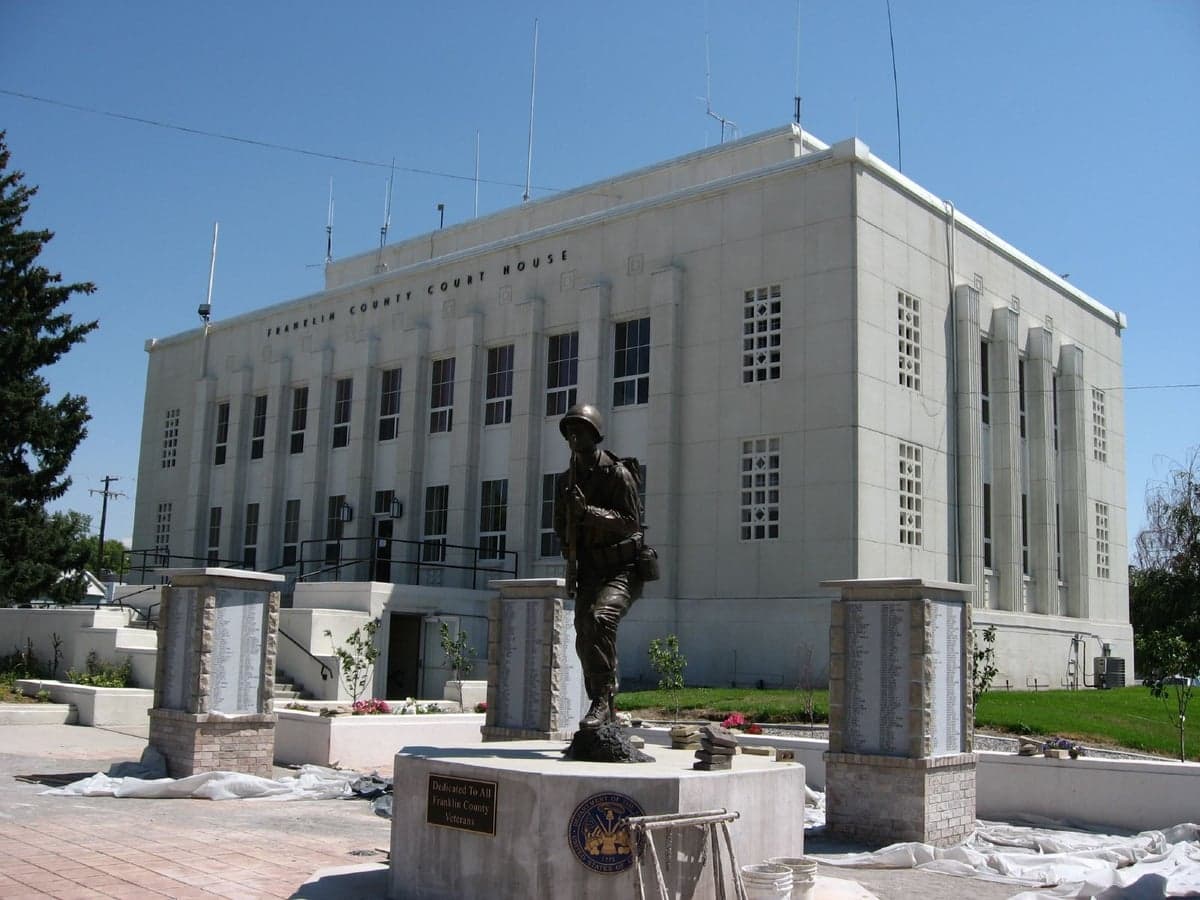
Franklin County, Idaho, is reliably Republican, with a Cook PVI of R+13, but it's a bit more moderate than the state as a whole, which sits at R+18. This isn't a purple county by any stretch, but the political temperature varies noticeably depending on which part you're in. The county seat, Preston, is the heart of the area's conservative base, while the smaller town of Dayton and the area around Weston have shown a slightly more independent streak in recent elections, often reflecting the influence of the LDS Church's emphasis on civic engagement and family values. The real swing precincts aren't between parties, but between more establishment Republicans and those who lean further right, especially in the rural stretches north of Preston.
How it compares
Compared to Idaho's R+18 statewide lean, Franklin County is a few points less conservative, which is a meaningful gap in a state this red. The difference comes down to the county's demographics and history. While the state has seen an influx of out-of-state transplants, especially in the Treasure Valley, Franklin County remains a tight-knit, generational community. The LDS population is a dominant cultural force here, and while that generally aligns with conservative values, it also fosters a pragmatic, community-first approach that can sometimes buck the more libertarian or anti-government strains found elsewhere in Idaho. For example, you'll see higher support for local school bonds and infrastructure spending here than in some neighboring counties, even if the candidates are all Republicans.
What this means for residents
For conservative residents, Franklin County is a comfortable place where their views are the norm. Local government, from the county commission to the school board, is reliably conservative, and you won't find much public debate on social issues. For liberal or moderate residents, the reality is that they are a clear minority. While there's no hostility, they often find themselves navigating a community where political assumptions are deeply held and rarely challenged. The practical effect is that local policy tends to be stable and predictable, with a focus on low taxes, agricultural interests, and maintaining the area's traditional way of life. There's less of the intense, polarized activism you see in more competitive areas, but also less room for political diversity in public life.
One cultural distinction that sets Franklin County apart from the rest of Idaho is its deep-rooted sense of local identity, tied closely to the Cache Valley and its Mormon pioneer history. You won't find the same kind of "don't tread on me" individualism that's common in northern or central Idaho. Instead, the political culture here is more about collective responsibility and community stewardship. Policy debates, when they happen, are usually about how to best preserve the area's agricultural character and family-centric lifestyle, not about fundamental ideological shifts. That's the real story of Franklin County politics: it's less about red versus blue and more about how to keep things running the way they've always been, for the people who have always been here.

State Political ClimatePolitical Climate in Idaho
State Political AnalysisPolitical Environment in the State
Idaho is one of the most reliably Republican states in the nation, with a Cook Partisan Voting Index of R+18, meaning it votes about 18 points more Republican than the country as a whole. The state has shifted sharply rightward over the past 20 years, driven by explosive growth in the conservative-leaning Treasure Valley and a simultaneous exodus of moderate Democrats from rural areas. While the state was already red in the 1990s, the transformation since 2010 has been dramatic — Idaho now routinely sends a 2-1 Republican delegation to the legislature and hasn't elected a Democrat to statewide office since 2006.
Urban vs. rural divide
The political map of Idaho is defined by a stark urban-rural split, but with a twist: the state's largest metro area, Boise, is itself increasingly conservative. The Boise-Nampa metropolitan area, home to roughly 40% of the state's population, has trended rightward as California and Washington transplants arrive, many fleeing high taxes and progressive policies. Ada County (Boise) voted for Trump by 12 points in 2020, while neighboring Canyon County (Nampa, Caldwell) went for Trump by 30 points. The rural north — places like Coeur d'Alene, Sandpoint, and Moscow — tells a more complex story. Kootenai County (Coeur d'Alene) is deeply red, but Latah County (Moscow, home to the University of Idaho) is one of the few blue dots in the state, voting for Biden by 10 points in 2020. The eastern and central parts of the state, including Idaho Falls, Pocatello, and Twin Falls, are overwhelmingly Republican, often voting 70-80% for GOP candidates. The only reliably Democratic areas are small pockets around college towns and a handful of Native American reservations.
Policy environment
Idaho's policy environment is among the most conservative in the nation. The state has no income tax on corporate or personal income, relying instead on a 6% sales tax and property taxes. The regulatory posture is decidedly pro-business, with minimal zoning restrictions outside of Boise and a right-to-work law that has kept union density low. Education policy has been a flashpoint: the state has one of the nation's most robust school choice landscapes, including charter schools, public charter schools, and a new "empowerment scholarship" program for private school tuition. Healthcare policy is similarly conservative — Idaho has not expanded Medicaid under the Affordable Care Act (though voters passed a ballot initiative in 2018 that the legislature partially implemented), and the state has some of the strictest abortion laws in the country, banning the procedure at six weeks with no exceptions for rape or incest. Election laws are straightforward: voter ID is required, same-day registration is available, and mail-in voting is permitted but not universal. The state has no ballot initiative process for constitutional amendments, though statutory initiatives are allowed.
Recent policy direction
The last five years have seen Idaho accelerate its conservative trajectory across multiple fronts. In 2023, the legislature passed a near-total abortion ban (HB 242) with narrow exceptions, making Idaho one of the most restrictive states in the post-Dobbs era. On gun rights, the state enacted permitless carry in 2016 and has repeatedly blocked local governments from enacting their own firearm ordinances. Parental rights have been a major focus: the 2023 "Parental Rights in Education" law (HB 349) requires schools to notify parents of curriculum changes and restricts discussion of gender identity in classrooms. On privacy and surveillance, Idaho passed a law in 2024 prohibiting government use of facial recognition technology without a warrant. Property rights remain strong, with no statewide rent control and limited eminent domain authority. The state has also moved to restrict ballot access for third parties, raising signature requirements in 2023. On medical freedom, Idaho was an early adopter of COVID-19 vaccine mandate bans for state employees and contractors.
Civil unrest & political movements
Idaho has a long history of anti-government and militia movements, dating back to the Ruby Ridge standoff in 1992. In recent years, the state has seen a resurgence of far-right activism, particularly in the northern panhandle around Coeur d'Alene and Sandpoint, where groups like the Proud Boys and Patriot Front have held rallies. The state's immigration politics are tense but not violent — Idaho has no sanctuary cities, and local law enforcement in places like Canyon County actively cooperates with ICE. The 2020 election integrity controversy was muted compared to other states, though the legislature did create a special committee to investigate election procedures. A notable flashpoint occurred in 2022 when the University of Idaho student murders in Moscow sparked a wave of conspiracy theories and online harassment. For a new resident, the most visible sign of political tension is likely the proliferation of political signs and flags in rural areas, particularly the "Don't Tread on Me" Gadsden flag and Trump 2024 banners.
Projection
Over the next 5-10 years, Idaho is likely to become even more conservative, but with a growing libertarian streak. The state's population is projected to grow by another 15-20% by 2030, with most newcomers coming from deep-blue states like California, Oregon, and Washington. These transplants tend to be fiscally conservative but socially moderate, which could create tension with the existing hardline conservative base. The Boise metro area will continue to be the political battleground, with Ada County potentially becoming more competitive as younger, more diverse residents move in. However, the rural areas will remain deeply red, and the legislature's supermajority is unlikely to be threatened. The biggest wild card is the growing influence of the "Liberty" wing of the Idaho Republican Party, which has pushed for even more aggressive deregulation, school choice expansion, and limits on local government authority. A new resident moving in now should expect to find a state that is solidly Republican but increasingly divided between traditional conservatives and libertarian-leaning populists.
For someone considering a move to Idaho, the bottom line is straightforward: if you're a conservative who values low taxes, gun rights, and limited government, you'll find a welcoming environment with a like-minded community. If you're a liberal, you'll be in a distinct minority, though you'll find pockets of like-minded people in Boise, Moscow, and Sandpoint. The state's political trajectory is clear — it's getting redder, not bluer — and the practical implications for daily life include lower taxes, fewer regulations, and a culture that prizes individual liberty over collective action. Just be prepared for the culture wars to play out in local school board meetings and county commission chambers, because that's where the real action is in Idaho politics.
* Values derived from national, state, county, city and local statistics and may differ in a specific area. Last updated: 2026-07-02T18:10:17.000Z
Narrative content on this page is AI-generated and may contain mistakes. Verify any details that matter before acting on them.
ReloMaps may earn a commission from affiliate links at no extra cost to you.

