Photo: Wikipedia
Demographics of Franklin County
Affluence Level in Franklin County
A middle-class area roughly in line with national averages across income, home values, education, and employment.
People of Franklin County
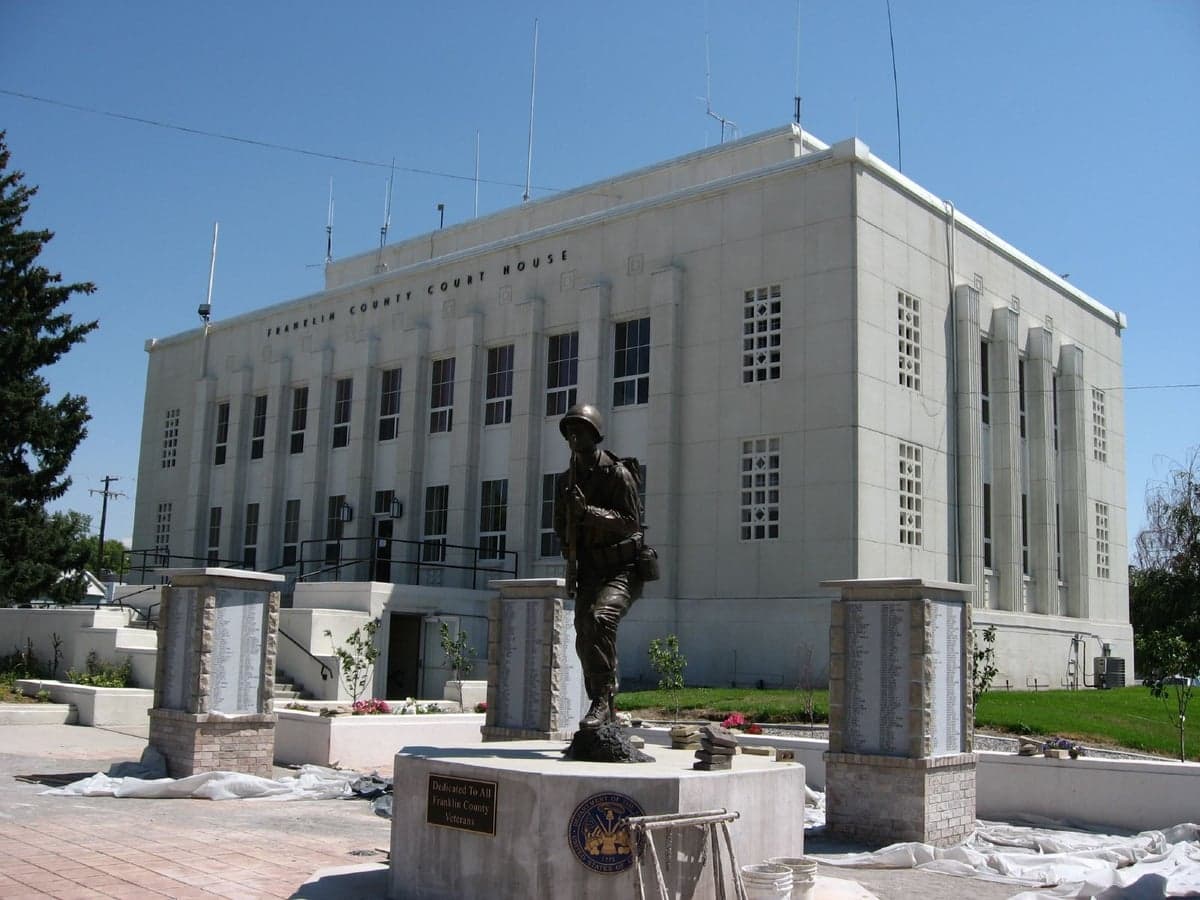
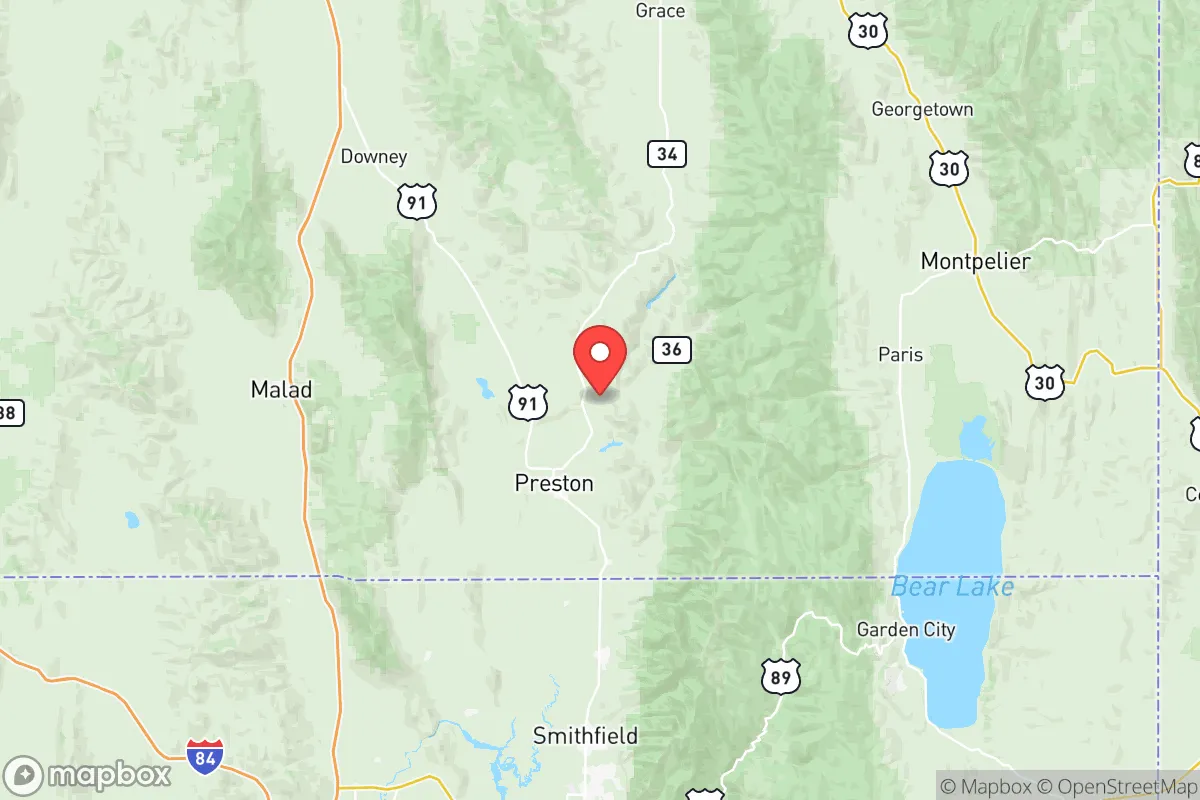
Franklin County, Idaho, is a predominantly white, rural community of 14,715 residents, shaped by a deep agricultural heritage and a strong religious identity rooted in its original Mormon pioneer settlement. With a foreign-born population of just 1.3% and a Hispanic population of 7.3%, the county remains one of the least ethnically diverse in the state, a direct reflection of its insular founding and limited economic diversification. The population is concentrated in the county seat of Preston and the smaller towns of Franklin, Weston, and Dayton, where family farms, church attendance, and a conservative social fabric define daily life. For those considering a move, Franklin County offers a quiet, low-crime environment with a strong sense of community, but little racial or cultural variety.
Settlement & growth (pre-1960)
Before Mormon settlement, the Bear River Valley was home to the Shoshone and Bannock tribes, who used the region for seasonal hunting and fishing. The arrival of Mormon pioneers in 1860 marked the first permanent American settlement, with the town of Franklin—named after Franklin D. Richards, an LDS apostle—becoming the first Anglo settlement in Idaho. These settlers were almost exclusively members of the Church of Jesus Christ of Latter-day Saints, sent by Brigham Young to colonize the Cache Valley and extend Mormon influence northward.
The early economy was entirely agrarian, with settlers irrigating the dry valley to grow wheat, oats, and potatoes. The completion of the Utah and Northern Railway in the 1870s connected Franklin County to broader markets, but the population remained overwhelmingly Mormon and ethnically homogenous. By 1900, the county's population was nearly 100% white, with a handful of Basque sheepherders and a few Chinese railroad workers passing through but not settling permanently. The town of Preston, established in 1881, grew as the commercial hub, while Weston and Dayton remained small farming hamlets.
Through the early 20th century, the population grew slowly, reaching about 9,000 by 1940. The Dust Bowl and Great Depression had little impact on Franklin County, as the local agricultural economy was stable and self-sufficient. World War II brought some out-migration as young men joined the military, but the county did not experience the industrial boom that drew rural populations to cities elsewhere. The post-war period saw modest growth, with the population reaching 11,000 by 1960, still overwhelmingly white and Mormon, with no significant immigrant or minority presence.
Modern era (post-1965)
The 1965 Hart-Cellar Act, which dramatically increased immigration from Asia and Latin America, had virtually no effect on Franklin County. The county's foreign-born population remains at just 1.3%, and the Hispanic population of 7.3% is the only non-white group of any size. Most Hispanic residents are concentrated in Preston and Franklin, working in agricultural labor, dairy operations, and food processing. There are no established Asian, Black, or Indian communities in the county, reflecting the area's lack of economic pull for immigrant groups.
Domestic migration has also been minimal. The county has not attracted significant numbers of retirees, remote workers, or out-of-state transplants, unlike other parts of the Mountain West. The population grew by only about 3% between 2000 and 2020, a rate far below the state average. Suburbanization has been limited to a few subdivisions on the outskirts of Preston, but the county has not experienced the sprawl seen in Ada County or Bannock County. The population remains deeply rooted in the LDS Church, with church attendance rates among the highest in the nation, and the social culture is shaped by conservative values, large families, and a strong emphasis on community self-reliance.
The future
Franklin County is projected to remain one of Idaho's least diverse counties over the next 10-20 years. The Hispanic population may grow slowly, reaching perhaps 10-12% by 2040, driven by natural increase and continued demand for agricultural labor. However, the county's lack of major employers, limited housing stock, and distance from urban centers will likely prevent any significant influx of new residents from other states or countries. The white population will continue to age, with a median age of 36, slightly above the state average, and out-migration of young adults seeking education and jobs in Boise, Logan, or Salt Lake City will keep growth modest.
The cultural identity of Franklin County will remain overwhelmingly Mormon and conservative, with little pressure toward diversification. The county's political leanings are among the most Republican in Idaho, and the social fabric is unlikely to shift significantly. New residents who move in will likely be drawn by the area's low crime, strong schools, and rural lifestyle, but they should expect a community that is insular and resistant to change. The towns of Preston, Franklin, Weston, and Dayton will continue to anchor the population, with no new settlements or major growth corridors emerging.
For someone moving in now, Franklin County offers a stable, predictable, and deeply traditional community—a place where the population is not growing or changing much, and where the values of the original Mormon settlers still define daily life. It is not a place of demographic transformation or cultural mixing, but rather a quiet corner of the West where the past and present look very much alike.

* Values derived from national, state, county, city and local statistics and may differ in a specific area. Last updated: 2026-07-02T18:10:17.000Z
Narrative content on this page is AI-generated and may contain mistakes. Verify any details that matter before acting on them.
ReloMaps may earn a commission from affiliate links at no extra cost to you.

