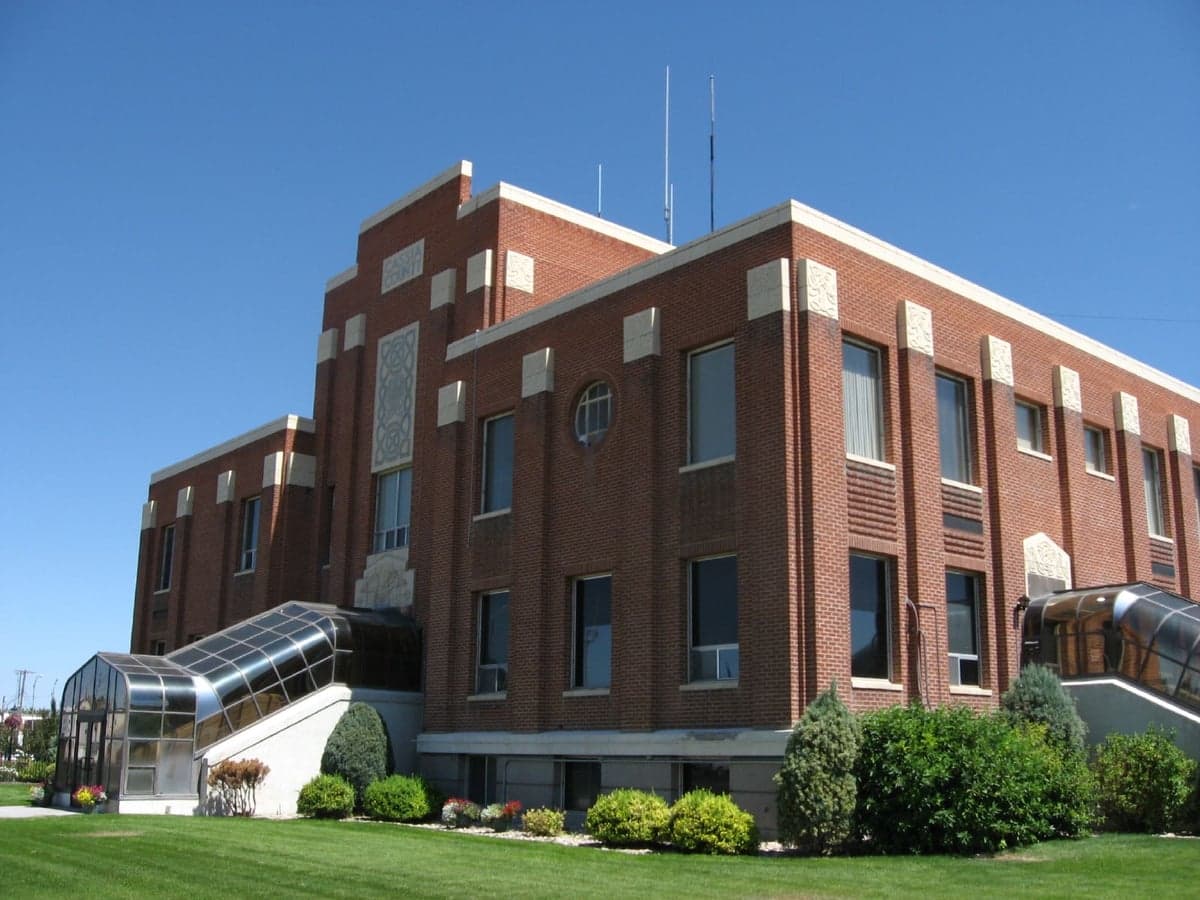
Photo: Wikipedia
Political ClimatePolitical Climate in Cassia County
Showing district-level results — no local-only data available.
Local Political AnalysisPolitical Analysis of Cassia County
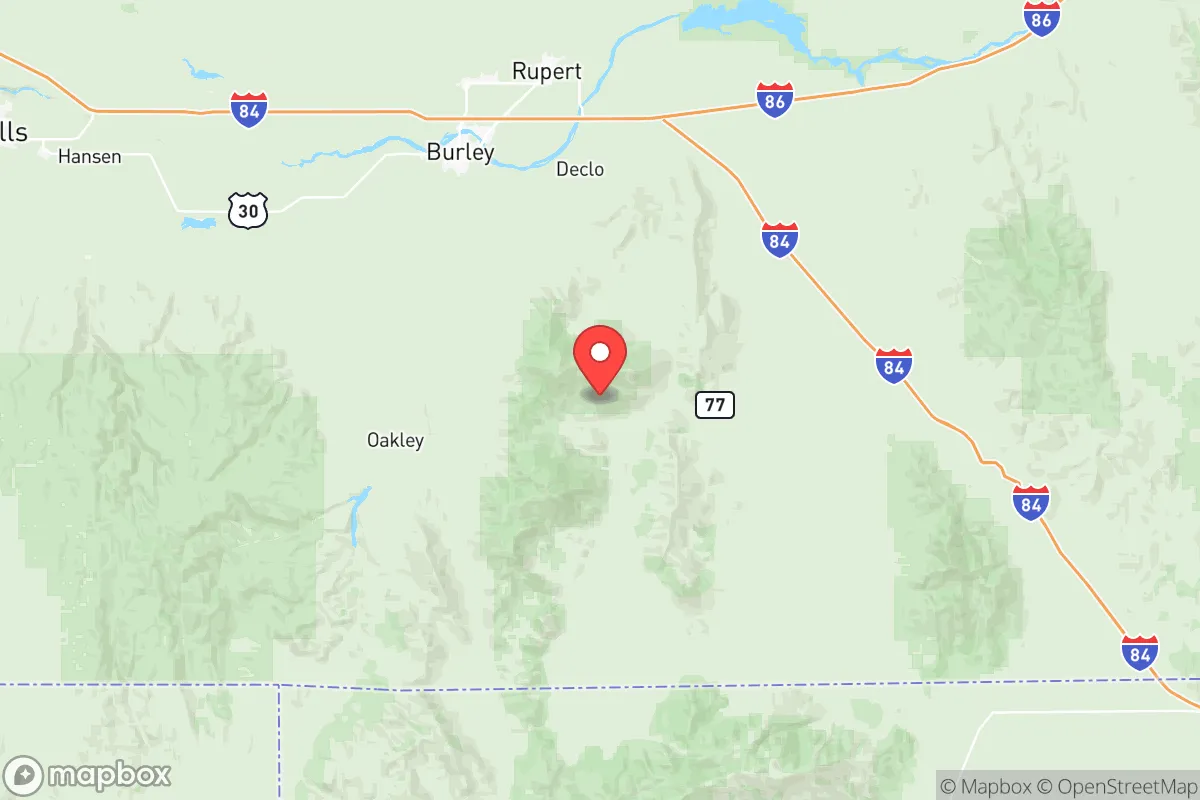
Cassia County is a reliably Republican stronghold, but it's not as deep red as the rest of Idaho might suggest. With a Cook PVI of R+13, it's noticeably less conservative than the state's overall R+18 rating, and that gap has real, local consequences. The county's politics are shaped by a mix of agriculture, a growing Latino population, and a quiet but persistent moderate streak, especially in the county seat of Burley.
How it compares
The five-point difference between Cassia County's R+13 and Idaho's R+18 is significant in a state where many rural counties are pushing R+30 or higher. The main reason is the city of Burley, which makes up roughly half the county's population. Burley's precincts, particularly around the hospital and the school district offices, have a history of swinging closer to the center. In the 2022 gubernatorial race, for example, Burley's urban precincts gave the Democratic candidate a higher share of the vote than any other part of the county, though still far from a win. In contrast, the smaller towns of Declo and Albion are among the most conservative areas in the county, often voting 80% or more for Republican candidates. The unincorporated community of Raft River, out in the sagebrush country, is similarly deep red. The swing precincts are almost entirely in Burley's newer subdivisions and along the I-84 corridor, where younger families and commuters to the Minidoka National Wildlife Refuge area tend to be slightly more moderate.
What this means for residents
For conservative residents, Cassia County is a comfortable place to live. Republican candidates win every countywide race by comfortable margins, and the local GOP is the dominant force in county commission and school board elections. The county's Republican lean means that conservative policy priorities—like low taxes, Second Amendment rights, and limited regulation—are the default. For liberal or moderate residents, the political reality is more nuanced. While you won't find a progressive majority anywhere in the county, Burley's relative moderation means that local elections are often decided in the Republican primary, not the general election. This can make the political climate feel less like a monolith and more like a contest between different shades of conservatism. The presence of a sizable Latino community, many of whom work in the dairy and potato processing industries, also adds a layer of complexity, as their voting patterns don't always align with the county's overall Republican tilt.
One cultural distinction that sets Cassia County apart from the rest of Idaho is its relationship with the LDS Church. The county has a high concentration of LDS members, and church influence is more visible in local politics than in, say, the more secular Boise area. This can mean that social issues like alcohol sales and Sunday business hours are more tightly regulated, and that community events often revolve around church calendars. For newcomers, this can feel either reassuring or restrictive, depending on your perspective. The county's political trajectory is likely to remain stable, with Burley's moderate growth slowly nudging the county toward the center, but not enough to flip any seats in the near future. The real action will continue to be in the Republican primaries, where the county's political character is truly defined.

State Political ClimatePolitical Climate in Idaho
State Political AnalysisPolitical Environment in the State
Idaho is one of the most reliably Republican states in the country, with a Cook Partisan Voting Index of R+18, meaning it votes about 18 points more Republican than the national average in presidential elections. The state has shifted sharply rightward over the past 20 years, driven by explosive growth in the conservative-leaning Boise metro area and an influx of out-of-state transplants, many of whom moved here specifically for the state’s political and cultural alignment. While the state was already red in the 1990s and early 2000s, the last decade has seen it harden into a deep-red stronghold where Democrats rarely win statewide office and the legislature is dominated by a conservative supermajority.
Urban vs. rural divide
The political map of Idaho is defined by a stark urban-rural split, but with a twist: the largest urban center, Boise and the Treasure Valley (including Meridian, Nampa, and Caldwell), is itself conservative-leaning, just less intensely so than the rest of the state. Ada County (Boise) has trended purple in recent cycles — it voted for Joe Biden in 2020 by a narrow margin, a shock to many longtime residents — but the surrounding counties of Canyon, Gem, and Payette remain deeply red. The rural north, anchored by Coeur d’Alene and the Idaho Panhandle, is among the most conservative regions in the nation, with counties like Bonner and Boundary routinely voting 75-80% Republican. The eastern side of the state, including Idaho Falls and Rexburg, is similarly conservative, driven by a large LDS population and agricultural economy. The only reliably blue pockets are the university towns: Moscow (home to the University of Idaho) and to a lesser extent Pocatello (Idaho State University), though even those are surrounded by deep-red rural areas. The political reality is that a relocator moving to Boise will find a more moderate, suburban conservatism, while someone settling in Coeur d’Alene or Idaho Falls will experience a far more culturally and politically homogeneous environment.
Policy environment
Idaho’s policy environment is shaped by a philosophy of limited government, low taxation, and cultural conservatism. The state has a flat income tax rate of 5.8% (recently reduced from 6% as part of ongoing tax reform), no estate tax, and relatively low property taxes compared to the national average. Sales tax is 6%, with no local option add-ons. The regulatory posture is business-friendly, with a right-to-work law and minimal occupational licensing burdens. Education policy is a flashpoint: the state has one of the lowest per-pupil spending levels in the nation, and the legislature has aggressively expanded school choice through charter schools and a new education savings account program (HB 93, passed in 2023) that allows public funds to follow students to private or homeschool settings. Healthcare policy is marked by a refusal to expand Medicaid under the Affordable Care Act until voters passed a ballot initiative in 2018; the legislature has since attempted to add work requirements and other restrictions. Election laws are restrictive by national standards: voter ID is required, same-day registration is not available, and mail-in voting is limited to those with an approved excuse. The state also has a closed primary system, meaning only registered Republicans can vote in GOP primaries, which effectively decides most general elections.
Recent policy direction
The last three years have seen Idaho accelerate its conservative policy agenda across multiple fronts. On gun and self-defense law, the state passed constitutional carry in 2016 and in 2023 enacted a law prohibiting local governments from enforcing federal gun regulations (HB 124), effectively creating a state-level nullification posture. Parental and education rights have been a major focus: the state passed the "Parents’ Bill of Rights" (HB 361) in 2022, requiring schools to notify parents of curriculum changes and medical services, and in 2023 banned classroom instruction on sexual orientation and gender identity (HB 71, modeled on Florida’s "Don’t Say Gay" law). On speech and privacy, Idaho has no broad shield law for journalists, and in 2023 passed a law (HB 314) restricting public library access to materials deemed "harmful to minors," which critics argue could lead to book bans. Medical and bodily autonomy is sharply restricted: abortion is banned at all stages of pregnancy with narrow exceptions for rape, incest, and the life of the mother, and the state has a trigger law that took effect immediately after Dobbs. Property rights are generally strong, with no statewide zoning mandates and a "right to farm" law protecting agricultural operations from nuisance lawsuits. Taxation continues to trend downward: the 2023 session cut the corporate income tax rate from 6.5% to 5.8% and accelerated individual income tax rate reductions. Voting and ballot access remain tight: the legislature has rejected no-excuse absentee voting and same-day registration, and in 2023 passed a law (HB 340) requiring proof of citizenship to register, which voting rights groups have challenged in court.
Civil unrest & political movements
Idaho has a visible and active political activist scene on both ends of the spectrum, though the right dominates. The state has been a hub for the "constitutional sheriff" movement, with several sheriffs publicly refusing to enforce federal gun laws or certain state mandates. The Ammon Bundy-linked People’s Rights network has a strong presence in the Treasure Valley and northern Idaho, organizing around vaccine mandates, property rights, and anti-government themes. On the left, the Idaho Democratic Party is small but active, with protests around abortion rights and LGBTQ+ issues drawing hundreds in Boise, though rarely more. Immigration politics are relatively quiet compared to border states, but the legislature has passed laws prohibiting sanctuary city policies and requiring local law enforcement to cooperate with federal immigration authorities. There is a small but vocal secessionist movement in northern Idaho — the "North Idaho" or "Greater Idaho" proposal to join eastern Oregon has gained some traction in rural counties, though it remains a fringe idea with no realistic path. Election integrity controversies have been minimal compared to states like Arizona or Georgia; Idaho’s voting systems are widely trusted by both parties, and there have been no major fraud allegations. A new resident would notice the prevalence of political signage, especially in rural areas, and the general cultural expectation of conservative political views in most social and professional settings.
Projection
Over the next 5-10 years, Idaho is likely to become even more conservative, but with a growing internal tension between traditional rural conservatives and the more libertarian-leaning transplants arriving from California, Washington, and Oregon. The Boise metro area will continue to grow and may become more politically competitive at the local level, but the state legislature will remain firmly in conservative hands due to gerrymandered districts and the closed primary system. The biggest wildcard is demographic: the influx of new residents — many of whom moved here explicitly for the political climate — will likely reinforce the state’s rightward tilt, but a subset of younger, more moderate professionals could gradually shift Ada County and perhaps Kootenai County (Coeur d’Alene) toward the center. The policy trajectory is clear: further tax cuts, expanded school choice, continued restrictions on abortion and LGBTQ+ rights, and a hardening of election laws. A relocator moving in now should expect that the state will remain a deeply red, culturally conservative environment for at least the next decade, with the most dramatic changes happening in the fast-growing suburbs of Boise and Meridian.
For a new resident, the bottom line is straightforward: if you are a conservative or libertarian-leaning individual or family, Idaho offers a policy environment that aligns closely with your values — low taxes, limited regulation, strong gun rights, and parental control in education. If you are a liberal or moderate, you will find a small but active community in Boise and the university towns, but you should expect to be in the political minority in most settings, and you will face a state government that is actively moving in a direction opposite to your preferences. The state is not politically diverse in the way that a swing state or a purple metro area is; it is a place where conservative politics are the default, and newcomers should be comfortable with that reality.
* Values derived from national, state, county, city and local statistics and may differ in a specific area. Last updated: 2026-07-15T16:03:06.000Z
Narrative content on this page is AI-generated and may contain mistakes. Verify any details that matter before acting on them.
ReloMaps may earn a commission from affiliate links at no extra cost to you.

