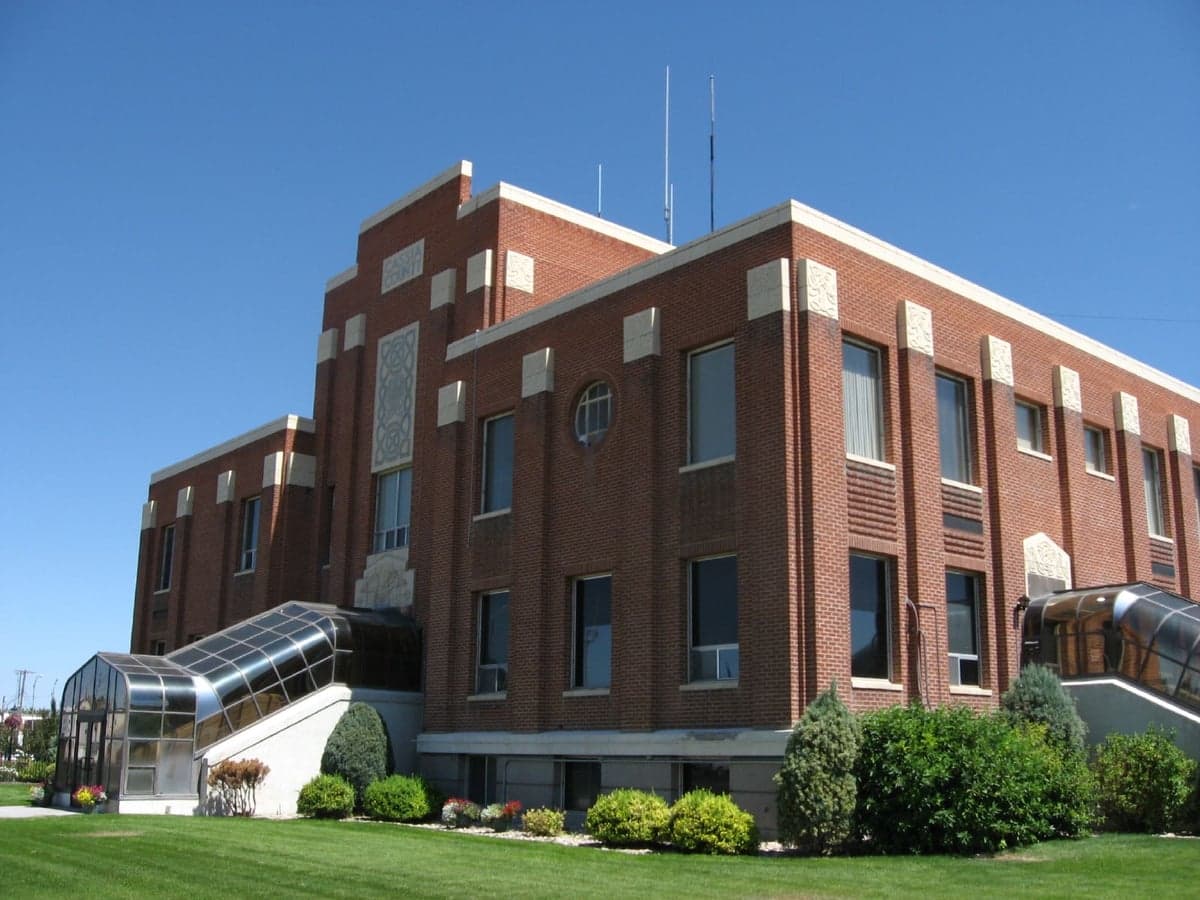
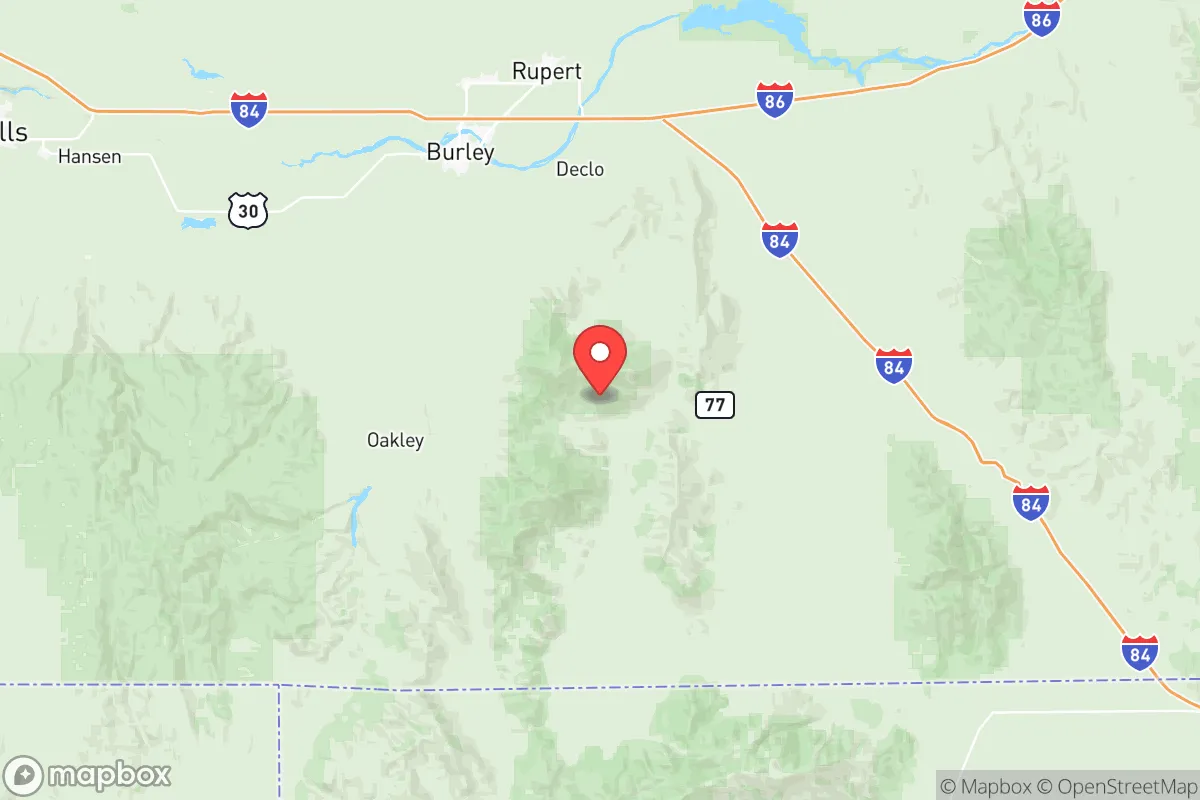
Photo: Wikipedia
Demographics of Cassia County
Affluence Level in Cassia County
A middle-class area roughly in line with national averages across income, home values, education, and employment.
People of Cassia County
Cassia County today is a predominantly white and Hispanic, rural community of 25,165 residents, anchored by the county seat of Burley and the neighboring city of Rupert. The population is notably young and family-oriented, with a median age of 35.1, and is characterized by a strong agricultural and Mormon (LDS) cultural influence. A distinctive marker is the county's 29.4% Hispanic population, a demographic that has reshaped the region's identity over the past three decades, while the foreign-born share sits at 7.4%. The area remains less educated than the national average, with just 20.9% of adults holding a bachelor's degree, reflecting its working-class, agrarian roots.
Settlement & growth (pre-1960)
The original inhabitants of the Cassia County area were the Shoshone and Bannock peoples, who used the region's river valleys and the City of Rocks area as seasonal hunting and gathering grounds. The first American presence came with fur trappers and explorers in the 1820s, followed by the Oregon Trail emigrants who crossed through the southern part of the county, leaving their names carved in the granite at City of Rocks near present-day Almo. The U.S. government forcibly removed the Native population onto the Fort Hall Reservation to the north by the 1870s, opening the land for white settlement.
The first permanent American settlers arrived in the 1860s and 1870s, drawn by the promise of irrigated farming along the Snake River and its tributaries. These early pioneers were overwhelmingly of English, Scottish, and Scandinavian stock, many of them Mormon converts from the British Isles and Scandinavia who were called by the LDS Church to settle the "Muddy Mission" and other outposts. The town of Albion, founded in the 1870s, became the original county seat and a center for education, hosting the Albion State Normal School (a teachers' college) that operated until 1951. Other early settlements like Declo, Malta, and Oakley were founded by these same LDS farming families, who built irrigation canals and established tight-knit, church-centered communities.
The single most transformative event for Cassia County's population was the completion of the Minidoka Project in the 1910s, a massive federal irrigation scheme that brought water to the dry sagebrush plains. This project, managed by the U.S. Bureau of Reclamation, turned the area around Burley and Rupert into a productive agricultural zone for sugar beets, potatoes, and alfalfa. The new farmland attracted a wave of settlers from the Midwest and the Great Plains, including families of German and Dutch descent who had experience with irrigated farming. The town of Rupert was founded in 1906 as the headquarters for the Minidoka Project and soon surpassed Albion in population, leading to a contentious county seat war that Rupert won in 1918. By 1930, Cassia County's population had grown to over 14,000, and the agricultural economy was booming.
During World War II, the region saw a brief but significant demographic event with the establishment of the Minidoka War Relocation Center near Eden, which incarcerated over 13,000 Japanese Americans from the West Coast. While most internees left after the war, a small number remained in the area, though their presence did not create a lasting Japanese American community in the county. The post-war period through 1960 saw steady growth, with the population reaching 16,121 by 1960, still overwhelmingly white and native-born, with the LDS Church remaining the dominant cultural institution.
Modern era (post-1965)
The most significant demographic shift in Cassia County since 1965 has been the growth of the Hispanic population, driven primarily by labor demand in agriculture and food processing. The 1965 Hart-Cellar Act did not directly affect this migration, as most Hispanic arrivals were from Mexico and Central America, but the broader liberalization of immigration policy and the expansion of the H-2A guest worker program facilitated the flow. Beginning in the 1970s and accelerating through the 1990s, Mexican and later Central American workers came to work in the sugar beet fields, potato processing plants, and dairy operations that dominate the local economy. The Burley area, with its large food processing facilities (including the Amalgamated Sugar Company plant), became the primary destination for these workers, and today Burley has the highest concentration of Hispanic residents in the county.
By 2020, the Hispanic share of Cassia County's population had risen to 29.4%, up from just 8.6% in 1990. This growth has been driven both by continued immigration and by higher birth rates among Hispanic families. The white (non-Hispanic) population, while still a majority at 65.2%, has aged and seen lower birth rates, leading to a gradual demographic shift. The Hispanic community is largely integrated into the agricultural workforce, with many families now in their second or third generation in the area. The towns of Rupert and Heyburn have also seen significant Hispanic settlement, and Spanish-language signage and businesses are now common along the main commercial corridors.
Domestic migration into Cassia County has been relatively modest compared to the booming Sun Belt suburbs, but there has been a steady trickle of retirees and remote workers drawn by the low cost of living and outdoor recreation opportunities. The City of Rocks National Reserve near Almo has attracted a small number of newcomers interested in rock climbing and tourism, but this has not been a large-scale population driver. The county's population grew by only 4.5% between 2010 and 2020, reflecting the limited economic diversification beyond agriculture. The Asian and Black populations remain negligible, at 0.3% and 0.1% respectively, and there is no measurable Indian subcontinent population.
The future
Cassia County is projected to continue its slow growth, with the Hispanic share of the population likely to rise toward 35-40% by 2040, driven by natural increase and continued labor demand in agriculture. The white population will continue to age and shrink in relative terms, though it will remain the largest single group for the foreseeable future. The county is not becoming more diverse in the broad sense — the Asian and Black populations are expected to remain tiny — but the Hispanic-white dynamic will continue to reshape the cultural landscape. The LDS Church, which has historically been the dominant religious and social institution, is adapting to this change, with Spanish-language wards and branches now common in Burley and Rupert.
New residential development is concentrating in the Burley-Rupert-Heyburn corridor, where most jobs and services are located, while the smaller towns like Albion, Malta, and Oakley are likely to see continued population stagnation or decline. The county's cultural identity is evolving from a homogeneous Mormon farming community into a bilingual, bicultural region where Hispanic traditions (such as quinceañeras and soccer leagues) are becoming mainstream. For newcomers, this means a community that is still deeply conservative and family-oriented, but with a growing Spanish-speaking presence and a more complex social fabric than the county's reputation might suggest.
Cassia County is becoming a place where the old Mormon pioneer heritage and the newer Hispanic agricultural workforce are slowly blending into a distinct rural Idahoan identity. For someone moving in now, the county offers a low-cost, safe, and family-focused environment, but with the understanding that the population is increasingly bilingual and that the agricultural economy, with its seasonal labor rhythms, shapes daily life. The future is one of gradual demographic change, not rapid transformation, and the county's character will remain rooted in its working-class, agrarian foundations.

* Values derived from national, state, county, city and local statistics and may differ in a specific area. Last updated: 2026-07-15T16:03:06.000Z
Narrative content on this page is AI-generated and may contain mistakes. Verify any details that matter before acting on them.
ReloMaps may earn a commission from affiliate links at no extra cost to you.

