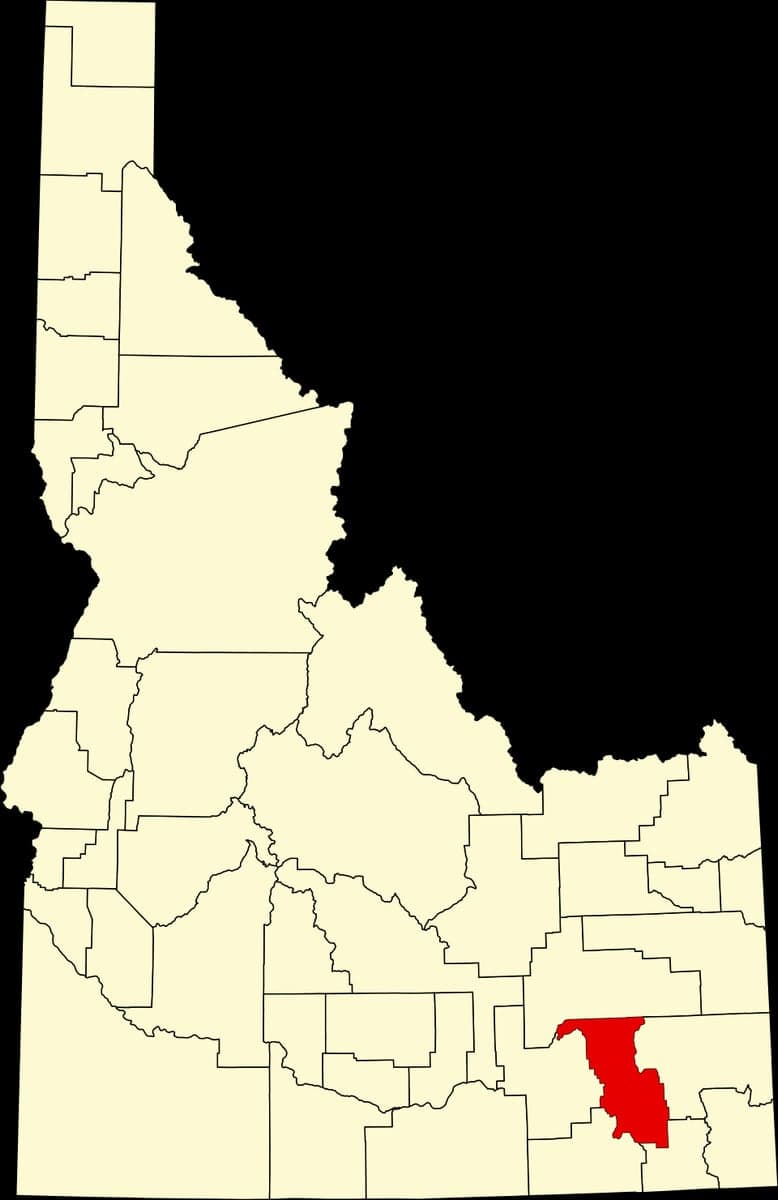
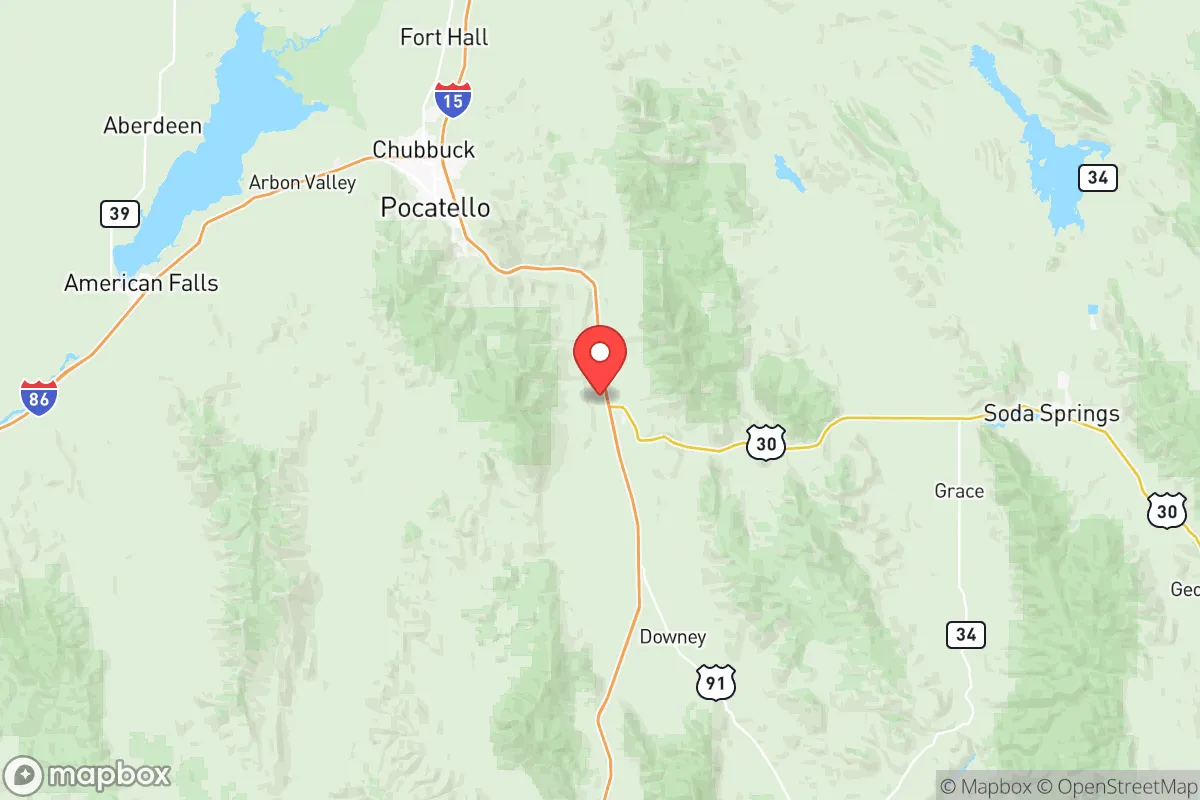
Photo: Wikipedia
Demographics of Bannock County
Affluence Level in Bannock County
A middle-class area roughly in line with national averages across income, home values, education, and employment.
People of Bannock County
Today, Bannock County is home to 88,457 residents, a population shaped by successive waves of settlement that began with Indigenous Shoshone-Bannock peoples and accelerated with Mormon pioneers in the 1860s. The county remains predominantly white (81.1%) with a growing Hispanic community (9.6%) and small but established East/Southeast Asian (1.2%) and Indian subcontinent (0.3%) populations. Its identity is rooted in agriculture, higher education (Idaho State University in Pocatello), and a conservative-leaning civic culture that prizes self-reliance and community stability.
Settlement & growth (pre-1960)
The original inhabitants of the Portneuf River valley were the Shoshone and Bannock peoples, who hunted bison and fished for salmon in the region for centuries. The 1868 Fort Bridger Treaty established the Fort Hall Indian Reservation, which today lies partly within Bannock County's northern reaches, near the town of Fort Hall. The Shoshone-Bannock Tribes continue to hold significant cultural and economic influence in the area, operating the Fort Hall Casino and managing natural resources on the reservation.
Permanent Euro-American settlement began in earnest with the arrival of Mormon pioneers in the 1860s. Following Brigham Young's directive to colonize the Intermountain West, Latter-day Saint families established farming communities along the Portneuf River. The town of Pocatello, named after a Shoshone chief, was founded in 1882 as a railroad hub for the Oregon Short Line Railroad. The railroad brought a wave of laborers — Irish, Italian, and Chinese workers — who built the tracks and settled in Pocatello's working-class neighborhoods. By 1900, Pocatello had grown into a regional trade center, with a population of about 4,000.
The early 20th century saw the arrival of Basque sheepherders, who came from the Pyrenees mountains of Spain and France to work the vast rangelands of southeastern Idaho. Many settled in Pocatello and the smaller community of McCammon, where Basque boarding houses and cultural traditions persisted for decades. The completion of the American Falls Dam in 1927 and subsequent irrigation projects transformed the Snake River Plain into productive farmland, drawing Midwestern farmers — many of German and Scandinavian descent — to areas like Chubbuck and Tyhee.
World War II brought a new demographic shift. The establishment of the Pocatello Army Air Base (now the Pocatello Regional Airport) and the growth of the Union Pacific Railroad's maintenance yards attracted workers from across the country, including African American families from the South and Midwest. By 1950, Pocatello's population had reached 26,000, and the county's character had shifted from a purely agricultural society to one with a growing industrial and service-sector base. The founding of Idaho State College (now Idaho State University) in 1901 as the Academy of Idaho further diversified the population, drawing faculty and students from outside the region.
Modern era (post-1965)
The 1965 Hart-Cellar Immigration Act had a modest but noticeable effect on Bannock County. Unlike coastal metropolitan areas, the county did not experience a large-scale influx of new immigrant groups. Instead, the foreign-born population remains low at just 1.7%, well below the national average. The most significant post-1965 demographic change has been the growth of the Hispanic population, which rose from under 2% in 1970 to 9.6% today. This growth is driven primarily by domestic migration from the Southwest and by natural increase among families already in the region. Hispanic residents are concentrated in Pocatello's south side and in the agricultural community of Arimo, where many work in dairy farming and food processing.
The East/Southeast Asian population (1.2%) is largely composed of Vietnamese and Filipino families who arrived in the 1970s and 1980s, many as refugees or through family reunification. They settled primarily in Pocatello, drawn by affordable housing and employment at the Union Pacific Railroad and Idaho State University. The Indian subcontinent population (0.3%) is a more recent arrival, concentrated among professionals working in healthcare and technology at Portneuf Medical Center and Idaho State University. The Black population remains very small (0.8%), with most African American residents living in Pocatello and Chubbuck, many of whom are military-connected or employed at the university.
Domestic migration since 2000 has been modest but steady. Bannock County has attracted retirees and remote workers from California and the Pacific Northwest, drawn by lower housing costs and a slower pace of life. These newcomers tend to settle in newer subdivisions in Chubbuck and the Highland Estates area east of Pocatello. The county's population grew by about 8% between 2010 and 2020, a rate that outpaces much of rural Idaho but lags behind the explosive growth of the Boise metro area.
The future
Bannock County is projected to continue slow, steady growth over the next 10-20 years, reaching an estimated 95,000-100,000 residents by 2040. The Hispanic share of the population is expected to rise to 12-14%, driven by higher birth rates and continued domestic migration. The East/Southeast Asian and Indian subcontinent populations will likely grow modestly as Idaho State University expands its international student recruitment and as healthcare employers seek specialized workers. The white non-Hispanic share will decline gradually but will remain the overwhelming majority.
New residential development is concentrating in Chubbuck, which has become the county's fastest-growing municipality, and in unincorporated areas along the I-15 corridor near Inkom and McCammon. These areas offer larger lots and lower property taxes than Pocatello proper. The county's cultural identity is evolving from a purely rural-agricultural society to a more suburban one, though it retains a distinctly conservative and family-oriented character. The Shoshone-Bannock Tribes are expected to play an increasing economic role, particularly through energy development and tourism on the reservation.
For someone moving to Bannock County today, the region offers a stable, affordable, and safe environment with a strong sense of community. The population is becoming slightly more diverse but remains overwhelmingly white and native-born. The county's future lies in balancing growth with preservation of its agricultural heritage and natural landscapes, while accommodating newcomers who value its low crime rates, good schools, and access to outdoor recreation.

* Values derived from national, state, county, city and local statistics and may differ in a specific area. Last updated: 2026-06-16T02:12:18.000Z
Narrative content on this page is AI-generated and may contain mistakes. Verify any details that matter before acting on them.
ReloMaps may earn a commission from affiliate links at no extra cost to you.

