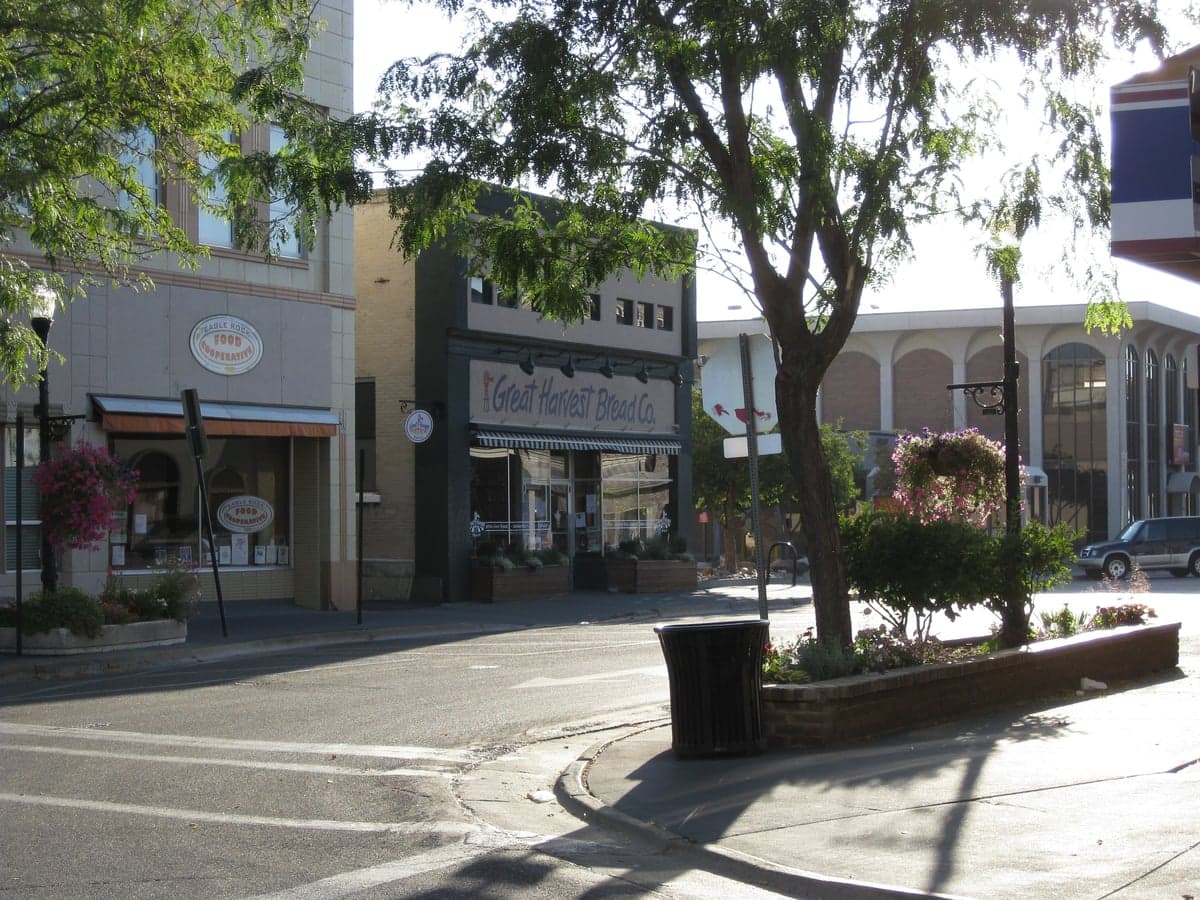
Photo: Wikipedia
Strategic Assessment of Idaho Falls, ID
Workable tactical position. Some exposure to population density or targets, but generally defensible in a crisis.
What does the Strategic Assessment tell us?
Our Strategic Assessment grades tactical survivability of an area. Major population centers, military targets, fallout zones, natural disasters, and border exposure all drive risk — lower exposure means a more defensible position in a crisis.
This is heavily inspired by Joel Skousen's Strategic Relocation book. Highly recommended you checkout the book ($)What does this tell us?
Our Strategic Assessment grades tactical survivability of an area. Major population centers, military targets, fallout zones, natural disasters, and border exposure all drive risk — lower exposure means a more defensible position in a crisis.
This is heavily inspired by Joel Skousen's Strategic Relocation book. Highly recommended you checkout the book ($)Strategic Pillars

Key Distances
Regional Safe Places
Below is our recommended "safe zones" in Idaho and the surrounding area based on our strategic heuristics. For most people, it's unrealistic to live in a “safe zone” full-time due to work, family or other personal reasons. They tend to be more rural. However, many of these areas are perfect for second homes and retreat properties that double as a vacation home or even a short-term rental.
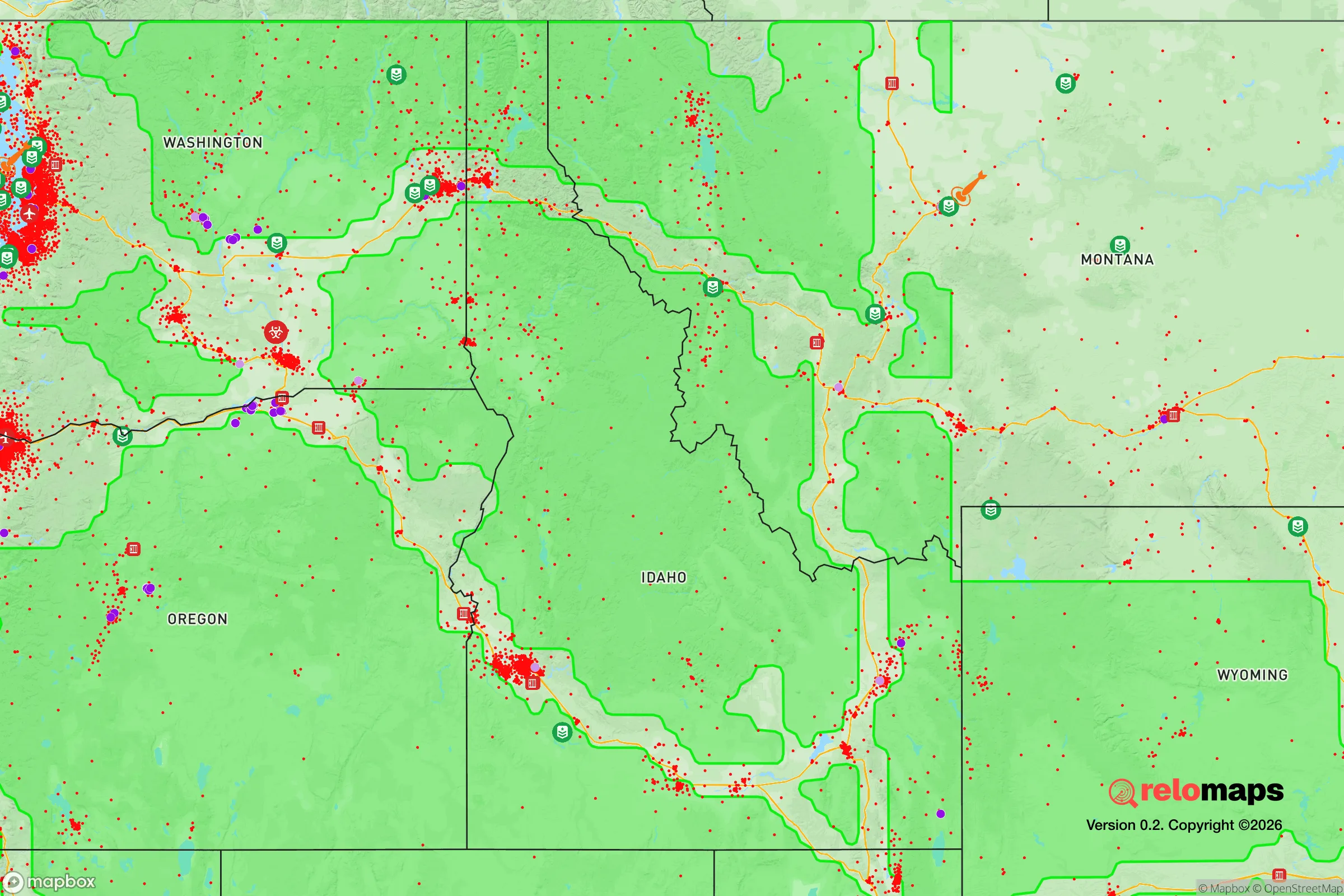
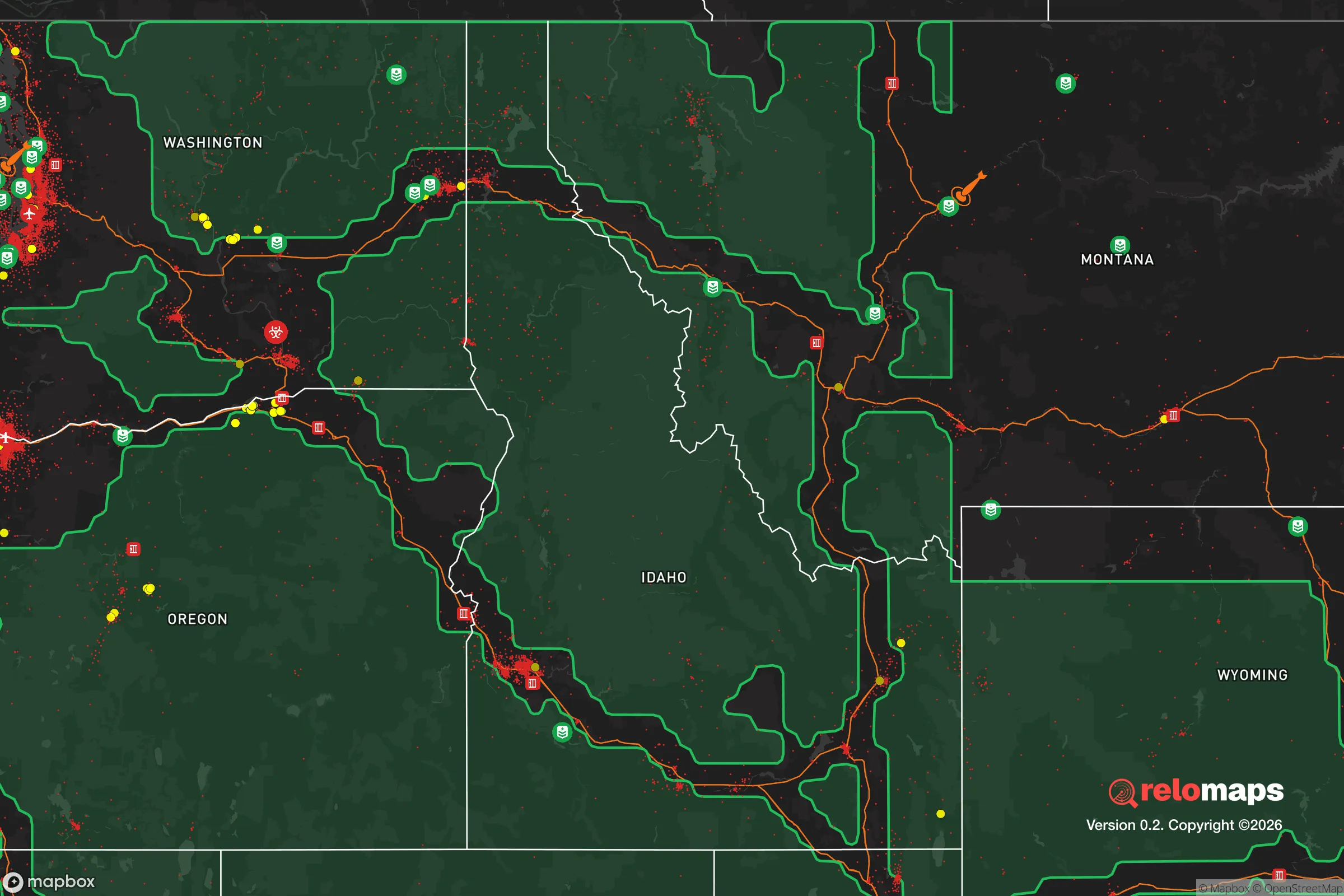


Important Note: For informational purposes only. This does not mean nothing bad ever happens in the green zones. Please use common sense. This is based on public data and modeled with AI. We tried to take a conservative approach but mistakes happen. We update this regularly as new information becomes available.
Solar Generator Recommendations
Backup power matters more here than in safer locations. We've picked three solar generators across budgets and capacity tiers — start with the budget unit if you only need a few essentials, or step up if you want to run a fridge and HVAC for days at a time.

Jackery Portable Power Station Explorer 300
Budget OptionPower on the Go: Weighing only 11 lbs, it's convenient to set up and store with book-sized foldable solar panels

BLUETTI Portable Power Station AC180
Designed for both indoor and outdoor scenarios, AC180 is highly capable as it has a robost capacity and continuous output power.

EF ECOFLOW DELTA Pro Ultra Power Station
Upgraded PickEcoFlow DELTA Pro Ultra is a whole-home energy system designed to grow with your family. Integrated with the Smart Home Panel 2, it scales to meet your evolving energy needs — keeping your home powered, intelligent, and secure through every stage of life.
We earn a commission, at no additional cost to you.
Strategic Assessment Analysis
Idaho Falls offers a compelling mix of geographic isolation and practical self-sufficiency that makes it a serious contender for anyone thinking long-term about resilience. Tucked away in the eastern part of the state, this city sits far from the coastal chaos and the major population centers that are likely to be primary targets or flashpoints in a national crisis. The area’s combination of natural resources, a relatively low population density, and a culture that still values independence gives it a strategic edge that’s hard to find in most of the lower 48.
Geographic position and natural advantages for long-term security
Idaho Falls is positioned in the Snake River Plain, a broad, fertile valley that provides a natural buffer against the kind of cascading failures that plague interconnected urban corridors. You’re roughly 200 miles from Salt Lake City and about 300 miles from Boise, meaning you’re far enough from major metro areas to avoid the immediate fallout of civil unrest or a mass casualty event, but close enough to access regional medical and supply hubs if things stabilize. The surrounding landscape is dominated by the Caribou-Targhee National Forest and the Centennial Mountains, offering countless bug-out locations and natural barriers that slow down any large-scale movement. The Snake River itself is a major asset—it’s a reliable, year-round water source that doesn’t depend on fragile municipal systems. The area’s high desert climate means less humidity and fewer disease vectors, but you’ll need to plan for cold winters and occasional drought. The real advantage here is the combination of water, arable land, and low population density—roughly 65,000 people in the city proper, with the county at about 120,000. That’s a density that allows for community cohesion without the anonymity and vulnerability of a big city.
Risks, exposures, and proximity to fallout-relevant landmarks
No place is perfect, and Idaho Falls has some specific exposures you need to account for. The most obvious is the Idaho National Laboratory (INL), located about 30 miles west of the city. This is a major nuclear research and testing facility, and while it’s not a commercial power plant, it does handle radioactive materials and has a history of incidents—including a fatal criticality accident in 1961. In a worst-case scenario, a major event at INL could create a localized contamination zone, though prevailing winds generally blow eastward, away from the city. You’re also about 90 miles from the Teton Dam site, which failed catastrophically in 1976, and while the dam has been rebuilt, the memory of that flood is still part of local planning. Earthquake risk is moderate—the area sits near the Intermountain Seismic Belt, but major quakes are rare. More immediate for a prepper mindset: the city’s economy is tied to agriculture, healthcare, and the lab, so a major economic disruption could hit local employment hard. The biggest risk, however, is the same one facing any inland city: supply chain fragility. If the interstate system goes down or fuel becomes scarce, Idaho Falls could become isolated quickly. The good news is that the community is already accustomed to self-reliance—many residents have gardens, livestock, and deep freezers, and the local culture frowns on dependency.
Practical resilience for a relocator: food, water, energy, and defensibility
For someone serious about preparedness, Idaho Falls delivers on the basics. Water is the first concern, and the Snake River provides an almost inexhaustible supply, though you’ll need your own filtration and pumping setup—municipal water is treated but could fail in a grid-down scenario. The shallow aquifer in the area also means private wells are feasible for many properties outside city limits. Food production is a major strength: the surrounding farmland grows potatoes, wheat, barley, and hay, and the local farmers’ markets and co-ops are robust. You can realistically raise chickens, goats, or even a small herd on a few acres, and the growing season, while short (about 100-120 frost-free days), is productive if you use season extenders. Energy is a mixed bag: the grid is fed by hydroelectric power from the Snake River and coal from the nearby Jim Bridger plant, but both are vulnerable to disruption. Solar is viable—the area gets over 200 sunny days a year—but you’ll need battery storage for the long winter nights. Natural gas is available in town, but rural properties rely on propane or wood. Defensibility is where Idaho Falls shines: the city is laid out in a grid with wide streets, but the real advantage is the surrounding terrain. The river creates natural chokepoints, and the mountains to the east and north provide excellent observation points and escape routes. The local gun culture is strong, with multiple shooting ranges and a high rate of private ownership, which means you’re not going to be the only armed person in a crisis. The downside is that the city itself is not easily defensible—it’s spread out, with multiple entry points—so you’d want to be on the outskirts or in a small satellite community like Ammon or Rigby for better perimeter control.
Overall strategic picture for a conservative relocator
Idaho Falls isn’t a bunker—it’s a working town with real infrastructure and real people, which is exactly what you want for long-term sustainability. The political climate leans heavily conservative, with Bonneville County voting +40 points for Trump in 2020, and the local government is generally pro-Second Amendment and resistant to overreach. That means you’re not going to face the kind of hostile local ordinances that plague blue-state refugees. The biggest trade-off is the cold—winters are long and snowy, with average highs in the 20s and 30s from December through February—but that same climate discourages the kind of mass migration that could overwhelm the area. The community is tight-knit but not insular; you’ll find plenty of like-minded people at church, at the range, or at local preparedness meetups. If you’re looking for a place that balances access to modern amenities with the ability to weather a serious national disruption, Idaho Falls deserves a hard look. Just make sure you’ve got your water filtration, your winter gear, and a good relationship with your neighbors—because in a crisis, that’s what will matter most.

* Values derived from national, state, county, city and local statistics and may differ in a specific area. Last updated: 2026-04-19T08:08:27.000Z
Narrative content on this page is AI-generated and may contain mistakes. Verify any details that matter before acting on them.
ReloMaps may earn a commission from affiliate links at no extra cost to you.

