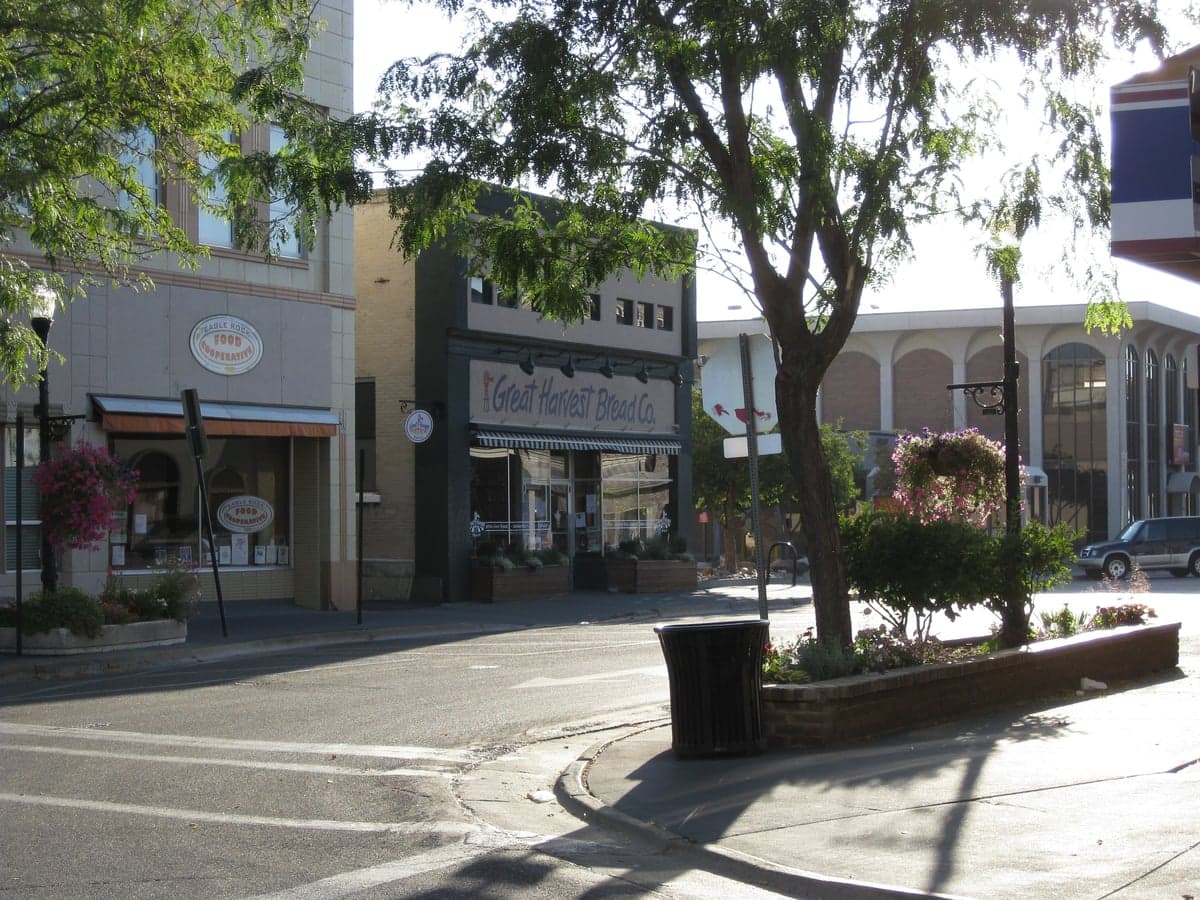
Photo: Wikipedia
Political ClimatePolitical Climate in Idaho Falls, ID
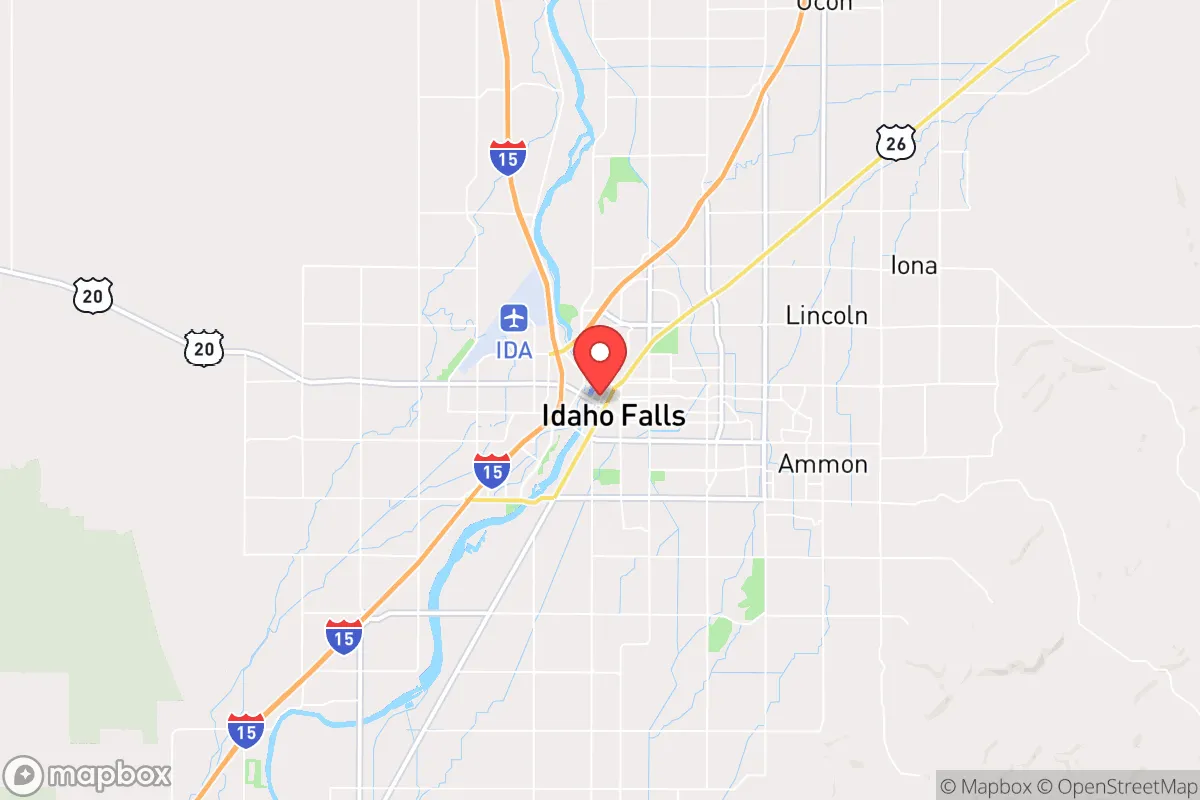
District shown is the primary district for this city’s centroid. Cities may span multiple districts.
Local Political AnalysisPolitical Analysis of Idaho Falls, ID
Idaho Falls is about as solidly conservative as it gets in the Gem State, and that’s not changing anytime soon. The Cook PVI of R+13 tells the story, but living here, you feel it in the way folks actually run their lives—low taxes, minimal fuss from the county, and a general expectation that the government stays out of your business. The political trajectory has been steady red for decades, though you can sense a subtle shift as more people move in from places like California or Seattle, bringing a different set of expectations. That said, the local culture and voting patterns still lean hard toward traditional values, and most of us plan to keep it that way.
How it compares
If you drive 50 miles west to Boise, you’ll find a much more purple environment—Ada County has been trending left in recent cycles, with Boise proper electing progressive city council members and pushing policies like higher density zoning and bike lane expansions that feel foreign to us. Head east into Wyoming, and towns like Jackson Hole are a whole different animal, with a heavy tourist-driven liberal tilt that clashes with the rest of the state. Closer to home, Rexburg and Blackfoot are similarly conservative, but Idaho Falls has a bit more economic diversity—think INL (Idaho National Laboratory) and healthcare—which brings in some moderates. Still, compared to the rest of Bonneville County, Idaho Falls is the anchor of the region’s right-leaning politics, and the surrounding rural areas are even more staunchly libertarian-leaning. The contrast is sharpest when you look at the local school board races or county commission meetings; here, the conversation is about keeping property taxes low and parental rights front and center, not about expanding government programs.
What this means for residents
For the average person living here, the political climate translates into a pretty straightforward daily life. You don’t have to worry about overreaching mandates or heavy-handed regulations on your small business or your property. The city council and county commissioners generally take a hands-off approach—they’re more concerned with keeping the roads paved and the water clean than telling you how to run your household. That said, the recent influx of newcomers has started to nudge things. You’ll see more “slow down” signs in neighborhoods and occasional debates about adding bike lanes or expanding public transit, which some of us see as the thin edge of the wedge for bigger government involvement. The real concern is that if the progressive wave that’s hit Boise or even parts of Utah County keeps creeping east, we could lose the local control that makes Idaho Falls feel like a place where you can breathe. For now, though, the political culture here still rewards self-reliance and frowns on anyone who tries to tell you what’s best for your family.
One thing that sets Idaho Falls apart culturally is the strong Latter-day Saint influence, which shapes a lot of the community’s values around family, charity, and personal responsibility. That religious backbone tends to reinforce the conservative political lean, but it also means there’s a strong sense of neighborly obligation—people help each other out without waiting for a government program to step in. You’ll notice it in the way the local food bank runs or how folks rally around a family in need after a house fire. On the policy front, the city has resisted things like sanctuary city status or heavy-handed environmental regulations that would tie up development. The biggest ongoing debate is probably around growth management—how to handle the new subdivisions and traffic without losing the small-town feel. Most of us would rather see smart, private-sector-led growth than a bunch of new zoning codes and planning commissions telling us where we can build. If you’re looking for a place where the government stays in its lane and you’re free to live your life your way, Idaho Falls still fits the bill—but keep an eye on those city council elections, because that’s where the future gets decided.

State Political ClimatePolitical Climate in Idaho
State Political AnalysisPolitical Environment in the State
Idaho is a deeply conservative state, with a Republican trifecta that has grown more assertive over the past decade. The state voted +30 points for Donald Trump in 2024, a shift from +32 in 2020 and +31 in 2016, reflecting a solidifying red base even as the state’s population booms. The dominant coalition is a mix of rural libertarians, Mormon cultural conservatives, and a growing wave of out-of-state transplants from California and Washington seeking lower taxes and fewer restrictions. Over the last 20 years, Idaho has moved from a moderate, business-friendly Republicanism to a more hardline, freedom-focused posture, driven by the Idaho Freedom Caucus and a governor who signs nearly every piece of conservative legislation that lands on his desk.
Urban vs. rural divide
The political map of Idaho is starkly divided between a handful of blue-leaning urban islands and a vast red sea. Boise and its immediate suburbs in Ada County have become a battleground: the city itself votes reliably Democratic, but the county as a whole still leans Republican, though it flipped to Biden in 2020 by a narrow margin. Moscow, home to the University of Idaho, is a progressive outlier in the otherwise ruby-red Latah County. Ketchum and Sun Valley in Blaine County are wealthy, left-leaning resort towns that vote blue by wide margins. Meanwhile, the rest of the state—places like Idaho Falls, Twin Falls, Coeur d’Alene, and Pocatello—vote Republican by 20 to 50 points. The rural-urban split is widening: as Boise grows more diverse and progressive, the legislature has responded by preempting local ordinances on everything from housing to mask mandates, ensuring that the state’s conservative values override city-level experiments.
Policy environment
Idaho’s policy environment is among the most conservative in the nation. The state has a flat income tax of 5.8% (down from 6.5% in 2022), no corporate income tax on pass-through entities, and a property tax system that is among the lowest in the West. The regulatory posture is aggressively pro-business: no state-level minimum wage above the federal $7.25, no mandatory paid leave, and a right-to-work law that keeps unions weak. Education policy is a flashpoint: the state passed a school choice expansion in 2023 through a $50 million tax credit program for private and homeschool expenses, and it has one of the strongest parental rights laws in the country (House Bill 93, 2022), requiring schools to notify parents of any curriculum involving sexuality or gender identity. Healthcare is limited: Idaho has not expanded Medicaid (though it did via ballot initiative in 2018, which the legislature has since tried to undermine), and abortion is effectively banned after six weeks with no exceptions for rape or incest, under the Defense of Life Act (2023). Election laws are strict: voter ID is required, same-day registration is not allowed, and the state has a closed primary system that keeps non-Republicans out of the most competitive races.
Trajectory & freedom
Idaho is becoming more free in many respects, but the definition of freedom is being hotly contested. On gun rights, the state passed constitutional carry in 2016 and a Second Amendment Preservation Act in 2021 that prohibits state enforcement of any future federal gun bans. On parental rights, the 2022 law mentioned above gives parents unprecedented control over school curricula and medical decisions. On medical autonomy, the state banned nearly all abortions and passed a law in 2023 prohibiting gender-affirming care for minors. On property rights, the legislature has repeatedly blocked local zoning reforms that would allow denser housing, favoring single-family home development. On taxation, the trend is downward: the income tax rate has been cut twice since 2022, and the state is on a path to eliminate it entirely by 2030. However, the state has also expanded government power in areas like election integrity (requiring hand-count audits in some counties) and immigration (a 2024 law makes it a state crime to enter Idaho from Mexico without authorization). The net effect is a state that is increasingly libertarian on economic and cultural issues, but more assertive on border security and election administration.
Civil unrest & political movements
Idaho has a history of far-right activism, but the mainstream conservative movement now dominates. The Idaho Freedom Caucus, a hardline group of about 20 state legislators, has effectively controlled the House agenda since 2022, pushing through bills on election integrity, school choice, and immigration. The state has seen protests over mask mandates (2020-2021) and critical race theory (2021-2022), but these have largely subsided. The most visible flashpoint is the ongoing fight over library books and LGBTQ+ materials, with several counties (including Bonner and Kootenai) passing resolutions to remove certain books from public libraries. Immigration politics are tense: the 2024 state law targeting illegal entry has drawn lawsuits, and the Twin Falls area has seen tensions over a growing Hispanic population working in dairy and agriculture. There is no serious secession or nullification movement, but the state’s attorney general has joined multi-state lawsuits against federal vaccine mandates, EPA regulations, and the Biden administration’s immigration policies. A new resident would notice the prevalence of “Don’t Tread on Me” flags and a general distrust of federal authority, especially in rural areas.
Projection
Over the next 5-10 years, Idaho will likely become more conservative, not less, despite the influx of out-of-state transplants. The reason is simple: the people moving to Idaho are overwhelmingly conservative-leaning, fleeing California, Washington, and Oregon for lower taxes, less regulation, and a culture that aligns with traditional values. The Boise area will continue to grow and may become more purple, but the legislature will remain firmly in the hands of rural and suburban Republicans who are increasingly aligned with the Freedom Caucus. The state will likely eliminate its income tax entirely, further restrict abortion access (possibly to zero exceptions), and expand school choice to include education savings accounts. The biggest wild card is the growing Hispanic population in southern Idaho, which could shift the political calculus in places like Canyon County and Jerome County over the long term. For now, though, the trajectory is clear: Idaho is doubling down on its identity as a low-tax, high-freedom, culturally conservative state, and anyone moving here should expect that trend to accelerate.
For a new resident, the bottom line is this: Idaho offers a political environment where your tax dollars stay local, your children’s education is under your control, and your Second Amendment rights are protected by state law. The trade-off is that you’ll live in a state where the government is actively involved in restricting abortion and gender-affirming care, and where local governments have limited power to experiment with progressive policies. If you value personal liberty, low taxes, and a culture that respects traditional values, Idaho is one of the best bets in the country. If you’re looking for a place where the government stays out of your life entirely, you’ll find that Idaho’s version of freedom comes with a strong moral framework—and that’s exactly how most residents want it.
* Values derived from national, state, county, city and local statistics and may differ in a specific area. Last updated: 2026-04-19T08:08:27.000Z
Narrative content on this page is AI-generated and may contain mistakes. Verify any details that matter before acting on them.
ReloMaps may earn a commission from affiliate links at no extra cost to you.

