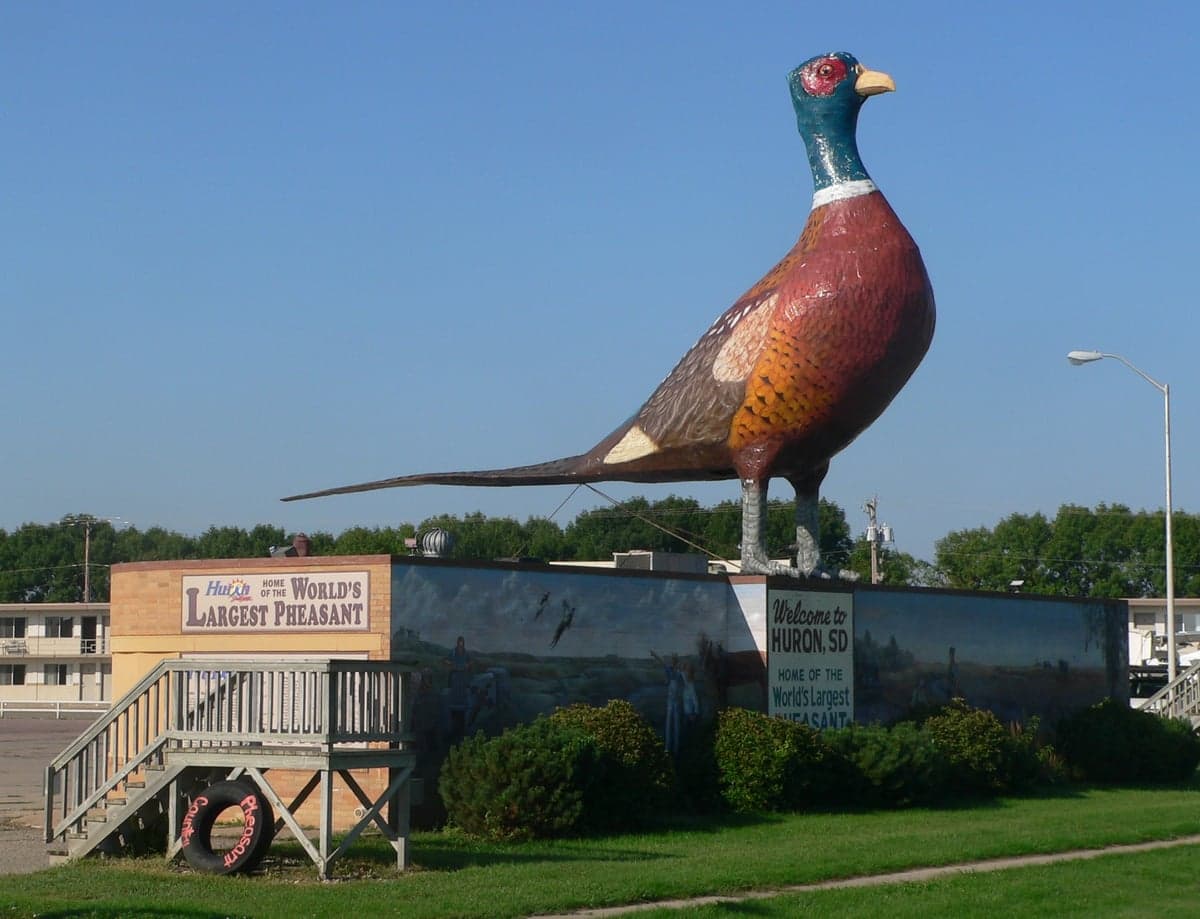
Photo: Wikipedia
Political ClimatePolitical Climate in Huron, SD
District shown is the primary district for this city’s centroid. Cities may span multiple districts.
Inherited from parent state — no local data available.
Local Political AnalysisPolitical Analysis of Huron, SD
Huron, South Dakota, sits solidly in conservative territory, with a Cook PVI of R+15 that reflects the area’s long-standing preference for limited government and traditional values. The city itself leans reliably Republican, though you’ll find a few pockets of more moderate thinking near the college or among newer arrivals from out of state. Over the past decade, the political trajectory has stayed steady—no dramatic swings leftward—but there’s a quiet undercurrent of concern among longtime residents about creeping federal overreach and the slow erosion of local control.
How it compares
Compared to South Dakota’s bigger cities, Huron is noticeably more conservative. Sioux Falls, about 120 miles east, has seen a gradual shift toward suburban moderation, with some precincts trending blue in recent cycles. Rapid City, out west, is reliably red but has a libertarian streak that can feel different from Huron’s more traditional, church-and-family conservatism. The surrounding towns—like Wessington Springs, De Smet, and Miller—are even more deeply conservative, often voting 70-80% Republican in local races. If you drive 30 miles north to Redfield, you’ll find a similar vibe, though with a stronger agricultural focus. The real contrast is with Brookings, home to South Dakota State University, where younger voters and faculty have nudged the county toward a purple-ish hue. Huron, by comparison, feels like a place where the old ways still hold—where people expect the government to stay out of their businesses, their schools, and their backyards.
What this means for residents
For folks living here, the political climate means fewer headaches from state or local overreach. Property taxes are manageable, zoning is light, and you won’t see the kind of heavy-handed mandates that have become common in coastal states. The city council and county commission tend to take a hands-off approach, trusting residents to make their own choices—whether that’s about how to run a farm, what to teach in a homeschool co-op, or how to carry a firearm. That said, there’s a growing wariness about federal strings attached to infrastructure grants or school funding, which some worry could bring progressive mandates into town by the back door. The recent push for diversity, equity, and inclusion initiatives in some South Dakota school districts has raised eyebrows here, with many parents keeping a close eye on the local board meetings. So far, Huron has resisted those trends, but the concern is real: once those ideas get a foothold, they’re hard to root out.
Culturally, Huron stands apart from the state’s more progressive corners by maintaining a strong sense of personal responsibility and community self-reliance. The annual State Fair, held right here, is a gathering that reinforces those values—family, hard work, and a healthy skepticism of distant bureaucrats. Policy-wise, the city has kept its tax burden low and its regulations minimal, which has helped small businesses and ag operations thrive without constant government interference. Looking ahead, the long-term outlook depends on whether Huron can hold the line against the same cultural shifts that have reshaped other rural towns. If the next generation stays engaged and keeps voting for local control, this place will stay the kind of community where you can live your life without someone in a government office telling you how to do it.

State Political ClimatePolitical Climate in South Dakota
State Political AnalysisPolitical Environment in the State
South Dakota has long been one of the most reliably Republican states in the nation, with a partisan lean that has only deepened over the past two decades. The state hasn't voted for a Democratic presidential candidate since 1964, and in 2024, Donald Trump carried it by over 30 points. The dominant coalition is a blend of rural conservatives, libertarian-leaning ranchers, and a growing number of out-of-state transplants fleeing blue states. Over the last 10-20 years, the state has shifted further right, driven by a steady influx of freedom-minded individuals and a native population that resists the progressive trends seen in neighboring Minnesota and Colorado. The political climate here is defined by a deep skepticism of federal overreach, a strong gun culture, and a legislative body that has consistently pushed for lower taxes and fewer regulations.
Urban vs. rural divide
The political map of South Dakota is starkly divided between its sparse urban centers and its vast rural expanse. The only real metro area, Sioux Falls, is a conservative stronghold but with a growing libertarian streak—Minnehaha County voted +18 R in 2024, down from +25 a decade ago, as some younger professionals and healthcare workers bring moderate views. Rapid City, the state's second-largest city, is even more reliably red, with Pennington County consistently voting +20 R or more, fueled by a strong military and tourism economy. The rural counties, like Harding, Perkins, and Jones, routinely vote +60 to +70 R, driven by agricultural interests and a fierce independence from government intervention. The only notable exception is Brookings, home to South Dakota State University, which occasionally flirts with purple—it voted +12 R in 2024, but the student population can tip local races toward more moderate candidates. The divide isn't about left vs. right as much as it is about rural libertarianism vs. urban pragmatism, but both sides overwhelmingly reject progressive policies.
Policy environment
South Dakota's policy environment is a dream for those seeking limited government. There is no state income tax, no corporate income tax, and no personal property tax on vehicles or business inventory. The sales tax is 4.5%, with local options pushing it to 6.5% in some cities like Sioux Falls and Rapid City. The regulatory posture is among the lightest in the nation—permitting for new businesses is fast, and there are no statewide zoning mandates that stifle development. Education policy is a mixed bag: the state has a robust school choice movement, with a new Education Savings Account program passed in 2024 that allows parents to use public funds for private or homeschool expenses. However, the public school system remains underfunded relative to the national average, and teacher salaries are low. Healthcare is largely free-market, with no state-run insurance exchange and minimal certificate-of-need laws, though rural hospital closures remain a concern. Election laws are solid: voter ID is required, same-day registration is not allowed, and the state has no mail-in voting unless requested for a specific reason. The legislature has also passed laws to ban ranked-choice voting and restrict ballot initiatives from being funded by out-of-state interests.
Trajectory & freedom
South Dakota is becoming more free, not less, and recent legislation proves it. In 2023, Governor Kristi Noem signed a law eliminating the requirement for a permit to carry a concealed firearm—constitutional carry is now the law of the land. The same year, the state passed a Parents' Bill of Rights, which requires schools to notify parents of any curriculum involving sexuality or gender identity and prohibits schools from withholding information about a child's mental health. On medical autonomy, South Dakota has one of the strictest abortion laws in the nation, banning the procedure at all stages except to save the mother's life, with no exceptions for rape or incest. Property rights were strengthened in 2024 with a law limiting the use of eminent domain for carbon pipeline projects, a direct response to the controversial Summit Carbon Solutions pipeline that had landowners up in arms. Taxation has been cut repeatedly: the state reduced the sales tax on groceries from 4.5% to 4.2% in 2023, and there's a push to eliminate it entirely. The only concerning trend is a slight uptick in local government overreach in Sioux Falls, where city council has debated zoning restrictions on short-term rentals and noise ordinances that some see as creeping nanny-statism.
Civil unrest & political movements
Political activism in South Dakota is relatively tame compared to coastal states, but there have been flashpoints. The most visible movement in recent years has been the landowner rebellion against carbon pipelines, particularly in counties like Brown and Spink, where farmers and ranchers have organized to fight eminent domain for private corporate gain. This has spawned a grassroots coalition that crosses party lines, uniting libertarians, environmentalists, and traditional conservatives. On the left, there have been small but persistent protests in Sioux Falls over abortion rights, particularly after the 2022 trigger law took effect, but these have not gained significant traction. Immigration politics are largely absent—the state has a tiny foreign-born population (about 4%), and there are no sanctuary policies. Election integrity controversies have been minimal, though the state did audit its 2020 election results and found no irregularities, which satisfied most conservatives. The Keystone XL pipeline protests in 2020-2021 were a brief flashpoint, but they fizzled after the project was canceled. Overall, the political atmosphere is calm, with most activism focused on property rights and local control rather than national culture war issues.
Projection
Over the next 5-10 years, South Dakota is likely to become even more conservative and libertarian, driven by two key demographic shifts. First, the continued influx of remote workers and retirees from high-tax states like California, Illinois, and Minnesota—places like Rapid City and the Black Hills region are seeing a boom in new construction, and these newcomers are overwhelmingly conservative or libertarian. Second, the state's native population is aging, and younger South Dakotans are increasingly leaving for college and not returning, which tilts the electorate older and more rural. The legislature will likely continue cutting taxes, expanding school choice, and resisting federal mandates. The only wild card is the growing influence of Sioux Falls, which is becoming more diverse and urbanized—if its growth outpaces the rest of the state, it could moderate the political climate slightly, but that's a long shot. The carbon pipeline fight will likely be resolved in favor of landowners, further cementing property rights. Anyone moving in now should expect a state that values individual liberty, low taxes, and minimal government interference, with no signs of shifting leftward.
For a new resident, the bottom line is this: South Dakota offers a political environment where your freedoms are respected, your taxes are low, and your voice matters at the local level. You won't find the culture wars of the coasts here, but you will find a state that has consistently pushed back against federal overreach and progressive ideology. If you're looking for a place where the government stays out of your life, your business, and your family, this is it. Just be prepared for cold winters and a housing market that's tightening fast in the desirable areas like Rapid City and Sioux Falls.
* Values derived from national, state, county, city and local statistics and may differ in a specific area. Last updated: 2026-04-19T05:10:25.000Z
Narrative content on this page is AI-generated and may contain mistakes. Verify any details that matter before acting on them.
ReloMaps may earn a commission from affiliate links at no extra cost to you.

