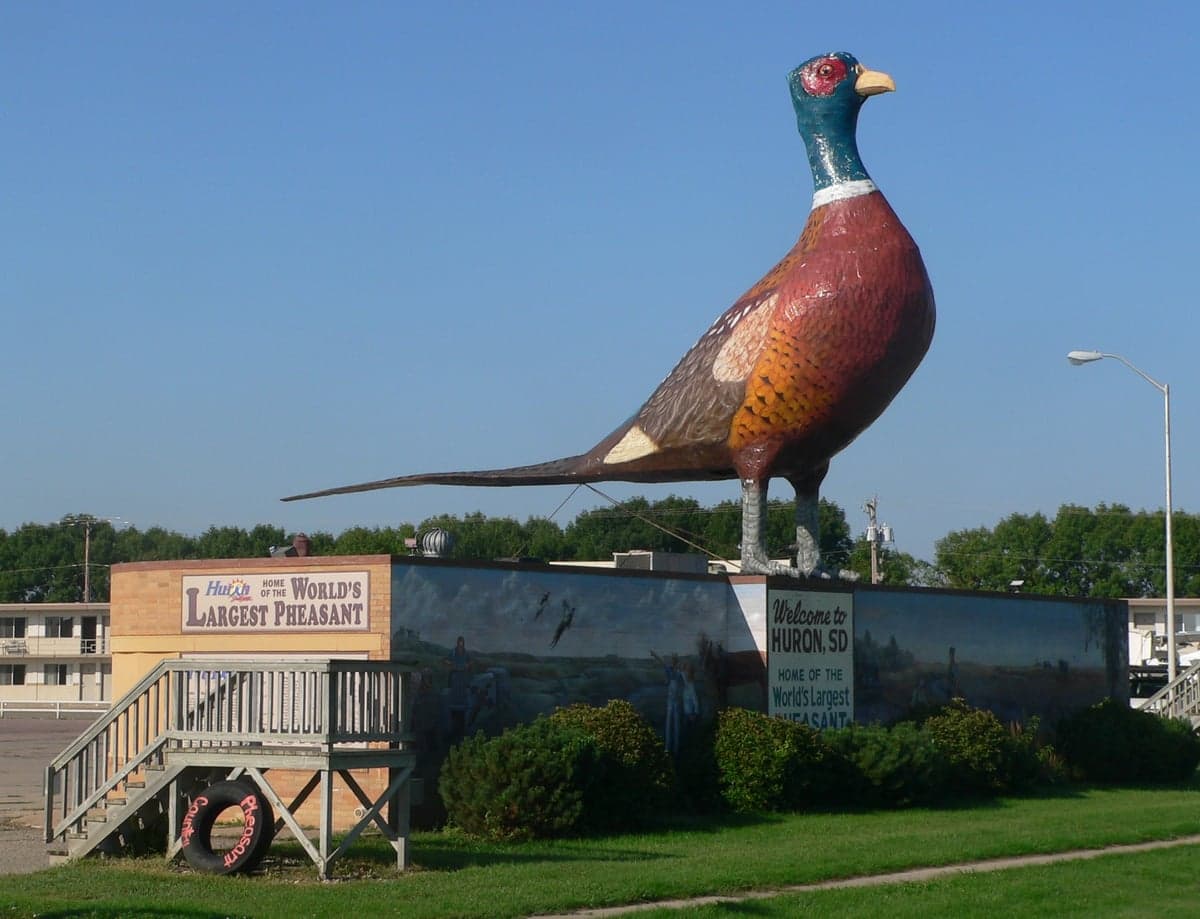
Photo: Wikipedia
Demographics of Huron, SD
Affluence Level in Huron, SD
A below-average socioeconomic profile. Incomes, home values, and educational attainment trail the U.S., with higher poverty and unemployment.
People of Huron, SD
Huron, South Dakota, is a city of 14,347 residents defined by its role as a regional trade and processing hub in the James River Valley, with a population that is 61.2% white, 18.1% Hispanic, and 12.0% East/Southeast Asian. The city’s character is shaped by a strong agricultural and manufacturing base, a notable immigrant workforce, and a conservative-leaning civic culture. Its distinctive identity today is a blend of historic European settlement roots and a modern, work-driven diversity centered on meatpacking and food processing.
How the city was settled and grew
Huron was founded in 1880 as a railroad town on the Chicago & North Western line, with the first wave of settlers being primarily German, Norwegian, and Swedish immigrants drawn by the promise of cheap, fertile land under the Homestead Act. These early European groups built the city’s core neighborhoods, including North Huron (north of the railroad tracks), where many German Lutheran families established farms and small businesses, and South Huron, which developed around the grain elevators and rail yards. The city grew steadily through the early 20th century as the seat of Beadle County and a center for wheat and livestock shipping. By 1950, Huron’s population was nearly entirely white, with a small number of African American families who arrived during the Great Northern migration to work on the railroad and in the packing plants. The post-World War II era saw suburban-style growth in West Huron, where new ranch-style homes were built for returning veterans and their families, solidifying the city’s middle-class, conservative character.
Modern era (post-1965)
The Immigration and Nationality Act of 1965 opened doors for new arrivals, but Huron’s modern demographic shift began in earnest in the 1990s, when the Dakota Provisions turkey processing plant (now part of Cargill) and other food-industry employers actively recruited immigrant labor. The most significant change has been the arrival of East/Southeast Asian communities, primarily Hmong and Vietnamese families, who now make up 12.0% of the population. These groups settled heavily in East Huron, near the industrial park and the plant, where affordable housing and proximity to work created a concentrated enclave. The Hispanic population, now 18.1%, grew from Mexican and Central American workers recruited for the same plants, with many families establishing roots in Southwest Huron and along the Dakota Avenue corridor. The African American share remains small at 1.3%, with most families living in older rental stock near the city center. The white population, while still the majority, has declined from over 90% in 1980 to 61.2% today, as younger native-born residents have moved to larger cities like Sioux Falls or out of state for professional opportunities.
The future
Huron’s population is trending toward greater diversity, driven by continued recruitment of immigrant labor for the food-processing sector, which shows no signs of slowing. The East/Southeast Asian community is plateauing as second-generation families assimilate and some move to larger metros, while the Hispanic population is growing steadily through both new arrivals and higher birth rates. The white population is aging and slowly declining, with the city’s overall growth flat to slightly negative since 2020. There is no evidence of tribalization into hostile enclaves; instead, neighborhoods like North Huron and West Huron remain predominantly white and older, while East Huron and Southwest Huron are becoming more mixed as immigrant families buy homes and integrate. The next 10-20 years will likely see Huron become a majority-minority city, with Hispanic residents becoming the largest single group, while the city’s conservative political culture and economic reliance on processing plants remain stable.
For someone moving in now, Huron is a place where work-driven immigration is reshaping the population in real time, creating a community that is more diverse than its rural reputation suggests, but still anchored by its agricultural and manufacturing roots. The city offers a low cost of living and steady blue-collar employment, but limited professional opportunities and a slowly declining native-born population mean that new arrivals will find a town in demographic transition, not stagnation.

* Values derived from national, state, county, city and local statistics and may differ in a specific area. Last updated: 2026-04-19T05:10:25.000Z
Narrative content on this page is AI-generated and may contain mistakes. Verify any details that matter before acting on them.
ReloMaps may earn a commission from affiliate links at no extra cost to you.

