Photo: Wikipedia
Political ClimatePolitical Climate in Hubert, NC
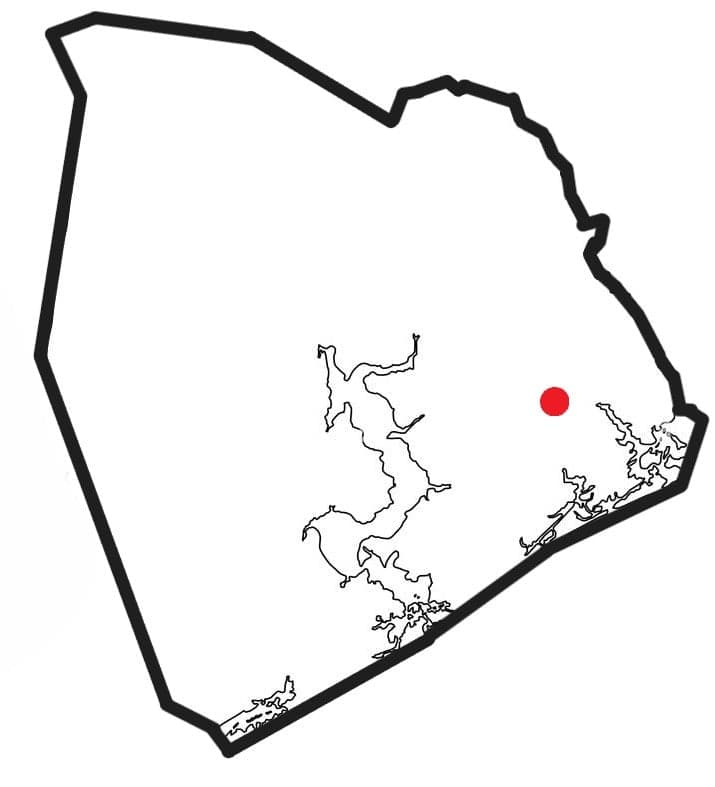
District shown is the primary district for this city’s centroid. Cities may span multiple districts.
Local Political AnalysisPolitical Analysis of Hubert, NC
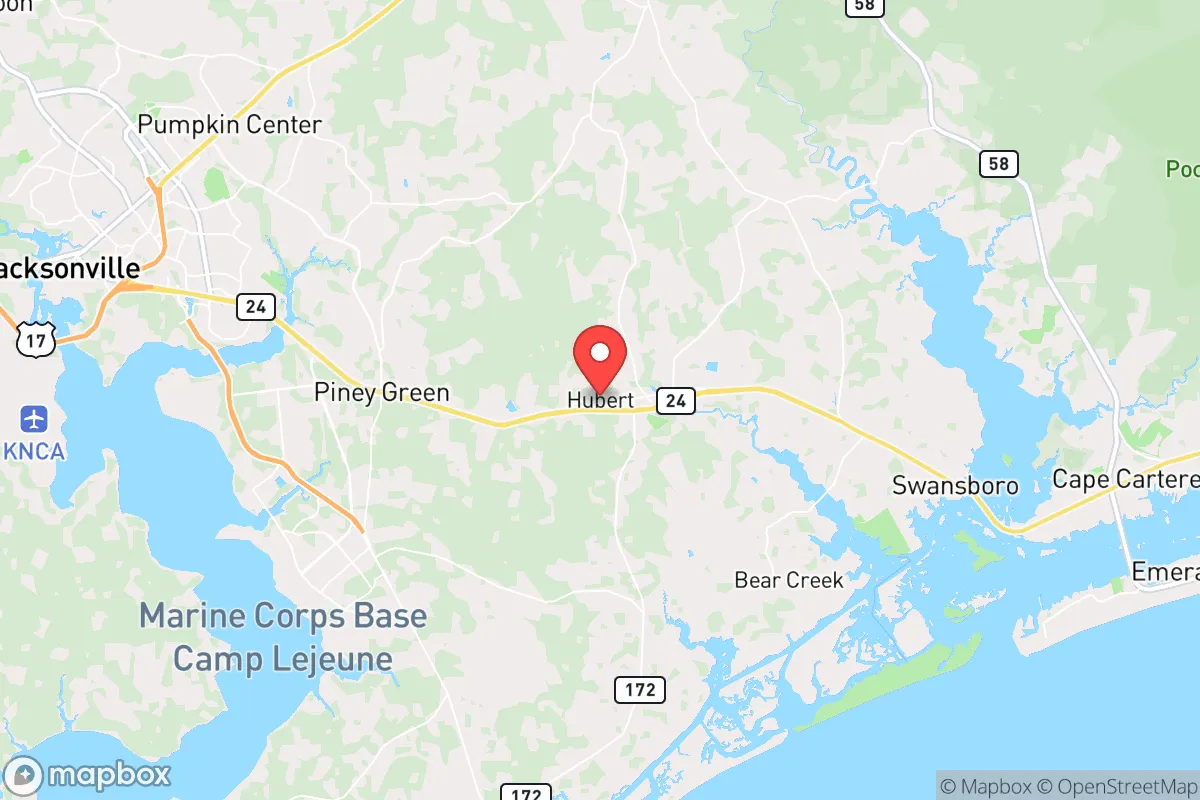
Hubert, North Carolina, is a deeply conservative community, and that’s not a recent shift—it’s been the baseline for as long as most folks around here can remember. The Cook PVI rating of R+10 tells you the story in a single number: this area votes Republican by a margin that’s ten points more Republican than the national average. To put that in perspective, the state of North Carolina as a whole sits at R+1, meaning Hubert is a solid ten points redder than the state average. That’s a big gap. In the 2024 presidential election, for example, Onslow County—where Hubert sits—went for the Republican candidate by roughly 30 points, while the state was decided by a much narrower 3-point margin. The trajectory here isn’t swinging left; if anything, the area has held steady or even hardened its conservative lean over the last decade, driven by a strong military presence (Marine Corps Base Camp Lejeune is right next door) and a population that values traditional social and fiscal policies.
How it compares
When you compare Hubert to the rest of North Carolina, the difference is stark. The state’s R+1 rating reflects a genuine battleground—places like Charlotte, Raleigh, and the Research Triangle are blue-leaning, while rural and coastal areas like Hubert are deep red. Drive 30 minutes north to Jacksonville, and you’ll find a similar conservative vibe, though it’s a bit more moderate due to the mix of active-duty military and civilian families. Head west to Wilmington, about 45 minutes away, and you’ll hit a purple city with a growing progressive scene, especially among younger transplants. But Hubert itself? It’s a small, unincorporated community where the local culture is shaped by hunting, fishing, church, and a strong sense of self-reliance. The contrast isn’t subtle—it’s like two different states living under one governor.
What this means for residents
For conservative residents, Hubert feels like home. Local politics are overwhelmingly Republican, so you’ll see GOP signs on lawns, hear conservative talk radio in the diners, and find that most local officials—from county commissioners to school board members—share your worldview. There’s little friction in daily life if you lean right. For liberal residents, the reality is more nuanced. You’re not going to be harassed, but you will be in the minority. Political conversations at the grocery store or at a backyard barbecue can feel isolating, and you’ll likely keep your views to yourself in mixed company. That said, the military community brings a certain tolerance—people are used to working with folks from all over the country, so outright hostility is rare. The practical upshot: if you’re conservative, you’ll feel validated; if you’re liberal, you’ll need to find your tribe online or in nearby Jacksonville or Wilmington.
Culturally, Hubert stands apart from the state’s urban centers. There’s no real push for progressive policies like sanctuary city status or heavy environmental regulation here—the local economy leans on the base, construction, and small businesses, so taxes stay low and gun rights are fiercely protected. The biggest policy distinction you’ll notice is how the county handles growth: it’s slow, deliberate, and resistant to change. New developments get scrutinized, and there’s a strong “don’t tell us how to live” attitude. Looking ahead, I don’t see Hubert shifting blue anytime soon. The military population rotates, but the core—retirees, long-time families, and folks who moved here for the quiet—keeps the politics steady. If you’re moving here, know that the political climate is baked into the soil, and it’s not going anywhere fast.

State Political ClimatePolitical Climate in North Carolina
State Political AnalysisPolitical Environment in the State
North Carolina is a classic swing state that has been drifting rightward in presidential elections even as its state-level politics remain fiercely competitive. The state’s Cook Partisan Voting Index of R+1 reflects a near-even split, but the real story is the growing Republican strength in exurban and rural areas, which has offset Democratic gains in the urban core. Over the last 20 years, the state has gone from a reliably red presidential pick (voting Republican in every election from 1980 to 2008 except for 1976 and 2008) to a true battleground, with Donald Trump winning it by just 1.3 points in 2020 and 3.2 points in 2024. The dominant coalitions are a fast-growing, diverse urban-suburban bloc centered on Charlotte and Raleigh-Durham, and a deeply entrenched rural and small-town conservative base that turns out heavily in midterms and local races.
Urban vs. rural divide
The political map of North Carolina is a tale of two worlds. The major metros—Charlotte (Mecklenburg County), Raleigh and Durham (Wake and Durham Counties), and to a lesser extent Greensboro and Winston-Salem (Guilford and Forsyth Counties)—are Democratic strongholds. Mecklenburg County alone delivered a 30-point margin for Joe Biden in 2020, while Wake County gave him a 25-point win. These areas are powered by transplants from the Northeast and Midwest, a growing tech and finance workforce, and a large Black and Hispanic population. In contrast, the rural east (e.g., Greenville and Jacksonville areas) and the mountain west (e.g., Asheville’s surrounding counties) are deeply Republican. The state’s 50 rural counties voted for Trump by an average of 30 points in 2020. The key battlegrounds are the fast-growing exurbs like Union County (southeast of Charlotte) and Johnston County (southeast of Raleigh), which have shifted hard right even as they grow. A relocator moving to Charlotte or Raleigh will experience a blue-leaning environment, while a move to a smaller city like Wilmington or Fayetteville will feel more purple-to-red, depending on the neighborhood.
Policy environment
North Carolina’s policy environment is a mix of conservative-leaning state laws and local variation. The state has a flat income tax rate of 4.5% (down from 7% in 2013), with a scheduled phase-down to 3.99% by 2027. Sales tax is 4.75% statewide, with local add-ons pushing it to 7% or higher in some counties. The regulatory posture is business-friendly, with a right-to-work law and a low corporate tax rate of 2.5%. Education policy is a flashpoint: the state has a school voucher program (the Opportunity Scholarship Program) that has expanded significantly since 2023, now covering all income levels, and a charter school sector that is among the most permissive in the South. Healthcare is a mixed bag—the state expanded Medicaid in 2023 under a bipartisan deal, covering roughly 600,000 new enrollees, but abortion access is restricted to the first 12 weeks (with a 20-week exception for rape and incest and a 24-week exception for life endangerment). Election laws are moderately restrictive: voter ID is required (implemented in 2023 after a long legal battle), early voting is generous (17 days), and same-day registration is available during early voting but not on Election Day. The state’s 14 electoral votes and competitive legislative maps make it a perennial target for national political spending.
Recent policy direction
The last five years have seen a clear conservative shift in state policy, driven by a Republican-controlled General Assembly that has been able to override Democratic Governor Roy Cooper’s vetoes since 2023. Key legislation includes the 2023 12-week abortion ban (SB 20), which replaced a previous 20-week ban and added new restrictions on medication abortion. Gun laws have been loosened: in 2023, the state eliminated the requirement for a permit to purchase a handgun (permitless carry for concealed and open carry, with a valid ID), and in 2024, it passed a law allowing teachers to carry firearms on school grounds with training. Parental rights in education were strengthened via the 2023 Parents’ Bill of Rights (HB 755), which requires schools to notify parents of instructional materials involving sexuality and prohibits instruction on gender identity and sexual orientation in grades K-4. Property rights were bolstered by a 2024 law limiting local governments’ ability to impose rent control and streamlining permitting for accessory dwelling units. On voting, the 2023 SB 747 made it harder to cure absentee ballots and shortened the absentee ballot request window, while a 2024 law (SB 749) tightened rules on third-party ballot collection. The state has also moved to restrict public health emergency powers, with a 2023 law limiting the governor’s ability to issue lockdowns or mask mandates without legislative approval. For a relocator, the bottom line is that North Carolina is trending toward a more libertarian-leaning conservative model on guns, education, and taxes, while maintaining moderate restrictions on abortion and voting.
Civil unrest & political movements
North Carolina has a history of visible political activism on both sides. The 2020 protests in Charlotte and Raleigh over George Floyd’s death were large but largely peaceful, though there were isolated incidents of property damage. The state has a strong organized left, with groups like the NC NAACP and Moral Mondays (a progressive protest movement that began in 2013 over voting rights and education funding) still active. On the right, the NC GOP and grassroots groups like NC Values Coalition have been effective at mobilizing around abortion and parental rights. Immigration politics are less heated than in border states, but there are flashpoints: Charlotte and Durham have sanctuary-like policies limiting cooperation with ICE, while the state legislature has passed laws (like the 2015 HB 318) banning sanctuary cities. Election integrity has been a major issue since 2020, with the state’s 2020 election audit (the most extensive in the country) confirming no widespread fraud, but the legislature has nonetheless tightened voting laws. A relocator will notice the political polarization in yard signs, bumper stickers, and local news coverage, but the state is not a hotbed of civil unrest—most political activity is channeled through elections and legislative battles rather than street protests.
Projection
Over the next 5-10 years, North Carolina is likely to remain a competitive swing state, but the trajectory favors Republicans at the state level. In-migration from blue states (especially New York, New Jersey, and California) is concentrated in Charlotte and Raleigh, which boosts Democratic margins in those metros, but the exurbs and rural areas are growing even faster and trending redder. The state’s legislative maps, drawn by Republicans in 2023, are likely to keep the General Assembly in GOP hands for the rest of the decade, even if Democrats win statewide races. The flat tax phase-down and business-friendly climate will continue to attract conservative-leaning relocators, while the abortion ban and parental rights laws may deter some progressive transplants. The wild card is the state’s growing Hispanic population (now 10% of the state), which leans Democratic but is less reliably so than the Black electorate. A relocator moving in now should expect a state that is politically divided but functionally conservative on most policy issues, with the urban islands of Charlotte and Raleigh providing a blue counterbalance. The state is not going to flip to deep red or deep blue anytime soon—it’s a permanent battleground where the winner often takes by a point or two.
For a new resident, the practical takeaway is that North Carolina offers a low-tax, business-friendly environment with a strong economy and a high quality of life, but the political climate is polarized and the policy direction is clearly conservative. If you lean right, you’ll find a state that is moving in your direction on guns, education, and taxes. If you lean left, you’ll find vibrant blue cities and a robust activist community, but you’ll need to accept that state-level policy will often be at odds with your views. The key is to choose your location carefully—the difference between living in Charlotte and living in Union County is the difference between a blue city and a red exurb, and that affects everything from school board politics to local ordinances. North Carolina is a state where your vote matters, but your zip code matters just as much.
* Values derived from national, state, county, city and local statistics and may differ in a specific area. Last updated: 2026-10-09T16:10:28.000Z
Narrative content on this page is AI-generated and may contain mistakes. Verify any details that matter before acting on them.
ReloMaps may earn a commission from affiliate links at no extra cost to you.

