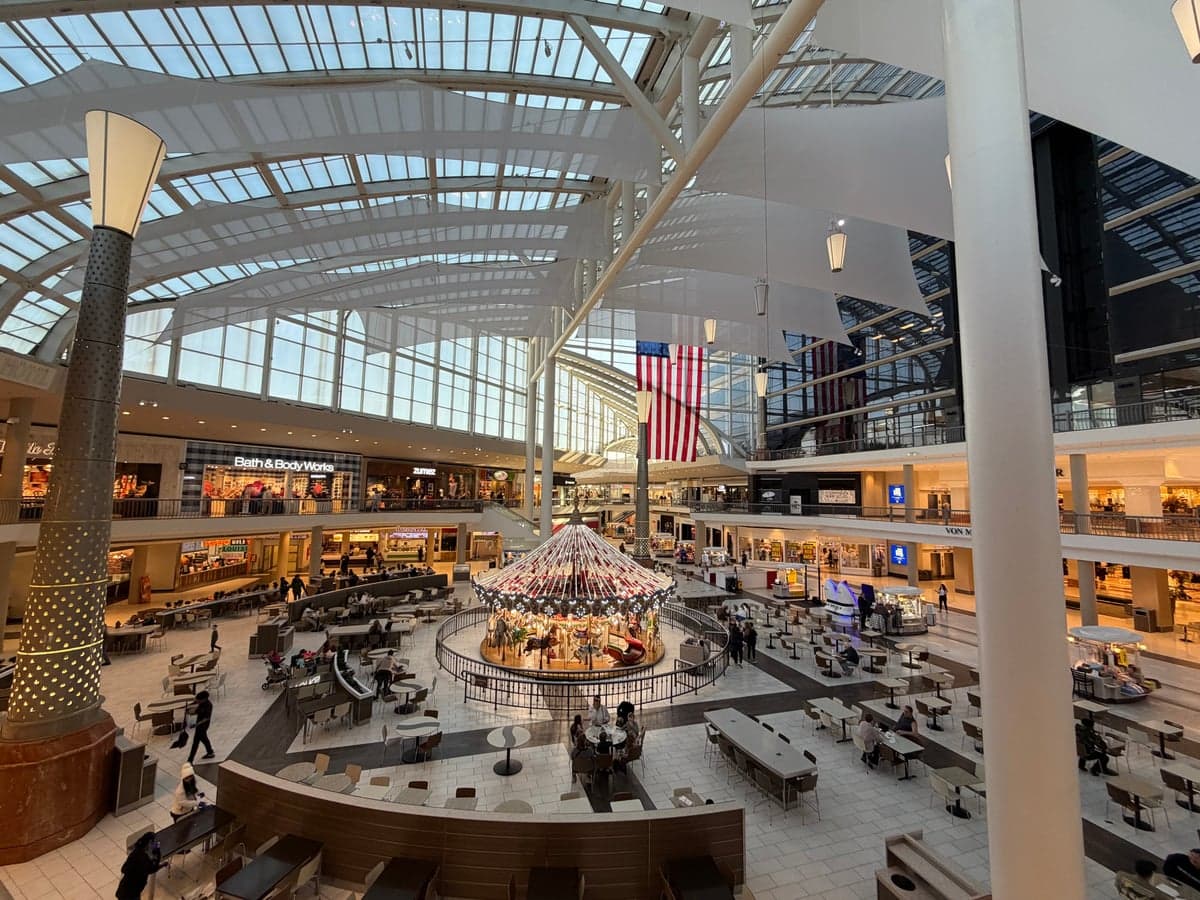
Photo: Wikipedia
Political ClimatePolitical Climate in Hoover, AL
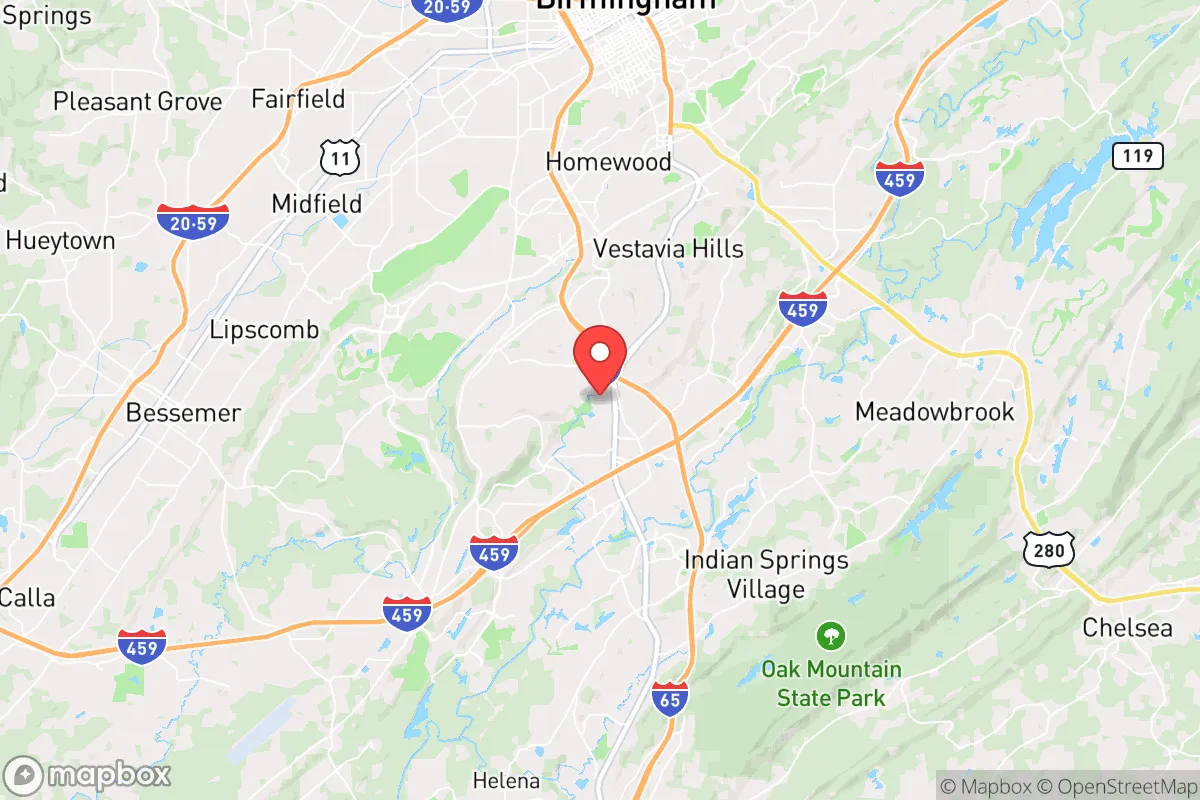
District shown is the primary district for this city’s centroid. Cities may span multiple districts.
Local Political AnalysisPolitical Analysis of Hoover, AL
Hoover, Alabama, has long been a rock-solid conservative stronghold, and that hasn't changed much despite the national trends. The Cook PVI of R+20 tells you the headline: this is a place where Republican candidates regularly win by double digits, and the local culture reflects that. But if you've lived here as long as I have, you've seen the undertow shift a little. The old-school, "leave us alone" conservatism that built this town is still the backbone, but there's a growing, quieter push from folks who want to bring in more progressive ideas, especially around zoning and school policies. It's not a blue wave by any stretch, but it's a current worth watching if you value limited government and personal freedom.
How it compares
Drive 15 minutes east into Birmingham proper, and you might as well be in a different country politically. Jefferson County as a whole leans blue, but Hoover sits right on the southern edge, acting as a buffer between that urban liberalism and the deeply red rural counties like Shelby to the south. Places like Vestavia Hills and Mountain Brook are similarly conservative, but Hoover's sheer size—it's the biggest suburb in the state—means it gets more attention from both parties. The contrast is stark: while Birmingham's city council debates things like defunding police or sanctuary city policies, Hoover's leadership has consistently held the line on law-and-order and fiscal restraint. That said, the 2020 and 2024 elections showed a slight uptick in Democratic votes in some precincts near the Riverchase area, likely driven by younger families moving in from out of state. It's not a flip, but it's a reminder that no place is immune to the national pressure.
What this means for residents
For the average family here, the political climate means your tax dollars are mostly spent on things you actually see: good roads, well-funded schools, and responsive police. The city council has been pretty hands-off on personal matters—no mask mandates that lasted forever, no heavy-handed business closures during the pandemic. That's the kind of local governance that respects your right to make your own choices. But the concern is creeping in. There's been talk of more "equity" initiatives in the school system, and some zoning changes that could bring denser, more government-subsidized housing into established neighborhoods. If you're someone who believes the best government is the one closest to the people and least involved in your daily life, these are the early warning signs. The local elections in 2025 will be a real test of whether Hoover stays the course or starts drifting toward the kind of overreach you see in bigger cities.
Culturally, Hoover still feels like a place where you can leave your doors unlocked and know your neighbors will watch your back. The big policy distinction is that the city has resisted the urge to create a bunch of new boards and commissions that micromanage everything from lawn heights to business signs. That's a breath of fresh air compared to some nearby towns that have gotten a little too comfortable with telling people what to do. The long-term trajectory depends on who shows up to vote in the primaries. If the old guard stays engaged, Hoover will remain a model of conservative common sense. If the new transplants get their way, we could see more regulations, more taxes, and less freedom. For now, it's still a great place to raise a family without the government breathing down your neck—but keep your eye on those school board meetings.

State Political ClimatePolitical Climate in Alabama
State Political AnalysisPolitical Environment in the State
Alabama is a deeply conservative state, with Republicans holding every statewide elected office and supermajorities in both legislative chambers, a dominance that has only solidified over the past 20 years. The state voted for Donald Trump by a margin of over 25 points in 2024, a shift from the 14-point margin in 2012, reflecting a steady rightward drift even as the national environment fluctuated. The dominant coalition is a mix of rural traditionalists, evangelical Christians, and a growing number of suburban families fleeing higher-tax states, all united around limited government, gun rights, and cultural conservatism.
Urban vs. rural divide
The political map of Alabama is a study in stark contrasts. The state’s few urban centers—Birmingham, Montgomery, and Mobile—vote reliably Democratic, but they are islands in a sea of deep red. Jefferson County (Birmingham) and Montgomery County are the only two counties that consistently go blue, driven by Black voters and a small but vocal progressive base in the university and medical sectors. Meanwhile, the rural Black Belt counties, despite having majority-Black populations, often vote more conservatively on cultural issues than their urban counterparts, though they still lean Democratic in presidential races. The real engine of Republican power is the suburban and exurban ring around Birmingham—places like Shelby County (voted +35 R in 2024) and Autauga County—along with the entire northern half of the state, from Huntsville (which is becoming a purple tech hub) to the rural counties along the Tennessee border. The Gulf Coast counties like Baldwin (home to Fairhope and Gulf Shores) are among the fastest-growing and most conservative in the state, drawing in retirees and remote workers from blue states.
Policy environment
Alabama’s policy environment is among the most conservative in the nation. There is no state income tax on retirement income, and the state’s combined state and local sales tax rate averages around 9-10%, which is high but offset by low property taxes (averaging 0.4% of home value). The regulatory posture is light-touch: no state-level minimum wage above the federal $7.25, no universal background checks for gun purchases, and a right-to-work law that keeps unions weak. On education, the state passed the Alabama CHOOSE Act in 2024, creating education savings accounts (ESAs) worth roughly $7,000 per child for families leaving failing public schools—a major win for school choice advocates. Healthcare policy is limited; the state has not expanded Medicaid under the ACA, leaving a coverage gap for about 300,000 adults, but this is seen by conservatives as a necessary check on federal overreach. Election laws are strict: voter ID is required, and the state purges inactive voters regularly. In 2024, Alabama also passed a law banning ranked-choice voting and requiring all ballots to be hand-counted in certain precincts, a move aimed at election integrity.
Trajectory & freedom
Alabama is trending more free in several key areas, particularly around parental rights and gun rights. In 2022, the state passed a permitless carry law (Constitutional Carry), allowing any law-abiding adult to carry a concealed firearm without a permit. The same year, the Alabama Parents’ Bill of Rights was enacted, requiring schools to notify parents of any curriculum involving sexual orientation or gender identity and giving parents the right to opt their children out. In 2023, the state passed a law banning gender-affirming care for minors, with criminal penalties for doctors who violate it. On the economic freedom front, the state has not imposed any COVID-19 vaccine mandates on private businesses or schools, and it passed a law in 2021 prohibiting employers from requiring proof of vaccination as a condition of employment. However, there are concerning signs: the state’s heavy reliance on federal dollars (over 40% of the state budget) creates a vulnerability to federal strings, and the recent expansion of the state’s gambling laws (allowing a lottery and casinos in 2024) was a mixed bag—it raised revenue but also expanded government involvement in personal choices.
Civil unrest & political movements
Alabama has seen relatively little civil unrest compared to other states, but there are flashpoints. The 2020 Black Lives Matter protests in Birmingham and Montgomery were largely peaceful, though a few statues were vandalized. The state’s immigration politics are heated but not chaotic: in 2024, Governor Kay Ivey signed a bill allowing state law enforcement to arrest and detain illegal immigrants found in the state, a direct challenge to federal authority. There is a growing nullification movement in the state legislature, with bills introduced in 2025 to declare federal gun laws unenforceable in Alabama—a symbolic but potent gesture. Election integrity remains a hot-button issue; after the 2020 election, the state conducted a forensic audit of voting machines in a few counties, finding no widespread fraud, but the distrust persists among the base. The most visible political movement is the “School Choice” coalition, which has become a powerful grassroots force, pushing for more ESA expansion and homeschooling protections. You’ll see “Don’t Tread on Me” flags flying in rural areas, but the overall atmosphere is one of quiet, determined conservatism rather than loud protest.
Projection
Over the next 5-10 years, Alabama will likely become more conservative, not less. The in-migration from states like California, Illinois, and New York is accelerating, particularly to the Gulf Coast (Baldwin County grew 15% from 2020-2025) and the Huntsville metro (which added 50,000 new residents in the same period). These newcomers are overwhelmingly conservative-leaning, often moving specifically for lower taxes and cultural alignment. The demographic shift is also working in Republicans’ favor: the Black population share is slowly declining (from 26% in 2010 to 24% in 2025), while the white and Hispanic populations are growing. The state’s rural areas are depopulating, but the suburban and exurban growth is more than compensating. Expect further expansions of school choice, a possible elimination of the state income tax (a bill was introduced in 2025), and more preemption of local ordinances on everything from gun laws to zoning. The only wild card is the federal government: if the Supreme Court or Congress imposes new mandates on education or healthcare, Alabama will likely be at the forefront of resistance.
Bottom line for a new resident: If you’re moving to Alabama for freedom, you’re making a smart bet. The state is actively expanding personal liberty in the areas that matter most to conservatives—gun rights, parental control, and low taxes. You’ll find a welcoming culture in places like Auburn or Madison, where neighbors look out for each other and government stays out of your business. Just be prepared for high sales taxes and a healthcare system that’s thin in rural areas. The politics here are stable, predictable, and moving in your direction—a rare thing in America today.
* Values derived from national, state, county, city and local statistics and may differ in a specific area. Last updated: 2026-04-19T18:54:25.000Z
Narrative content on this page is AI-generated and may contain mistakes. Verify any details that matter before acting on them.
ReloMaps may earn a commission from affiliate links at no extra cost to you.

