Photo: Wikipedia
Demographics of Honey Grove, TX
Affluence Level in Honey Grove, TX
A middle-class area roughly in line with national averages across income, home values, education, and employment.
People of Honey Grove, TX
Honey Grove, Texas, is a small, tight-knit community of 1,886 residents where a strong sense of local heritage and a slower pace of life define daily character. The population is predominantly White (63.8%) with a significant Black community (20.0%) and a growing Hispanic presence (13.3%), reflecting a history of agricultural settlement and later diversification. With only 2.1% foreign-born and a low college attainment rate of 15.7%, the city retains a working-class, rural identity rooted in its North Texas location near the Oklahoma border. The people here value tradition, self-reliance, and neighborly connections, making it a place where newcomers are often drawn by family ties or the appeal of affordable, quiet living.
How the city was settled and grew
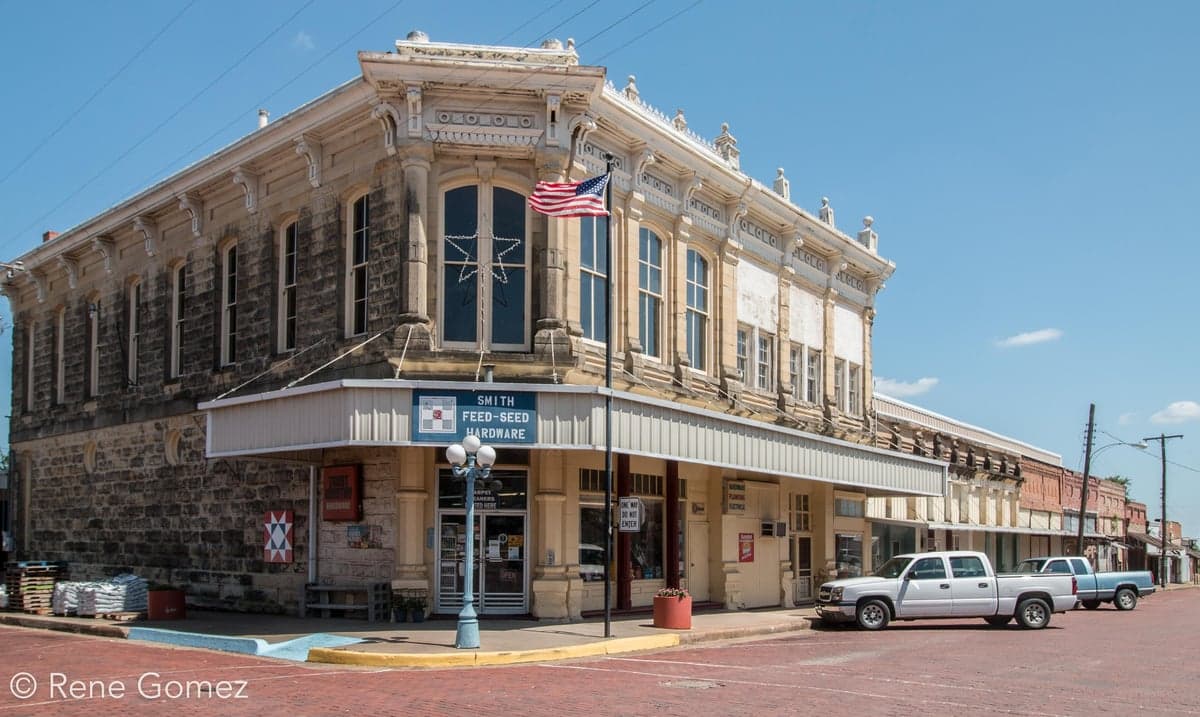
Honey Grove was founded in the 1830s by Anglo-American settlers from the Upper South, primarily Tennessee, Kentucky, and Missouri, who were drawn by the fertile blackland prairie soil ideal for cotton farming. The city’s name derives from a grove of honey locust trees, and its early economy revolved around cotton plantations and small-scale agriculture. The original settlers clustered around the town square and along what is now Main Street, establishing the Historic Downtown District as the commercial and social hub. By the 1850s, enslaved African Americans made up a substantial portion of the population, working the cotton fields that surrounded the town. After the Civil War, freedmen established their own community in the Southside neighborhood, centered around the area near present-day FM 100 and the railroad tracks, where churches, schools, and small businesses served the Black population. The arrival of the Texas and Pacific Railway in the 1870s spurred a second wave of growth, attracting merchants, craftsmen, and a small number of German and Czech immigrants who settled in the Railroad Addition, a neighborhood just north of the depot. By 1900, Honey Grove had become a regional cotton and livestock trading center, with a population that was roughly two-thirds White and one-third Black, a pattern that held through the mid-20th century.
Modern era (post-1965)
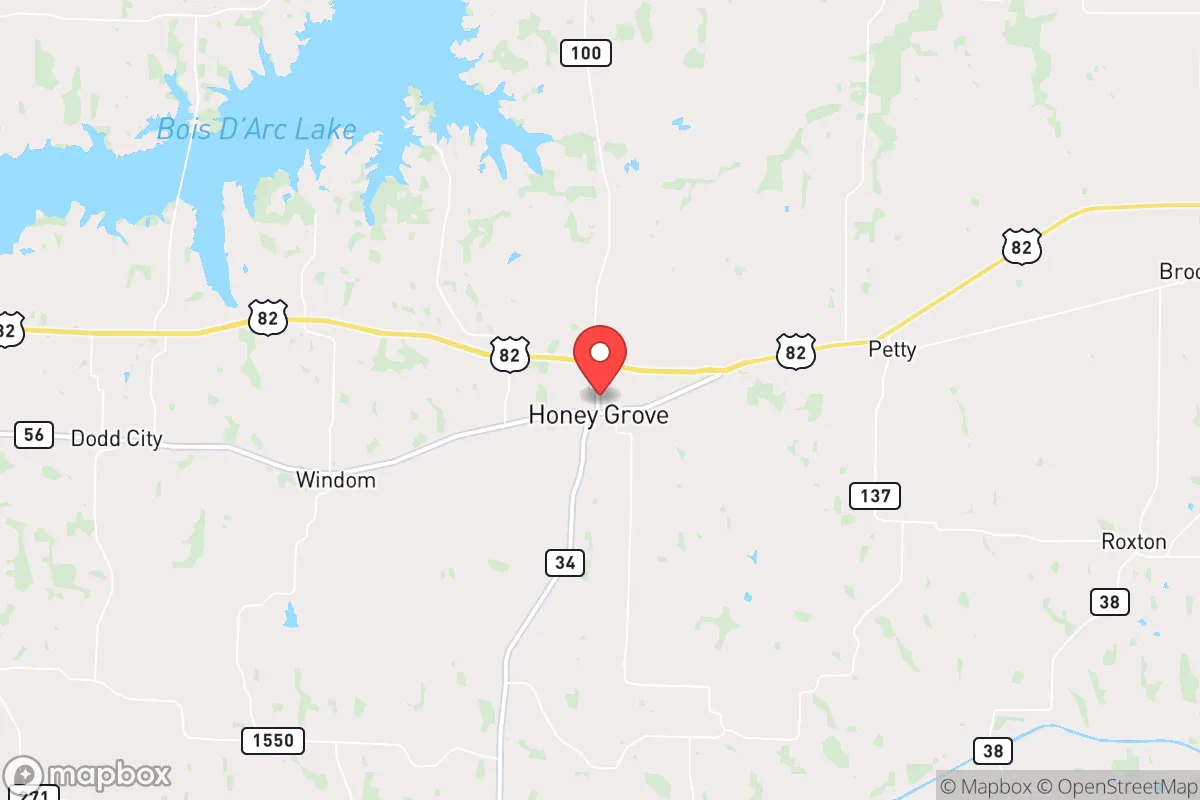
The post-1965 period brought gradual demographic shifts, though Honey Grove remained largely insulated from the large-scale immigration that reshaped many Texas cities. The mechanization of cotton farming and the decline of small-scale agriculture led to a steady population loss from a peak of around 2,500 in the 1950s to the current 1,886. The Black population, which had been concentrated in the Southside neighborhood and along East Oak Street, began a slow out-migration to larger cities like Dallas and Sherman for better job opportunities, though a core community remains. The Hispanic population, virtually nonexistent before 1970, began to grow modestly as migrant farmworkers settled in the area, initially in rental housing near the Industrial Park on the city’s western edge. Today, Hispanic residents are dispersed throughout the city but have a visible presence in the Westside area near Highway 56. The White population, while still the majority, has aged in place, with younger families often moving to larger towns for employment. The city’s racial composition has remained relatively stable since 2000, with the Black share holding near 20% and the Hispanic share slowly rising from about 8% in 2000 to 13.3% today. The Asian and Indian populations remain at 0.0%, reflecting the city’s limited economic draw for immigrant groups.
The future
Honey Grove’s population is projected to remain stable or decline slightly over the next 10-20 years, as the city lacks major employment drivers to attract new residents. The Hispanic share is likely to continue its gradual increase, potentially reaching 18-20% by 2040, driven by natural growth and some in-migration from nearby agricultural areas. The Black population is expected to hold steady or decline modestly, as younger generations continue to leave for urban centers. The White population will likely shrink further due to an aging demographic and low birth rates. New residential development is concentrated in the Northside Estates subdivision, a small, predominantly White neighborhood of single-family homes built since 2010, and in scattered infill lots in the Historic Downtown District, where a few renovated homes are attracting retirees and remote workers. The city’s cultural identity is evolving slowly, with the annual Honey Grove Fiesta (established 2015) reflecting the growing Hispanic influence, while the long-standing Honey Grove Heritage Festival remains the dominant community event. For newcomers, the city offers a stable, low-cost environment but limited economic opportunity, making it best suited for those with local family ties, remote work, or retirement plans.
Honey Grove is becoming a quieter, older, and slightly more Hispanic version of its historical self, with a population that values continuity over change. For someone moving in now, the city offers a close-knit, affordable community where neighbors know each other and traditions run deep, but where job prospects are limited and diversity is growing only slowly. It is a place for those seeking a simple, rooted life rather than rapid growth or urban amenities.

* Values derived from national, state, county, city and local statistics and may differ in a specific area. Last updated: 2026-11-07T17:02:47.000Z
Narrative content on this page is AI-generated and may contain mistakes. Verify any details that matter before acting on them.
ReloMaps may earn a commission from affiliate links at no extra cost to you.

