Photo: Wikipedia
Personal Sovereignty in Homestead, FL
Viable for self-reliance. Generally workable, though some barriers may limit total independence.
What does Personal Sovereignty tell us?
Personal Sovereignty measures your capacity for self-reliance and independence with minimal government friction. Higher scores mean fewer barriers between you and the way you want to live... but it assumes you have the space you need and good neighbors.
What does this tell us?
Personal Sovereignty measures your capacity for self-reliance and independence with minimal government friction. Higher scores mean fewer barriers between you and the way you want to live... but it assumes you have the space you need and good neighbors.
State Policy
Energy independence: Importer (10% of energy produced in-state)
Personal Liberty
Homesteading

Personal Liberty Analysis
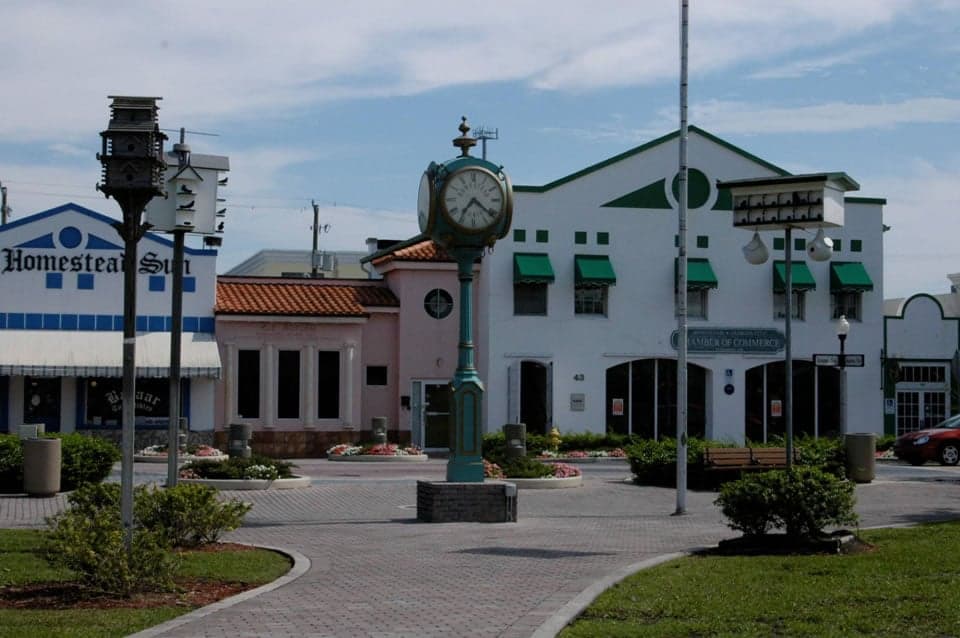
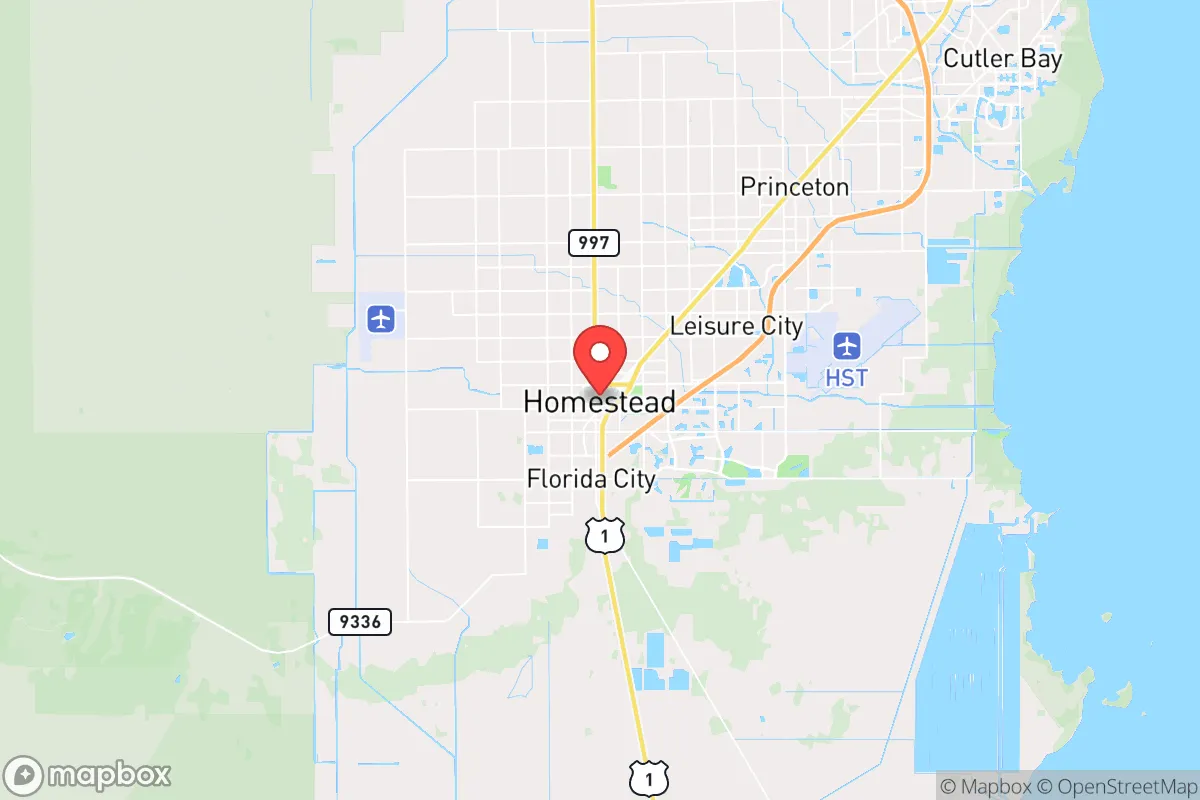
Homestead, Florida, offers a unique environment for personal sovereignty that is shaped by its position at the southern edge of the continental U.S. and its proximity to the Everglades. While Florida as a whole has a strong reputation for individual liberty, Homestead’s specific character—a mix of agricultural roots, military presence, and a growing population of people seeking distance from urban control—creates a distinct autonomy profile. For those prioritizing self-reliance, the area provides a foundation that is far stronger than most coastal or northern metros, but it requires a clear-eyed understanding of the state-level framework and local realities that govern daily life.
Tax burden and regulatory posture: How Florida’s framework affects Homestead
Florida’s lack of a state income tax is the single most powerful tool for personal financial sovereignty in Homestead. This means every dollar earned stays in your pocket, free from state-level confiscation for programs you may not support. The state’s sales tax rate is 6%, but Miami-Dade County adds a 1% surcharge, bringing the total to 7% in Homestead—still manageable compared to high-tax states. Property taxes are levied at the county level, and Miami-Dade’s effective rate hovers around 0.98% of assessed value, which is slightly above the national average but reasonable given the lack of income tax. The regulatory posture in Homestead is notably more permissive than in Miami proper, with the city’s government generally taking a hands-off approach to business licensing and land use compared to the dense urban core. However, Florida’s state-level building codes are among the strictest in the nation due to hurricane risks, which adds cost and complexity to any construction or renovation project. For a prepper or survivalist, this means you can keep more of your income, but you must navigate a regulatory environment that prioritizes structural resilience over personal freedom in design choices.
Self-defense and gun law specifics: What Homestead offers for armed preparedness
Florida is a “shall issue” state for concealed carry permits, and as of 2023, permitless (constitutional) carry is legal for anyone 21 or older who can legally possess a firearm. This is a significant win for personal sovereignty in Homestead. You can carry a concealed firearm without a permit, a background check, or a waiting period for most purchases—though federal background checks still apply at licensed dealers. Open carry is generally prohibited, except in specific circumstances like hunting, fishing, or camping, which is a limitation to note. Stand Your Ground laws are fully in effect, meaning you have no duty to retreat before using deadly force if you are in a place you have a legal right to be and reasonably believe force is necessary to prevent death or great bodily harm. Castle Doctrine protections extend to your home, vehicle, and occupied structure. Homestead’s proximity to the Everglades also means that firearms for wildlife defense are a practical consideration, not just a philosophical one. The local sheriff’s office in Miami-Dade is generally supportive of Second Amendment rights, but the county’s urban core (Miami) has a more restrictive political climate. In practice, Homestead residents enjoy a high degree of firearm freedom, but you should be aware that local ordinances on discharging firearms within city limits are restrictive—you’ll need property outside the urban boundary for regular target practice.
Self-reliance and homesteading viability: Lot sizes, zoning, and off-grid feasibility
Homestead’s agricultural zoning and large-lot subdivisions are a major draw for those seeking self-sufficiency. The city’s historic role as the center of South Florida’s farming region means that many residential lots are one acre or larger, especially in unincorporated areas and neighborhoods like Leisure City and Florida City. Zoning codes in these areas often permit keeping chickens, goats, and even small livestock, though you should verify specific HOA restrictions if you buy in a planned community. Off-grid feasibility is mixed. Florida’s high water table and flat terrain make septic systems standard in rural areas, and well water is common on larger parcels. Solar power is viable year-round due to the subtropical sun, but net metering policies with Florida Power & Light (the dominant utility) are favorable—you can sell excess power back to the grid. Complete off-grid living is legally challenging because the state requires connection to an approved power source for new construction, and local building codes mandate certain structural standards. Rainwater collection is legal but must not create mosquito breeding grounds. For a prepper, the best strategy is to buy a large lot in an unincorporated area, install solar with battery backup, and maintain a grid connection as a fallback. The growing season is nearly year-round, which is a massive advantage for food sovereignty.
Personal liberties: Parental rights, medical autonomy, speech, and property
Florida has become a battleground for personal liberties, and Homestead sits squarely within that state-level framework. Parental rights in education are strongly protected under Florida law, with the Parental Bill of Rights (HB 241, 2021) affirming that parents have the fundamental right to direct the upbringing, education, and health care of their minor children. This includes the ability to opt out of curriculum materials and to be notified of any medical or mental health services provided at school. Medical autonomy is more complex. Florida has strict vaccine mandates for school attendance, but religious and medical exemptions are available, though they require paperwork and persistence. The state’s response to COVID-19 was notably less restrictive than many others, with no mask mandates in schools after 2021 and no vaccine passports. Property rights are strong under Florida’s “Property Rights” amendment, which requires the government to compensate landowners for any regulatory taking that reduces property value. This is a powerful check on local overreach. Free speech is robust, with no state-level hate speech laws or restrictions on political expression. However, Homestead’s local government has occasionally been criticized for opaque permitting processes and slow responses to public records requests, which can be a frustration for those who value transparency. Overall, the legal environment in Homestead leans heavily toward individual liberty, but you must remain vigilant about local bureaucratic inertia.
In the broader context of the United States, Homestead offers a level of personal sovereignty that is rare in coastal metros. The combination of no state income tax, constitutional carry, strong parental rights, and large-lot zoning creates a foundation for self-reliance that is difficult to find in places like California, New York, or even parts of Texas. Homestead is not a libertarian utopia—you still contend with hurricane building codes, utility monopolies, and a county government that can be slow and inefficient—but it is a place where a determined individual or family can carve out a high degree of autonomy. For those watching the erosion of freedoms elsewhere, Homestead represents a viable redoubt in the subtropical fringe, where the state’s political trajectory aligns with personal sovereignty, and the physical environment rewards those who prepare.

* Values derived from national, state, county, city and local statistics and may differ in a specific area. Last updated: 2026-09-21T19:02:09.000Z
Narrative content on this page is AI-generated and may contain mistakes. Verify any details that matter before acting on them.
ReloMaps may earn a commission from affiliate links at no extra cost to you.

