Photo: Wikipedia
Demographics of Hiram, OH
Affluence Level in Hiram, OH
A middle-class area roughly in line with national averages across income, home values, education, and employment.
People of Hiram, OH
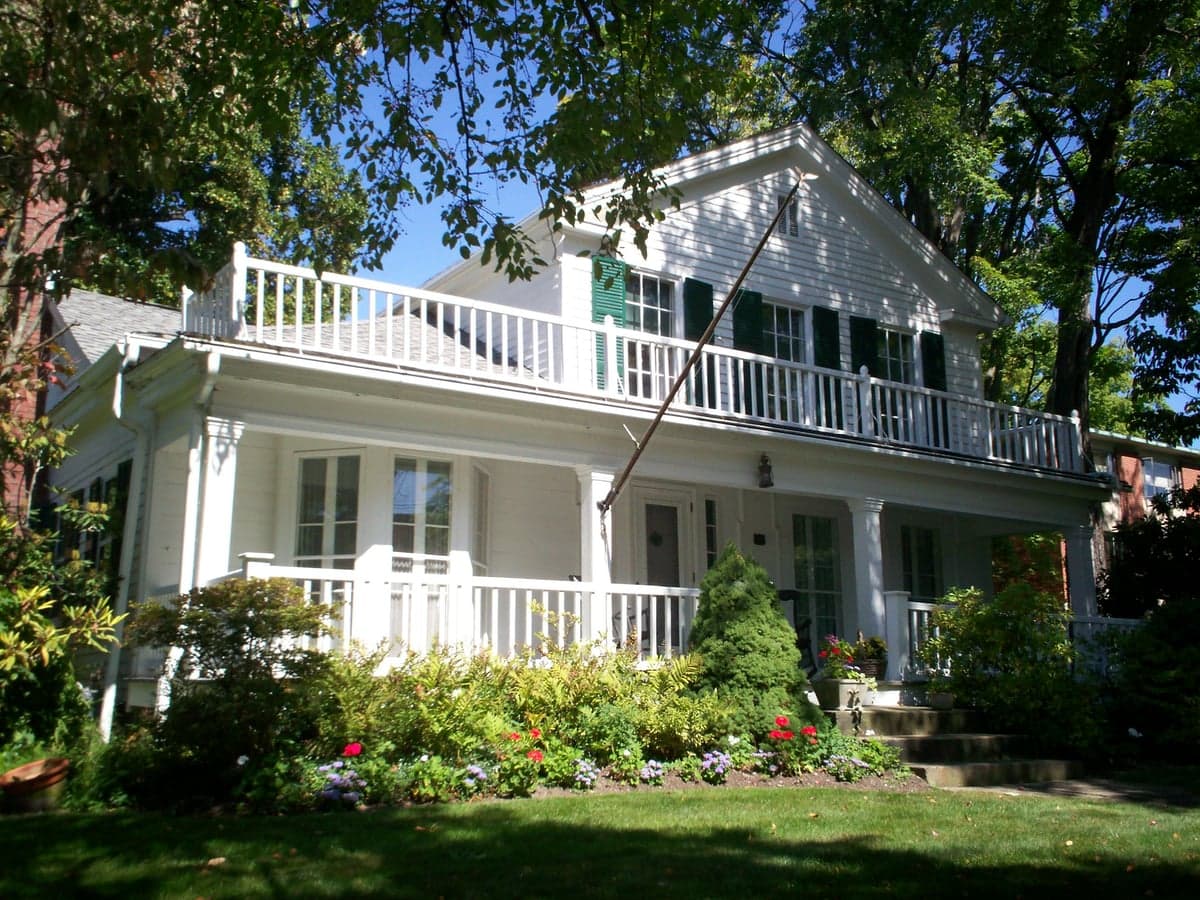
Hiram, Ohio, is a small, tight-knit village of 1,363 residents that blends a historic New England-style college town character with a quiet, family-oriented atmosphere. The population is predominantly White (82.0%), with a notable Black community (11.2%) and a small Hispanic presence (2.4%), creating a modestly diverse enclave in rural Portage County. With nearly half of adults holding a college degree (46.9%), the village is shaped intellectually by Hiram College and culturally by its deep-rooted abolitionist and progressive heritage. The population density is low, and the community’s identity is defined by its historic homes, tree-lined streets, and a strong sense of local tradition.
How the city was settled and grew
Hiram was founded in the early 1800s by settlers from Connecticut and Massachusetts, drawn by the Connecticut Western Reserve land grants. The village was platted in 1807 and quickly became a center for education and religious reform, largely due to the influence of the Disciples of Christ (Christian Church). The original Yankee settlers built the core of what is now Historic District, centered around the Hiram College campus and the town green. These early residents were staunchly abolitionist, and Hiram became a stop on the Underground Railroad, with several homes in the Garfield Heights area (named for President James A. Garfield, a Hiram College alumnus and local preacher) serving as safe houses. Through the mid-20th century, the population remained overwhelmingly White and native-born, with growth driven by the college and small-scale agriculture. The village’s population peaked around 1,500 in the 1960s, then stabilized as suburban sprawl from Cleveland and Akron largely bypassed the area.
Modern era (post-1965)
After the 1965 Immigration and Nationality Act, Hiram saw virtually no foreign-born influx—the current foreign-born population is 0.0%. Instead, the village’s demographic shifts came from domestic migration. The most significant change was the growth of the Black population, which rose from a negligible share in 1970 to 11.2% today. This increase is largely tied to the expansion of Hiram College’s outreach and recruitment efforts, which began attracting African American students and faculty from the Cleveland and Youngstown metro areas. Many of these families settled in the College Hill neighborhood, a cluster of modest homes and rental properties just west of the campus. The Hispanic population (2.4%) is a more recent arrival, concentrated in the West Hiram area near State Route 82, drawn by work in local landscaping, construction, and the nearby greenhouse industry. The Asian population remains negligible (0.2%), with no Indian subcontinent presence (0.0%). The village’s overall population has held steady at roughly 1,300–1,400 since 1990, as out-migration of younger adults seeking urban jobs has been offset by in-migration of retirees and college-affiliated families.
The future
Hiram’s population is projected to remain stable or decline slightly over the next 10–20 years, as the village lacks major employment drivers beyond the college and small businesses. The Black share is likely to grow modestly as Hiram College continues its diversity initiatives, but the foreign-born population will almost certainly stay near zero due to the village’s rural location and limited housing stock. The Hispanic population may increase slowly, but it will remain a small minority. The most notable trend is the aging of the White population—many longtime residents are retiring, and younger families are being priced out of the historic core. New construction is limited, but a few infill homes are appearing in the Meadowbrook Estates subdivision on the village’s eastern edge, attracting some young families from the broader Portage County area. The cultural identity of Hiram is likely to remain rooted in its college-town character and progressive history, even as the population becomes slightly more racially diverse but no more ethnically varied.
For someone moving in now, Hiram offers a stable, safe, and intellectually engaged community with a strong sense of place. The village is becoming slightly more diverse in racial terms, but it remains overwhelmingly native-born and culturally homogeneous. New residents should expect a quiet, family-friendly environment where the college is the social and economic anchor, and where change comes slowly.

* Values derived from national, state, county, city and local statistics and may differ in a specific area. Last updated: 2026-06-16T10:05:31.000Z
Narrative content on this page is AI-generated and may contain mistakes. Verify any details that matter before acting on them.
ReloMaps may earn a commission from affiliate links at no extra cost to you.

