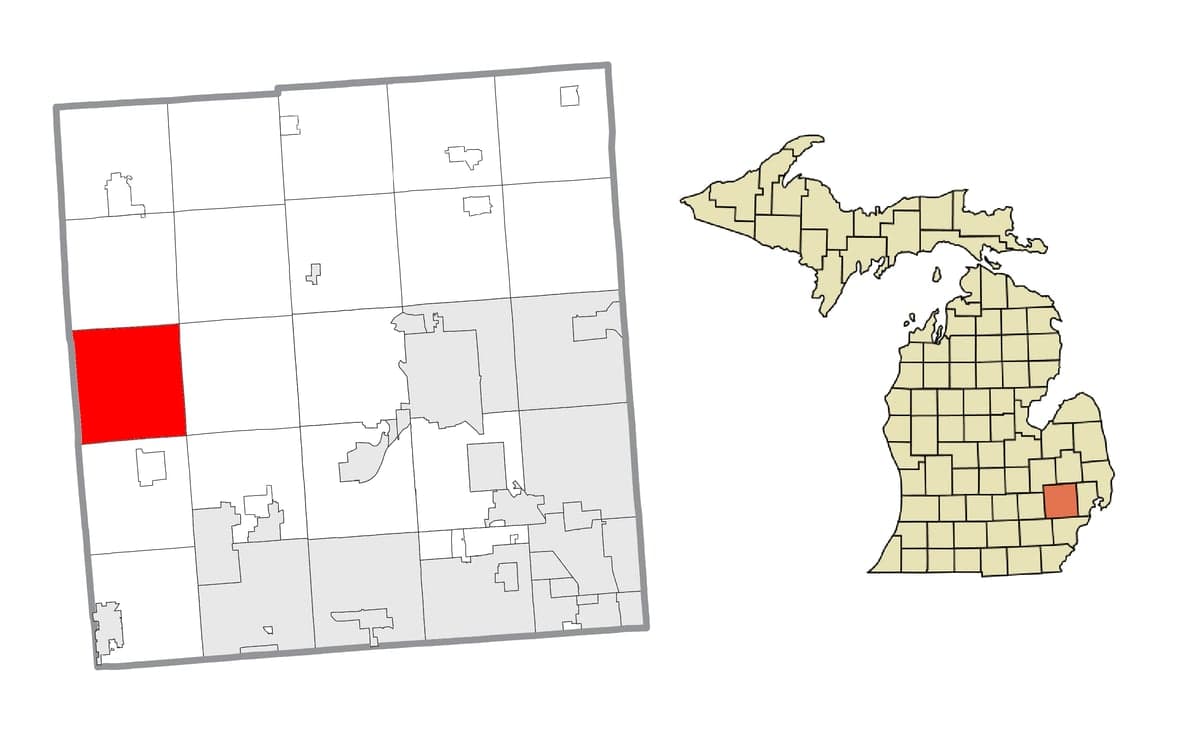
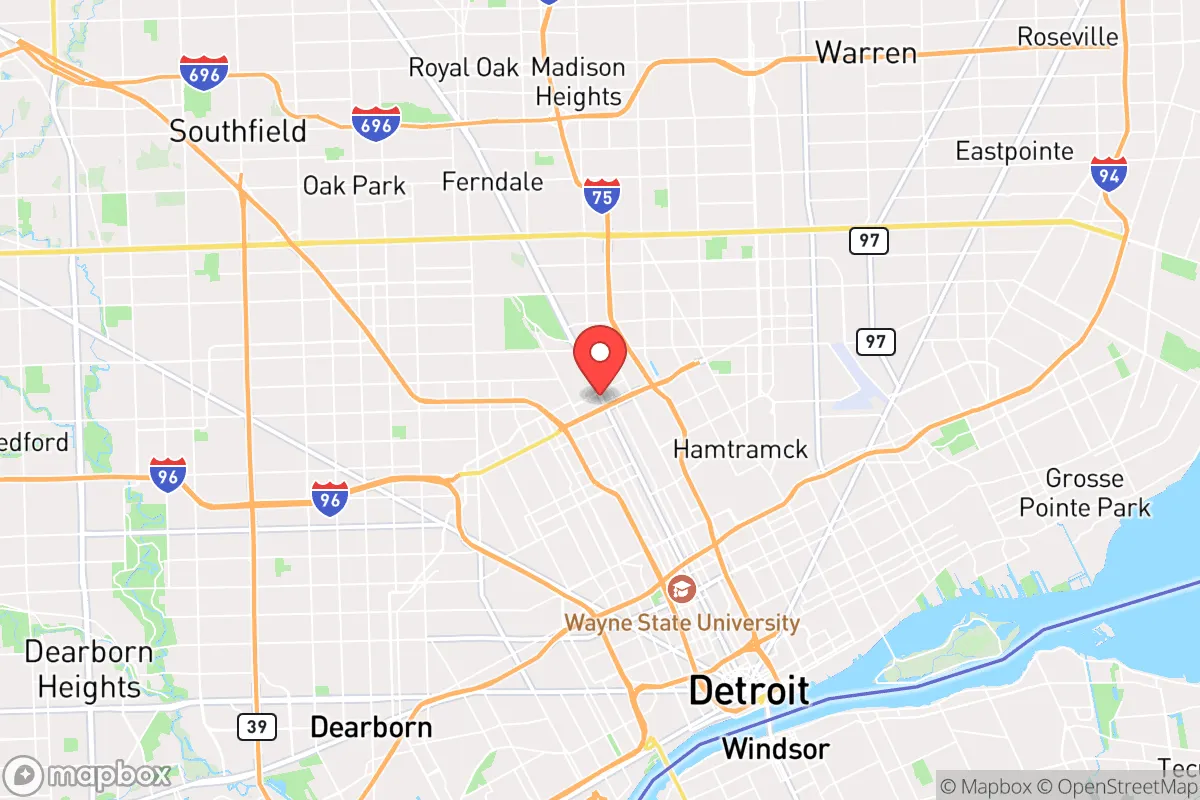
Photo: Wikipedia
Demographics of Highland, MI
Affluence Level in Highland, MI
A low-income area with significant economic hardship. Household wealth and educational attainment are well below national averages.
People of Highland, MI
The people of Highland, Michigan, today form a small, tightly-knit community of 8,798 residents, characterized by a predominantly Black population (85.8%) and a notably low foreign-born share (0.6%). The city’s identity is shaped by its deep roots in African American heritage, a modest college attainment rate of 17.0%, and a demographic profile that is both highly homogeneous and distinct from the surrounding Oakland County suburbs. For those moving in now, Highland offers a quiet, family-oriented environment where community ties run deep, but where economic and educational opportunities remain more limited than in nearby, more affluent areas.
How the city was settled and grew
Highland’s early settlement began in the 1830s, drawing Yankee farmers from New England and New York who were attracted by the area’s fertile, rolling land and the promise of the Michigan Territory’s land grants. The village was platted in 1836 around a central millpond, and the first wave of European-American settlers—largely of English and Scottish descent—built homes in what is now the Old Village Historic District, centered on Livingston Road and Milford Road. These early residents established a rural economy based on sawmills, gristmills, and small-scale agriculture. A second wave of German and Irish immigrants arrived in the 1850s and 1860s, settling along the North Milford Road corridor and in the Hickory Ridge area, where they worked as tenant farmers and laborers. By 1900, Highland remained a small, overwhelmingly white farming community of roughly 1,200 people, with no significant industrial base to drive further growth.
Modern era (post-1965)
The modern demographic transformation of Highland began in the 1970s and accelerated through the 1990s, driven by Black families moving outward from Detroit and Pontiac in search of affordable housing, larger lots, and lower crime rates. This domestic in-migration was part of a broader suburbanization pattern across Oakland County, where restrictive covenants had historically excluded Black residents. Highland’s relatively low land prices and its distance from the most expensive lakefront suburbs made it an accessible destination. The Highland Station neighborhood, a subdivision of ranch-style homes built in the 1970s and 1980s, became a primary landing point for these new residents, as did the Duck Lake Road area, where larger parcels allowed for more privacy. By the 2000 census, the Black population had risen to over 60%, and by 2020 it had reached 85.8%, while the white population fell to 9.2%. The foreign-born share remained negligible at 0.6%, and the Hispanic share at 1.1%, reflecting that Highland’s growth came almost entirely from domestic migration, not international immigration. The city’s college attainment rate of 17.0% is well below the Oakland County average of roughly 50%, indicating that many new residents moved for affordability rather than professional opportunities.
The future
Highland’s population is projected to remain stable or decline slightly over the next decade, as the city has little undeveloped land and no major new housing developments underway. The demographic trend points toward continued racial homogeneity, with the Black share likely holding above 80% and little growth in Hispanic, Asian, or foreign-born populations. Younger residents are increasingly leaving for college and not returning, drawn to job centers in Ann Arbor, Troy, and Auburn Hills, which contributes to an aging population profile. New construction is concentrated in the East Highland Road corridor, where a handful of custom-built homes on large lots are attracting a small number of middle-class Black families seeking a quieter alternative to more expensive suburbs like Southfield or Farmington Hills. The city’s cultural identity is becoming more distinctly African American, with local churches, community events, and the Highland Farmers Market reflecting this shift. However, the lack of economic diversification and the low college attainment rate suggest that Highland will remain a bedroom community rather than a destination for new industries or a magnet for international newcomers.
For someone moving in now, Highland is a stable, predominantly Black community where affordability and a slow pace of life are the main draws, but where limited job growth, an aging housing stock, and a shrinking youth population present long-term challenges. The city is not becoming more diverse; rather, it is consolidating its current demographic character. New residents will find a place where neighbors know each other, where the schools are small, and where the nearest major employment centers require a 30- to 45-minute commute.

* Values derived from national, state, county, city and local statistics and may differ in a specific area. Last updated: 2026-10-20T18:16:34.000Z
Narrative content on this page is AI-generated and may contain mistakes. Verify any details that matter before acting on them.
ReloMaps may earn a commission from affiliate links at no extra cost to you.

