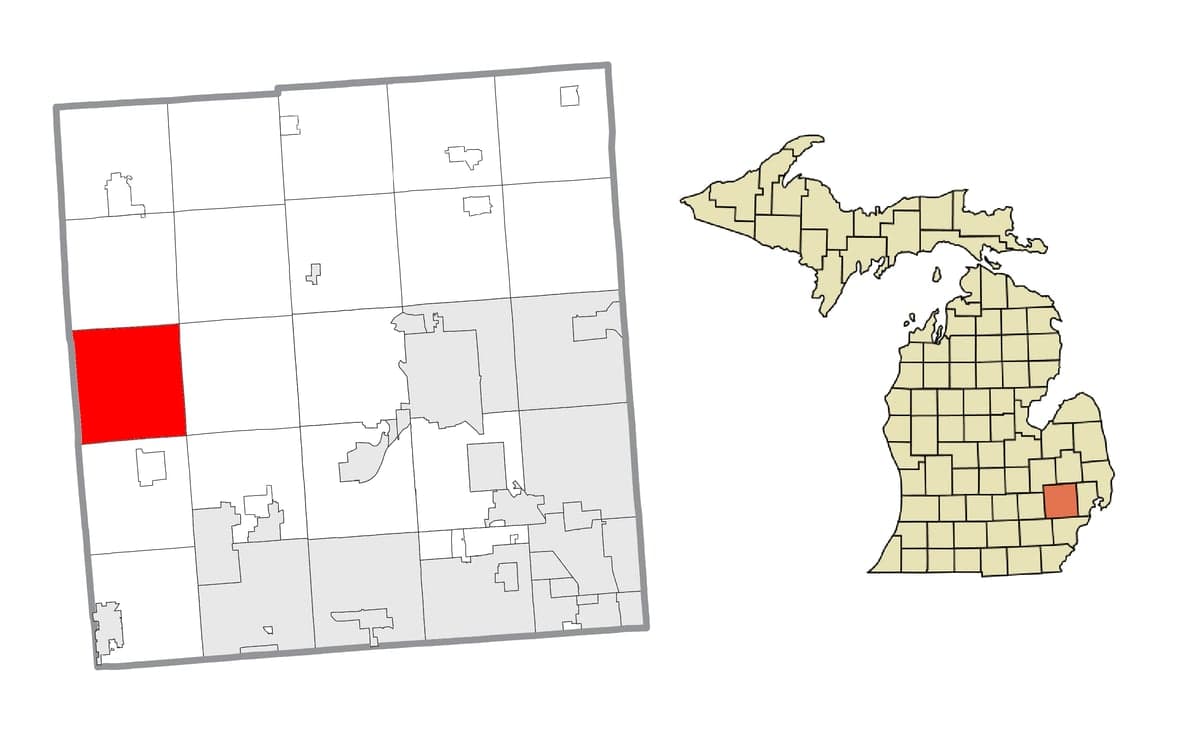
Photo: Wikipedia
Personal Sovereignty in Highland, MI
Strong independent fundamentals that actively favor personal liberty and low regulation.
What does Personal Sovereignty tell us?
Personal Sovereignty measures your capacity for self-reliance and independence with minimal government friction. Higher scores mean fewer barriers between you and the way you want to live... but it assumes you have the space you need and good neighbors.
What does this tell us?
Personal Sovereignty measures your capacity for self-reliance and independence with minimal government friction. Higher scores mean fewer barriers between you and the way you want to live... but it assumes you have the space you need and good neighbors.
State Policy
Energy independence: Importer (20% of energy produced in-state)
Personal Liberty
Homesteading

Personal Liberty Analysis
Highland, Michigan, offers a notably high degree of personal sovereignty within a state that presents a mixed regulatory landscape. For individuals and families prioritizing autonomy, the area provides a tangible sense of self-reliance, supported by low-density zoning, a strong rural character, and a community culture that largely expects residents to manage their own affairs. While Michigan’s state-level tax burden and certain regulatory frameworks require careful navigation, Highland’s local environment—combined with the state’s robust self-defense laws and permissive homesteading rules—creates a living situation where personal freedom is a practical, day-to-day reality rather than an abstract ideal.
Tax burden and regulatory posture in Highland and Michigan
Michigan’s overall tax burden is moderate compared to the national average, and Highland residents benefit from several structural advantages. The state levies a flat 4.25% personal income tax and a 6% sales tax, with no local income tax in Highland itself. Property taxes are the primary local revenue source, and Oakland County’s average effective property tax rate hovers around 1.8% of assessed value—higher than some neighboring counties but offset by the Michigan Homestead Property Tax Credit, which caps taxes at 3.5% of household income for qualifying residents. The regulatory posture in Highland is distinctly light-touch. The township operates under a general law framework with minimal zoning overlay beyond basic agricultural and residential classifications. There are no local business licensing requirements beyond state-level permits, and home-based enterprises are generally permitted by right in residential zones. Building codes follow the state’s standard Michigan Residential Code, but enforcement is complaint-driven rather than proactive—meaning the township does not conduct routine inspections unless a neighbor files a grievance. This creates a practical environment where residents can modify their property, build outbuildings, or start a small business without navigating a thicket of local bureaucracy.
Self-defense and gun law specifics in Highland and Michigan
Michigan is a shall-issue state for concealed pistol licenses (CPL), meaning that any resident who passes a background check and completes an approved training course can obtain a permit without discretionary denial by local authorities. Highland is located in Oakland County, where the sheriff’s office processes CPL applications efficiently, typically within 45 days. The state also permits open carry of handguns without a license for anyone legally allowed to possess a firearm, though local ordinances in some cities restrict this—Highland has no such restriction. Crucially, Michigan law provides stand-your-ground protections with no duty to retreat in any place where a person is lawfully present. The state’s Castle Doctrine extends this protection to one’s home, vehicle, and occupied structure, with a presumption of reasonable fear if an unlawful intruder forcibly enters. Magazine capacity is unrestricted, and the state does not ban any specific firearm types by name, including AR-15-style rifles. The only notable limitation is that Michigan requires a purchase license (issued by local law enforcement) for handgun acquisitions, but this is a straightforward administrative step. For Highland residents, the practical effect is clear: the legal framework supports a strong self-defense posture, and the local culture—with its rural character and low crime rates—reinforces the expectation that individuals are responsible for their own security.
Self-reliance and homesteading viability in Highland
Highland’s zoning and land-use policies are exceptionally favorable for self-reliance and homesteading. The minimum lot size in the township’s agricultural and rural residential districts is 2 acres, with many parcels ranging from 5 to 20 acres. This density allows for substantial on-site food production, including vegetable gardens, fruit orchards, and small livestock. The township’s zoning code explicitly permits keeping of chickens, goats, sheep, and up to two horses per acre without a special permit. Beekeeping is allowed by right, and there are no restrictions on the number of hives. For those interested in larger livestock, the agricultural district allows cattle and pigs with minimal setback requirements. Off-grid living is feasible but requires attention to state-level regulations. Michigan’s Stille-DeRossett-Hale Single State Construction Code Act mandates that all dwellings meet the state building code, which effectively requires connection to a septic system and a potable water source—either a well or a municipal connection. However, Highland has no municipal water or sewer service in most areas, so private wells and septic systems are the norm. Solar panels are permitted without special permitting, and the state’s net metering policy allows homeowners to sell excess electricity back to the grid. Rainwater collection is unrestricted, and composting toilets are allowed as an alternative to flush toilets if they meet Michigan Department of Environment, Great Lakes, and Energy (EGLE) standards. The practical upshot is that a determined resident can achieve a high degree of self-sufficiency—growing food, generating power, and managing waste—without running afoul of local or state regulations.
Personal liberties in Highland: parental rights, medical autonomy, speech, and property
Highland’s environment for personal liberties is shaped by both state law and local culture. Parental rights are strongly protected under Michigan law, which includes a statutory presumption that parents have the fundamental right to direct the upbringing, education, and healthcare of their children. The state does not mandate any specific curriculum for homeschoolers beyond a basic list of required subjects, and parents are free to choose any educational approach—including unschooling—as long as they provide an organized educational program. Highland is served by the Huron Valley Schools district, but many families in the area opt for homeschooling or private education, and the community has active homeschool co-ops and support networks. Medical autonomy is more nuanced. Michigan does not have a state-level vaccine mandate for adults, and the state’s 1978 Public Health Code allows for broad religious and philosophical exemptions to school immunization requirements. However, the state’s emergency powers during the COVID-19 pandemic were controversial, and some residents remain wary of future public health orders. The local culture in Highland leans toward skepticism of government overreach, and the township board passed a resolution in 2021 affirming its support for voluntary compliance with health directives rather than mandates. Free speech and property rights are robust. Highland has no local noise ordinances beyond the state’s general nuisance laws, and there are no sign restrictions on residential property. The township does not regulate political speech or assembly, and the Oakland County Sheriff’s Office generally takes a hands-off approach to private disputes. Property rights are further protected by Michigan’s Private Property Rights Protection Act, which requires government entities to compensate landowners for any regulatory taking that reduces property value by more than 20%. This creates a strong disincentive against overzealous zoning enforcement.
Overall, Highland offers a level of personal sovereignty that is notably higher than what is found in most suburban or urban areas of Michigan. The combination of low-density zoning, permissive homesteading rules, strong self-defense laws, and a local culture that values non-interference creates an environment where residents can exercise substantial control over their lives, property, and families. While the state’s tax burden is moderate and certain regulatory frameworks—particularly around building codes and healthcare mandates—require awareness, the practical freedom available in Highland is considerable. For a reader who prioritizes autonomy and self-reliance, this area represents a solid choice within the broader Michigan landscape, offering a balance of legal protections and cultural alignment that supports a genuinely independent lifestyle.

* Values derived from national, state, county, city and local statistics and may differ in a specific area. Last updated: 2026-10-20T18:16:34.000Z
Narrative content on this page is AI-generated and may contain mistakes. Verify any details that matter before acting on them.
ReloMaps may earn a commission from affiliate links at no extra cost to you.

