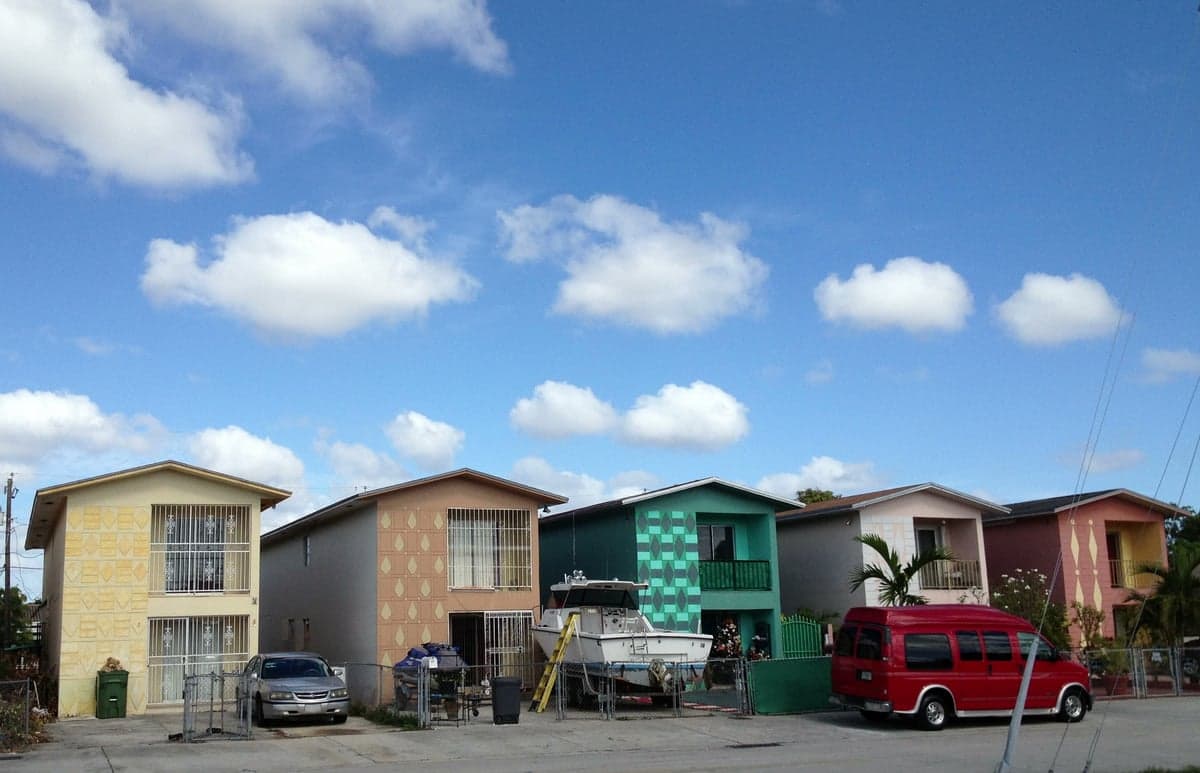
Photo: Wikipedia
Political ClimatePolitical Climate in Hialeah, FL
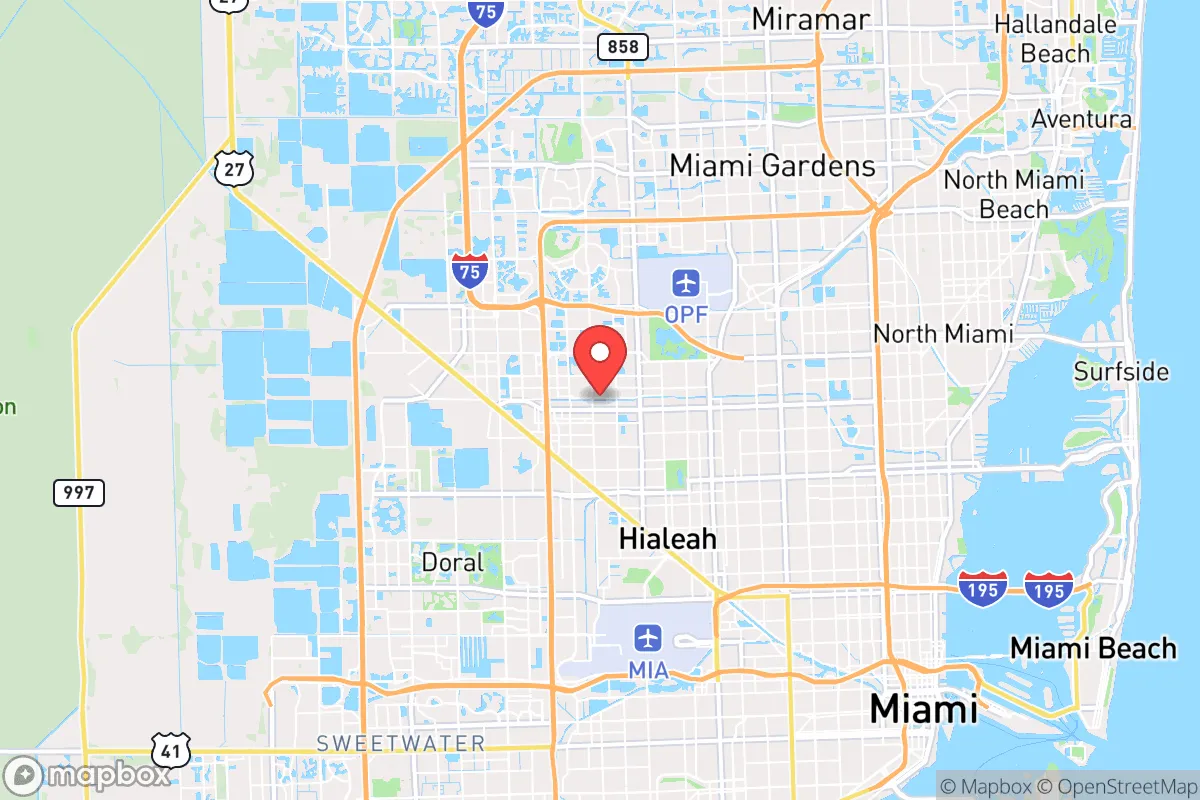
District shown is the primary district for this city’s centroid. Cities may span multiple districts.
Local Political AnalysisPolitical Analysis of Hialeah, FL
Hialeah has long been one of the most reliably conservative strongholds in South Florida, and that hasn't changed. With a Cook Partisan Voting Index of R+16, this city of over 220,000 people leans heavily Republican, and it's been that way for decades. The political DNA here is shaped by a deep-rooted Cuban-American community that remembers what happens when government overreach goes unchecked, and that memory keeps the area solidly red. If you're looking for a place where traditional values and personal freedoms are still taken seriously, Hialeah is about as steady as it gets.
How it compares
Drive 15 minutes east to Miami proper, and you're in a different world politically. Miami-Dade County as a whole has been trending bluer in recent years, with some precincts in the city of Miami voting heavily Democratic. But Hialeah? It's an island of red in a sea of purple. Compare it to nearby Doral, which has a growing Venezuelan and Colombian population and has shown more willingness to split tickets, or to Coral Gables, where you'll find a mix of moderate Republicans and progressive-leaning voters. Hialeah's electorate is older, more established, and far less likely to embrace the progressive shifts you see in other parts of the county. The contrast is stark: while Miami Beach and Brickell are pushing for higher taxes and more government programs, Hialeah residents consistently vote for lower taxes, less regulation, and a government that stays out of their lives.
What this means for residents
For someone moving here, the political climate means you can expect a local government that generally respects your right to run your own life. Property taxes are relatively low compared to other parts of the county, and there's little appetite for the kind of zoning overhauls or density increases that are causing headaches in places like Fort Lauderdale or West Palm Beach. You won't see Hialeah rushing to adopt the kind of progressive social policies that are becoming common in other Florida cities. The city council and mayor's office have been reliably conservative for years, and that's unlikely to change anytime soon. However, keep an eye on the long-term trends: as younger generations move in and the older Cuban-American population ages, there's a slow but real shift. Some local races have gotten tighter, and the influence of Miami-Dade County's broader leftward drift is something to watch. If you value personal freedoms and limited government, Hialeah is still a safe bet, but it's not immune to the pressures that are reshaping the rest of the state.
One thing that sets Hialeah apart culturally is its fierce independence. You'll hear more Spanish than English on the streets, and the local politics reflect a community that values self-reliance and distrusts big government—whether it's in Tallahassee or Washington. There's a strong sense of "we take care of our own" here, and that extends to how people vote. The city has also been a vocal opponent of state-level mandates that feel like overreach, whether it's mask mandates or vaccine passports. That libertarian streak runs deep. If you're looking for a place where the government doesn't try to run every aspect of your life, Hialeah is one of the last holdouts in South Florida. Just don't expect it to stay that way forever—nothing does.

State Political ClimatePolitical Climate in Florida
State Political AnalysisPolitical Environment in the State
Florida has transformed from a classic swing state into a solidly Republican-leaning powerhouse over the past two decades, with the GOP now holding a voter registration advantage of over 500,000 and winning every statewide election since 2012 by increasingly comfortable margins. The dominant coalition is a mix of conservative retirees, military veterans, and Hispanic voters (especially Cuban-Americans and Venezuelans in Miami-Dade), who have pushed the state from a 2012 Obama win to a 2024 Trump victory by over 13 points. This shift is not a fluke—it’s the result of a decade of deliberate policy choices and demographic sorting that have made Florida the most politically stable red state in the Sun Belt.
Urban vs. rural divide
The political map of Florida is starkly divided between the deep-blue urban cores and the overwhelmingly red suburbs and rural counties. Miami-Dade County, once a Democratic stronghold, has shifted dramatically right—Trump won it in 2024 by 11 points, a stunning reversal from Hillary Clinton’s 29-point win there in 2016. This is driven by the Cuban-American and Venezuelan communities in Hialeah and Doral, who are fiercely anti-socialist and have abandoned the Democratic Party over its leftward drift. Meanwhile, Broward and Palm Beach counties remain Democratic bastions, but their margins are shrinking as conservative retirees move into places like The Villages and Ocala. The I-4 corridor—Orlando, Tampa, and Lakeland—is the true battleground, with Orange County staying blue but surrounding counties like Osceola and Polk trending red. Rural North Florida, from the Panhandle’s Panama City down to Gainesville’s outskirts, is deeply conservative, while the Big Bend region around Tallahassee is a blue island thanks to state government and Florida A&M. The takeaway: if you want a conservative environment, avoid downtown Miami and Orlando, and look at suburbs like St. Johns (the most conservative county in the state) or Collier County.
Policy environment
Florida’s policy environment is a model of limited government, which is why it’s attracting so many relocators. There is no state income tax, a constitutional cap on property tax increases (the Save Our Homes amendment), and a regulatory framework that prioritizes business growth over bureaucratic red tape. Education policy has been a flashpoint: Governor Ron DeSantis signed the Parental Rights in Education Act (HB 1557) in 2022, which prohibits classroom instruction on sexual orientation and gender identity in grades K-3, and the Stop WOKE Act (HB 7) in 2022, which bans mandatory diversity training that promotes critical race theory. School choice is expansive, with the Family Empowerment Scholarship program giving over 400,000 students access to private or homeschool options. Healthcare policy is mixed—Florida did not expand Medicaid under Obamacare, keeping costs down for taxpayers, but the state has a high uninsured rate. Election integrity was tightened with SB 90 in 2021, which limited drop boxes, required voter ID for mail ballots, and banned ballot harvesting—a move that drew lawsuits but has held up in court. The bottom line: Florida’s government is actively pushing back against progressive overreach, and that’s a feature, not a bug.
Trajectory & freedom
Florida is becoming more free by almost every measure, especially compared to states like California or New York. The 2023 Permitless Carry law (HB 543) allows law-abiding adults to carry concealed firearms without a permit, a major expansion of Second Amendment rights. The Live Local Act (SB 102) preempts local zoning to allow more housing development, reducing government control over property use. On medical freedom, Florida banned vaccine passports in 2021 (SB 2006) and prohibited mask mandates in schools (HB 1557). The Florida Freedom Fund was created to help residents relocate from states with oppressive COVID policies. However, there are concerns: the state’s Sunshine Law makes government meetings open, but some local governments still try to hide behind closed sessions. Property rights are strong, but the state’s growth management laws have been weakened, leading to more sprawl and traffic. The trajectory is clear: Florida is doubling down on personal liberty, and the only real threat is if in-migration from blue states brings enough voters to flip the legislature—but that hasn’t happened yet.
Civil unrest & political movements
Florida has seen relatively little civil unrest compared to other large states, but there have been flashpoints. The 2020 Black Lives Matter protests in Miami and Orlando were large but mostly peaceful, though there were isolated incidents of looting in downtown Miami. The state’s anti-riot law (HB 1), passed in 2021, enhanced penalties for rioting and made it easier to sue local governments that defund police—a direct response to the unrest. Immigration politics are front and center: Governor DeSantis sent migrants to Martha’s Vineyard in 2022 as a protest against federal border policy, and the state passed SB 1718 in 2023, which requires businesses with 25+ employees to use E-Verify and makes it a felony to transport undocumented immigrants into the state. This has made Florida a national leader in fighting illegal immigration. Election integrity remains a hot topic: the 2020 election in Florida was widely praised for its smooth operation, but the 2022 midterms saw some local controversies over mail ballot drop boxes in Broward County. The Florida Democratic Party is in disarray, with its voter registration advantage erased and its leadership struggling to find a message that resonates. For a new resident, you’ll see more “Don’t Tread on Me” flags than “Defund the Police” signs.
Projection
Over the next 5-10 years, Florida will likely become even more conservative as the demographic trends continue. The state is adding about 1,000 new residents per day, and the vast majority are coming from blue states like New York, California, and Illinois—but these are not progressive refugees. Polling shows that many of these relocators cite taxes, crime, and government overreach as their reasons for leaving, and they tend to vote Republican once they arrive. The Hispanic vote is shifting right, especially among younger Cuban-Americans and Venezuelans who see socialism as a real threat. The only wildcard is the growing Puerto Rican population in Central Florida, which leans Democratic, but that bloc is smaller than the conservative Hispanic wave. The state’s congressional delegation will likely gain two more seats after the 2030 census, and those will almost certainly be red. The biggest risk is if the state’s housing affordability crisis—driven by high insurance costs and property taxes—slows in-migration, but even then, the political inertia is strong. Expect Florida to be a safe red state for at least the next decade.
For a new resident, the bottom line is this: Florida offers a political environment where your rights are protected, your taxes are low, and your kids’ education is focused on academics, not ideology. The state is not perfect—traffic in Miami and Orlando is brutal, and homeowners insurance is a nightmare—but the political climate is the most stable and freedom-oriented in the country. If you’re moving here, you’ll find a community that values self-reliance and pushes back against government overreach. Just avoid the deep-blue pockets of downtown Miami and Orlando, and you’ll feel right at home.
* Values derived from national, state, county, city and local statistics and may differ in a specific area. Last updated: 2026-04-24T03:53:53.000Z
Narrative content on this page is AI-generated and may contain mistakes. Verify any details that matter before acting on them.
ReloMaps may earn a commission from affiliate links at no extra cost to you.

