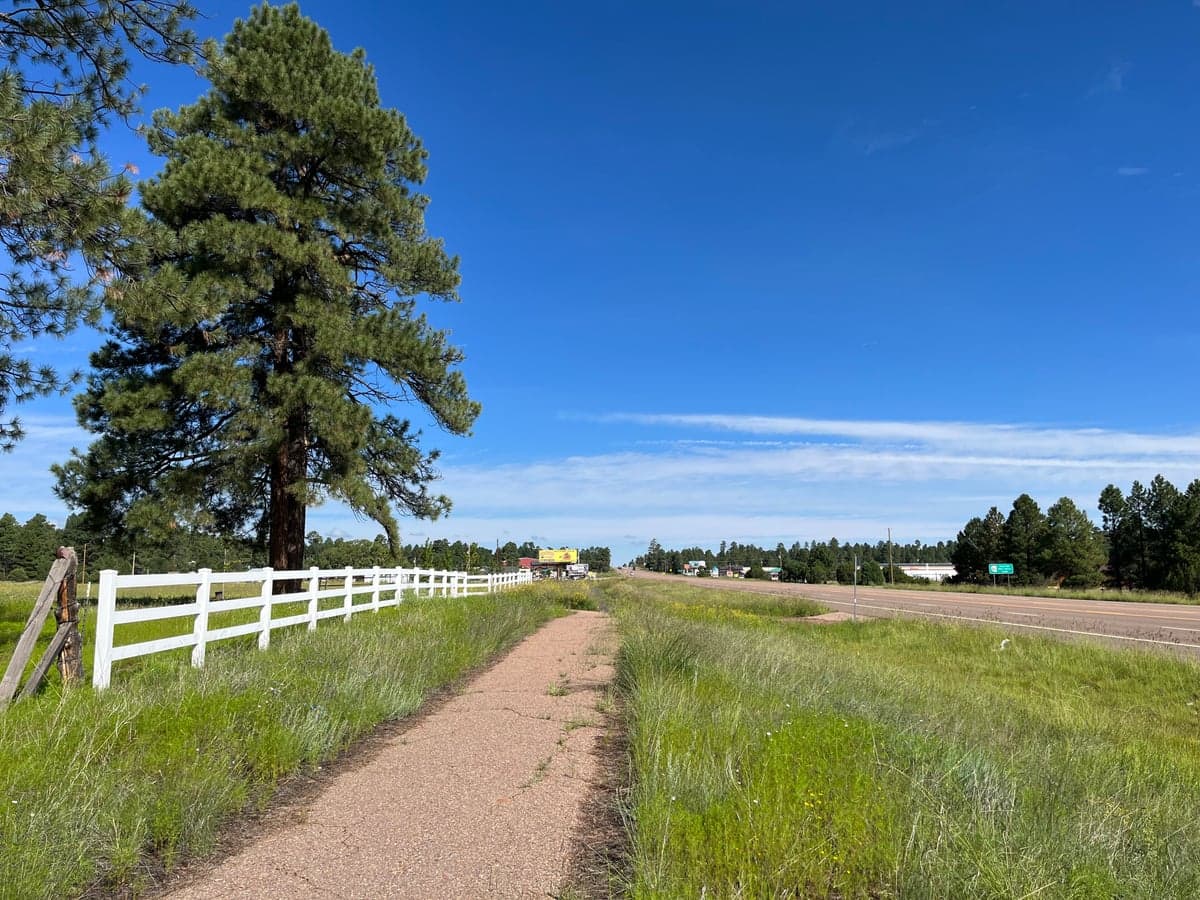
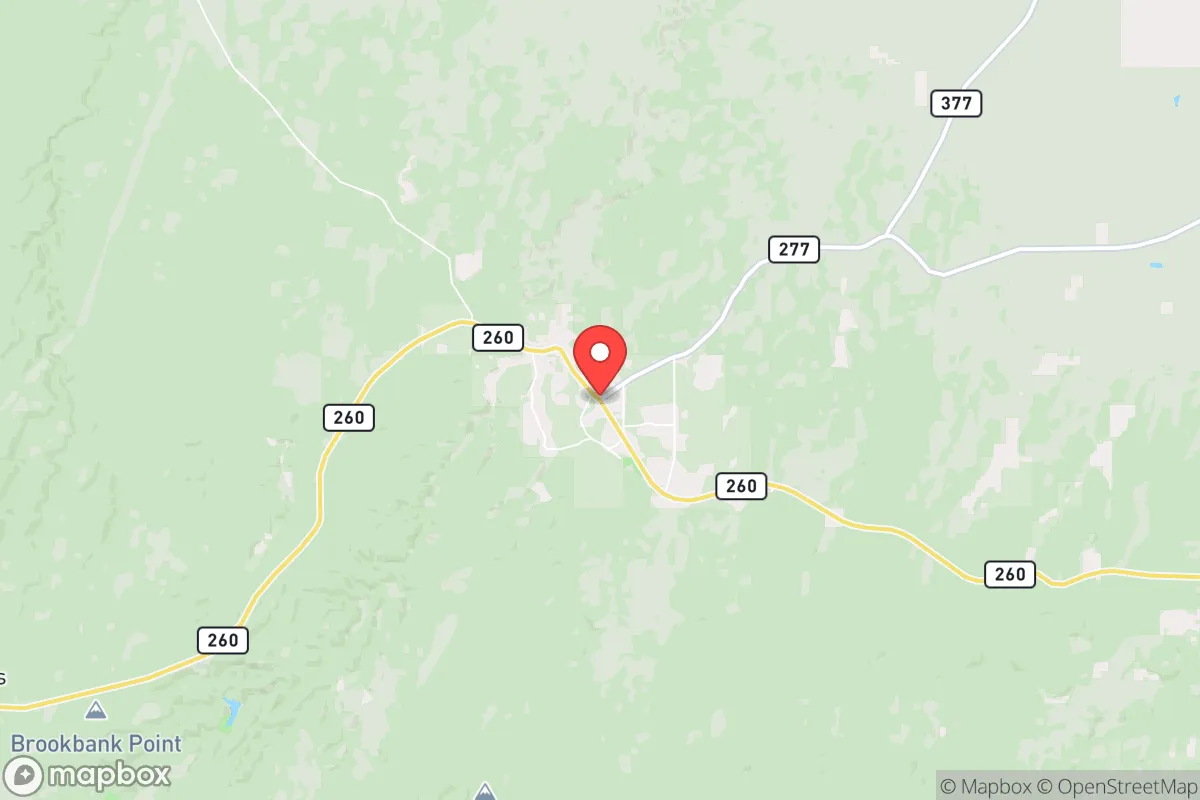
Photo: Wikipedia
Political ClimatePolitical Climate in Heber, AZ
District shown is the primary district for this city’s centroid. Cities may span multiple districts.
Inherited from parent county — no local data available.
* Lean and PVI are calculated from the surrounding county’s 2020 and 2024 presidential results, Cook-style — a finer measure here than its congressional district (AZ-2).
Political rankings in Arizona
- Most Conservative Cities in Arizona
- Most Liberal Cities in Arizona
- Best Liberal-Leaning Towns in the Mountain West
- Safest Liberal-Leaning Towns in the Mountain West
- Safest Conservative-Leaning Cities in the Mountain West
- Affordable Small Towns for Conservatives
- Most Affordable Liberal-Leaning Small Towns in the U.S.
- Safest Conservative-Leaning Cities in the U.S.
- Most Conservative Counties in Arizona
- Most Liberal Counties in Arizona
Local Political AnalysisPolitical Analysis of Heber, AZ
Heber, Arizona, is a deeply conservative community where Republican candidates typically win by comfortable margins, a reality reflected in its Cook Partisan Voting Index (PVI) of R+7. This means the area votes about seven percentage points more Republican than the national average, a lean that has been remarkably stable over the past decade. In contrast, the state of Arizona as a whole has a Cook PVI of EVEN, meaning it is a pure swing state that could tip either way in a given election. For Heber, this creates an interesting dynamic: the town's politics are far more predictable and one-sided than the state's, and local elections often hinge on primary contests rather than general ones.
How it compares
Heber's R+7 rating places it firmly in the conservative column, but it is not the most Republican area in the state. For comparison, nearby communities like Show Low and Pinetop-Lakeside are also reliably red, though perhaps not quite as lopsided as Heber. The real contrast comes when you drive an hour or so west to the Phoenix metro area, where suburbs like Scottsdale and Paradise Valley are competitive or even lean Democratic in some precincts. The state's EVEN PVI is driven by the massive population centers of Maricopa and Pima counties, where suburban and urban voters create a near-even split. In Heber, you won't find that kind of political tension; the local culture is overwhelmingly conservative, and political discussions tend to assume a shared set of values around limited government, gun rights, and traditional social norms. The area's trajectory has been one of steady, not radical, conservatism—there's no sign of a shift toward the center, even as the state as a whole has become more competitive.
What this means for residents
For conservative residents, Heber offers a comfortable political environment where their views are the norm. Local government, law enforcement, and school board positions are almost always held by Republicans, and policy decisions tend to reflect that majority. Taxes are low, property rights are respected, and there is little appetite for progressive social or environmental regulations. For liberal residents, life in Heber can be isolating. They are a distinct minority, and while overt hostility is rare, they may feel out of step with community events, local media, and even casual conversation. That said, the area's small-town character means most people are neighborly regardless of politics, and many residents simply avoid discussing political topics in mixed company. The practical effect of the R+7 lean is that conservative priorities—like Second Amendment protections, school choice, and low business taxes—are baked into local governance, while progressive initiatives, such as renewable energy mandates or diversity programs, rarely gain traction.
Culturally, Heber stands apart from the state's swing-voter identity. The town is deeply rooted in outdoor recreation—hunting, fishing, and off-roading—and its politics reflect that rural, self-reliant ethos. Policy-wise, you'll see strong support for water rights, forest management, and opposition to federal land-use restrictions. Unlike the Phoenix area, where housing affordability and immigration are hot-button issues, Heber's political discourse centers on local concerns like wildfire prevention, road maintenance, and keeping the area's small-town feel. For anyone moving here, the key takeaway is that Heber is not a microcosm of Arizona's political battleground; it's a steadfastly conservative enclave where the political climate is stable, predictable, and unlikely to change anytime soon.

State Political ClimatePolitical Climate in Arizona
State Political AnalysisPolitical Environment in the State
Arizona has transformed from a reliably Republican stronghold into the nation’s premier political battleground, with a Cook Partisan Voting Index of EVEN. Over the past 20 years, the state has shifted from voting for George W. Bush by 11 points in 2004 to flipping for Joe Biden by 0.3 points in 2020, then swinging back to Donald Trump by 5.5 points in 2024. This volatility reflects a deep demographic and ideological realignment: Maricopa County, home to 60% of the state’s population, now decides elections by razor-thin margins, while fast-growing Pinal County has become a reliably red exurban firewall. The dominant coalitions are a growing, diverse urban-suburban bloc centered in Phoenix and Tucson versus a deeply conservative rural and exurban base that still holds outsized influence in the state legislature.
Urban vs. rural divide
The political map is a study in stark contrasts. Maricopa County, anchored by Phoenix, Mesa, and Chandler, is the epicenter of the state’s swing — it went for Biden in 2020 and Trump in 2024, with suburban women and Latino voters in places like Avondale and Goodyear proving decisive. Tucson and Pima County are the state’s Democratic stronghold, consistently voting blue by double digits, driven by the University of Arizona and a robust progressive activist scene. In contrast, rural counties like Mohave (Kingman), Yavapai (Prescott), and Cochise (Sierra Vista) vote Republican by 30-40 points, powered by retirees, veterans, and ranching communities. The most telling microcosm is Pinal County, between Phoenix and Tucson: once a sleepy agricultural area, it now votes +20 R as master-planned communities like Maricopa and Casa Grande fill with families fleeing Maricopa’s higher costs. The divide isn’t just geographic — it’s generational, with younger voters in Tempe and Flagstaff pushing left while snowbirds in Sun City and Green Valley anchor the right.
Policy environment
Arizona’s policy landscape is a patchwork of conservative governance and direct-democracy liberalism. The state has a flat income tax of 2.5% (enacted in 2023 via Proposition 132), one of the lowest in the nation, and no estate tax. Property taxes are low, with an average effective rate of 0.62%. However, the state’s sales tax is high — 5.6% state rate plus local add-ons that can push it over 10% in Phoenix. Education policy is a flashpoint: Arizona was the first state to pass universal school vouchers (Empowerment Scholarship Accounts) in 2022, allowing any family to use public funds for private or homeschool, a policy that has drawn both praise from conservatives and fierce opposition from rural districts. Healthcare is mixed — the state expanded Medicaid under the Affordable Care Act (AHCCCS), but abortion is now banned at 15 weeks with no exceptions for rape or incest, following a 2022 law that replaced the near-total 1864 territorial ban. Election laws are a national model for the right: voter ID is required at the polls, and the state has a permanent early voting list used by 80% of voters. However, the 2020 “audit” in Maricopa County, led by Senate Republicans, remains a source of deep distrust among both parties.
Recent policy direction
The last three years have seen a sharp rightward shift on several fronts. In 2024, the legislature passed a bill allowing permitless carry of firearms (HB 2700), joining 25 other states. Parental rights were strengthened with a 2023 law requiring schools to notify parents of any curriculum involving sexual orientation or gender identity (HB 2499). On property rights, the state has aggressively preempted local zoning, with a 2024 law (SB 1123) barring cities from regulating short-term rentals like Airbnb, a boon for investors but a headache for neighborhoods in Sedona and Flagstaff. Privacy and surveillance saw a mixed bag: the state banned the use of facial recognition by police without a warrant (SB 1692, 2023), but also expanded the use of automated license plate readers. Medical and bodily autonomy remains contested — the 15-week abortion ban stands, but a 2024 ballot initiative to enshrine abortion rights (Proposition 139) is expected to pass, potentially overriding the legislature. Voting access has tightened: a 2022 law (HB 2492) requires proof of citizenship to vote in federal elections, a policy currently tied up in court. Taxation is trending downward: the 2.5% flat tax is set to drop further if revenue targets are met, a policy that benefits high earners in Scottsdale and Paradise Valley but strains funding for rural roads and schools.
Civil unrest & political movements
Arizona has been a national flashpoint for political activism. The 2020 election aftermath saw the “Stop the Steal” movement centered in Phoenix, with armed protests outside the Maricopa County Recorder’s Office and a months-long “audit” that became a conservative cause célèbre. On the left, the 2022 repeal of the 1864 abortion ban sparked massive protests at the state capitol, with activists from Tucson and Flagstaff busing in for weekly demonstrations. Immigration politics are ever-present: the 2024 border crisis has fueled the rise of the “Arizona Border Strike Force” under Governor Katie Hobbs (a Democrat), which has drawn criticism from both pro-immigrant groups and hardline conservatives who want the state to invoke “invasion” clauses. Sanctuary city policies are a local battleground — Tucson and Phoenix have declared themselves “welcoming cities,” limiting cooperation with ICE, while Yuma and Cochise counties have passed resolutions declaring themselves “non-sanctuary.” Election integrity remains the most visible fault line: the 2024 election saw armed poll watchers in Maricopa County, and the state’s new “Election Procedures Manual” is being litigated by both parties. A new resident will notice the omnipresence of political signage — from “Trump Won” flags in Wickenburg to “Reproductive Freedom” banners in Bisbee — and the frequency of local ballot measures, which often outnumber candidate races.
Projection
Over the next 5-10 years, Arizona will likely remain a toss-up, but the demographic currents favor a slow leftward drift. The state adds about 100,000 new residents annually, many from California and the Midwest, and these newcomers tend to be younger, more diverse, and more moderate — they vote like the suburbs of Phoenix, not the ranches of Cochise. Maricopa County will continue to decide everything, and its growing Latino population (now 30% of the county) is trending Democratic, though not as fast as national pundits assume — many Latino voters in places like San Luis and Yuma are Catholic and socially conservative. The rural vote will become less decisive as the state’s population concentrates in the Sun Corridor (Phoenix to Tucson). However, the state legislature will remain Republican-controlled through 2030 due to gerrymandering, even if Democrats win statewide races. The wild card is water: as the Colorado River shrinks, rural communities in Pinal and Mohave counties could depopulate, while Phoenix and Tucson adapt with desalination and conservation. A relocator moving in now should expect a decade of close elections, continued policy whiplash on abortion and education, and a state that feels like two different countries — the urban, diverse, air-conditioned Phoenix metro versus the rural, libertarian, water-scarce hinterlands.
For a new resident, the bottom line is that Arizona offers low taxes, a booming economy, and a climate that’s still manageable with air conditioning, but you’ll need to accept that your vote will be one of the most consequential in the country. If you’re conservative, you’ll find a state that respects gun rights, school choice, and low regulation, but you’ll also see your party losing ground in the suburbs. If you’re liberal, you’ll have a strong base in Tucson and central Phoenix, but you’ll face a legislature that consistently overrides your city’s policies. The practical takeaway: pick your county carefully. Maricopa is the battleground, Pinal is the red refuge, and Pima is the blue island. And whatever you do, get used to seeing ballot measures — Arizona’s direct democracy means you’ll vote on everything from abortion to taxes every two years. It’s a state that rewards engagement and punishes apathy, and that’s unlikely to change anytime soon.
* Values derived from national, state, county, city and local statistics and may differ in a specific area. Last updated: 2026-11-24T18:17:49.000Z
Narrative content on this page is AI-generated and may contain mistakes. Verify any details that matter before acting on them.
ReloMaps may earn a commission from affiliate links at no extra cost to you.

