
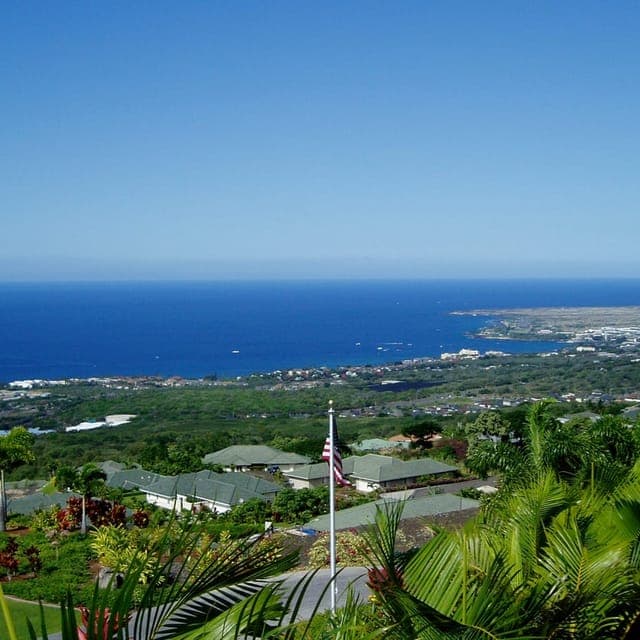
Photo: Wikipedia
Quality of Life in Hawaii
A livable area that tracks near national norms for affordability, walkability, and neighborhood health.
What does Quality of Life tell us?
Quality of Life measures an area by evaluating factors like cost of living, nearby amenities, country club access, airport proximity, socioeconomic signals and neighborhood character. For large states, this is a general average — quality of life can vary dramatically between metro areas, suburbs, and rural communities within the same state.
What does this tell us?
Quality of Life measures an area by evaluating factors like cost of living, nearby amenities, country club access, airport proximity, socioeconomic signals and neighborhood character. For large states, this is a general average — quality of life can vary dramatically between metro areas, suburbs, and rural communities within the same state.
Cost of Living
115% above national average
58%
The Real Cost of Living in Hawaii for 2026
| Tier | Individual | Family (4) |
|---|---|---|
| Survival | $31k | $58k |
| Comfortable | $116k | $171k |
| Luxury | $170k+ | $264k+ |
| Elite (Top 5%) | $200k+ | $310k+ |
Quality-of-Life Analysis
Hawaii presents a spectrum of quality-of-life options that ranges from dense urban high-rises to off-grid rural homesteads, attracting retirees, remote workers, hospitality professionals, and military families alike. The statewide cost-of-living index of 215 (more than double the U.S. average) and a median home value of $808,200 mean that every tier of living requires a premium, but the trade-offs in climate, culture, and natural access vary dramatically by location. Island choice alone—Oʻahu versus the Neighbor Islands—can shift commute times, housing stock, and social pace, making it critical for a relocating household to match their lifestyle expectations to a specific local economy and geography.
Major metros
Oʻahu’s urban core is Honolulu, the only city in Hawaii that functions as a true metropolitan hub, with a population density comparable to San Francisco and a skyline of high-rise condominiums. Honolulu anchors the state’s finance, government, tourism, and military sectors; nearly three-quarters of the state’s jobs are located on Oʻahu. The average commute of 26.4 minutes is relatively manageable for a metro of its size, but traffic congestion on the H-1 freeway is a daily reality. Waikīkī and Kakaʻako are urban neighborhoods within Honolulu that appeal to those wanting walkable access to restaurants, nightlife, and beaches. The city’s cultural identity is a mix of Native Hawaiian, Asian American, and Pacific Islander influences, with a world-class arts scene and an international airport that provides direct flights throughout the Pacific Rim. For someone seeking career density, single-family home inventory is minimal and expensive; many residents rent or live in condos, with median rent at $1,938 and home values often exceeding $1 million in core neighborhoods.
Mid-size cities & college towns
Hilo on the Big Island is the state’s second-largest city (pop. 44,000) and a classic mid-size college town, home to the University of Hawaii at Hilo. It offers a slower, rainier pace with strong agricultural roots and a lower cost of living than Honolulu—median home values here are roughly $400,000–$500,000, well below the state median. Kailua-Kona on the Big Island’s west side is a sunnier, tourist-driven town with a growing remote-worker population and a strip of coffee farms in the uplands. Kahului on Maui is the island’s commercial center, anchored by the airport, shopping centers, and light industrial zones; residents often commute to beachfront resort jobs in Lahaina or Wailea. Līhuʻe on Kauaʻi is the county seat and a small but functional hub for government and retail, with a distinctly slower pace and limited rental inventory. Kailua on Oʻahu (pop. 38,000) blends suburban beach living with a short commute to Honolulu, attracting families who can afford single-family homes in the $1.5–2 million range but want access to ocean recreation.
Small towns & rural areas
The most rural tiers of Hawaii are found on the Neighbor Islands. Hāna on Maui is an isolated, largely Native Hawaiian community connected by the winding Road to Hāna—no grocery chain, limited cell service, and a deep sense of place that appeals to those seeking solitude and subsistence living. Volcano Village on the Big Island sits in a misty rainforest near Kīlauea, attracting artists and nature lovers willing to endure rain and vog for a homestead on the volcano. Hanalei on Kauaʻi’s North Shore is a tight-knit surf town with a community center, a handful of restaurants, and million-dollar views—but median home prices exceed $1.5 million and employment options outside of tourism are scarce. On Oʻahu, the North Shore (sunset, Pūpūkea, Haleʻiwa) offers a rural feel within an hour’s drive of Honolulu; farm stands, surf breaks, and a strong agricultural preserve characterize the area. For those willing to live without paved roads or full utilities, Puna District on the Big Island (Pāhoa, Kalapana) remains the state’s most affordable real estate—homes under $300,000 are possible, with the trade-off being lava zone risks, limited services, and long drives to Hilo for groceries.
Luxury vs. affordable living
Luxury enclaves are concentrated in gated communities and exclusive coastal subdivisions. Kāhala on Oʻahu and Wailea on Maui feature oceanfront estates starting above $5 million, with private beach access and proximity to five-star resorts. Princeville on Kauaʻi and Kukuiʻula near Poʻipū offer resort-style club amenities and homes in the $2–10 million range. For affordable living, Ewa Beach on Oʻahu’s leeward coast has newer townhome developments with prices around $600,000, but the commute to Honolulu can exceed 40 minutes. Ocean View on the Big Island’s southern tip offers lots and homes under $250,000 in a dry, lava-flow-scape setting—groceries require a 30-minute drive. Wahiawā on Oʻahu, an inland central plateau town, has pockets of homes below $500,000 near Schofield Barracks, serving military families. The spread is extreme: median home value state-wide is $808,200, but a buyer in Puna can still find a one-bedroom cottage for $200,000 while a comparable home in Kāhala will cost twenty times that.
The practical reality is that Hawaii’s cost-of-living index of 215 translates into a necessity for a household income well above $100,000 to afford even a modest rental, let alone homeownership. Young professionals gravitate toward Honolulu or Kailua-Kona for job density and social life, while remote workers and retirees often choose Hilo or the Big Island’s upland districts for lower housing and a slower rhythm. Families with children tend to settle on Oʻahu’s suburban “second city” communities—Mililani, Kapiʻolani Pearl City—where good public schools and lower crime rates are prioritized. The widest quality-of-life spectrum in the state exists not between islands but within each island’s geography: windward versus leeward, urban versus rural, wet versus dry. Choosing a location in Hawaii means accepting the trade-offs of isolation, weather, commute, and price—but the richest reward is a lifestyle that, even at its most affordable tier, offers year-round outdoor living and a cultural fabric unlike any other U.S. state.

Crime in Hawaii
Generally safer than 62% of comparable U.S. locations.
Violent CrimeViolent Crime Analysis
Property CrimeProperty Crime Analysis
Crime Analysis
Hawaii presents a complex safety picture that diverges sharply from the mainland U.S. The state’s overall violent crime rate of 215 per 100,000 residents is notably lower than the national average of roughly 380 per 100,000, but its property crime rate of 1,680 per 100,000 sits significantly above the national average of about 1,950 per 100,000. This means residents face a lower risk of violent assault or robbery than most Americans, yet experience a heightened threat of theft, burglary, and vehicle break-ins, particularly in tourist-heavy zones and urban centers.
Crime in context
Hawaii’s violent crime rate has remained relatively stable over the past decade, hovering between 200 and 250 per 100,000, while property crime has fluctuated more dramatically. The state’s property crime rate of 1,680 per 100,000 is roughly 14% below the national figure, but this masks severe hotspots. Honolulu’s Waikiki district and downtown areas report property crime rates nearly double the state average, driven by opportunistic theft from rental cars, hotel rooms, and beachgoers. In contrast, rural communities like Hana on Maui and the North Shore of Kauai see property crime rates below 800 per 100,000, largely due to lower population density and fewer transient visitors. The state’s geographic isolation also means that stolen goods are harder to fence quickly, which slightly depresses property crime compared to mainland metro areas like Los Angeles or Seattle.
What residents experience
For everyday residents, the most tangible safety concern is property crime rather than violent confrontation. Vehicle break-ins are the single most common crime reported in Hawaii, with over 4,000 incidents annually on Oahu alone. Residents in urban Honolulu, Kailua, and Kihei frequently report stolen packages, bicycle theft, and garage burglaries. Violent crime, while less common, is concentrated in specific areas: the Ewa Beach and Waianae neighborhoods on Oahu have violent crime rates exceeding 400 per 100,000, driven largely by domestic violence and drug-related disputes. The state’s progressive judicial philosophy, particularly under Honolulu’s prosecutorial leadership, has led to low incarceration rates and frequent pretrial release for non-violent property offenders. This approach, while intended to reduce prison overcrowding, has frustrated many residents who see repeat offenders cycling through the system quickly. In 2024, Honolulu’s District Attorney’s office declined to prosecute nearly 30% of property crime cases, citing resource constraints and a preference for diversion programs—a policy that critics argue emboldens thieves and leaves victims without recourse.
Neighborhood-level variation
Safety in Hawaii varies dramatically by island and neighborhood. Hilo on the Big Island reports a violent crime rate of 180 per 100,000—below the state average—but struggles with methamphetamine-related property crime in its older residential areas. Lahaina on Maui, still recovering from the 2023 wildfires, has seen a temporary spike in burglaries as displaced residents leave homes unattended. The safest areas are generally the gated resort communities and upscale subdivisions: Kahala in Honolulu, Kaanapali on Maui, and Princeville on Kauai all report violent crime rates under 100 per 100,000. Conversely, downtown Hilo and parts of Waikiki have property crime rates exceeding 2,500 per 100,000, driven by transient populations and easy targets. For families relocating, the safest bet is to choose a neighborhood with a homeowners association and private security patrols, as public police response times in rural areas can exceed 30 minutes. The state’s overall safety remains good for those who take basic precautions—locking vehicles, securing packages, and avoiding poorly lit areas after dark—but the progressive justice system’s leniency toward property offenders means that residents should expect theft to be a recurring nuisance rather than a rare event.
Top Cities for Quality of Life in Hawaii



* Values derived from national, state, county, city and local statistics and may differ in a specific area. Last updated: 2026-06-03T05:30:39.000Z
Narrative content on this page is AI-generated and may contain mistakes. Verify any details that matter before acting on them.
ReloMaps may earn a commission from affiliate links at no extra cost to you.

