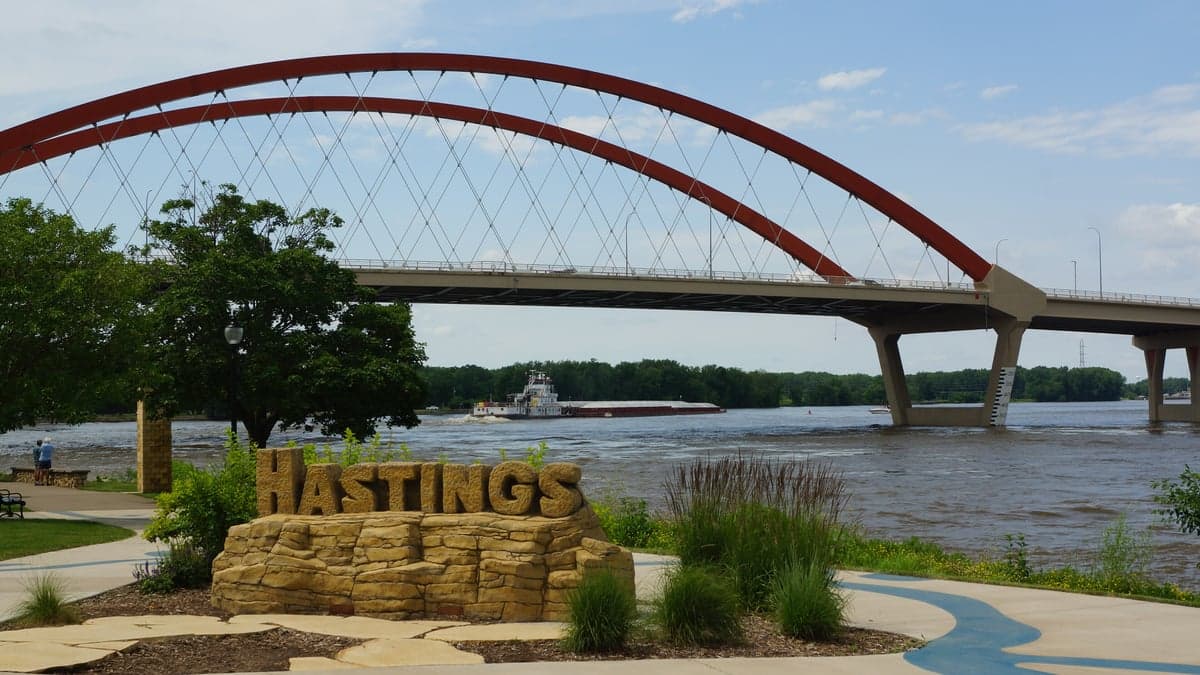
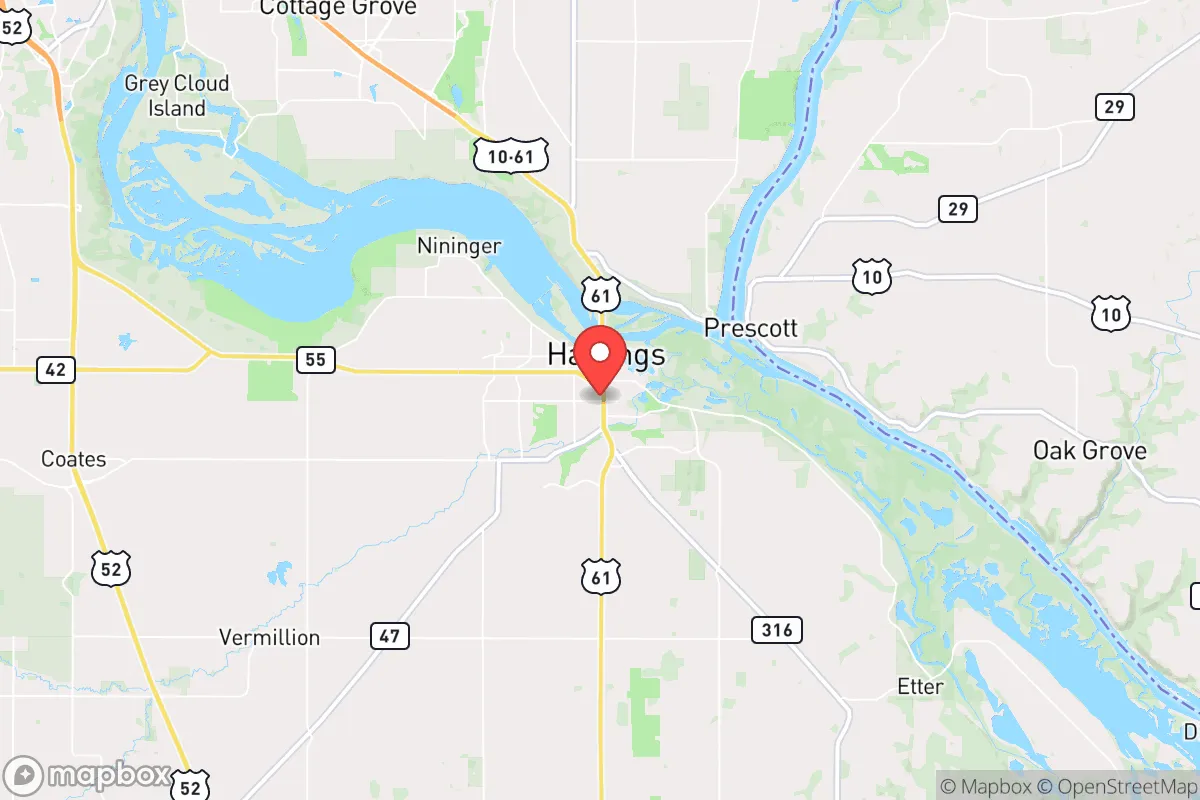
Photo: Wikipedia
Personal Sovereignty in Hastings, MN
Viable for self-reliance. Generally workable, though some barriers may limit total independence.
What does Personal Sovereignty tell us?
Personal Sovereignty measures your capacity for self-reliance and independence with minimal government friction. Higher scores mean fewer barriers between you and the way you want to live... but it assumes you have the space you need and good neighbors.
What does this tell us?
Personal Sovereignty measures your capacity for self-reliance and independence with minimal government friction. Higher scores mean fewer barriers between you and the way you want to live... but it assumes you have the space you need and good neighbors.
State Policy
Energy independence: Importer (26% of energy produced in-state)
Personal Liberty
Homesteading

Personal Liberty Analysis
Hastings, Minnesota offers a moderate level of personal sovereignty that balances state-level regulatory frameworks with a practical, community-oriented local culture. While Minnesota is not a low-regulation state overall, Hastings provides a more autonomy-friendly environment than the Twin Cities metro core, particularly for residents who value self-reliance, property rights, and a slower pace of life. The city's position along the Mississippi River and its historic downtown create a distinct identity that appeals to those seeking independence without complete isolation.
Tax burden and regulatory posture in Hastings compared to the metro
Minnesota's tax burden is among the highest in the nation, ranking 6th overall in state and local tax collections per capita as of 2025. Hastings residents pay a combined state and local sales tax rate of 7.875%, which includes the state's 6.875% rate plus a 1% local option tax. Property taxes in Hastings are moderate for the metro area, with the effective tax rate on median-valued homes around 1.2% to 1.4% annually, depending on the specific property and school district. The city's regulatory posture is generally business-friendly for a Minnesota municipality, with a streamlined permitting process for home renovations and small-scale commercial projects. However, the state's environmental regulations, particularly those administered by the Minnesota Pollution Control Agency, can add layers of review for any land-use changes near the Mississippi River or its tributaries. The city's zoning code is more permissive than suburban counterparts like Woodbury or Lakeville, allowing for home-based businesses and accessory dwelling units with fewer restrictions. For a conservative-leaning resident, the regulatory environment in Hastings is best described as "moderate with state-level friction" — local officials tend toward pragmatism, but state mandates on energy codes, environmental review, and labor regulations create a baseline compliance burden that cannot be avoided.
Self-defense and gun law specifics for Hastings residents
Minnesota is a shall-issue state for concealed carry permits, meaning the local sheriff's office in Dakota County must issue a permit to any qualified applicant who passes a background check and completes an approved firearms safety course. Hastings residents apply through the Dakota County Sheriff's Office, which processes permits within the statutory 30-day window. The state does not require a permit to purchase rifles or shotguns, but handgun purchases require a Permit to Purchase (valid for one year) or a Permit to Carry. Minnesota has no magazine capacity restrictions as of 2026, and the state preempts local firearm ordinances, meaning Hastings cannot enact its own gun bans or stricter regulations than state law. Open carry is legal for individuals with a Permit to Carry, though it is uncommon in practice. The state's "stand your ground" doctrine is limited — Minnesota law imposes a duty to retreat in public places if safely possible, though the Castle Doctrine applies fully inside one's home or vehicle. For self-defense-minded residents, Hastings offers a legal environment that respects the right to bear arms with reasonable administrative requirements, but the duty to retreat outside the home is a meaningful limitation compared to states like Texas or Florida. The Dakota County Sheriff's Office is generally supportive of Second Amendment rights, and local gun culture is robust, with several gun shops and ranges within a 20-minute drive.
Self-reliance and homesteading viability in Hastings
Hastings provides viable opportunities for self-reliance, particularly for residents willing to live on the city's outskirts or in unincorporated areas of Dakota County. Standard residential lots within city limits range from one-quarter to one-half acre, with some larger parcels available in the city's more rural western sections. The city's zoning code allows for backyard chickens on lots of sufficient size, with a permit required and limits on the number of birds. Beekeeping is permitted with registration, and vegetable gardens are unrestricted on residential property. For those seeking more serious homesteading, properties in the surrounding townships (such as Nininger or Ravenna) offer 1- to 5-acre parcels at prices significantly lower than metro-area equivalents — expect $200,000 to $400,000 for a 2- to 5-acre lot with a house, compared to $500,000+ in Washington County. Off-grid living is legally challenging within city limits due to building codes requiring grid-tied electrical service and municipal water/sewer connections in most zones. However, in unincorporated Dakota County, residents can install septic systems, wells, and solar panels with proper permits, though the county enforces the Minnesota State Building Code, which mandates certain construction standards. Rainwater collection is legal but regulated, and composting toilets require a county-approved system. The growing season in Hastings runs approximately 150 days (mid-May to early October), suitable for cool-weather crops and some warm-season varieties with careful planning. For a family seeking a balance between suburban convenience and self-reliance, Hastings offers a realistic middle ground — you can keep chickens, grow a substantial garden, and install solar panels, but full off-grid independence requires moving to the surrounding townships.
Personal liberties in Hastings: parental rights, medical autonomy, speech, and property
Parental rights in Minnesota are generally strong, with state law affirming parents' authority to direct their children's education, healthcare, and religious upbringing. Hastings Public Schools offer open enrollment, allowing families to choose schools across district boundaries, and the district has a robust policy for parental notification on health and wellness matters. Minnesota does not have a specific "parents' bill of rights" statute, but court precedent supports parental decision-making authority. Medical autonomy in Minnesota is mixed — the state has broad vaccine mandates for school attendance (including COVID-19 for healthcare workers, though not for K-12 students as of 2026), and the Minnesota Department of Health maintains authority over public health emergencies. The state's medical cannabis program is relatively restrictive compared to neighboring Wisconsin, but recreational cannabis was legalized for adults 21 and over in 2023, with retail sales beginning in 2025. Hastings has opted out of allowing cannabis retail establishments within city limits, though possession and home cultivation (up to eight plants per household) are legal. Free speech protections in Hastings are typical for a Minnesota municipality — the city maintains a public comment period at council meetings and does not restrict political signage beyond reasonable time, place, and manner regulations. Property rights are protected under Minnesota's eminent domain laws, which require just compensation and a public purpose, though the state's environmental regulations can effectively limit certain uses of land near waterways. For a conservative-leaning resident, the personal liberties environment in Hastings is characterized by strong property and speech protections, moderate parental rights, and a healthcare system that balances individual choice with public health mandates.
Overall, Hastings offers a personal sovereignty profile that is best described as "pragmatic independence within a regulated state." Compared to rural Minnesota counties like Kanabec or Mille Lacs, Hastings has more regulatory oversight but also better access to services, employment, and community resources. Compared to the Twin Cities core, Hastings provides significantly more autonomy in daily life — lower taxes, fewer zoning restrictions, and a culture that values self-reliance. For a family or individual who prioritizes personal freedom but does not want to live in complete isolation, Hastings represents a solid compromise. The city's location on the Mississippi River, its historic downtown, and its mix of suburban and rural characteristics create an environment where residents can exercise meaningful control over their property, education, and lifestyle choices, while accepting the baseline regulatory framework of a blue state. The key trade-off is clear: Hastings offers more sovereignty than the metro, less than the deep countryside, but with the advantage of being within 30 minutes of both.

* Values derived from national, state, county, city and local statistics and may differ in a specific area. Last updated: 2026-11-23T04:53:47.000Z
Narrative content on this page is AI-generated and may contain mistakes. Verify any details that matter before acting on them.
ReloMaps may earn a commission from affiliate links at no extra cost to you.

