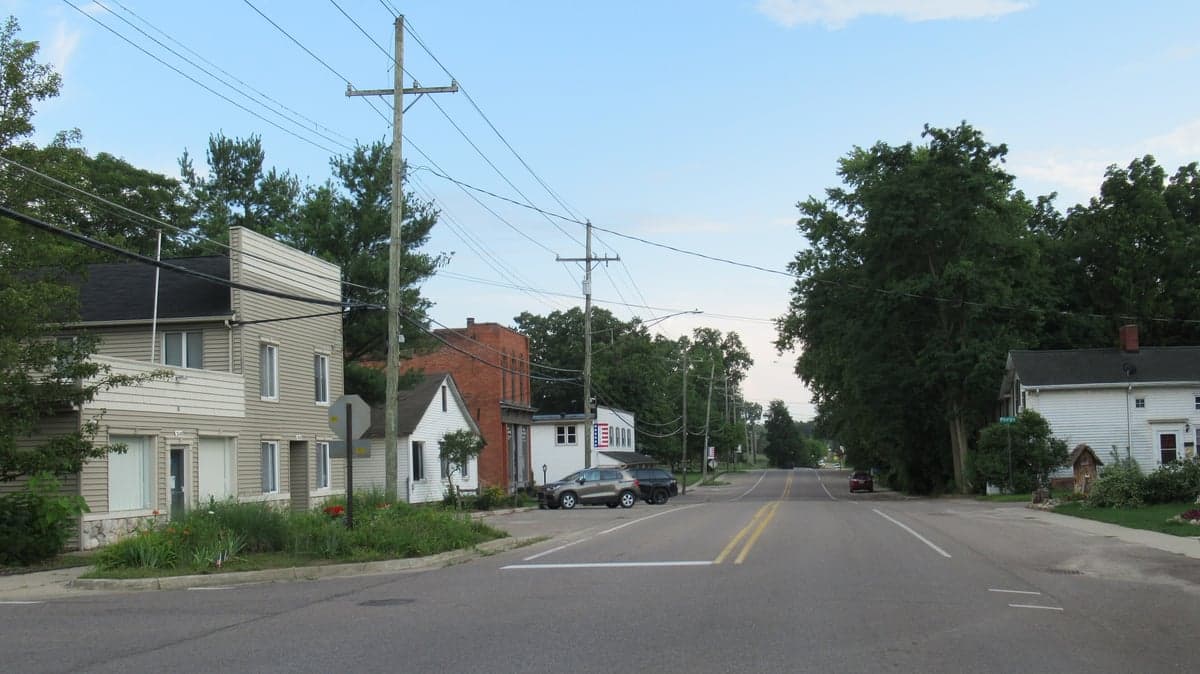
Photo: Wikipedia
Strategic Assessment of Hartland, MI
Workable tactical position. Some exposure to population density or targets, but generally defensible in a crisis.
What does the Strategic Assessment tell us?
Our Strategic Assessment grades tactical survivability of an area. Major population centers, military targets, fallout zones, natural disasters, and border exposure all drive risk — lower exposure means a more defensible position in a crisis.
This is heavily inspired by Joel Skousen's Strategic Relocation book. Highly recommended you checkout the book ($)What does this tell us?
Our Strategic Assessment grades tactical survivability of an area. Major population centers, military targets, fallout zones, natural disasters, and border exposure all drive risk — lower exposure means a more defensible position in a crisis.
This is heavily inspired by Joel Skousen's Strategic Relocation book. Highly recommended you checkout the book ($)Strategic Pillars
Key Distances
Regional Safe Places
Below is our recommended "safe zones" in Michigan and the surrounding area based on our strategic heuristics. For most people, it's unrealistic to live in a “safe zone” full-time due to work, family or other personal reasons. They tend to be more rural. However, many of these areas are perfect for second homes and retreat properties that double as a vacation home or even a short-term rental.


Important Note: For informational purposes only. This does not mean nothing bad ever happens in the green zones. Please use common sense. This is based on public data and modeled with AI. We tried to take a conservative approach but mistakes happen. We update this regularly as new information becomes available.
Solar Generator Recommendations
Backup power matters more here than in safer locations. We've picked three solar generators across budgets and capacity tiers — start with the budget unit if you only need a few essentials, or step up if you want to run a fridge and HVAC for days at a time.
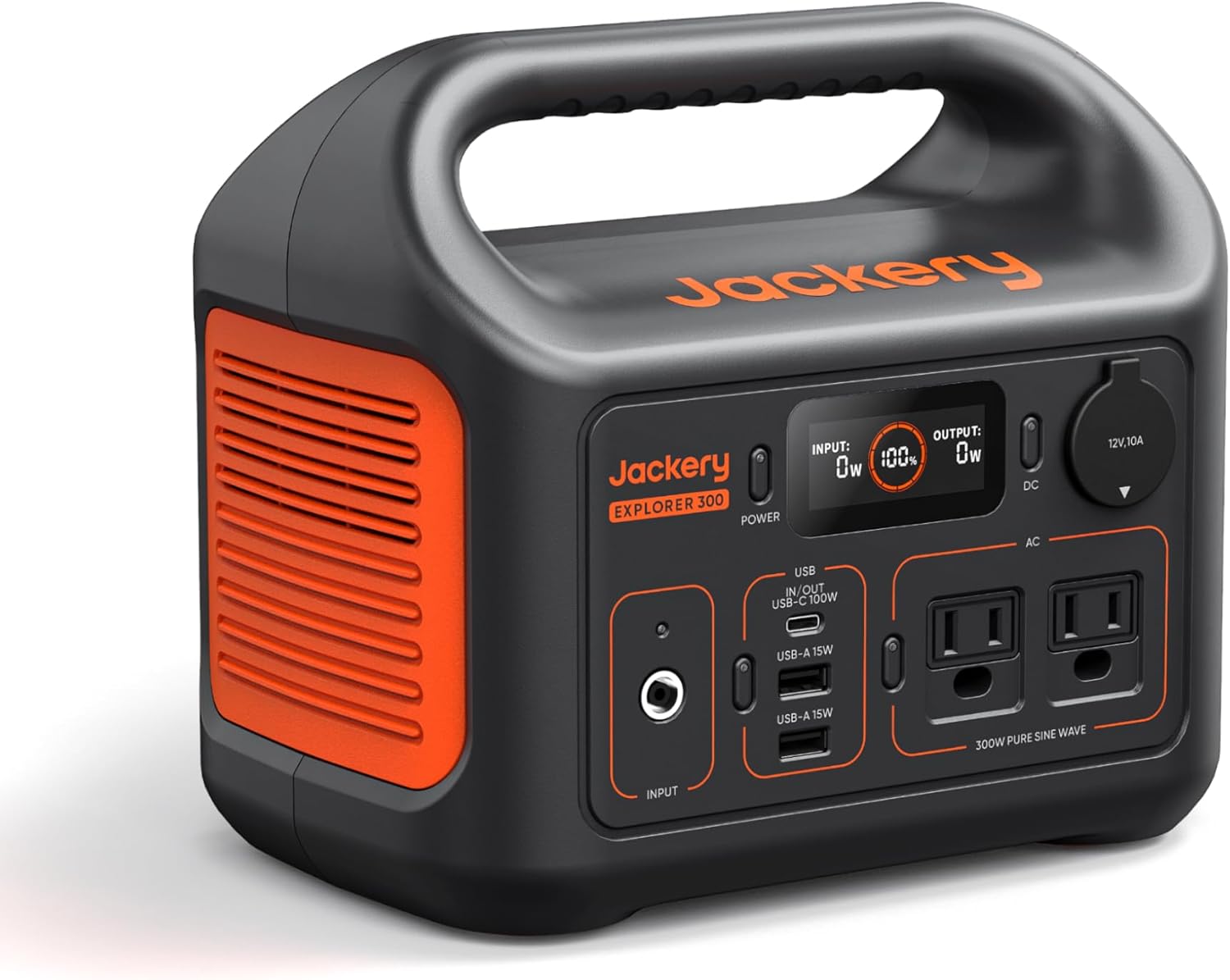
Jackery Portable Power Station Explorer 300
Budget OptionPower on the Go: Weighing only 11 lbs, it's convenient to set up and store with book-sized foldable solar panels

BLUETTI Portable Power Station AC180
Designed for both indoor and outdoor scenarios, AC180 is highly capable as it has a robost capacity and continuous output power.

EF ECOFLOW DELTA Pro Ultra Power Station
Upgraded PickEcoFlow DELTA Pro Ultra is a whole-home energy system designed to grow with your family. Integrated with the Smart Home Panel 2, it scales to meet your evolving energy needs — keeping your home powered, intelligent, and secure through every stage of life.
We earn a commission, at no additional cost to you.
Strategic Assessment Analysis
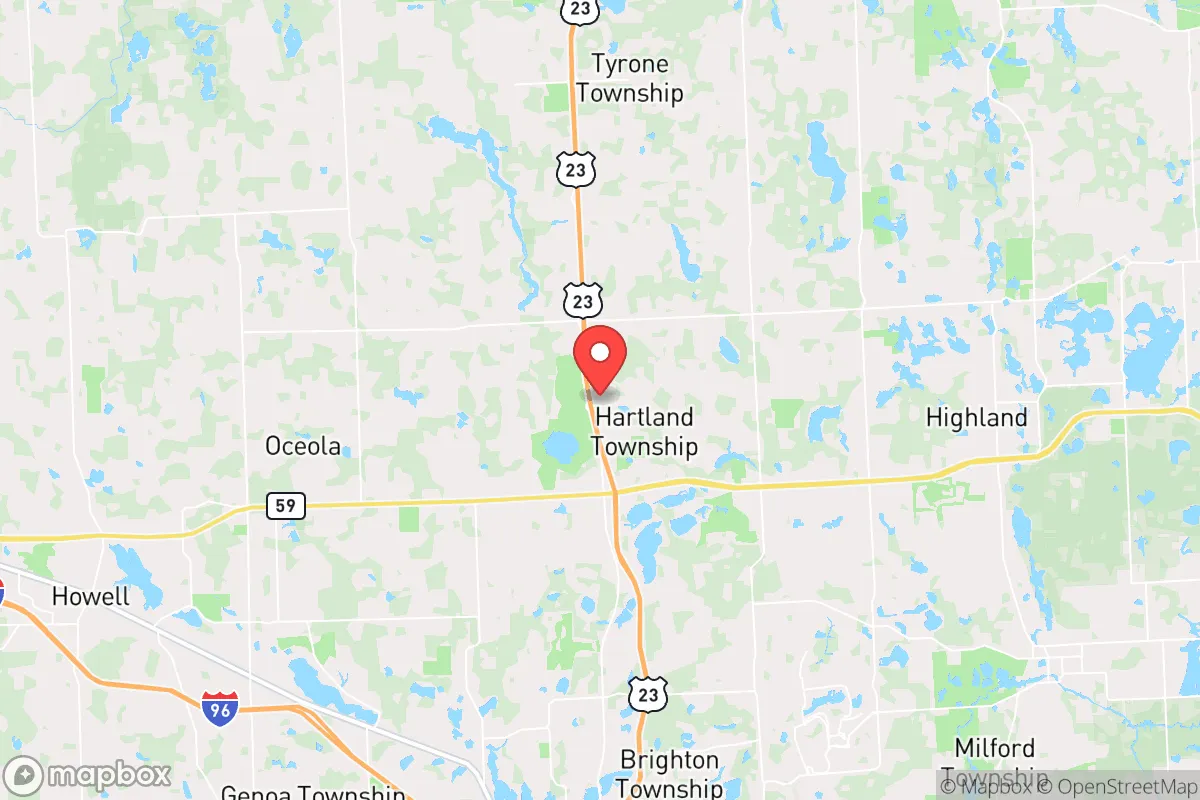
Hartland, Michigan, offers a compelling balance of rural self-sufficiency and strategic proximity to major infrastructure, making it a noteworthy option for those prioritizing resilience and preparedness. Located in Livingston County, roughly 40 miles northwest of Detroit and 15 miles south of Flint, the area benefits from a position that is far enough from dense urban centers to avoid their immediate collapse risks, yet close enough to access critical resources and medical facilities when needed. The township’s population of roughly 14,000, spread across a mix of farmland, lakes, and wooded subdivisions, provides a low-density environment that inherently supports defensibility and resource independence.
Geographic position and natural advantages for long-term stability
Hartland’s geographic setting is defined by its position on the edge of the Southeast Michigan moraine, a region of rolling hills and well-drained soils that historically supported agriculture. The area sits atop the Saginaw aquifer system, which provides reliable groundwater access for wells—a critical advantage for off-grid water security. The nearby Huron River watershed, with its headwaters in Livingston County, offers surface water sources that are less polluted than those downstream near industrial centers. The region’s moderate climate, with an average annual precipitation of 32 inches and a growing season of roughly 150 days, supports small-scale farming and gardening without the drought risks common in the western U.S. Hartland is also situated away from major fault lines, with negligible seismic risk, and is far enough inland to avoid direct hurricane storm surge threats, though severe thunderstorms and occasional tornadoes are a seasonal reality. The area’s natural topography—a mix of open fields, hardwood forests, and small lakes—provides both concealment and defensible terrain, with numerous rural roads offering multiple egress routes away from the I-96 corridor if needed.
Risks, exposures, and proximity to fallout-relevant landmarks
The primary man-made risk for Hartland is its proximity to the Detroit metropolitan area, a major population and industrial center that would be a likely target in a conflict scenario. The 40-mile distance places Hartland outside the immediate blast zone for most ground-level detonations, but fallout patterns depend heavily on wind direction. Prevailing westerly winds mean that fallout from a Detroit-area strike would generally drift eastward, away from Hartland, but a shift to easterly winds could bring contamination within 24–48 hours. The area is also roughly 50 miles from the Fermi 2 nuclear power plant in Newport, Michigan, and 60 miles from the Palisades plant near South Haven—both of which present a low-probability but high-consequence risk of radiological release. On the natural hazard side, Hartland lies in a region with moderate tornado risk (EF2-EF3 events are possible, though not common), and severe winter storms can disrupt power and transportation for days. The area’s reliance on a single major highway (I-96) for rapid evacuation is a vulnerability; secondary routes like M-59 and M-23 can become congested. Flooding is limited to low-lying areas near the Huron River and its tributaries, but most residential lots are on elevated ground. Overall, the risk profile is moderate—better than a dense suburb, but not as insulated as a remote rural county in the Upper Peninsula.
Practical resilience for a relocator: food, water, energy, and defensibility
For a relocator focused on self-sufficiency, Hartland offers several practical advantages. Water security is strong: the majority of homes in the township use private wells, and the shallow aquifer (typically 50–150 feet deep) is easily accessible with a hand pump or solar-powered pump. Surface water from the Huron River and numerous small lakes (e.g., Hartland Lake, Woodruff Lake) provides backup, though treatment via boiling or filtration is necessary. Food production is viable: the area’s agricultural history means good soil for gardens, and many properties have space for chickens, goats, or small livestock. The Hartland Farmers Market and local farms (e.g., the nearby MSU Extension’s Livingston County office) support seed and knowledge sharing. However, the growing season is short, so cold-hardy crops and season extension techniques (hoop houses, root cellars) are recommended. Energy resilience is mixed: grid power is reliable under normal conditions, but winter ice storms can cause multi-day outages. Solar potential is moderate (4.5 peak sun hours per day), and many homes have basements suitable for battery storage or generator hookups. Natural gas is available in denser subdivisions, but rural properties often rely on propane or heating oil, which require storage and supply chains. Defensibility is good: the low population density and network of dirt roads and wooded lots make it easy to establish a perimeter and monitor approach routes. The local sheriff’s office (Livingston County) has a reputation for quick response times in rural areas, but in a prolonged crisis, community cooperation would be essential. The Hartland area has a strong culture of hunting and outdoor skills, which translates into a population that is more self-reliant than typical suburbanites. The main weakness is the area’s dependence on external supply chains for most goods—there is no major food processing or manufacturing base within the township itself, so a long-term disruption would require barter or travel to larger towns like Brighton or Howell.
The overall strategic picture for Hartland is one of moderate resilience with clear trade-offs. It is not a remote survivalist retreat, but it offers a practical middle ground for someone who wants to be prepared without living off-grid in the wilderness. The area’s strengths—reliable water, decent soil, low crime, and a community with a rural mindset—are balanced by its proximity to major urban targets and a climate that demands seasonal preparation. For a relocator with a slightly conservative leaning, Hartland’s political and cultural environment (Livingston County is reliably Republican, with a strong emphasis on property rights and local governance) aligns with a self-reliance ethos. The key recommendation is to invest in a well-maintained generator, a deep-cycle battery system, and a year’s supply of non-perishable food, as the area’s grid and supply chains are the weakest links. With those mitigations in place, Hartland provides a defensible, resource-rich base that can weather most disruptions short of a direct nuclear strike on Detroit—a scenario that would challenge any location within 100 miles of a major city. For the serious-minded relocator, it is a solid B+ choice in the Midwest resilience landscape.

* Values derived from national, state, county, city and local statistics and may differ in a specific area. Last updated: 2026-10-20T18:52:06.000Z
Narrative content on this page is AI-generated and may contain mistakes. Verify any details that matter before acting on them.
ReloMaps may earn a commission from affiliate links at no extra cost to you.

