
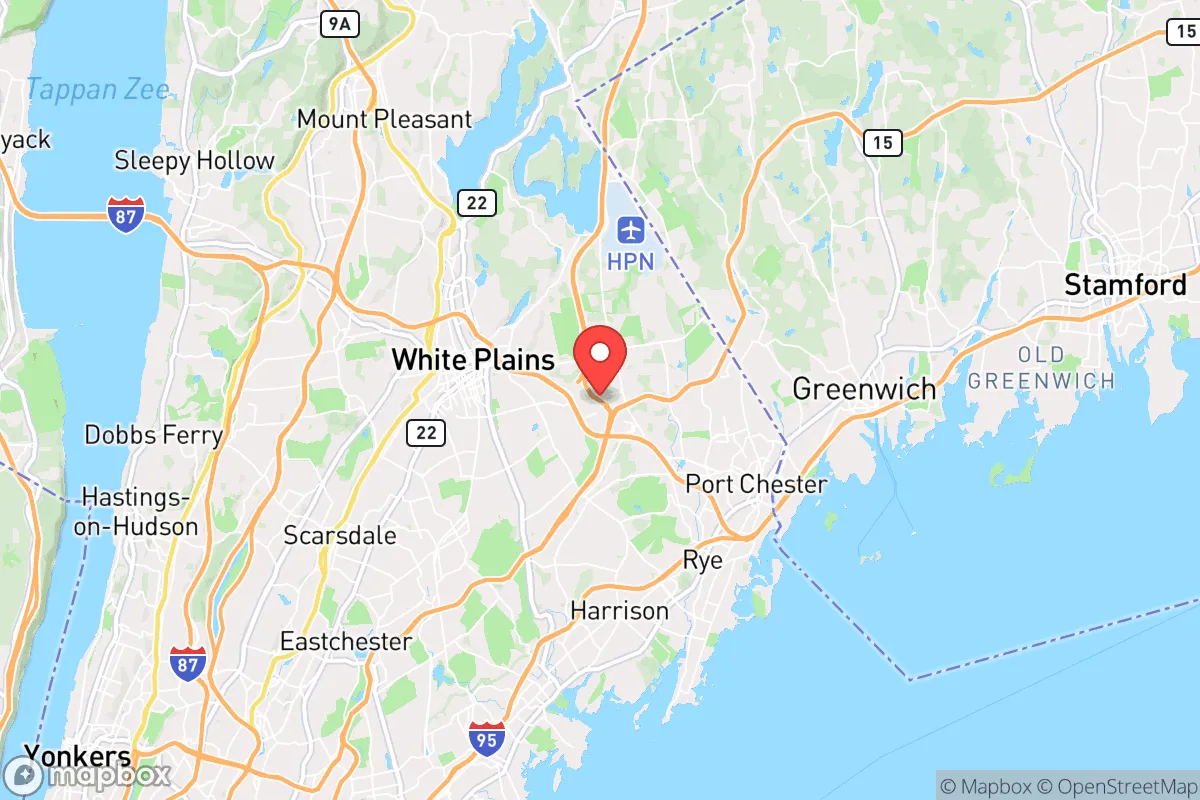
Photo: Wikipedia
Strategic Assessment of Harrison, NY
Multiple tactical vulnerabilities. Population density, target proximity, or disaster risk are likely compounding. A retreat property and exit planning is required.
What does the Strategic Assessment tell us?
Our Strategic Assessment grades tactical survivability of an area. Major population centers, military targets, fallout zones, natural disasters, and border exposure all drive risk — lower exposure means a more defensible position in a crisis.
This is heavily inspired by Joel Skousen's Strategic Relocation book. Highly recommended you checkout the book ($)What does this tell us?
Our Strategic Assessment grades tactical survivability of an area. Major population centers, military targets, fallout zones, natural disasters, and border exposure all drive risk — lower exposure means a more defensible position in a crisis.
This is heavily inspired by Joel Skousen's Strategic Relocation book. Highly recommended you checkout the book ($)Strategic Pillars

Key Distances
Regional Safe Places
Below is our recommended "safe zones" in New York and the surrounding area based on our strategic heuristics. For most people, it's unrealistic to live in a “safe zone” full-time due to work, family or other personal reasons. They tend to be more rural. However, many of these areas are perfect for second homes and retreat properties that double as a vacation home or even a short-term rental.
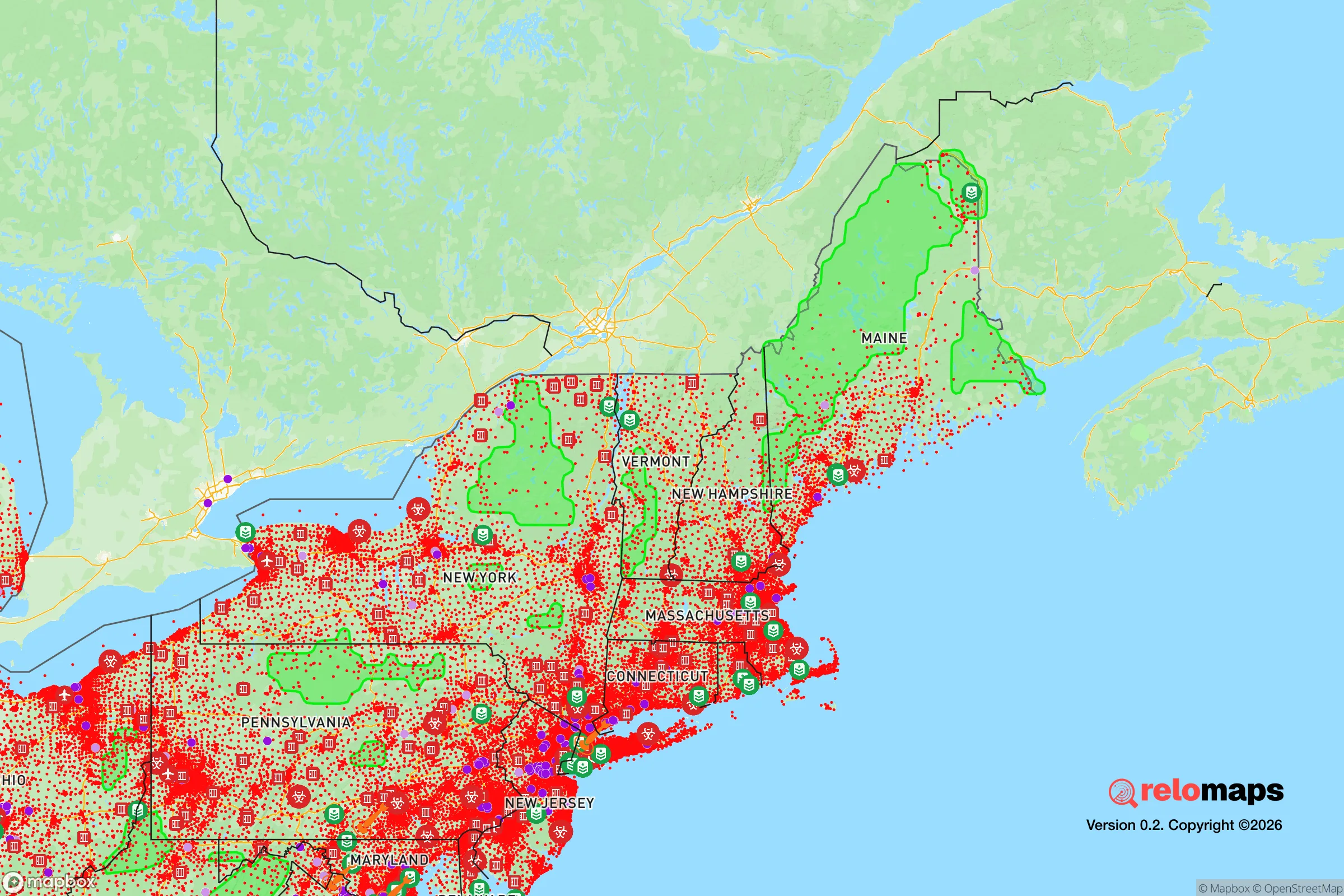


Important Note: For informational purposes only. This does not mean nothing bad ever happens in the green zones. Please use common sense. This is based on public data and modeled with AI. We tried to take a conservative approach but mistakes happen. We update this regularly as new information becomes available.
Solar Generator Recommendations
Backup power matters more here than in safer locations. We've picked three solar generators across budgets and capacity tiers — start with the budget unit if you only need a few essentials, or step up if you want to run a fridge and HVAC for days at a time.

Jackery Portable Power Station Explorer 300
Budget OptionPower on the Go: Weighing only 11 lbs, it's convenient to set up and store with book-sized foldable solar panels

BLUETTI Portable Power Station AC180
Designed for both indoor and outdoor scenarios, AC180 is highly capable as it has a robost capacity and continuous output power.

EF ECOFLOW DELTA Pro Ultra Power Station
Upgraded PickEcoFlow DELTA Pro Ultra is a whole-home energy system designed to grow with your family. Integrated with the Smart Home Panel 2, it scales to meet your evolving energy needs — keeping your home powered, intelligent, and secure through every stage of life.
We earn a commission, at no additional cost to you.
Strategic Assessment Analysis
Harrison, New York, presents a complex strategic picture for the conservative prepper. On one hand, its location in Westchester County offers proximity to critical infrastructure and economic resilience; on the other, it sits within the blast radius of one of the world's highest-value target zones. For a relocator prioritizing long-term survivability over short-term convenience, the calculus is sobering. The town’s real advantage lies not in its isolation—it has none—but in its potential as a staging ground for those who understand that true security requires a secondary, more remote position.
Geographic position and natural advantages for long-term security
Harrison occupies a narrow strip of land along the Long Island Sound, roughly 22 miles northeast of Midtown Manhattan. Its position on the mainland, rather than on Long Island itself, gives it a slight edge in a crisis: it is not dependent on bridges or tunnels for egress. The town is bisected by the Hutchinson River Parkway and I-95, and the Metro-North New Haven Line runs through it, offering rail access to both New York City and New Haven, Connecticut. For a prepper, these routes are double-edged—they provide supply lines but also avenues for mass evacuation and potential looting. The natural terrain is rolling hills and coastal lowlands, with the Byram River forming part of the western border. There are no significant natural barriers—no mountains, no dense forests—that would slow a determined mob or provide defensible chokepoints. The area’s water supply comes from the New York City reservoir system, which is a single point of failure for millions of people. In a prolonged grid-down scenario, Harrison’s residents would be competing with the entire NYC metro area for the same dwindling resources. The town’s one genuine natural advantage is its access to the Long Island Sound for fishing and maritime evacuation, but that requires a boat and the ability to navigate potentially hostile waters.
Risks, exposures, and proximity to fallout-relevant landmarks
This is where the analysis turns grim. Harrison sits within the primary fallout zone of any nuclear detonation over Manhattan. Depending on wind direction, a surface burst at ground zero could deposit lethal radioactive particles across Westchester County within hours. The Indian Point Energy Center, a decommissioned nuclear plant in Buchanan, NY, is roughly 20 miles north—a potential target or accident site. Additionally, the town is within 30 miles of multiple high-value military and government targets: the United Nations headquarters, the Federal Reserve Bank of New York, the Port of New York and New Jersey, and the headquarters of several major financial institutions. In a scenario of coordinated attack, Harrison would be in the path of both the initial blast effects and the subsequent fallout plume. Beyond nuclear threats, the area is vulnerable to electromagnetic pulse (EMP) attacks. A high-altitude burst over the eastern seaboard would likely knock out the entire power grid for the Northeast Corridor, including Harrison. The town’s dense suburban layout—with homes on quarter-acre lots and narrow streets—means that a prolonged power outage would lead to rapid resource depletion and social friction. The local police department is small (roughly 40 officers), and in a mass casualty event, they would be overwhelmed within hours. The nearest major trauma center is White Plains Hospital, about 6 miles west, but in a crisis, that facility would be gridlocked. For a prepper, the key takeaway is that Harrison is not a retreat; it is a forward operating base that must be abandoned within 48 hours of a major event.
Practical resilience for a relocator: food, water, energy, and defensibility
For a single individual or family willing to invest in serious preparation, Harrison offers a few practical advantages. The town has a robust local food scene, with multiple supermarkets (Stop & Shop, Whole Foods, and a local farmers’ market) that could be stockpiled before a crisis. However, shelf-stable food storage is a must, as supply chains to the area would be cut off within 24 hours of a major event. Water is the critical vulnerability. The municipal supply comes from the Catskill/Delaware watershed, and a single pipeline break or contamination event would leave the town dry. A prepper should install a minimum 500-gallon rainwater catchment system and a Berkey or similar gravity filter. For energy, the grid is unreliable in a crisis, but the area has good solar exposure. A rooftop solar array with battery backup (e.g., Tesla Powerwall or a DIY LiFePO4 system) could provide enough power for lights, refrigeration, and communications. Natural gas lines run through the town, but they are vulnerable to seismic events and sabotage. A backup propane tank for cooking and heating is a wise investment. Defensibility is the weakest link. Harrison’s housing stock is primarily single-family homes on small lots with large windows and open floor plans—hard to secure. A prepper should reinforce doors, install security film on windows, and create a safe room. The town’s proximity to I-95 means that any civil unrest in New York City will spill into Harrison within hours. The best defensive strategy is not to fight but to have a pre-planned bug-out route north to the Adirondacks or western Massachusetts, where terrain and population density favor a smaller, more mobile group. Harrison can serve as a supply cache and a place to monitor events, but it is not defensible against a determined mob.
The overall strategic picture for Harrison is one of calculated risk. It is not a place to ride out a societal collapse, but it is a viable location for a prepper who understands that survival in the 21st century requires mobility and redundancy. The town’s economic resilience—its schools, its tax base, its proximity to jobs—makes it a good place to build wealth and acquire skills. But the same proximity that makes it attractive for daily life makes it dangerous in a crisis. The conservative prepper should view Harrison as a base camp, not a fortress. Stock it with supplies, maintain a low profile, and have a secondary location ready in the hills of New England or the Appalachian foothills. In a world where the unthinkable has become plausible, Harrison offers a comfortable present but a fragile future. The wise relocator will use it as a stepping stone, not a final destination.

* Values derived from national, state, county, city and local statistics and may differ in a specific area. Last updated: 2026-05-01T01:45:41.000Z
Narrative content on this page is AI-generated and may contain mistakes. Verify any details that matter before acting on them.
ReloMaps may earn a commission from affiliate links at no extra cost to you.

