 Popular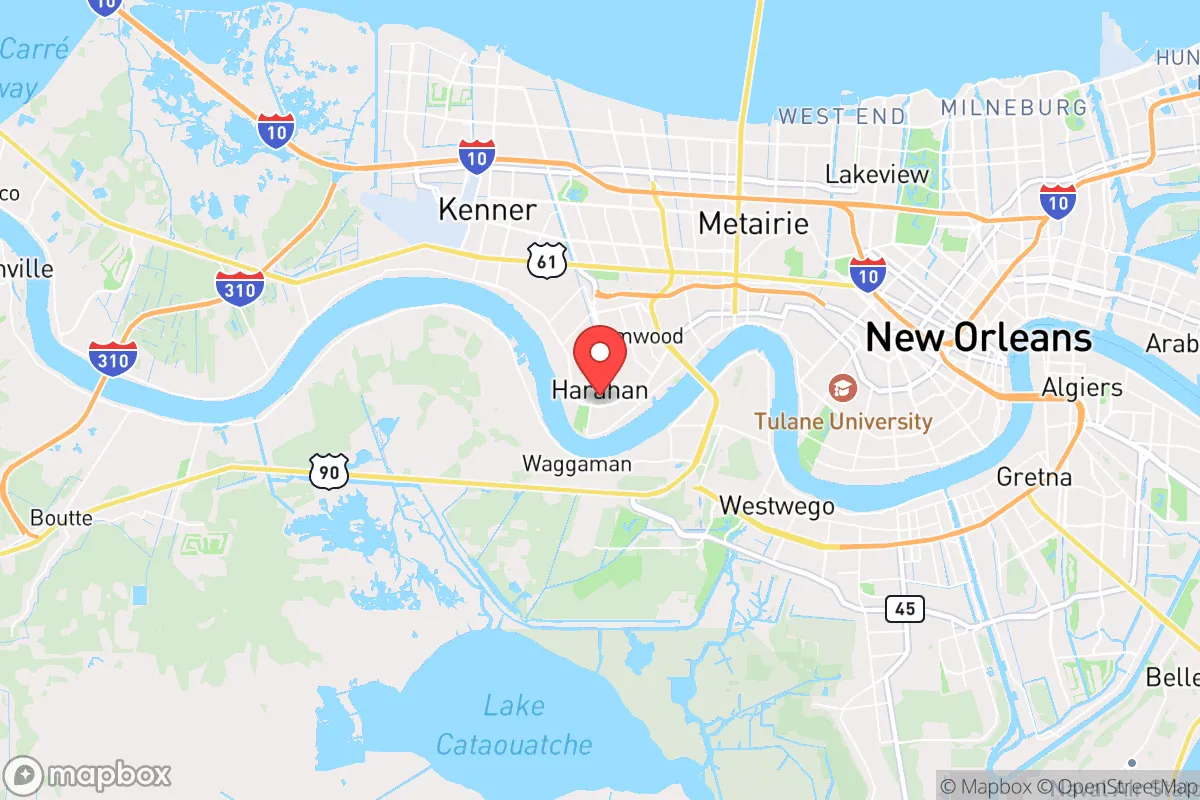
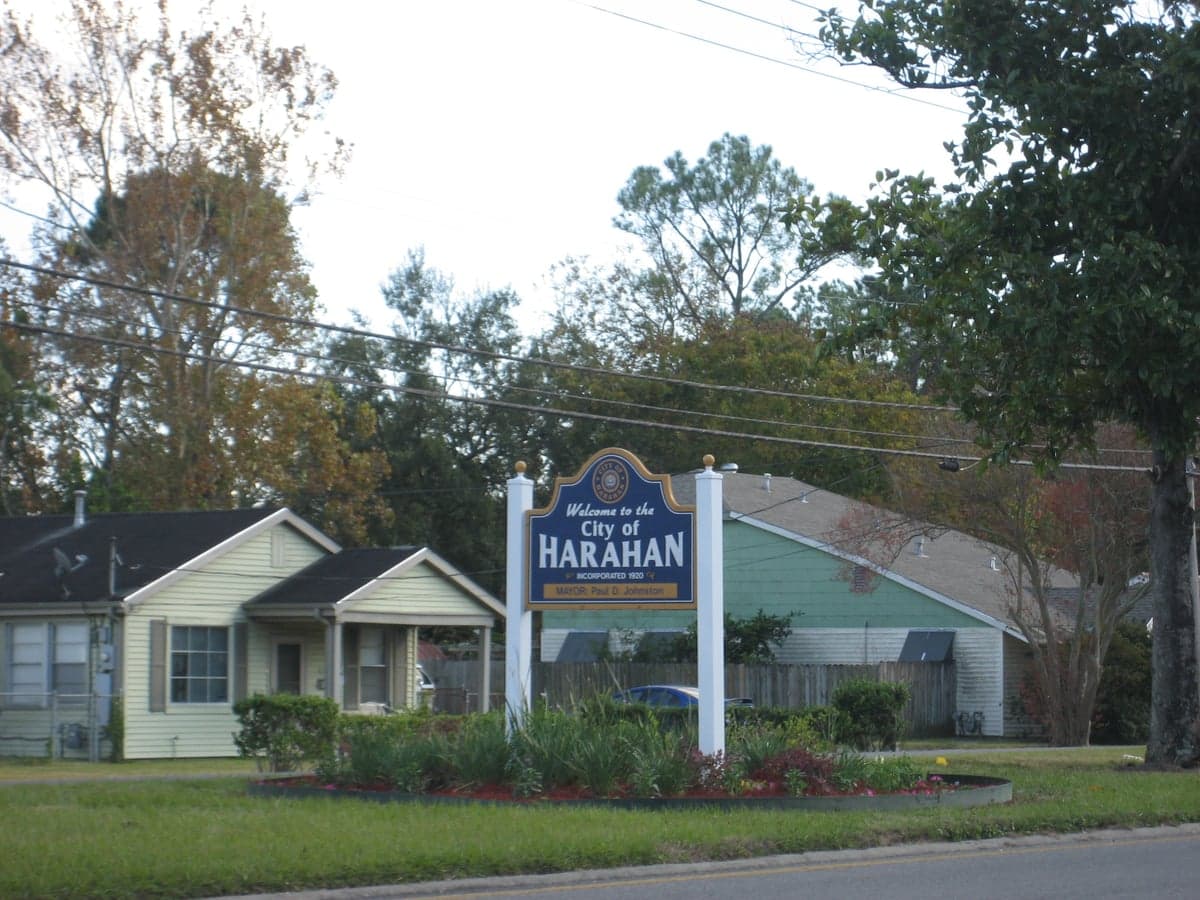
Photo: Wikipedia
Political ClimatePolitical Climate in Harahan, LA
District shown is the primary district for this city’s centroid. Cities may span multiple districts.
Local Political AnalysisPolitical Analysis of Harahan, LA
Harahan leans heavily Republican, with a Cook Partisan Voting Index of R+19, making it one of the more conservative pockets in the greater New Orleans metro. This isn't a new development—the city has been reliably red for decades, but the margin has widened slightly in recent cycles as suburban Jefferson Parish has shifted rightward while Orleans Parish has moved left. If you look at the precinct-level results from 2024, Harahan voted about 62% for the Republican presidential candidate, which is a few points higher than the parish average. The trajectory here is steady: no dramatic flips, just a slow consolidation of conservative voters who value the area's stability, low taxes, and proximity to the city without the urban political culture.
How it compares
Compared to Louisiana as a whole, Harahan is noticeably more Republican. The state itself is reliably red in presidential elections—Trump won it by about 19 points in 2024—but that statewide number is pulled down by Democratic strongholds like New Orleans and Baton Rouge. Harahan's R+19 PVI actually mirrors the statewide presidential margin, but the difference is in the local texture. In Harahan, you're in a solidly conservative suburb where Republican candidates often run unopposed in local races. Drive 15 minutes east into New Orleans, and you're in a D+30 environment. Head west to Kenner or Metairie, and you'll find similar Republican leanings, though Kenner has a slightly larger Democratic base due to its more diverse population. The contrast is sharpest with Orleans Parish: Harahan and New Orleans are only about 10 miles apart but exist in completely different political universes.
What this means for residents
For conservative residents, Harahan offers a comfortable political environment where their views are the norm. Local government tends to be fiscally conservative, with lower property taxes than in Orleans Parish and a more business-friendly regulatory approach. School board meetings and city council decisions rarely feature the kind of ideological battles you see in more evenly split communities. For liberal residents, the reality is more about being in the minority. You'll find like-minded neighbors—there's a small but active Democratic club in Jefferson Parish—but you won't see many progressive policy wins at the local level. That said, Harahan is not a place where political differences lead to social friction. People tend to keep politics neighborly, and the city's small size (about 9,000 residents) means most interactions are about potholes and drainage, not national debates. The practical effect is that conservatives feel their vote counts, while liberals know they're voting more for principle than for local impact.
One cultural distinction worth noting: Harahan has a strong sense of local identity that transcends party lines. The city was originally a railroad town, and that working-class roots still shows in its no-frills attitude. You won't find the kind of affluent, country-club Republicanism you see in some parts of St. Tammany Parish. Instead, it's more of a blue-collar conservatism focused on public safety, infrastructure, and keeping taxes low. The city's annual Harahan Heritage Festival is a good example—it's a non-political community event where everyone shows up regardless of party. In terms of policy, the most visible local issues are drainage improvements (a perennial concern in south Louisiana) and maintaining the small-town feel as development pressure from Metairie creeps westward. Neither party has a monopoly on those concerns, which is why local elections in Harahan tend to be low-key affairs decided more on personality and competence than on ideology.

State Political ClimatePolitical Climate in Louisiana
State Political AnalysisPolitical Environment in the State
Louisiana has been a reliably Republican state in federal elections for over two decades, but its politics are far more complex than a simple red-state label suggests. The state backed Donald Trump by nearly 19 points in 2024, continuing a rightward shift that began in the late 1990s, but Democrats still hold significant power at the local and state level, particularly in New Orleans and Baton Rouge. Over the last 20 years, the state has moved from a competitive purple state to a solidly Republican one in presidential races, though the state legislature and governor's office have seesawed between parties, with Democrat John Bel Edwards serving as governor until 2024 before being succeeded by Republican Jeff Landry.
Urban vs. rural divide
The political map of Louisiana is a classic story of urban islands surrounded by a deep-red rural sea. New Orleans is the state's most reliably Democratic stronghold, delivering over 80% of its vote to Joe Biden in 2020, driven by a large African American population and a progressive-leaning white professional class. Baton Rouge is more competitive but still leans Democratic, with the city proper voting blue while the surrounding suburbs of Prairieville and Denham Springs are heavily Republican. Lafayette and Shreveport are more moderate, with Lafayette trending right as its oil-and-gas economy grows and Shreveport remaining a Democratic holdout in the northwest. The rural parishes—like Winn Parish, Franklin Parish, and Beauregard Parish—routinely vote 75-80% Republican, driven by cultural conservatism and a strong evangelical presence. The Acadiana region around Lafayette is a fascinating mix: historically Democratic Cajun country that has shifted hard right over the last two decades on cultural and energy issues.
Policy environment
Louisiana's policy environment is defined by a low-tax, low-service model that appeals to many conservatives but creates real trade-offs. The state has no personal property tax on vehicles or boats, and property taxes are among the lowest in the country, averaging about 0.55% of home value. The state sales tax, however, is high—combined state and local rates often exceed 10% in places like New Orleans and Baton Rouge. Income taxes are moderately progressive, with a top rate of 4.25% as of 2025, down from 6% in 2020. Education policy is a mixed bag: Louisiana has one of the most robust school choice programs in the nation, including a statewide voucher program and a thriving charter school sector in New Orleans, but overall student outcomes remain near the bottom nationally. Healthcare is a major concern—the state expanded Medicaid under the Affordable Care Act in 2016, covering over 400,000 residents, but rural hospital closures have accelerated, and the state ranks poorly in health outcomes. Election laws are moderately restrictive: voters must show photo ID, and early voting is available for 7 days, but no-excuse absentee voting is limited to those over 65 or with specific reasons.
Recent policy direction
The last few years have seen Louisiana move decisively to the right on a broad range of issues. In 2024, Governor Jeff Landry signed a near-total abortion ban with no exceptions for rape or incest, triggering immediately after the Dobbs decision. The state also passed a constitutional carry law in 2024, allowing permitless concealed carry of firearms for anyone 18 or older who can legally possess a gun. On education, the 2024 session saw the creation of a universal school choice program that allows any family to use state funds for private or homeschool expenses, and a law requiring the display of the Ten Commandments in every public school classroom—a move that is already facing legal challenges. On voting, the state passed a law in 2024 banning private funding of election administration and tightening ballot harvesting rules. Property rights remain strong, with no statewide zoning and a general pro-development posture, though coastal erosion and flood risk are creating new regulatory pressures. On privacy and surveillance, Louisiana has no comprehensive data privacy law, but it does have a strict anti-doxxing statute and a law banning the use of AI to create child sexual abuse material. Medical and bodily autonomy is heavily restricted post-Dobbs, with no exceptions for rape or incest, though the law does allow for the termination of ectopic pregnancies and other medical emergencies.
Civil unrest & political movements
Louisiana has a long history of political activism on both sides, but recent years have seen a sharpening of tensions. The 2020 Black Lives Matter protests in New Orleans and Baton Rouge were large and occasionally violent, with the Baton Rouge protests following the death of Alton Sterling in 2016 still a raw memory. On the right, the Louisiana chapter of the Oath Keepers and other militia groups have been active, particularly around gun rights rallies and election integrity events. Immigration politics are less heated than in border states, but the state has seen a rise in anti-immigrant rhetoric, particularly around the small but growing Latino population in the New Orleans metro. There is no sanctuary city policy anywhere in Louisiana; in fact, the state passed a law in 2024 requiring local law enforcement to cooperate with federal immigration authorities. Election integrity has been a flashpoint since 2020, with the state legislature holding multiple hearings and passing laws to restrict mail-in voting and ban ballot drop boxes. The most visible political flashpoint for a new resident would likely be the Ten Commandments display law, which has sparked both support and protest in school board meetings across the state.
Projection
Over the next 5-10 years, Louisiana is likely to become even more Republican, but with important caveats. The state's population is aging and slowly declining, with the biggest losses in rural parishes and the biggest gains in the Northshore suburbs of New Orleans (St. Tammany Parish) and the Baton Rouge exurbs like Livingston Parish. These growing areas are deeply conservative, which will reinforce the state's rightward tilt. However, New Orleans and Baton Rouge are likely to remain Democratic strongholds, and the growing Hispanic population in the New Orleans metro could shift the calculus slightly if that community becomes more politically engaged. The biggest wildcard is climate change: as coastal erosion and hurricane risk worsen, the state may see significant out-migration from vulnerable areas, which could accelerate the rural decline and concentrate population in the more conservative inland parishes. A relocator moving in now should expect a state that is culturally and politically conservative, with low taxes and limited government services, but also one that is grappling with serious structural challenges in healthcare, education, and infrastructure.
For a new resident, the bottom line is that Louisiana offers a genuinely low-tax, low-regulation environment that appeals to many conservatives, but it comes with trade-offs in public services and infrastructure. The state's political climate is reliably Republican at the federal level, but local politics can be more competitive, especially in New Orleans and Baton Rouge. If you value school choice, gun rights, and limited government, you'll find a lot to like. If you're looking for a place with strong public schools, robust healthcare, and a moderate social environment, you may want to look more closely at the specific parish you're considering. The political reality is that Louisiana is a deeply conservative state that is becoming more so, but it's also a place where local dynamics vary enormously—from the progressive bubble of New Orleans to the evangelical strongholds of the Florida Parishes. Know your parish, and you'll know your politics.
* Values derived from national, state, county, city and local statistics and may differ in a specific area. Last updated: 2026-07-20T22:05:52.000Z
Narrative content on this page is AI-generated and may contain mistakes. Verify any details that matter before acting on them.
ReloMaps may earn a commission from affiliate links at no extra cost to you.

