 Popular
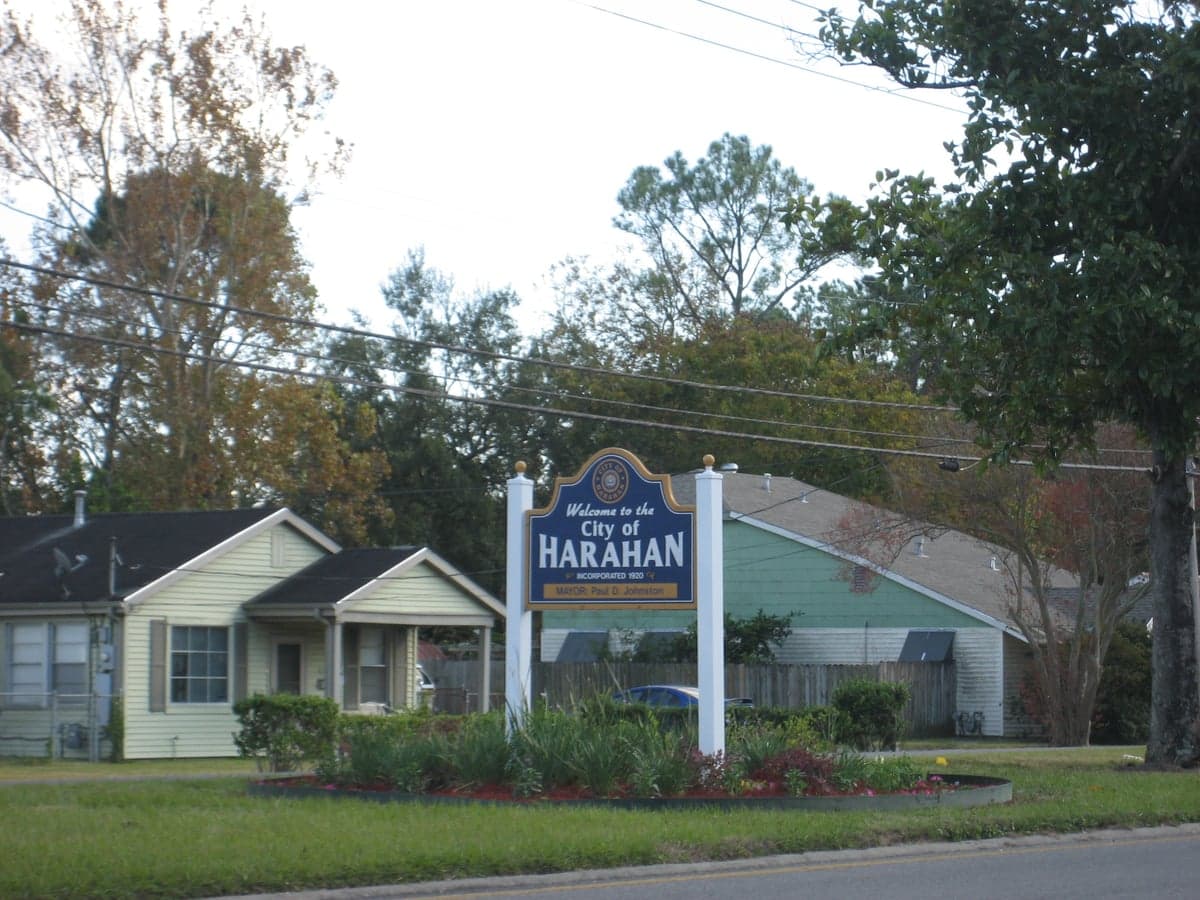
Photo: Wikipedia
Demographics of Harahan, LA
Affluence Level in Harahan, LA
A middle-class area roughly in line with national averages across income, home values, education, and employment.
People of Harahan, LA
The people of Harahan, Louisiana, today form a predominantly white, middle-class community of 8,939 residents, characterized by a strong sense of local identity rooted in the city's railroad and Mississippi River history. With a 85.0% white population and a notably low 1.5% foreign-born share, Harahan is one of the less ethnically diverse suburbs in the New Orleans metro area. The city's population is older and more settled than many neighboring communities, with 41.0% holding a college degree, reflecting a stable, family-oriented demographic that values proximity to both the river and the city of New Orleans.
How the city was settled and grew
Harahan was not a gradual colonial settlement but a planned railroad town, born directly from the expansion of the Illinois Central Railroad in the early 20th century. The city was incorporated in 1920 and named after James T. Harahan, a former president of the Illinois Central. The original population was overwhelmingly white and native-born, drawn by jobs at the railroad's massive yard and repair shops along the Mississippi River. The first residential area, Old Harahan (the original grid of streets near the riverfront), was built by railroad workers and their families, many of whom were of German and Irish descent who had moved upriver from New Orleans. A second early neighborhood, Harahan Heights, developed slightly inland on higher ground and attracted a mix of railroad foremen and small business owners. The city's growth remained slow and steady through the 1930s and 1940s, with the population staying overwhelmingly white and native-born, as the railroad provided stable, union-protected employment that discouraged the kind of transient labor seen in other industrial towns.
Modern era (post-1965)
After the 1965 Hart-Cellar Act reshaped American immigration, Harahan saw almost none of the foreign-born influx that transformed other parts of the New Orleans metro. The city's foreign-born population remains at just 1.5% in the 2020s, a figure far below the national average and even below many neighboring Jefferson Parish communities. Instead, the post-1965 story of Harahan is one of domestic in-migration and suburban consolidation. As white families left New Orleans proper during the 1970s and 1980s, many settled in Harahan's newer subdivisions, particularly Harahan Village and the Hickory Ridge area, which offered larger lots and newer homes than the older riverfront grid. The city's black population, at 3.2%, is notably low even by suburban Jefferson Parish standards, and the Hispanic share of 7.7% is modest, concentrated mostly in the Harahan Village area. The East/Southeast Asian population (0.7%) and Indian-subcontinent population (0.8%) are both very small, reflecting the city's limited draw for immigrant communities who have instead clustered in Metairie and Kenner. The city's population peaked around 9,500 in the 1980s and has since declined slightly, as younger families have been priced out by rising home values and the lack of new housing construction.
The future
Harahan's population is likely to remain stable or decline slowly over the next 10-20 years, with little demographic diversification on the horizon. The city has very little undeveloped land, and its housing stock is dominated by older single-family homes that are increasingly expensive for first-time buyers. The Hispanic share may grow modestly, as it has across Jefferson Parish, but the city's low foreign-born rate and high home prices will limit large-scale change. The white share, while still dominant at 85.0%, will likely edge downward as older residents age in place and a small number of younger, more diverse families move into the Harahan Heights and Old Harahan neighborhoods. The city's cultural identity will remain rooted in its railroad and river heritage, with annual events like the Harahan Heritage Festival reinforcing a sense of continuity. For a mover considering Harahan, the city offers a stable, low-diversity, family-oriented environment with good schools and easy access to New Orleans, but little of the demographic dynamism or international flavor found in other parts of the metro.
For someone moving in now, Harahan represents a choice for stability over change: a predominantly white, native-born, middle-class suburb where the population is aging slowly and the cultural identity is firmly tied to the city's railroad past. The city is not becoming more diverse in any meaningful way, and its future demographic trajectory points toward gradual, modest decline rather than growth or transformation. This makes Harahan a good fit for families and individuals who prioritize continuity, low crime, and proximity to New Orleans without the diversity and energy of more dynamic suburbs.

* Values derived from national, state, county, city and local statistics and may differ in a specific area. Last updated: 2026-07-20T22:05:52.000Z
Narrative content on this page is AI-generated and may contain mistakes. Verify any details that matter before acting on them.
ReloMaps may earn a commission from affiliate links at no extra cost to you.

