Photo: Wikipedia
Demographics of Hanceville, AL
Affluence Level in Hanceville, AL
A below-average socioeconomic profile. Incomes, home values, and educational attainment trail the U.S., with higher poverty and unemployment.
People of Hanceville, AL
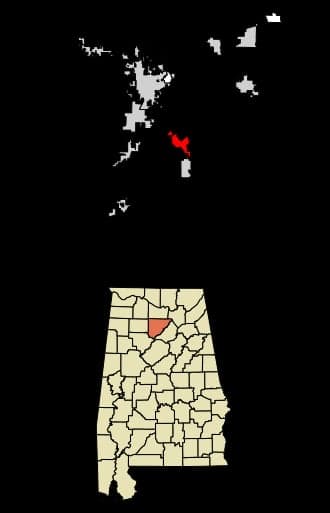
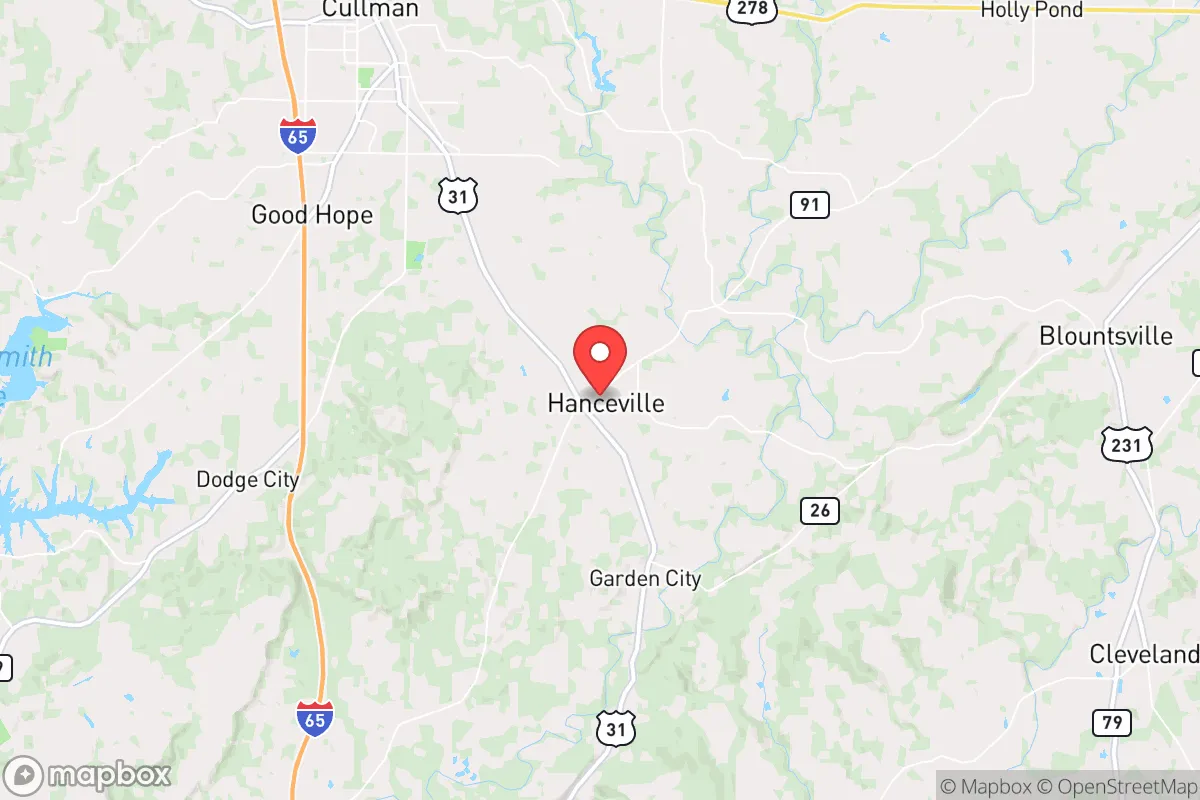
Hanceville, Alabama, is a small, predominantly white, working-class city of 3,255 residents where family roots run deep and the pace of life remains distinctly rural. With a population that is 87.9% white and 6.9% Black, the city’s character is shaped by its agricultural and railroad history, a strong sense of local community, and a low college attainment rate of 11.9%. The city’s identity is less about rapid change and more about stability, with a foreign-born population of just 2.5% and a Hispanic share of 2.9%, making it a place where generational continuity is the norm.
How the city was settled and grew
Hanceville was founded in the 1870s as a railroad town, its growth tied directly to the Louisville and Nashville Railroad which cut through Cullman County. The original settlers were primarily white yeoman farmers of English, Scots-Irish, and German descent, drawn by the promise of cheap land and the new rail connection that could ship cotton and timber to larger markets. The town was officially incorporated in 1879, named after a local railroad official. The earliest residential core developed around the depot and along Main Street, an area now known as Old Town Hanceville, where the first general stores, churches, and modest frame houses were built. A second wave of settlement came in the early 1900s with the expansion of the timber and cotton industries, attracting more white farm families who built homes in the East Hanceville neighborhood, a grid of streets east of the railroad tracks that still contains many of the city’s oldest homes. The Black population, which has historically been a small but consistent minority, settled primarily in the South Hanceville area, near the old industrial sites and along the railroad corridor, where a few historic Black churches and family cemeteries remain as markers of that community’s presence.
Modern era (post-1965)
After the 1965 Hart-Cellar Act, Hanceville saw almost no new immigration, a pattern that continues today. The city’s demographic story in the modern era is one of domestic stability rather than ethnic diversification. The most significant population shift has been the gradual out-migration of younger, college-bound residents to larger cities like Birmingham and Huntsville, leaving behind an older, more settled population. The West Hanceville neighborhood, developed in the 1970s and 1980s, absorbed most of the new single-family home construction during this period, attracting white families who worked at the local schools, the poultry processing plants in nearby Cullman, or at Wallace State Community College. The Hanceville Estates subdivision, built in the 1990s, became the preferred location for middle-class families seeking larger lots and newer homes, while the older Downtown Hanceville district saw a decline in residential density as commercial uses expanded. The Black population, which has remained around 6-7% for decades, continues to be concentrated in South Hanceville, though some families have moved into newer subdivisions. The Hispanic population, at 2.9%, is a very recent and small presence, mostly families working in agriculture and poultry processing who have settled in rental properties scattered across the city rather than in a single ethnic enclave.
The future
Hanceville’s population is projected to remain stable or grow very slowly, with no major demographic transformation on the horizon. The city’s low college attainment rate and limited high-wage job market will likely continue to push young adults toward larger metro areas, reinforcing the older age profile. The Hispanic share may increase modestly as agricultural and industrial labor demand persists, but the foreign-born population is expected to remain well below state and national averages. New residential development is likely to occur on the northern and western edges of the city, near the Highway 31 corridor, where land is cheaper and access to Cullman is easiest. The North Hanceville area, currently a mix of farmland and scattered homes, is the most probable site for future subdivisions. Culturally, the city will remain a predominantly white, conservative, church-centered community where change comes slowly and newcomers are expected to integrate into existing social structures rather than reshape them.
For someone moving to Hanceville today, the city offers a stable, low-cost, and safe environment where neighbors know each other and community ties are strong. It is not a place of rapid growth or diversity, but rather a deeply rooted small town where the population is aging in place and the future looks much like the present. New residents will find a welcoming but insular community where fitting in means participating in local churches, school events, and civic organizations rather than expecting the city to adapt to them.

* Values derived from national, state, county, city and local statistics and may differ in a specific area. Last updated: 2026-07-15T22:09:22.000Z
Narrative content on this page is AI-generated and may contain mistakes. Verify any details that matter before acting on them.
ReloMaps may earn a commission from affiliate links at no extra cost to you.

