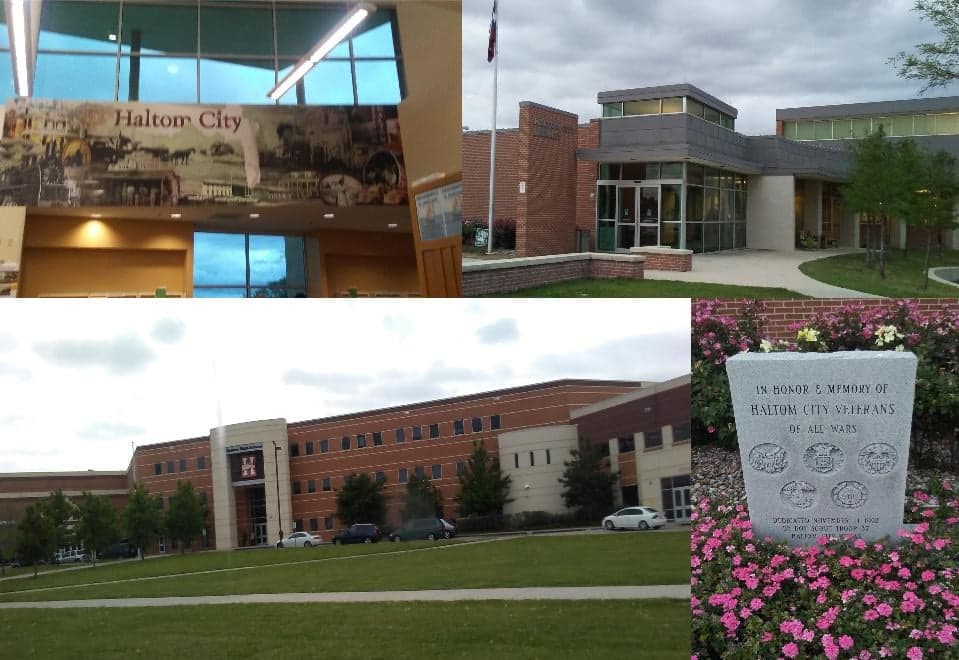
Photo: Wikipedia
Strategic Assessment of Haltom City, TX
Multiple tactical vulnerabilities. Population density, target proximity, or disaster risk are likely compounding. A retreat property and exit planning is required.
What does the Strategic Assessment tell us?
Our Strategic Assessment grades tactical survivability of an area. Major population centers, military targets, fallout zones, natural disasters, and border exposure all drive risk — lower exposure means a more defensible position in a crisis.
This is heavily inspired by Joel Skousen's Strategic Relocation book. Highly recommended you checkout the book ($)What does this tell us?
Our Strategic Assessment grades tactical survivability of an area. Major population centers, military targets, fallout zones, natural disasters, and border exposure all drive risk — lower exposure means a more defensible position in a crisis.
This is heavily inspired by Joel Skousen's Strategic Relocation book. Highly recommended you checkout the book ($)Strategic Pillars
Key Distances
Regional Safe Places
Below is our recommended "safe zones" in Texas and the surrounding area based on our strategic heuristics. For most people, it's unrealistic to live in a “safe zone” full-time due to work, family or other personal reasons. They tend to be more rural. However, many of these areas are perfect for second homes and retreat properties that double as a vacation home or even a short-term rental.

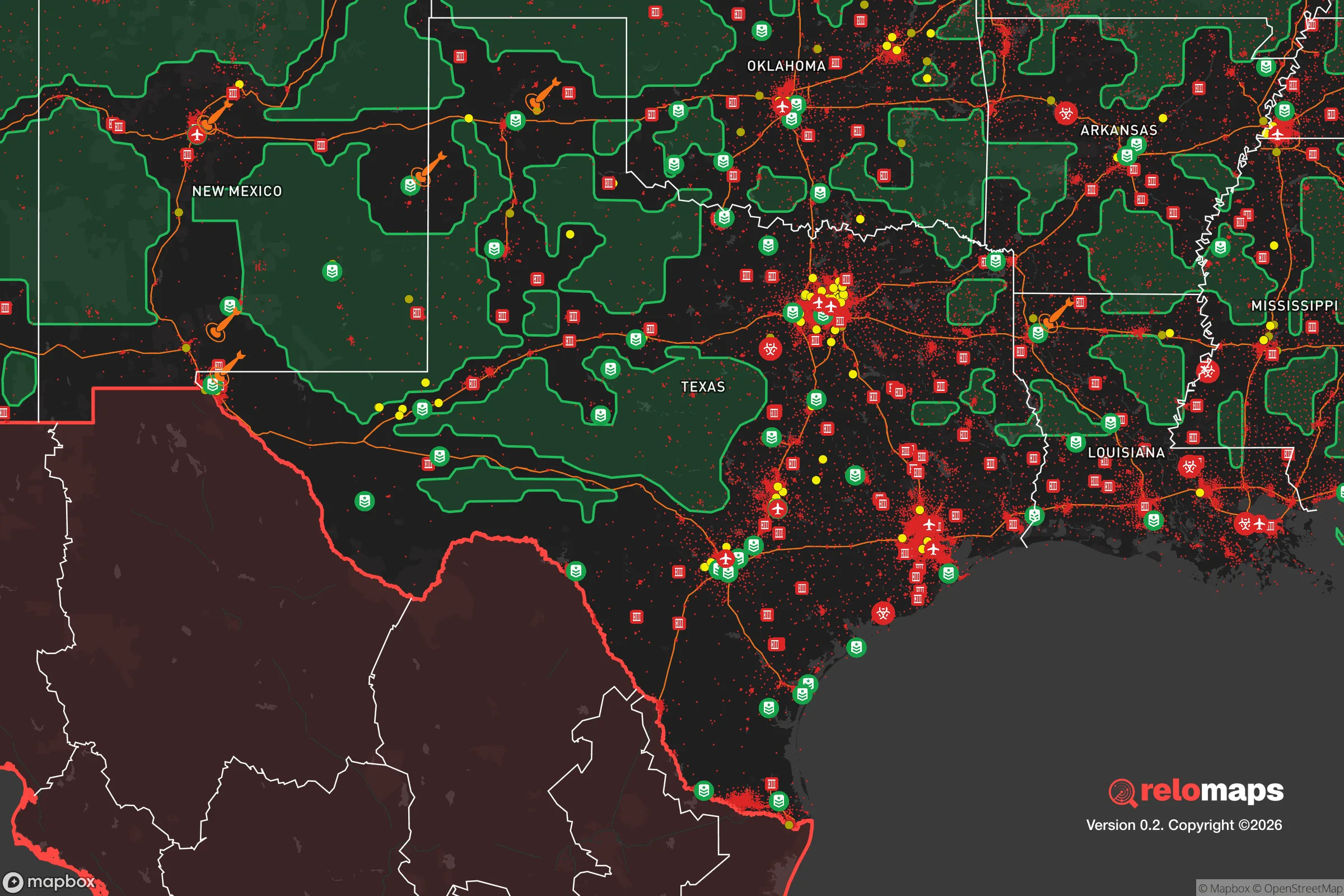


Important Note: For informational purposes only. This does not mean nothing bad ever happens in the green zones. Please use common sense. This is based on public data and modeled with AI. We tried to take a conservative approach but mistakes happen. We update this regularly as new information becomes available.
Solar Generator Recommendations
Backup power matters more here than in safer locations. We've picked three solar generators across budgets and capacity tiers — start with the budget unit if you only need a few essentials, or step up if you want to run a fridge and HVAC for days at a time.
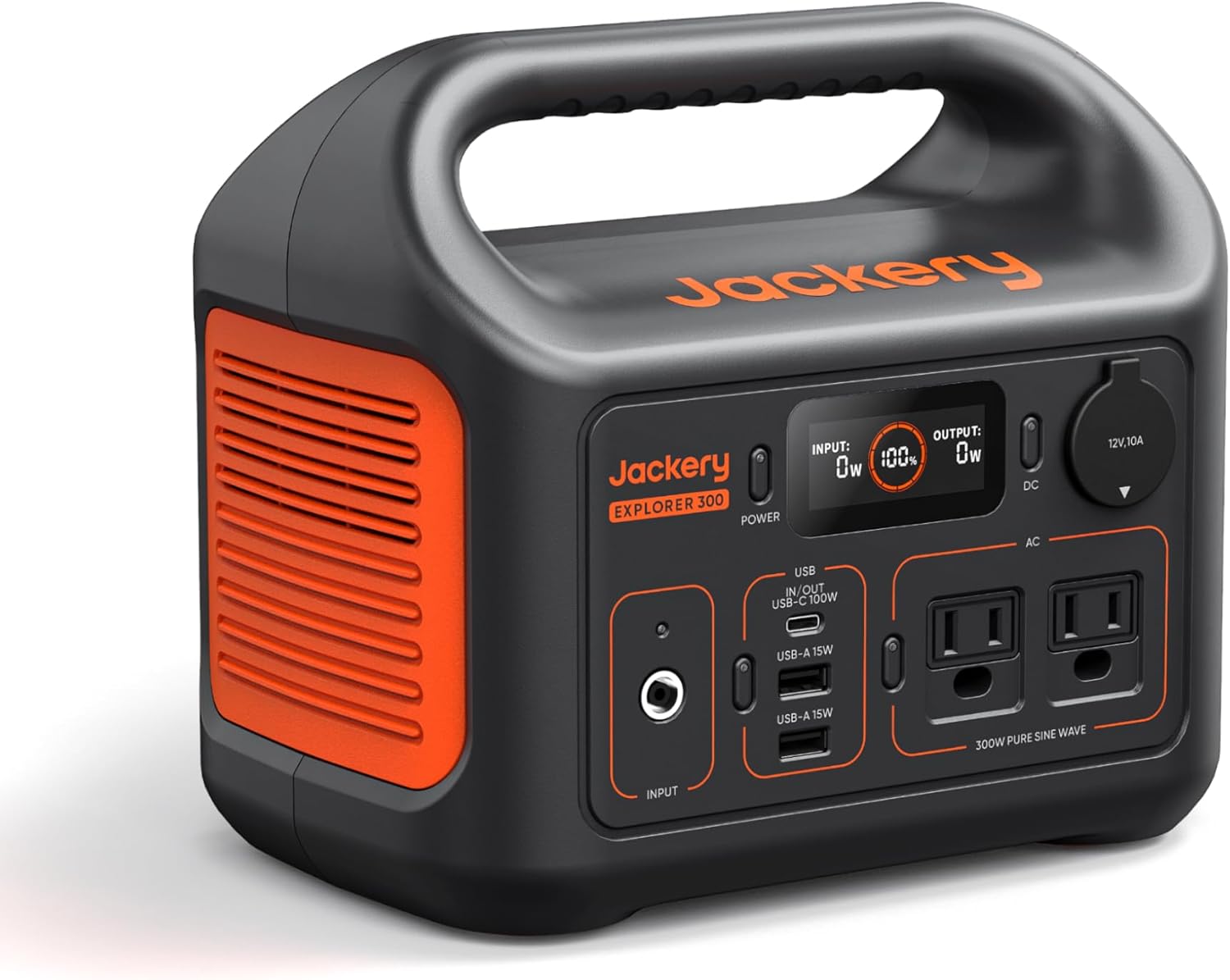
Jackery Portable Power Station Explorer 300
Budget OptionPower on the Go: Weighing only 11 lbs, it's convenient to set up and store with book-sized foldable solar panels

BLUETTI Portable Power Station AC180
Designed for both indoor and outdoor scenarios, AC180 is highly capable as it has a robost capacity and continuous output power.

EF ECOFLOW DELTA Pro Ultra Power Station
Upgraded PickEcoFlow DELTA Pro Ultra is a whole-home energy system designed to grow with your family. Integrated with the Smart Home Panel 2, it scales to meet your evolving energy needs — keeping your home powered, intelligent, and secure through every stage of life.
We earn a commission, at no additional cost to you.
Strategic Assessment Analysis
Haltom City, Texas, occupies a strategic position in the Dallas-Fort Worth metroplex that offers a mixed resilience profile for the disaster-conscious relocator. Its location just northeast of Fort Worth and roughly 30 miles from downtown Dallas places it within a major population corridor, which brings both logistical advantages and significant risk exposure. For a reader prioritizing self-sufficiency and preparedness, Haltom City presents a trade-off: proximity to urban resources and infrastructure versus vulnerability to the cascading effects of a major regional disruption.
Geographic position and natural advantages for preparedness
Haltom City sits on the eastern edge of the Cross Timbers ecoregion, a transitional zone between the rolling plains to the west and the Blackland Prairie to the east. This geography provides relatively stable terrain—no significant floodplains, fault lines, or coastal storm surge exposure. The area is inland enough to be insulated from hurricane landfalls, though it can experience the remnants of tropical systems that bring heavy rain. The local climate is characterized by hot summers and mild winters, with occasional severe thunderstorms, hail, and the risk of tornadoes—a standard hazard for North Texas. The city's elevation around 600 feet above sea level offers no particular defensive high ground, but it also lacks the low-lying flood risks seen in parts of Fort Worth near the Trinity River. For a relocator, the natural advantages are modest but real: no coastal evacuation concerns, no seismic activity, and a growing season long enough to support year-round gardening with proper planning. The region's aquifer systems, particularly the Trinity Aquifer, provide a groundwater source that is more reliable than surface water in drought conditions, though well access is limited within city limits.
Risks, exposures, and proximity to fallout-relevant landmarks
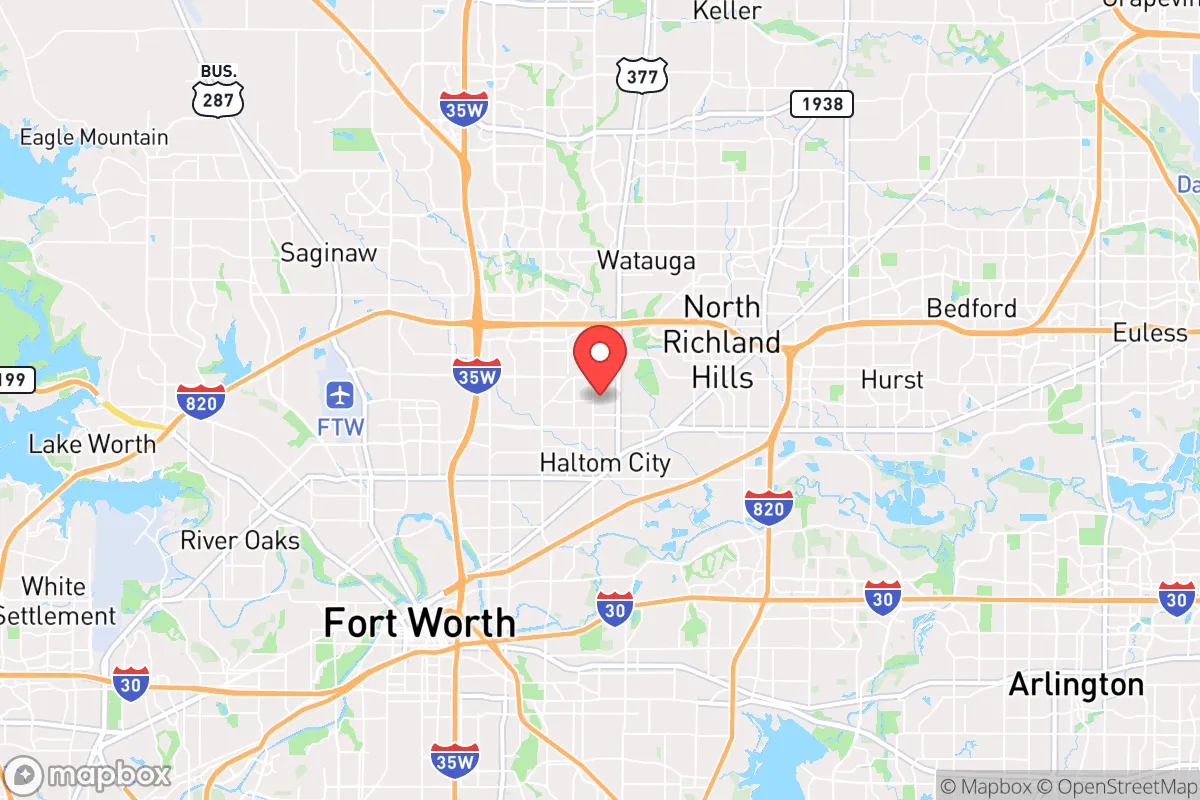
The most significant strategic vulnerability for Haltom City is its location within the Dallas-Fort Worth metropolitan area, a population center of over 7.5 million people. In a major disaster scenario—whether natural, pandemic-related, or geopolitical—this density creates competition for resources, potential civil unrest, and strain on emergency services. The city is within a 10-mile radius of several critical infrastructure nodes: Fort Worth Meacham International Airport (a general aviation and cargo hub) lies about 5 miles west, and the BNSF Railway's Fort Worth rail yard is roughly 8 miles southwest. These are potential targets for disruption or secondary effects in a conflict scenario. More directly, Haltom City is about 15 miles from the Naval Air Station Joint Reserve Base Fort Worth (formerly Carswell Air Force Base), a strategic military installation that houses F-35 and F-16 fighter squadrons, as well as reserve units. In a national security crisis, this base could become a primary target for adversary strikes, placing Haltom City within a high-risk fallout zone. The city also sits near major highway corridors—Interstate 820 and State Highway 121—which would likely become chokepoints during an evacuation, as seen during the 2021 winter storm Uri, when roads became impassable due to ice and gridlock. For the preparedness-minded reader, these proximity factors are the primary reason to consider whether Haltom City offers sufficient buffer from urban and military risks.
Practical resilience for a relocator: food, water, energy, and defensibility
Haltom City's practical resilience is shaped by its suburban character and the broader North Texas infrastructure. Food security is a mixed picture: the city has several grocery chains (Kroger, Walmart, Aldi) within a 5-minute drive, but local food production is limited. Community gardens exist but are not widespread; the city's zoning allows for backyard chickens and small-scale gardening, but homeowners association restrictions in some subdivisions may limit this. For a relocator serious about self-sufficiency, the surrounding rural areas of Tarrant County offer more acreage, but within Haltom City's typical quarter-acre lots, a family could produce a meaningful portion of vegetables and eggs with planning. Water resilience is a stronger point: the city draws its municipal water from the Trinity River via the Tarrant Regional Water District, which also manages reservoirs like Eagle Mountain Lake and Lake Worth. These surface water sources are vulnerable to drought and contamination, but the district has invested in redundancy through the Integrated Pipeline Project, which connects to the Richland-Chambers Reservoir system. For off-grid capability, rainwater harvesting is legal and encouraged in Texas, with no state-level restrictions, though Haltom City's building codes may require permits for larger systems. Energy resilience is a critical concern given Texas's independent grid (ERCOT). The 2021 winter storm demonstrated that the region is vulnerable to prolonged power outages during extreme weather. Haltom City residents experienced rolling blackouts and some multi-day outages. Solar panel adoption is growing but remains below 5% of homes; battery storage systems are becoming more common. Natural gas is the primary heating fuel, and the city's gas distribution network held up better than the electrical grid during Uri. For a relocator, investing in a whole-home generator or solar-plus-storage system is a practical hedge against grid instability. Defensibility is limited in a dense suburban setting. Haltom City's layout—grid-like streets with cul-de-sacs in newer subdivisions—offers some natural chokepoints, but the lack of rural buffer means that a security incident in Fort Worth could quickly spill over. The city's police department is well-funded relative to its size (about 45 officers for 44,000 residents), but in a widespread crisis, law enforcement would be stretched thin. The local gun culture is strong, with several firearm retailers and ranges in the area, and Texas's constitutional carry law (effective 2021) allows permitless carry for residents 21 and older. For the preparedness-minded, this legal environment supports personal defense, but it also means that neighbors may be armed—a factor to consider in community dynamics during a crisis.
The overall strategic picture for Haltom City is one of moderate resilience with clear trade-offs. Its inland location and stable geology provide a baseline of safety from coastal and seismic threats, and its access to regional water infrastructure and a supportive legal environment for self-sufficiency are genuine advantages. However, the city's proximity to a major military air base, dense urban population, and ERCOT-dependent grid introduce risks that cannot be ignored. For a relocator who values community resources and job access over rural isolation, Haltom City offers a workable compromise—provided that proactive steps are taken: installing backup power, securing a reliable water storage system, and building a neighborhood network of like-minded residents. The city is not a retreat; it is a suburban outpost that requires preparation to weather the disruptions that are increasingly common in modern Texas. For those willing to invest in that preparation, Haltom City can be a defensible and functional base of operations within a larger, risk-laden region.

* Values derived from national, state, county, city and local statistics and may differ in a specific area. Last updated: 2026-10-21T15:10:14.000Z
Narrative content on this page is AI-generated and may contain mistakes. Verify any details that matter before acting on them.
ReloMaps may earn a commission from affiliate links at no extra cost to you.

