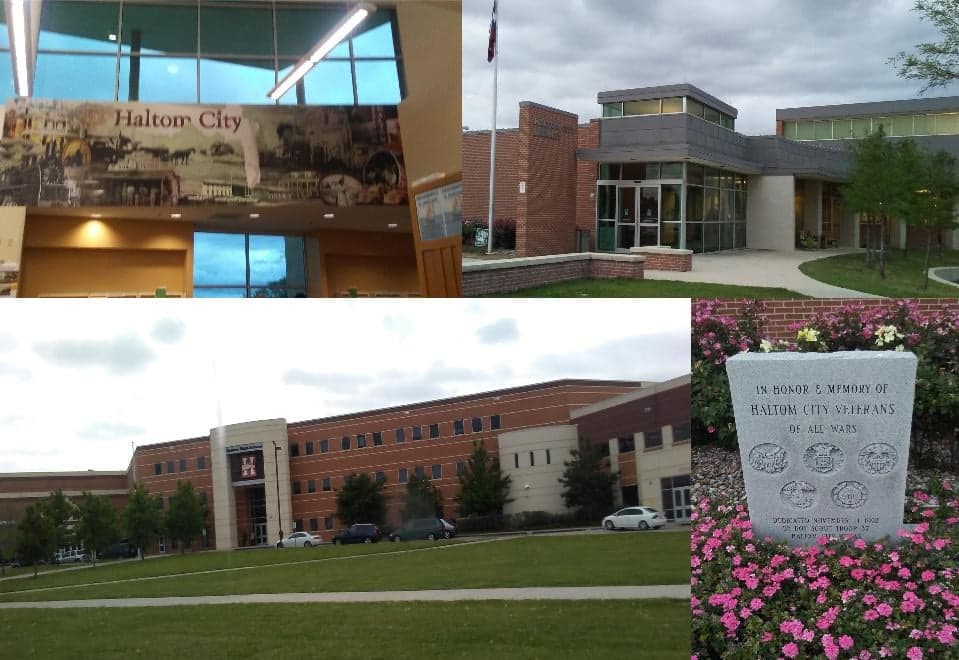
Photo: Wikipedia
Political ClimatePolitical Climate in Haltom City, TX
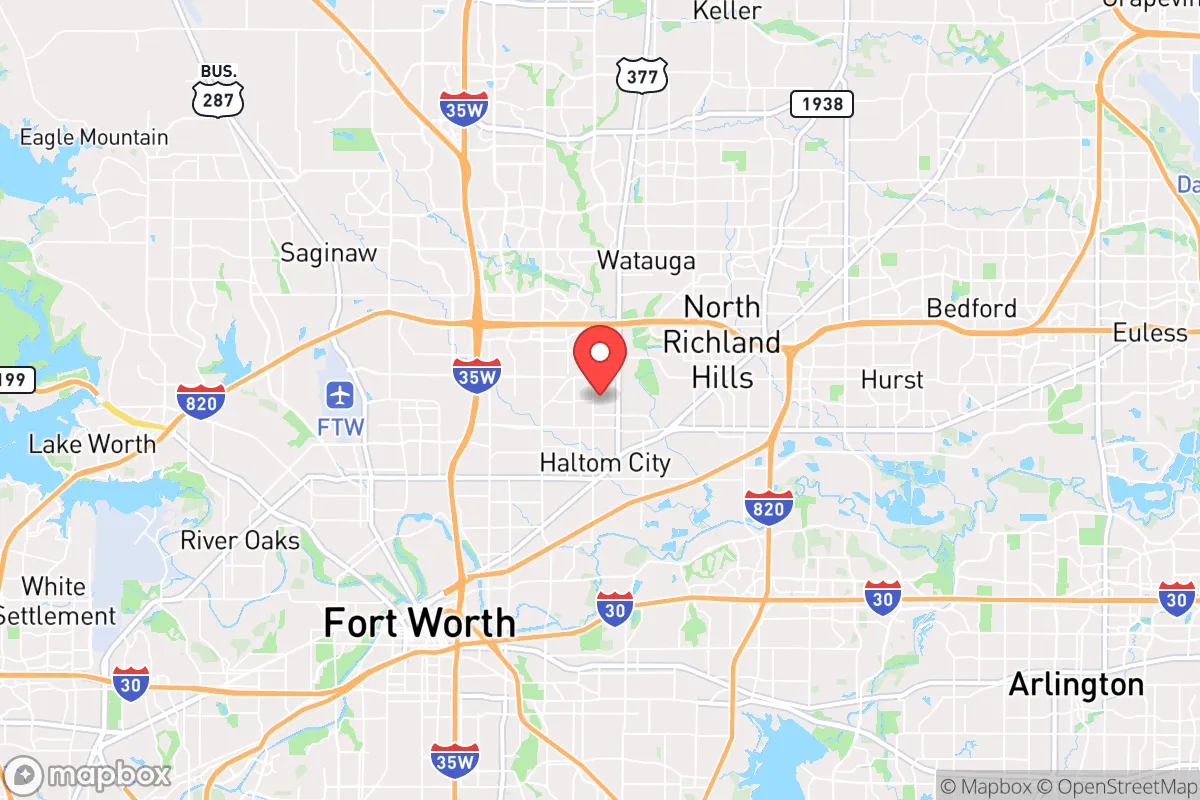
District shown is the primary district for this city’s centroid. Cities may span multiple districts.
Local Political AnalysisPolitical Analysis of Haltom City, TX
Haltom City leans solidly Republican, with a Cook Partisan Voting Index (PVI) of R+11, meaning it votes about 11 points more Republican than the national average. This isn’t a recent shift—the city has been a GOP stronghold for decades, anchored by its older, working-class, and military-connected population. While Texas as a whole has no official Cook PVI, statewide elections typically run R+5 to R+10, so Haltom City is noticeably redder than the state average. The trend here is stable: no dramatic swing left or right, just a steady, reliable Republican majority that shows up in local and national races alike.
How it compares
Compared to Texas as a whole, Haltom City is more conservative. The state’s urban centers—like Dallas, Houston, and Austin—pull the statewide average toward purple, especially in fast-growing suburbs. But Haltom City sits in Tarrant County, which has been a bellwether: it voted for Trump in 2016 and 2020, but by narrower margins than Haltom City itself. Neighboring Fort Worth to the east is more mixed, with liberal pockets near downtown and Texas Christian University, while suburbs like North Richland Hills and Watauga lean similar to Haltom City. To the west, Keller and Southlake are even more Republican, often hitting R+15 or higher. So Haltom City is right in the middle of the region’s conservative belt—not as deep red as exurbs, but reliably redder than the state’s average.
What this means for residents
For conservative residents, this means local policies align closely with their values. The city council and school board elections tend to favor candidates who prioritize low taxes, public safety funding, and traditional family issues. You’ll see fewer progressive initiatives like sanctuary city ordinances or heavy zoning restrictions. For liberal residents, it can feel like swimming upstream. While they’re not silenced—there are active Democratic precinct chairs and local groups—they rarely win seats or sway major policy. The practical effect is that Haltom City’s budget leans heavily into police and fire services, with less emphasis on social programs or public transit. Property taxes are moderate for Tarrant County, but there’s little appetite for new bond measures that aren’t tied to roads or utilities. Both sides agree on one thing: the city’s growth is steady, and the political climate stays predictable, which keeps real estate stable and community life low-drama.
Culturally, Haltom City feels like a slice of older Texas—more blue-collar than the tech-boom suburbs, with a strong sense of local identity. You won’t find the progressive coffee shops or activist hubs of Denton or Dallas. Instead, the city’s politics reflect its demographics: a majority-white, older population with a significant Hispanic minority that leans more conservative than in other parts of Texas. The city’s motto, “A City of Champions,” isn’t just about sports—it’s about a no-nonsense, self-reliant attitude. If you’re moving here, expect a place where political conversations are polite but firm, where the Fourth of July parade is a bigger deal than any protest, and where the biggest policy debates are about road widening and water rates, not culture wars. For both conservatives and liberals, it’s a straightforward, predictable environment—and that’s exactly how most folks here like it.

State Political ClimatePolitical Climate in Texas
State Political AnalysisPolitical Environment in the State
Texas has been a reliably Republican state for the past three decades, but the margin has been shrinking. In 2024, Donald Trump won the state by roughly 9 points, down from the 10-point margin in 2020 and the 16-point margin in 2016. The state’s political center of gravity remains conservative, but the coalition is fracturing along geographic and demographic lines. The dominant forces are the suburban and rural conservative base, which has held firm, and the rapidly growing urban and suburban liberal bloc, which is gaining ground. The long-term trajectory points toward a competitive two-party state, but that shift is still years away from tipping the statewide balance.
Urban vs. rural divide
The political map of Texas is a story of three distinct regions. The major metros — Houston, Dallas-Fort Worth, San Antonio, and Austin — are the engine of Democratic growth. Harris County (Houston) and Dallas County have both flipped blue in presidential elections, and Bexar County (San Antonio) is now reliably Democratic. Travis County (Austin) is the bluest urban core in the state, routinely delivering 70%+ of its vote to Democrats. Meanwhile, the rural and exurban counties that ring these metros — places like Collin County (north of Dallas), Montgomery County (north of Houston), and Comal County (north of San Antonio) — are among the most Republican in the nation. The Rio Grande Valley, once a Democratic stronghold, has shifted rightward, with counties like Zapata and Starr flipping to Trump in 2020 and 2024. The Panhandle and West Texas, including Lubbock and Midland, remain deeply conservative. The urban-rural divide is stark: the state’s 10 largest counties now account for over half the vote, and their Democratic lean is the primary reason the statewide margin is tightening.
Policy environment
Texas has no state income tax, which is a major draw for relocators. The state relies on property taxes and sales tax, with a combined state and local sales tax rate that can exceed 8.25% in some cities. The regulatory posture is business-friendly, with limited zoning in many areas and a right-to-work law that weakens union influence. Education policy is dominated by school choice debates; the state has a private school voucher program that was expanded in 2023, but it remains controversial. Healthcare policy is defined by the state’s refusal to expand Medicaid under the Affordable Care Act, leaving roughly 1.5 million Texans without coverage. Election laws have been tightened: Senate Bill 1 (2021) added ID requirements for mail-in voting, limited drive-through and 24-hour voting, and gave partisan poll watchers more access. The state also has a permitless carry law for handguns (2021) and a near-total abortion ban (trigger law effective 2022).
Recent policy direction
The last few legislative sessions have pushed Texas further in a conservative direction on several fronts. On gun rights, the permitless carry law (HB 1927) allows most adults to carry a handgun without a license or training. On education, the state passed a law requiring public schools to display “In God We Trust” posters and another banning certain books deemed sexually explicit. On parental rights, the state enacted a law requiring parental consent for minors to access social media and another restricting gender-affirming care for minors. On property rights, the state passed a law limiting the ability of cities to annex land without a vote. On voting, the state has continued to tighten ballot access, including a 2023 law that makes it a crime to mail unsolicited voter registration applications. On privacy and surveillance, the state has expanded the use of license plate readers and facial recognition by law enforcement. On medical autonomy, the abortion ban includes no exceptions for rape or incest, only for the life of the mother. The overall direction is toward more state preemption of local control, particularly on issues like policing, environmental regulation, and public health mandates.
Civil unrest & political movements
Texas has seen significant political activism from both sides. The 2020 protests following George Floyd’s murder in Minneapolis sparked large demonstrations in Austin, Houston, and Dallas, with some turning violent. In response, the state legislature passed a law in 2021 that made it a felony to bail out protesters and increased penalties for rioting. Immigration politics are a constant flashpoint. Governor Greg Abbott’s Operation Lone Star, launched in 2021, deployed state troopers and National Guard to the border, bused migrants to Democratic-led cities, and installed razor wire and buoys in the Rio Grande. The state has also passed a law (SB 4) that allows state and local police to arrest people suspected of entering the country illegally, though it is currently tied up in court. Secession rhetoric has been limited to fringe groups, but the state GOP platform in 2022 included a call for a referendum on secession. Election integrity remains a live issue, with the state conducting a controversial forensic audit of the 2020 election in four counties, which found no evidence of widespread fraud. A new resident would notice the heavy police presence in border communities like El Paso and the political polarization visible in yard signs and bumper stickers across the state.
Projection
Over the next 5-10 years, Texas is likely to become more competitive at the statewide level. The population is growing by roughly 1,000 people per day, and a disproportionate share of newcomers are moving to the blue-leaning suburbs of Austin, Dallas, and Houston. The Hispanic population, which has historically leaned Democratic, is shifting rightward, particularly in the Rio Grande Valley and among younger voters. The rural population is shrinking, which will continue to erode the Republican base. However, the state’s political geography — with its large, sparsely populated rural counties and its heavily gerrymandered congressional districts — means that the state legislature and congressional delegation will remain Republican for the foreseeable future. A Democratic presidential candidate could plausibly win Texas by 2032, but that would require turning out the urban vote at record levels while holding the Hispanic vote. For now, the state will remain a Republican stronghold at the state level, with a slowly narrowing margin.
For a new resident, the practical takeaway is that Texas offers a low-tax, low-regulation environment with a conservative policy bent, but the political landscape is shifting. If you lean conservative, you will find a state government that largely reflects your values, particularly on guns, abortion, and education. If you lean liberal, you will find strong communities in the major cities and a growing political movement, but you will also face a state government that is actively hostile to many of your priorities. The key is to choose your location carefully: the political reality in Austin is very different from the one in Lubbock, and the gap is only widening.
* Values derived from national, state, county, city and local statistics and may differ in a specific area. Last updated: 2026-10-21T15:10:14.000Z
Narrative content on this page is AI-generated and may contain mistakes. Verify any details that matter before acting on them.
ReloMaps may earn a commission from affiliate links at no extra cost to you.

