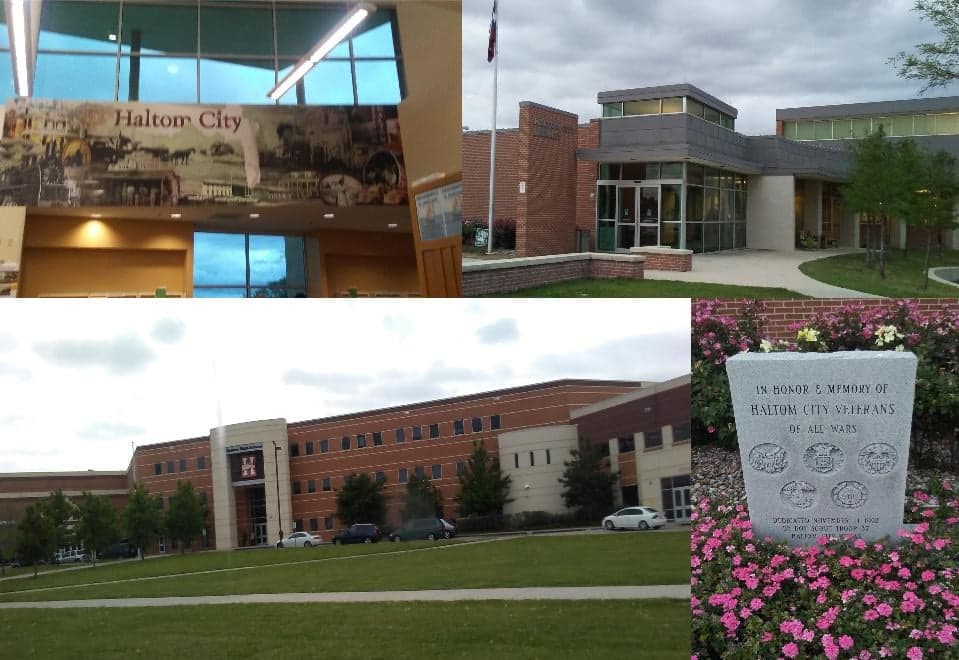
Photo: Wikipedia
Demographics of Haltom City, TX
Affluence Level in Haltom City, TX
A below-average socioeconomic profile. Incomes, home values, and educational attainment trail the U.S., with higher poverty and unemployment.
People of Haltom City, TX
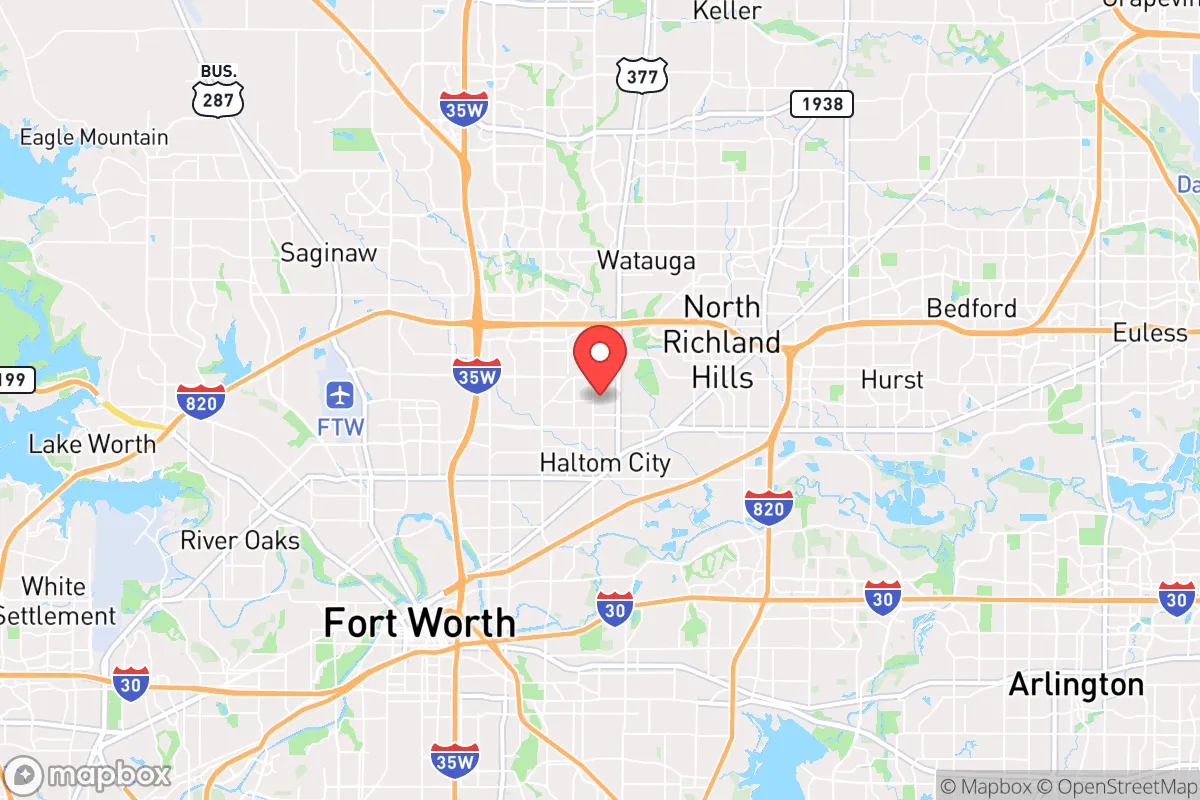
Haltom City, Texas, is a working-class suburb of Fort Worth where Hispanic residents now form the largest single ethnic group at 43.8% of the population, followed by non-Hispanic White residents at 38.6%. With a population of 45,681 and a notably low college attainment rate of 12.2%, the city retains a blue-collar, family-oriented character shaped by decades of industrial employment and affordable housing. Its identity is rooted in post-war suburban expansion and successive waves of domestic and international migration, creating a dense, diverse community where 16.0% of residents are foreign-born.
How the city was settled and grew
Haltom City was not a 19th-century settlement but a 20th-century creation, incorporated in 1953. Its original population was drawn by the expansion of the Bell Helicopter plant (now Bell Textron) in nearby Hurst and the general industrial boom of the mid-century Dallas-Fort Worth metroplex. The city was named for the Haltom family, who owned much of the land, and early development centered on the Haltom Road corridor and the area around Belknap Street. The first major wave of residents were White, native-born families moving from rural Texas and the Midwest for manufacturing jobs. These early subdivisions, such as Haltom Heights and the blocks near Watauga Road, were built out in the 1950s and 1960s with modest, single-family homes. The city’s growth was also fueled by its proximity to the General Dynamics plant (now Lockheed Martin) in Fort Worth, which drew skilled tradespeople and assembly-line workers.
Modern era (post-1965)
The 1965 Hart-Cellar Act opened the door to new immigration streams that reshaped Haltom City. The most significant shift began in the 1980s and accelerated through the 2000s, as Hispanic families—primarily of Mexican and Central American origin—moved into the city’s older housing stock. This wave concentrated in the central Haltom City neighborhoods around Denton Highway and Haltom Road, where affordable rentals and proximity to construction, service, and light-industrial jobs created a natural landing zone. By the 2020 Census, Hispanics had become the largest group, and the non-Hispanic White share had fallen below 40%. A smaller but notable wave of East and Southeast Asian immigrants (6.5% of the population), largely Vietnamese and Burmese, settled in the eastern side of the city near the Hurst border, drawn by low home prices and the area’s growing Asian grocery and service infrastructure. Indian-subcontinent residents (1.4%) are a more recent and smaller presence, often professionals working in the DFW tech corridor, and are dispersed rather than concentrated in a single neighborhood. Black residents (6.6%) are a long-standing but relatively small community, with roots in the post-civil-rights era migration from the rural South, and are spread across the city without a single dominant enclave.
The future
Haltom City’s population is projected to continue its trend toward greater Hispanic plurality, with the non-Hispanic White share likely to fall below 30% within the next decade. The foreign-born share (16.0%) is expected to hold steady or rise slightly, driven by continued immigration from Latin America and secondary migration from other Texas cities. New housing developments, such as the Prescott Crossing area near the city’s northern edge, are attracting younger families—both Hispanic and White—who are priced out of Fort Worth’s closer-in suburbs. The East and Southeast Asian population is likely to grow modestly, but the city lacks the ethnic infrastructure (e.g., large temples or ethnic malls) to draw a major new wave. The low college attainment rate (12.2%) suggests that Haltom City will remain a predominantly blue-collar community, with economic anchors in logistics, manufacturing, and trades rather than the white-collar sectors driving growth in neighboring Southlake or Colleyville.
For a new resident, Haltom City offers a dense, affordable, and increasingly Hispanic-influenced suburban environment where English and Spanish are both common in daily life. It is not a gentrifying or rapidly upscaling suburb, but a stable, working-class city where the next decade will likely see continued demographic consolidation rather than dramatic change. The city’s identity is becoming more distinctly bicultural, with a strong sense of local community rooted in schools, churches, and small businesses along the Haltom Road and Denton Highway corridors.

* Values derived from national, state, county, city and local statistics and may differ in a specific area. Last updated: 2026-10-21T15:10:14.000Z
Narrative content on this page is AI-generated and may contain mistakes. Verify any details that matter before acting on them.
ReloMaps may earn a commission from affiliate links at no extra cost to you.

