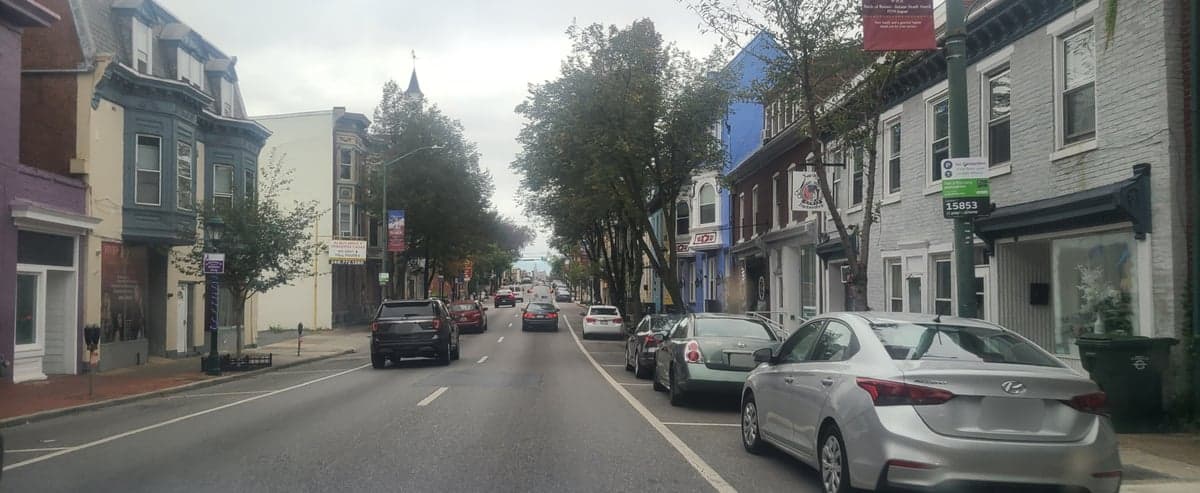
Photo: Wikipedia
Political ClimatePolitical Climate in Hagerstown, MD
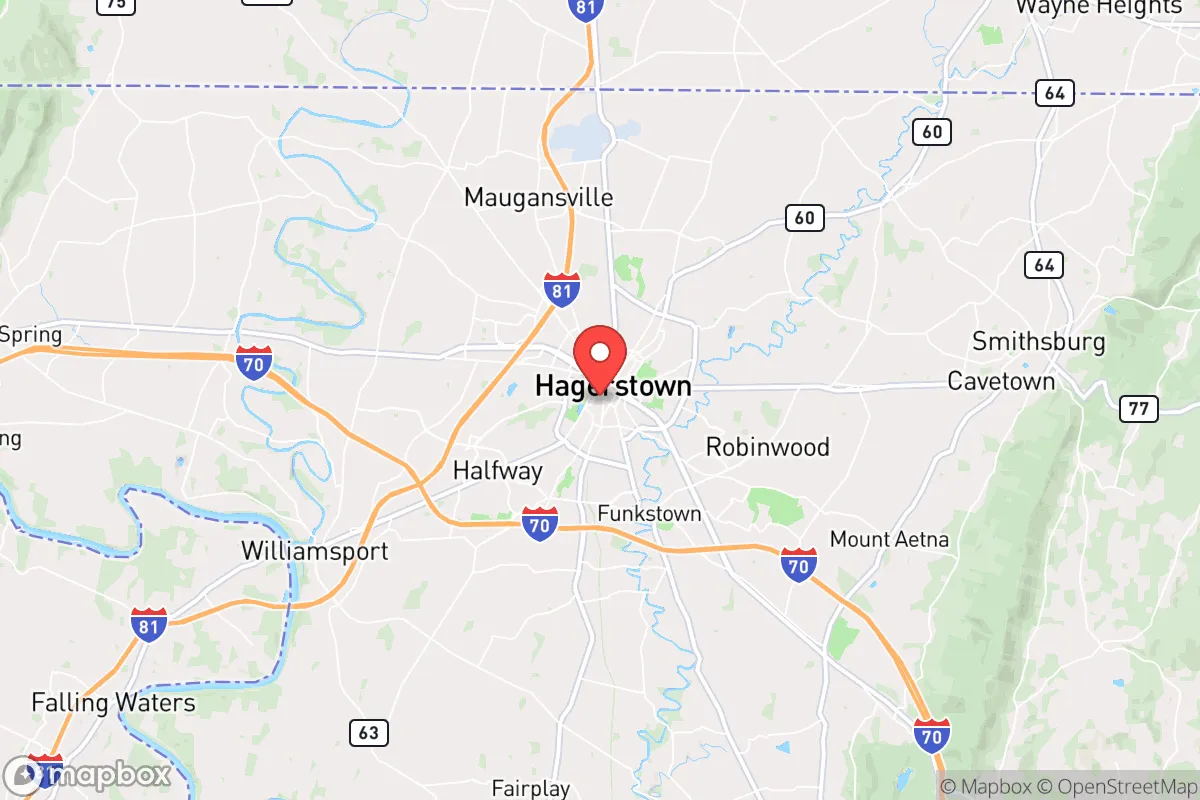
District shown is the primary district for this city’s centroid. Cities may span multiple districts.
Local Political AnalysisPolitical Analysis of Hagerstown, MD
Hagerstown, Maryland, sits in a political tug-of-war that’s gotten a lot more interesting over the past decade. The area’s Cook Partisan Voting Index (PVI) of D+3 tells you it leans Democratic overall, but that number hides a lot of tension. If you’ve lived here as long as I have, you remember when Washington County was reliably red, and Hagerstown itself was a blue-collar, common-sense kind of place. Now, you’ve got a city council that’s been flirting with progressive ideas, while the surrounding county—places like Boonsboro and Clear Spring—still vote solidly conservative. The trajectory is concerning: each election cycle seems to bring a little more government overreach, whether it’s zoning restrictions that feel like they’re micromanaging your property or local ordinances that nibble at your Second Amendment rights.
How it compares
Drive 20 minutes north to Chambersburg, Pennsylvania, and you’re in a county that went +30 points for Trump in 2024—a world away from Hagerstown’s D+3. Head east to Frederick, and you’ll find a city that’s gone full progressive, with rent control debates and sanctuary city policies that make Hagerstown’s current drift look mild. But that’s the rub: Hagerstown is caught in the middle. It’s not as conservative as the rural townships around it, but it’s not as left-leaning as Frederick or Montgomery County. What you get is a slow creep of policies that feel like they’re testing the waters—like the 2023 push for a “housing first” initiative that prioritized funding for homeless services over code enforcement. It’s the kind of thing that sounds good on paper but ends up with more government bureaucracy and less personal accountability. The contrast with nearby Williamsport, which still flies “Don’t Tread on Me” flags at its July 4th parade, is stark.
What this means for residents
For folks who value personal freedoms, the trend is a yellow flag at best. The city’s been tightening its grip on short-term rentals, requiring permits and inspections that feel like a solution in search of a problem. Property taxes have inched up, and there’s chatter about a “livability” ordinance that could regulate noise, parking, and even how many cars you can have in your driveway. It’s not tyranny, but it’s the kind of slow erosion that makes you wonder: what’s next? On the flip side, if you’re a small business owner or a gun owner, you’re still better off here than in Baltimore or Silver Spring. The county sheriff’s office is pro-Second Amendment, and the local GOP is active. But the city council’s 5-2 Democratic majority means you’re always one election away from a rent control vote or a ban on plastic bags—the kind of nanny-state stuff that grates on a longtime resident.
Culturally, Hagerstown still has a strong blue-collar backbone—the Cushwa Warehouse, the railroad history, the VFW posts—but the progressive wave is washing in. You see it in the new murals downtown that celebrate “diversity” more than local history, and in the city’s decision to fly the Pride flag over the square in June. It’s not the end of the world, but it’s a shift from the “live and let live” attitude that used to define the place. If you’re thinking of moving here, keep an eye on the 2026 city council elections. A couple of conservative wins could slow the slide; another progressive sweep, and you might start seeing policies that feel more like Frederick or Hagerstown’s own little version of Annapolis. For now, it’s still a decent place to raise a family if you’re willing to speak up at town hall meetings—but don’t expect the government to stay out of your business for long.

State Political ClimatePolitical Climate in Maryland
State Political AnalysisPolitical Environment in the State
Maryland has long been a blue state, but its political climate is far more complex than a simple Democratic label suggests. The state has voted for the Democratic presidential candidate by double digits in every election since 1992, yet this dominance is almost entirely driven by the Washington, D.C. suburbs and Baltimore City. Over the last 10-20 years, the state has shifted steadily leftward on cultural and economic issues, with the legislature enacting some of the nation’s most progressive policies on taxes, gun control, and education. For a conservative-leaning individual or family, understanding this landscape means recognizing that your experience will vary dramatically depending on whether you settle in the rural panhandle, the suburban D.C. orbit, or the Eastern Shore.
Urban vs. rural divide
The political map of Maryland is a textbook case of urban-rural polarization. The Democratic stronghold is the Washington, D.C. suburbs — Montgomery County and Prince George’s County — which together cast nearly a third of the state’s votes and deliver margins of +40 to +60 points for Democrats. Baltimore City is another deep-blue anchor, though its population has declined by roughly 7% since 2010, slightly reducing its electoral weight. In contrast, the rural western counties — Garrett, Allegany, and Washington — vote Republican by 30-40 points. The Eastern Shore counties like Worcester and Caroline are also reliably red, though they are smaller in population. The key battleground is the suburban ring around Baltimore — Baltimore County, Howard County, and Anne Arundel County — which have trended blue over the last decade as educated, affluent professionals move in from D.C. and Baltimore. Frederick County, once a conservative stronghold, flipped to Biden in 2020 and is now a purple-to-light-blue area, driven by D.C. commuters. The takeaway: if you want a conservative environment, you’re looking at the western mountains, the Eastern Shore, or the rural northern tier near the Pennsylvania line.
Policy environment
Maryland’s state-level policy is aggressively progressive, and it has been for years. The state has a progressive income tax with rates up to 5.75%, plus a local “piggyback” tax that can push the combined rate over 8% in high-tax counties like Montgomery. Property taxes are high, and the state’s estate tax kicks in at $5 million, which is lower than the federal exemption. On education, Maryland passed the Blueprint for Maryland’s Future in 2021, a massive $3.8 billion annual funding plan that expands pre-K, raises teacher salaries, and centralizes control in Annapolis — critics argue it drives up taxes without improving outcomes. Healthcare is heavily regulated, with a state-based insurance exchange and strict certificate-of-need laws that limit new hospital construction. On election law, Maryland has no-excuse mail-in voting, same-day registration, and automatic voter registration — all of which are popular with progressives but raise concerns about election integrity among conservatives. The state also has some of the nation’s strictest gun laws, including a ban on “assault weapons,” a handgun permit requirement that was recently tightened, and a magazine capacity limit of 10 rounds. For a conservative, the policy environment feels like a constant uphill battle against Annapolis.
Trajectory & freedom
Maryland is becoming less free by nearly any measure of personal liberty. The most significant recent contraction came with the Gun Safety Act of 2023, which expanded the list of “sensitive places” where concealed carry is banned (including hospitals, public transit, and any property without explicit signage allowing guns), and required a 10-day waiting period for all firearm purchases. This law was passed in direct response to the Supreme Court’s Bruen decision, and it is currently being challenged in court. On parental rights, the state passed the Transgender Health Equity Act in 2023, which prohibits courts from considering a parent’s objection to a child’s gender transition in custody disputes — a move that alarms many conservative parents. Medical autonomy took a hit with the state’s strict COVID-19 mandates, which were among the longest-lasting in the country. Property rights are constrained by the state’s aggressive use of eminent domain for development projects, particularly in the D.C. suburbs. On the positive side for conservatives, Maryland has no state-level rent control, and the state’s right-to-work status remains unchanged (though union influence is strong). The trajectory is clear: Annapolis is moving left faster than the state’s population is moving right.
Civil unrest & political movements
Maryland has seen its share of political flashpoints. The Freddie Gray protests in Baltimore in 2015 led to days of unrest, a state of emergency, and a lasting shift in the city’s relationship with law enforcement. More recently, the 2020 George Floyd protests saw significant demonstrations in Baltimore and Silver Spring, with some property damage. On the right, the Maryland Shall Issue gun rights group is highly active, organizing rallies in Annapolis and filing lawsuits against the state’s gun laws. The Eastern Shore has seen a small but vocal secession movement, with some residents pushing to join Delaware or form a new state — though it remains fringe. Immigration politics are a live wire: Maryland is a sanctuary state under a 2023 executive order from Governor Wes Moore, which limits cooperation between state law enforcement and federal immigration authorities. This has created tension in counties like Harford and Carroll, where local sheriffs have resisted. Election integrity remains a concern for conservatives, especially after the 2020 election saw widespread mail-in voting and a controversial ballot drop box system. The Maryland State Board of Elections has been criticized for lax voter roll maintenance, though no major fraud has been proven. For a new resident, the most visible sign of political tension is the sheer number of yard signs and bumper stickers — you’ll see “Moore/Wes” signs in the suburbs and “Trump 2024” flags in the rural areas.
Projection
Over the next 5-10 years, Maryland will likely become more blue, not less. The key driver is demographic: the D.C. suburbs continue to grow, while rural western Maryland and the Eastern Shore are stagnant or declining. The 2020 Census gave Maryland a new congressional map that was drawn to maximize Democratic seats, and the state’s independent redistricting commission (created in 2015) has not prevented gerrymandering. In-migration is a mixed bag: the state gains new residents from the D.C. area (mostly liberal professionals) but loses people to lower-tax states like Florida, Texas, and the Carolinas. The Republican Party in Maryland is weak, with no statewide elected officials and a shrinking base in the suburbs. The best-case scenario for conservatives is that the state’s high taxes and regulatory burden eventually slow growth, leading to a political realignment — but that is a long shot. For someone moving in now, expect the policy environment to become more progressive, with potential new taxes on wealth and carbon, further gun restrictions, and expanded government healthcare. The rural areas will remain conservative, but they will have less and less influence in Annapolis.
For a conservative individual or family considering Maryland, the bottom line is this: choose your county carefully. If you settle in Garrett County or the Eastern Shore, you can live in a conservative community with low crime and good schools, but you will still pay high state taxes and deal with Annapolis’s progressive policies. If you move to the D.C. suburbs, you will be surrounded by liberal politics, high costs, and a culture that may feel alienating. The state offers excellent job opportunities in defense, biotech, and federal contracting, but the trade-off is a constant political fight. If you value personal freedom, low taxes, and a government that stays out of your life, Maryland is likely not your best bet — but if you have family or job ties here, you can carve out a good life in the right pocket of the state.
* Values derived from national, state, county, city and local statistics and may differ in a specific area. Last updated: 2026-04-22T01:48:30.000Z
Narrative content on this page is AI-generated and may contain mistakes. Verify any details that matter before acting on them.
ReloMaps may earn a commission from affiliate links at no extra cost to you.

